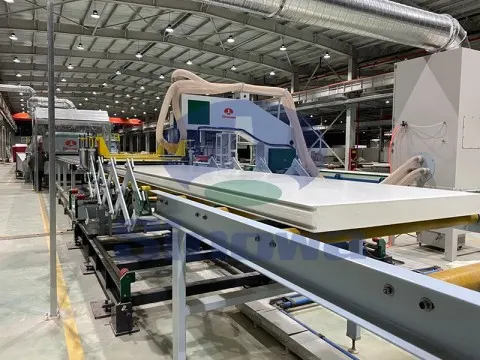
PU Sandwich Panel Production Line
Publication Date: Sep 28, 2026
PU Sandwich Panel Production Line – Automated continuous PU panel machinery producing thermal insulated roof, wall and cold room sandwich panels. Complete line with foaming, lamination & cutting solutions.
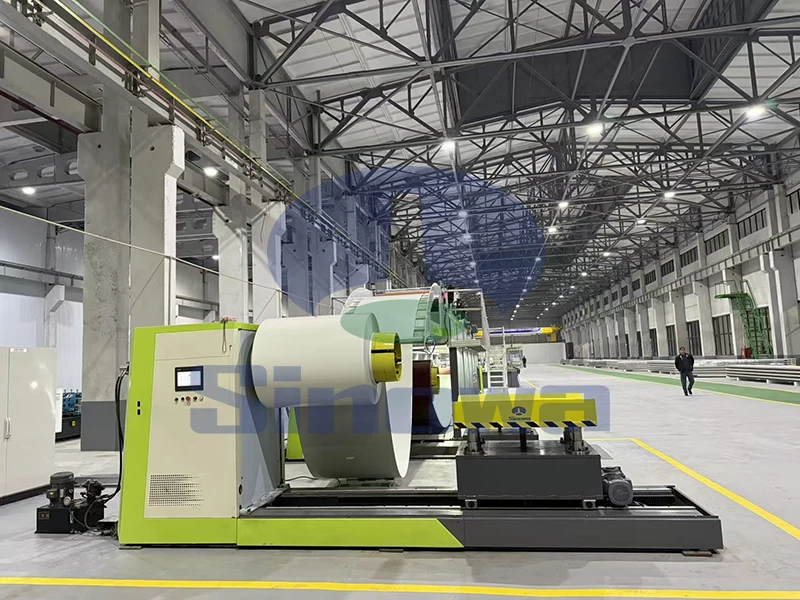
The PU sandwich panel production line is an automated integrated manufacturing system for composite insulation panels. It integrates material pretreatment, foaming, lamination, curing and finishing processes, delivering high-performance, structurally stable panels widely used in construction and industrial insulation fields.
Basic Overview and Core Operational Logic
A modern PU sandwich panel line serves as a comprehensive continuous manufacturing system designed to produce composite panels with polyurethane foam cores and rigid surface layers. Unlike discrete manual processing equipment, this automated line realizes seamless connection of multiple production procedures, effectively solving the problems of inconsistent product quality and low output efficiency in traditional panel manufacturing. The core operational logic centers on the organic combination of mechanical transmission, chemical foaming reaction and intelligent temperature and pressure control. The whole production process follows a fixed linear flow, from surface material pretreatment to final finished product output, with each procedure linked closely and restricted mutually. The system adopts modular functional design, and each independent unit undertakes exclusive processing tasks while maintaining precise collaborative operation. This operational mode not only simplifies the overall production workflow but also reserves flexible adjustment space for different panel specifications, laying a solid foundation for standardized and large-scale production of PU sandwich panels.
Raw Material Preparation and Pretreatment System
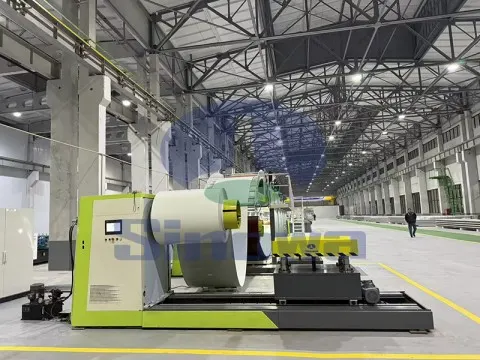
Raw material pretreatment is the primary foundational procedure of the entire PU sandwich panel production process, directly affecting the flatness, adhesion effect and overall quality of finished panels. The main raw materials involved include metal coil surface materials and liquid polyurethane raw materials for core foaming. For surface coil materials, the production line is equipped with professional uncoiling and leveling integrated devices. The uncoiling unit steadily releases coiled raw materials at a uniform speed to avoid tensile deformation caused by uneven feeding. The multi-group roller leveling structure further eliminates internal stress and surface bending defects generated during coil storage and transportation, ensuring the flatness of surface materials before composite processing. Meanwhile, the system completes simple surface cleaning treatment to remove dust and impurities, enhancing the bonding tightness between surface materials and PU foam core. For polyurethane raw materials, the pretreatment link realizes sealed storage and constant-temperature maintenance of liquid materials, avoiding performance changes caused by temperature fluctuation and impurity mixing, which guarantees the stability of subsequent foaming reactions.
Polyurethane Metering and High-Pressure Mixing System
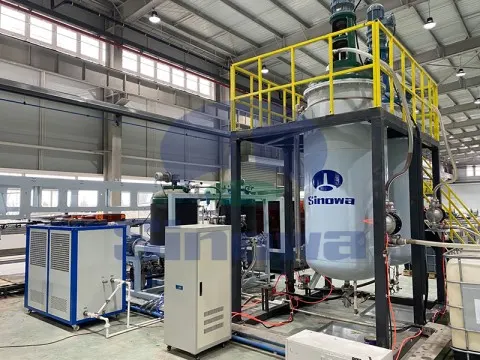
The polyurethane metering and high-pressure mixing system is the core functional unit that determines the thermal insulation performance, structural density and service stability of sandwich panel cores. PU foaming relies on the chemical reaction of multiple liquid raw materials, and the accuracy of raw material proportioning and mixing uniformity are the key factors affecting core layer quality. The production line is equipped with high-precision automatic metering equipment, which can realize micro-adjustment of raw material feeding amount and maintain high proportioning accuracy in continuous operation. Different from traditional low-speed mixing equipment, the high-pressure mixing device adopts high-speed turbulent mixing technology to fully fuse multiple raw materials in an instant, avoiding local uneven mixing and incomplete reaction. After mixing, the liquid PU mixture is evenly injected between the upper and lower surface materials through a precise nozzle layout. The system supports real-time dynamic adjustment of mixing pressure and injection volume according to different panel thickness and density requirements, ensuring that the foamed core layer has uniform texture, no hollow holes and consistent density, and effectively improving the thermal insulation and shock resistance of the panel.
Automatic Feeding and Positioning of Surface Materials
Stable feeding and accurate positioning of surface materials are essential prerequisites for realizing high-precision composite molding of PU sandwich panels. The production line adopts a fully automatic servo feeding system, which can realize synchronous feeding of upper and lower surface materials and maintain consistent feeding speed and tension throughout the process. The tension control module effectively avoids material deviation, wrinkling and stretching deformation during high-speed transmission, ensuring the dimensional accuracy of the panel width direction. In terms of positioning, the system is equipped with intelligent deviation correction sensors and mechanical positioning structures. In the continuous feeding process, the sensors monitor the material offset state in real time, and the automatic deviation correction device quickly fine-tunes the material position to keep the upper and lower surface materials completely aligned. This precise positioning function eliminates the quality defects of edge deviation and inconsistent covering range of the core layer. In addition, the feeding system supports stepless speed regulation, which can match the operating speed of foaming, lamination and curing units, realizing synchronous operation of the whole line and improving overall production continuity and stability.
Continuous Lamination and Composite Molding Process
The continuous lamination and composite molding procedure is the key link to realize the integration of PU foam core and surface materials. After the liquid PU mixture is injected between the upper and lower surface materials, the composite materials enter the double-belt lamination unit for integral pressing and molding. The lamination system adopts a stable gear-driven double-belt transmission structure, which can clamp the composite panel body evenly and transmit it stably. The gap between the upper and lower belts can be precisely calibrated and locked, which accurately controls the overall thickness of the panel and ensures consistent thickness of the whole panel in the length and width directions. During the lamination process, appropriate uniform pressure is applied to the panel surface. On the one hand, it promotes the full expansion and filling of the PU foam mixture, making the core layer closely fit with the surface materials without gaps. On the other hand, it shapes the flat and smooth surface of the panel and enhances the overall structural compactness. The continuous lamination mode avoids the inconsistent pressure of intermittent pressing equipment, effectively improving the overall flatness and structural uniformity of composite panels.
Constant-Temperature Curing and Solidification Technology
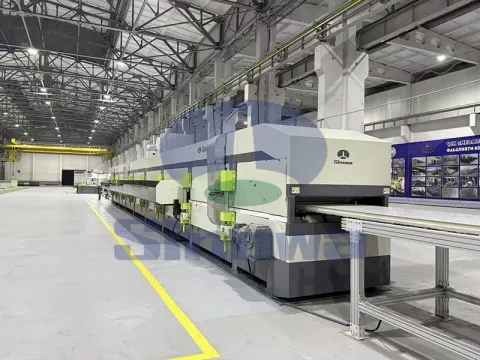
Constant-temperature curing is a critical procedure to complete the chemical solidification of PU foam and stabilize the overall structure of sandwich panels. After lamination and preliminary molding, the panel enters the closed constant-temperature curing channel for continuous heat preservation and solidification treatment. The curing system adopts circulating constant-temperature control technology to maintain a stable and uniform temperature environment inside the channel, avoiding local overheating or insufficient temperature that leads to incomplete foaming and uneven core performance. In the curing stage, the PU foam completes the final chemical cross-linking reaction, gradually forming a compact and stable porous insulation structure. This process fixes the relative position of the surface layer and the core layer, greatly improving the bonding strength between layers and avoiding delamination and cracking in subsequent use. The length of the curing channel and the running speed of the conveyor belt form a matched design, which ensures that the panel obtains sufficient curing time in continuous production. Reasonable curing treatment can significantly enhance the dimensional stability, compression resistance and aging resistance of finished panels.
Fixed-Size Cutting and Edge Trimming Processing
Fixed-size cutting and edge trimming are the finishing processing procedures to standardize the size and appearance of PU sandwich panels. After full curing and structural stabilization, the continuous long-panel blank is transmitted to the cutting unit for precise fixed-length cutting. The production line adopts automatic numerical control cutting equipment, which can set arbitrary cutting lengths according to production requirements, with high cutting precision and smooth and flat cutting sections. The intelligent counting and positioning system realizes automatic fixed-point cutting, avoiding size deviation caused by manual measurement and operation. After cutting, the edge trimming device performs fine trimming on the four edges of the panel to remove redundant leftover materials and burrs generated in the previous processes. Edge trimming treatment makes the panel edges neat and smooth, improves the overall appearance quality, and also avoids edge cracking and damage during transportation and installation. In addition, the cutting and trimming system operates synchronously with the front-end production procedures, realizing uninterrupted continuous processing and effectively improving the finished product output efficiency.
Surface Finishing and Defect Inspection
Surface finishing and online defect inspection ensure the high-quality performance and appearance consistency of finished PU sandwich panels. After cutting and trimming, the panel surface will undergo fine finishing treatment, including surface dust removal, slight flatness correction and appearance detail optimization. This procedure removes tiny impurities and minor surface defects generated during production, making the panel surface more smooth and neat. Meanwhile, the production line is equipped with a complete online inspection system, which conducts real-time detection of panel thickness flatness, interlayer bonding state, core layer compactness and surface appearance quality through intelligent sensing equipment. The system can automatically identify unqualified products with defects such as uneven thickness, local hollowing and surface scratches, and mark and screen them out in time. Different from manual inspection, online intelligent inspection realizes full-coverage detection of each panel, effectively avoiding missing inspection and misjudgment, and ensuring that all delivered finished products meet consistent quality standards.
Finished Product Conveying and Automatic Stacking
Finished product conveying and automatic stacking are the terminal links of the production line, realizing orderly collection and standardized storage of qualified panels. The inspected qualified panels are stably transmitted to the stacking station through the low-noise conveying platform. The automatic stacking device adopts mechanical arm or gantry stacking structure, which can realize orderly stacking of panels according to fixed specifications and layers. The system can automatically adjust the stacking spacing and layer number according to panel size and thickness, ensuring neat stacking and stable placement without extrusion deformation. Compared with manual stacking, automatic stacking equipment has higher efficiency and better stacking uniformity, which effectively reduces manual labor intensity and avoids panel surface damage and dimensional confusion caused by manual operation. In addition, the terminal conveying and stacking system is connected with the production scheduling system, which can realize automatic statistics of output quantity, facilitate production data management, and lay a foundation for subsequent packaging, transportation and warehouse storage.
Intelligent Central Control and Collaborative Operation System
The intelligent central control system is the brain of the entire PU sandwich panel production line, realizing unified scheduling and precise control of all functional units. The system integrates the operation data of feeding, foaming, lamination, curing, cutting and stacking modules, and realizes real-time monitoring and synchronous linkage of all production links through program setting. Operators can adjust production parameters such as feeding speed, foaming pressure, curing temperature and cutting size through the central control interface, realizing flexible switching of different panel specifications. The built-in data feedback and self-correction function can automatically fine-tune operating parameters according to real-time production conditions, offsetting the subtle errors generated in continuous operation and maintaining long-term stable production state. In addition, the system has abnormal fault early warning and protection functions. When equipment operation deviation or process abnormality occurs, it will automatically send an alarm and start protection measures to avoid equipment failure and batch quality problems, greatly improving the safety and stability of production operation.
Production Line Performance Characteristics and Application Value
The modern PU sandwich panel production line has prominent performance advantages in automation level, production efficiency and product quality stability. The fully automated integrated production mode greatly reduces manual intervention links, effectively lowers labor costs and human-caused quality errors. The precise process control ensures that the produced PU sandwich panels have uniform density, excellent thermal insulation performance, strong interlayer bonding force and good structural stability, with flat and beautiful overall appearance. The production line supports flexible adjustment of multiple panel specifications, which can meet the production needs of different thicknesses and sizes of insulation composite panels. Its continuous and efficient production capacity adapts to large-scale industrial production scenarios. The high-quality PU sandwich panels produced by the line are widely applicable to building exterior wall insulation, roof enclosure, industrial workshop partition, cold storage insulation and other fields, providing reliable lightweight, heat-preservation and energy-saving composite materials for modern construction and industrial manufacturing industries, with broad market application value and development prospects.
Gallery of PU Sandwich Panel Production Line
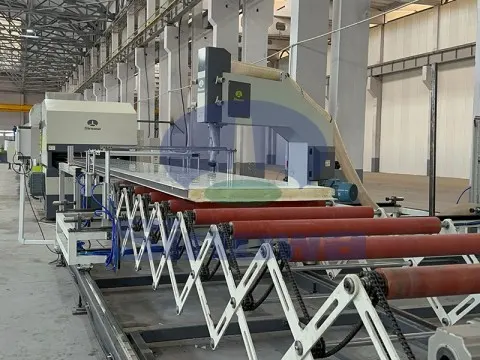
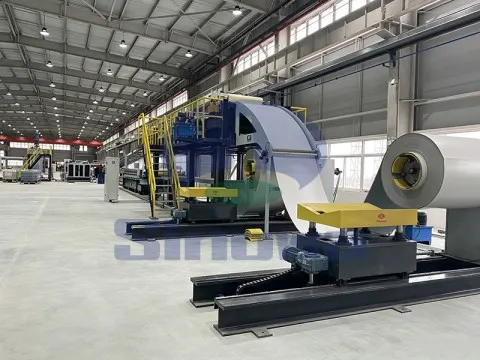
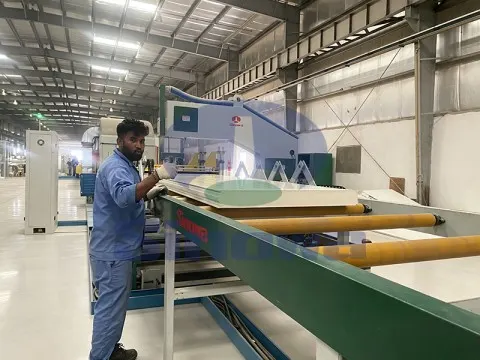
Tags: pu sandwich panel production line, pu sandwich panel production line manufacturer, pu sandwich panel production line supplier, china pu sandwich panel production line, pu sandwich panel production line for sale
Related Informations
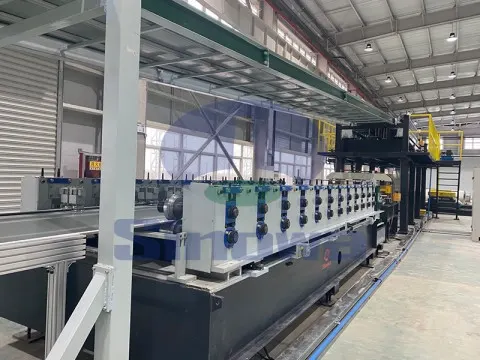
How To Adjust The Feeding Amount Of PU Raw Materials In The PU Sandwich Panel Line?
Can One Foaming Machine Serve Both Continuous And Discontinuous PU Sandwich Panel Line?