Automatic PU Sandwich Panel Production Line
Publication Date: Oct 5, 2026
Fully automatic continuous PU sandwich panel production line for roof, wall and cold room insulation panels. PLC controlled, including roll forming, PU foaming, lamination, curing & cutting. Stable, high efficiency, low labor. Custom available.
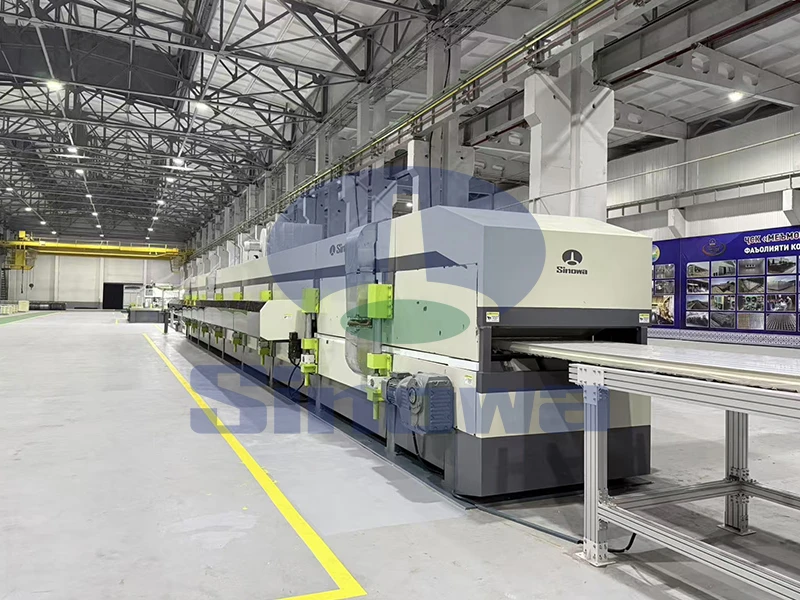
The automatic PU sandwich panel production line is an integrated intelligent manufacturing system for continuous composite panel production. It integrates mechanical transmission, fluid control, chemical foaming and precision molding to achieve full-automatic one-step forming of high-performance polyurethane sandwich panels with stable operation and high efficiency.
Core Overview and Operational Characteristics
The automatic PU sandwich panel line represents a highly integrated and streamlined manufacturing solution for modern composite building materials. Designed for continuous and uninterrupted production, it combines mechanical automation, intelligent parameter regulation, and chemical reaction control to complete the entire panel manufacturing process without frequent manual intervention. Unlike traditional semi-automatic equipment that relies on manual material feeding and intermittent operation, this production line realizes synchronous linkage of all functional modules, ensuring consistent production rhythm and stable product quality throughout the workflow. The entire operational process covers raw material unwinding, surface pretreatment, precise PU material proportioning and mixing, uniform foaming injection, composite lamination, constant-temperature curing, fixed-length cutting, and finished product output, forming a closed-loop automated production system. Its core operational characteristics lie in high continuity, low manual dependence, and strong parameter consistency, which effectively avoid product quality fluctuations caused by human operation errors. Additionally, the modular structural design endows the production line with flexible adjustability, enabling it to adapt to different panel thicknesses, surface materials and structural specifications, meeting the diversified production demands of the composite panel industry.
Raw Material Feeding and Unwinding System
The raw material feeding and unwinding system serves as the starting module of the entire production line, laying a foundation for stable and standardized subsequent production. This system is mainly responsible for the automatic unwinding and tension control of upper and lower surface base materials, which are the outer protective layers of PU sandwich panels. Equipped with intelligent tension adjusting devices, it can maintain constant material tension during high-speed unwinding, effectively preventing base material deviation, wrinkling and stretching deformation that commonly occur in traditional unwinding processes. The system supports continuous roll material feeding, realizing non-stop material switching through automatic roll replacement configuration, which greatly improves production continuity and avoids production pause losses caused by material replacement. Meanwhile, it is matched with a material deviation correction mechanism that monitors the material conveying track in real time and fine-tunes the operating position dynamically to ensure the flat and straight conveying of base materials. All operating parameters of the unwinding system can be preset and adjusted through the central control terminal, including unwinding speed and tension value, realizing intelligent and precise control. Stable operation of this module ensures the flatness and dimensional accuracy of the panel surface, which is a key prerequisite for achieving tight lamination and excellent appearance quality of finished PU sandwich panels.
Surface Pretreatment Technology for Base Materials
Base material surface pretreatment is a crucial intermediate process that determines the bonding performance between surface materials and PU foam core layers, directly affecting the overall structural stability and service life of sandwich panels. After unwinding, the base materials enter the integrated pretreatment unit, which integrates multiple functional processes including surface cleaning, static elimination and surface finishing. In the cleaning process, high-efficiency air cleaning and physical brushing structures are adopted to thoroughly remove floating dust, fine debris and oil stains attached to the base material surface, eliminating impurities that may cause poor bonding and hollowing defects. The static elimination device effectively removes static electricity generated during high-speed material conveying, preventing dust re-adsorption and ensuring a clean and dry bonding interface. Different from simple cleaning processes, this pretreatment unit also conducts micro-finishing on the base material surface to optimize surface roughness, enhance the physical adhesion between the base material and PU foam, and avoid delamination and peeling problems in long-term use. The entire pretreatment process operates automatically and synchronously with the production line rhythm, without independent manual operation. The optimized surface treatment effect significantly improves the composite firmness of sandwich panels, enabling the finished products to maintain stable structural performance under complex service environments.
Precision PU Material Metering and Mixing System
The precision metering and mixing system is the core functional component of the production line, which directly determines the foaming quality, thermal insulation performance and structural uniformity of the PU foam core layer. Polyurethane foam is formed by the chemical reaction of multiple raw materials including polyol, isocyanate, foaming agent and catalyst, and the proportion accuracy of each raw material is the key to qualified foam performance. This system is equipped with independent sealed storage pipelines and high-precision flow monitoring units for each raw material, realizing automatic quantitative conveying according to preset production formulas. The intelligent flow control system dynamically monitors and adjusts the feeding volume of each raw material in real time, effectively avoiding formula deviation caused by pressure fluctuation and temperature change. All raw materials are transported to the high-speed sealed mixing chamber for uniform stirring, ensuring full fusion of different components without dead angles. The closed mixing environment prevents external air and impurities from mixing in, avoiding foam cavity and uneven density. The system supports formula parameter adjustment according to different product requirements, realizing flexible switching of foam density and hardness, and meeting the performance requirements of sandwich panels for different application scenarios.
In-line Foaming and Injection Process
The in-line foaming and injection process is the key link for forming the PU foam core layer of sandwich panels, completing the transition from liquid raw materials to solid foam structures. After uniform high-precision mixing, the liquid PU composite material is evenly sprayed and injected between the upper and lower pretreated base materials through a movable automatic injection head. The injection head adopts a linear uniform spraying design, which can adjust the spraying width and flow rate according to the panel width and thickness specifications, ensuring full coverage of the gap between the base materials without material accumulation or missing injection. With the continuous forward conveying of the production line conveyor system, the liquid PU material undergoes gradual physical foaming and chemical cross-linking reactions. In the constant-temperature closed forming space, the foaming material expands stably and fills the entire interlayer gap uniformly, forming a dense, uniform and pore-free foam core structure. The whole foaming process is synchronized with the production line conveying speed, realizing dynamic balance between foaming reaction progress and material transmission. The automatic continuous foaming mode effectively solves the problems of uneven foaming, local hollowing and inconsistent core layer density existing in intermittent manual foaming processes, greatly improving the yield and performance consistency of sandwich panels.
Composite Lamination and Shaping Mechanism
The composite lamination and shaping mechanism undertakes the task of compounding the upper and lower base materials with the foaming core layer and shaping the overall structure of the sandwich panel. After PU material injection and preliminary foaming, the semi-finished panel enters the lamination unit composed of multi-group precision pressing rollers. The pressing rollers adopt segmented pressure adjustment design, which can apply uniform and stable pressing force on the panel surface according to different thickness specifications. This uniform pressing effect can tightly bond the base materials with the PU foam core layer, eliminate gaps at the composite interface, and ensure the overall flatness of the panel. Meanwhile, the lamination unit is equipped with a synchronous speed adjustment function, keeping consistent operating speed with the front-end injection and conveying system to avoid panel deformation and interface dislocation caused by speed difference. In the closed lamination and shaping area, constant temperature and pressure environment is maintained to assist the full curing of PU foam, promote the complete cross-linking reaction of foam materials, and enhance the structural compactness and compressive strength of the core layer. Through integrated composite shaping, the semi-finished products form an integrated rigid composite structure, laying a solid foundation for subsequent cutting and finished product processing, and effectively improving the overall structural rigidity and dimensional stability of sandwich panels.
Constant-Temperature Curing and Molding Process
Constant-temperature curing and molding is a key process to stabilize the physical and chemical properties of PU sandwich panels, ensuring that the foam core layer achieves optimal structural performance and bonding effect. After composite lamination, the semi-finished panels enter the long-distance constant-temperature curing channel, which provides a stable and controllable temperature environment for the complete curing of PU foam. The intelligent temperature control system of the curing channel can realize uniform temperature distribution in the entire space, avoiding local overheating or low temperature that may cause incomplete curing or excessive foaming. With the slow forward conveying in the curing channel, the internal chemical cross-linking reaction of the PU foam is fully completed, the foam structure is completely shaped, and the bonding force between the core layer and the base materials reaches the optimal state. The length of the curing channel and the conveying speed are matched scientifically to ensure that panels of different thicknesses can obtain sufficient curing time. Sufficient constant-temperature curing treatment can effectively improve the thermal insulation, compression resistance and dimensional stability of finished panels, reduce the shrinkage deformation rate of products in later use, and avoid quality problems such as panel warping and interface degumming. This automated curing process realizes standardized and unified product molding quality, eliminating the instability of traditional natural curing methods.
Intelligent Fixed-Length Cutting System
The intelligent fixed-length cutting system is responsible for precise sizing and cutting of cured integrated sandwich panels, realizing the conversion from continuous strip semi-finished products to standard finished products. This system adopts servo driving and intelligent positioning technology, which can accurately identify and set the cutting length according to preset production parameters, achieving high-precision fixed-length cutting. Different from traditional manual cutting and semi-automatic cutting equipment, it supports continuous online cutting without stopping the production line, realizing seamless connection with the front-end curing and molding process. The high-speed cutting tool is made of high-hardness materials, which can complete smooth cutting of composite panels with different surface materials and core layer thicknesses, ensuring flat and burr-free cutting sections. The system is equipped with an automatic error correction function, which can dynamically compensate for tiny dimensional errors generated in the production process to ensure that the dimensional accuracy of finished products meets production requirements. In addition, it supports flexible switching of multiple cutting sizes, which can quickly adapt to customized production needs of different specifications. The automated cutting process not only greatly improves production efficiency and reduces manual cutting errors and labor costs, but also ensures the consistency of product size and appearance quality in batch production.
Finished Product Sorting and Stacking Module
The finished product sorting and stacking module is the terminal functional unit of the production line, realizing automatic collection, sorting and stacking of cut standard sandwich panels. After cutting, the finished panels are conveyed to the sorting platform through the synchronous conveying system. The intelligent sensing device of the module automatically identifies qualified products and eliminates unqualified products with defective size or appearance, realizing preliminary automatic screening of finished products. Qualified panels are then transported to the stacking station, where the automatic stacking machine completes orderly layered stacking according to preset stacking height and arrangement rules. The stacking process maintains uniform spacing and flat placement of panels, effectively avoiding panel scratches, deformation and position deviation caused by manual stacking. The module can adjust stacking parameters according to panel specifications and production rhythm, adapting to batch and customized production modes. The fully automated sorting and stacking process replaces traditional manual collection and arrangement, greatly improving the finishing efficiency of finished products, reducing labor intensity, and standardizing the storage and transportation state of finished panels. It also facilitates subsequent packaging, warehousing and transportation operations, realizing full-process automated production from raw materials to finished products.
Overall Advantages and Industrial Application Value
The automatic PU sandwich panel production line has significant comprehensive advantages in production efficiency, product quality and operational cost, and has become the core equipment for large-scale production of composite thermal insulation panels in the modern building material industry. In terms of production efficiency, the full-continuous automated production mode eliminates intermediate manual handling, waiting and repeated positioning links, greatly shortens the production cycle, and realizes uninterrupted high-yield production. In terms of product quality, the full-process intelligent parameter control ensures the consistency of raw material proportioning, foaming effect, composite strength and dimensional accuracy of each batch of products, effectively reducing product defect rates. In terms of operational cost, the high degree of automation reduces the demand for on-site operators, lowers labor costs and human error losses, and the precise material proportioning system avoids raw material waste, improving material utilization rate. In addition, the modular and flexible design enables the production line to adapt to multiple application scenarios, and the produced PU sandwich panels are widely used in building thermal insulation, enclosure structures, industrial workshops and other fields. With the continuous upgrading of the composite material industry, this intelligent production line will further promote the standardized and high-quality development of the PU sandwich panel manufacturing industry.
Gallery of Automatic PU Sandwich Panel Production Line






Tags: automatic pu sandwich panel production line, automatic pu sandwich panel production line manufacturer, automatic pu sandwich panel production line supplier, china automatic pu sandwich panel production line, automatic pu sandwich panel production line for sale
-

A reliable PU sandwich panel production line serves as the core equipment for manufacturing high-performance building insulation panels. This professional PU sandwich panel line features automated feeding, foaming and molding processes to ensure consistent panel thickness and structural stability. The well-designed polyurethane sandwich panel production line effectively improves production efficiency while reducing material waste in daily operation. Each calibrated polyurethane sandwich panel line can adapt to different panel sizes to meet diverse construction needs. With precise temperature and pressure control, the advanced continuous PU sandwich panel line produces panels with excellent thermal insulation and weather resistance. Meanwhile, the optimized PIR sandwich panel production line upgrades the foaming formula to enhance fire resistance performance. The high-efficiency PIR sandwich panel line maintains stable operation during long-term mass production, delivering durable and high-quality sandwich panels for various architectural and industrial applications.
-

The phenolic panel production line realizes automated and continuous manufacturing of high-performance thermal insulation panels through streamlined and coordinated processing procedures.
-

Modern insulation panel manufacturing relies on professional automated equipment to ensure stable product quality and high production efficiency. The rock wool sandwich panel production line features precise material lamination and forming processes to produce rigid, heat-insulating building panels. Meanwhile, the mineral wool sandwich panel production line adopts optimized assembly procedures to fabricate lightweight, soundproof panels widely used in architectural enclosure and thermal preservation projects.