Double Belt PU Sandwich Panel Line
Publication Date: Sep 28, 2026
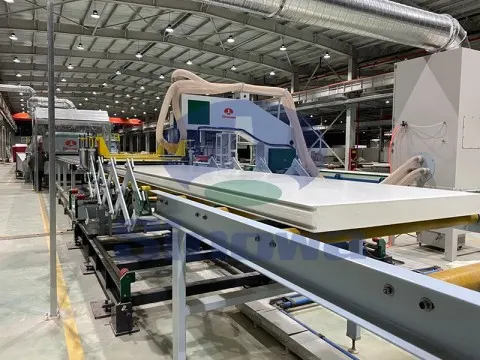
The double belt PU sandwich panel line is a fully automated continuous production system tailored for high-performance polyurethane sandwich panel manufacturing. It integrates multiple functional modules to complete panel forming, foaming, curing and shaping, delivering uniform, high-quality insulated building panels with stable operational efficiency.
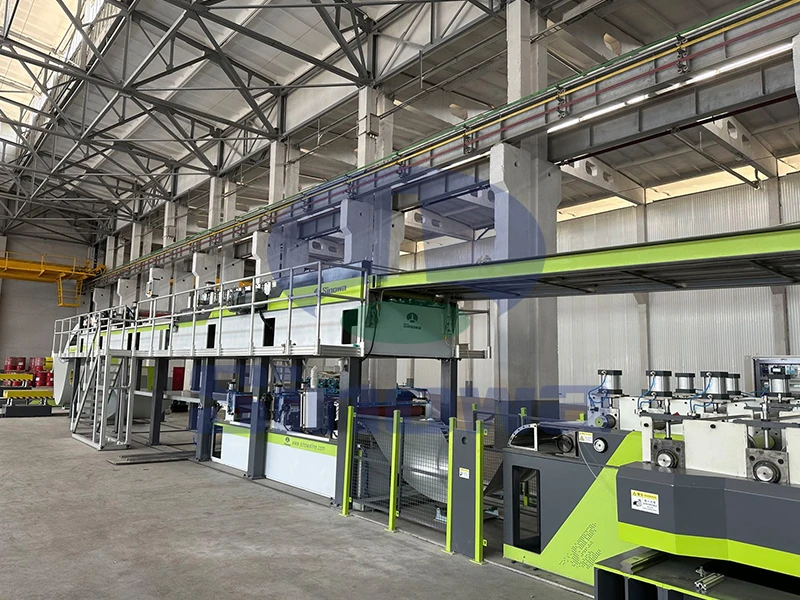
The core design concept of the double belt PU sandwich panel line lies in its continuous and synchronized double-belt transmission structure, which fundamentally optimizes the traditional intermittent production mode of sandwich panels. Unlike single-belt equipment that suffers from uneven pressure and unstable panel flatness, the upper and lower closed-loop conveyor belts of this line operate in precise synchronization throughout the entire production cycle. This symmetrical transmission structure maintains consistent tension and conveying speed on both sides of the raw materials, effectively avoiding offset, wrinkling or deformation of the surface materials during the foaming and bonding process. The belt structure is engineered with high wear resistance and temperature resistance, enabling long-term stable operation in variable thermal environments generated by PU foam chemical reactions. Each section of the belt travels at a matched pace to ensure the whole production process from raw material feeding to finished panel shaping proceeds in a seamless continuous flow, laying a solid foundation for standardized panel production.
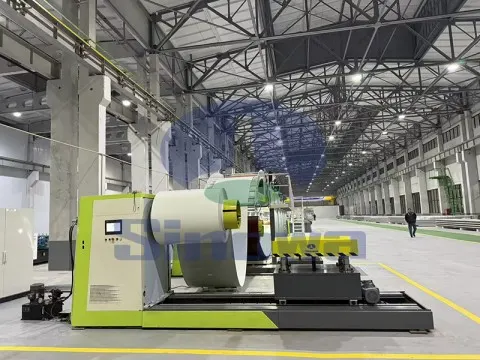
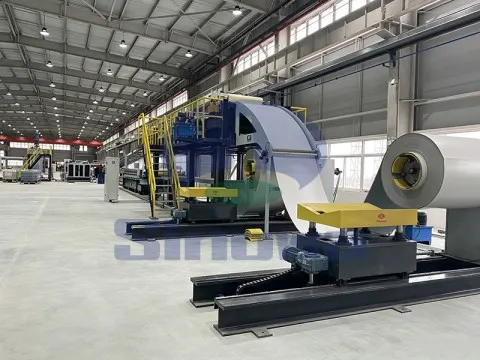
Raw material pretreatment and feeding serve as the initial and foundational stage of the entire production workflow of the double belt PU sandwich panel line. This stage mainly covers the unwinding, straightening and edge trimming of metal surface sheets, as well as the precise delivery of PU foam raw materials. The surface sheet unwinding unit releases coiled metal materials steadily, with automatic correction functions to guarantee the linear conveying of sheets and prevent lateral deviation in subsequent processes. After unwinding, the sheets pass through precision rolling components to achieve flat and tidy surface states, eliminating irregular bends and burrs that may affect bonding quality. Meanwhile, the PU dual-component liquid raw materials are transported through sealed pipelines to the mixing system, where preliminary constant-temperature treatment is conducted to stabilize the physical properties of the materials. This standardized pretreatment process ensures that both surface materials and core raw materials meet the optimal processing conditions, avoiding quality fluctuations caused by raw material state differences in the later foaming and composite forming stages.
The PU raw material mixing and pouring system acts as the core functional unit that determines the internal quality of sandwich panels in the whole production line. The system adopts high-precision proportional pumping and full stirring technology to process two different liquid PU raw materials, ensuring accurate ingredient matching and uniform mixing of the chemical components. Sufficient mixing in a closed environment prevents uneven component distribution, which could lead to inconsistent foaming density and poor thermal insulation performance of the panel core. After mixing, the liquid PU material is evenly poured onto the moving lower surface sheet through a multi-point distributed pouring head. The pouring range and flow rate are dynamically adjusted according to the panel width and production speed, realizing full coverage of the sheet surface without accumulation or missing areas. This precise pouring method enables the subsequent foam expansion process to form a uniform closed-cell structure, ensuring consistent thickness and compactness of the PU core layer across the entire panel surface.
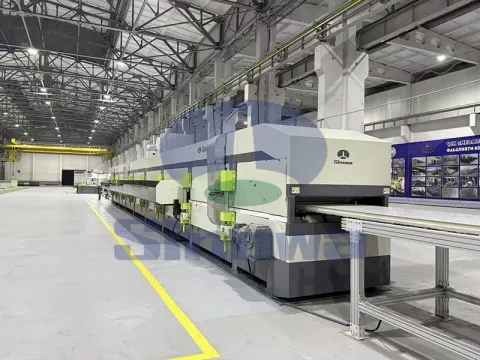
The double-belt pressing and curing module is the key section for panel composite forming and chemical stabilization, occupying the longest processing distance in the entire production line. After the PU liquid material is poured, the upper and lower surface sheets with the intermediate foam raw materials enter the closed double-belt pressing area. The adjustable gap between the two belts accurately controls the final thickness of the sandwich panel, maintaining stable pressure on the panel during the entire curing process. Equipped with an independent circulating heating system, the module provides a constant and uniform thermal environment for the PU foaming reaction. The steady temperature field promotes full chemical reaction and foaming expansion of the PU materials, allowing the foam core to completely fill the cavity between the two surface sheets and form a tight composite structure. In this process, the foam core achieves complete polymerization and cross-linking reaction, realizing firm chemical bonding with the metal surface layers and forming stable mechanical and thermal insulation properties.
Temperature control and pressure regulation technologies are crucial supporting factors for the stable operation of the double belt PU sandwich panel production line. The equipment adopts independent temperature zoning control in the curing section, which can fine-tune the heating temperature of different areas according to the real-time reaction state of PU foam. This zoning regulation avoids local overheating that causes foam cell damage or insufficient temperature leading to incomplete reaction, effectively optimizing the foaming uniformity of the core layer. Meanwhile, the double-belt pressure system realizes flexible pressure adjustment through mechanical transmission and hydraulic auxiliary structures. It can adapt to different panel thickness specifications and production speeds, maintaining balanced pressure on the panel surface without causing surface indentation or core layer compression deformation. The coordinated control of temperature and pressure ensures that each batch of panels maintains consistent structural density, bonding strength and overall flatness, greatly reducing the rate of defective products caused by parameter instability.
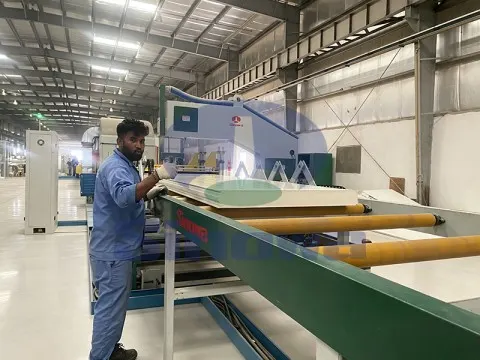
The post-curing cooling and shaping process further optimizes the structural stability and appearance quality of finished sandwich panels. After completing high-temperature curing and preliminary forming in the double-belt pressing area, the panels enter the natural cooling and heat dissipation conveyor section. The long-distance conveying platform allows the panels to move slowly at a constant speed, enabling gradual and uniform heat dissipation from the interior to the surface. This slow cooling mode effectively releases internal stress generated by the high-temperature foaming and curing reaction, preventing panel warping, bending or cracking during subsequent use. During the cooling process, the internal foam cell structure is further stabilized, and the bonding force between the PU core and surface sheets is further strengthened. The fully cooled panels present flat and smooth surfaces with stable overall dimensions, meeting the basic quality requirements for subsequent cutting, stacking and application.
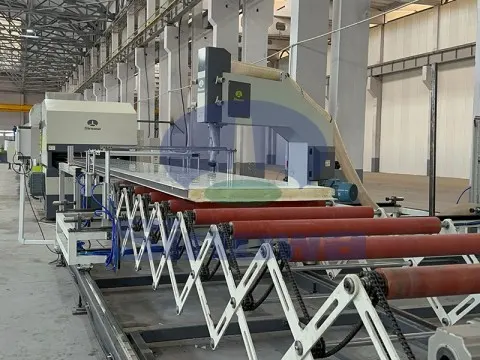
The automatic cutting and sizing system endows the production line with flexible product customization capabilities to meet diverse application demands. Equipped with a high-precision flying saw cutting device, the system can automatically identify and set cutting lengths according to different user requirements, realizing non-stop dynamic cutting during panel conveying. The cutting tool adopts high-hardness materials and precision transmission structures, ensuring neat and smooth cutting sections without burrs, cracks or core layer delamination. The entire cutting process is intelligently controlled, with real-time calibration of cutting accuracy to eliminate errors caused by mechanical vibration or conveying speed fluctuations. In addition, the system supports continuous cutting of panels with different length specifications in a single production run, realizing flexible switching of production parameters. This intelligent sizing function greatly improves production flexibility and enables the equipment to adapt to personalized production needs of various engineering projects.
Automatic stacking and discharging systems realize the final automated closed-loop operation of the entire production line. After cutting and quality preliminary screening, qualified panels are automatically transported to the stacking station through the conveyor system. The intelligent stacking device adopts stable mechanical clamping and lifting structures, which can neatly stack panels layer by layer according to set specifications, avoiding surface scratches, collision deformation or messy stacking. The stacking speed is automatically matched with the front-end production speed, realizing synchronous operation of production and collection without manual intervention. After stacking to the set height, the finished panel groups are automatically discharged from the production line, facilitating subsequent packaging, transportation and storage. This fully automatic post-processing mode greatly reduces manual operation links, improves production efficiency, and ensures the neat and uniform state of finished products.
The outstanding operational advantages of the double belt PU sandwich panel manufacturing line are reflected in its high automation, stable productivity and low operational consumption. The whole production process from raw material feeding, foaming composite forming to finished product cutting and stacking is automatically linked, with minimal manual operation required during normal production. The highly integrated control system unifies the parameters of each functional module, realizing synchronous coordination of all links and avoiding production stagnation caused by parameter mismatch. The continuous production mode effectively improves unit time output, while the precise parameter control system reduces raw material waste and defective product rate. In addition, the equipment is designed with optimized mechanical structures, reducing mechanical wear and energy consumption during long-term operation, achieving a balance between efficient production and cost control.
With its superior product quality and stable production performance, the double belt PU sandwich panel line supports the production of multi-scenario applicable PU sandwich panels. The finished panels produced by this line feature uniform internal structure, excellent overall flatness, strong bonding firmness and stable thermal insulation performance, which are widely suitable for building thermal insulation, cold storage enclosure, industrial workshop enclosure and other fields. The flexible parameter adjustment capability of the equipment enables it to produce panels with different thicknesses and structural specifications, meeting the diversified use requirements of different engineering environments. While ensuring product consistency and durability, the equipment’s efficient and continuous production mode also provides reliable production support for large-scale and standardized engineering construction projects.
Gallery of Double Belt PU Sandwich Panel Line
Tags: double belt pu sandwich panel line, double belt pu sandwich panel line manufacturer, double belt pu sandwich panel line supplier, china double belt pu sandwich panel line, double belt pu sandwich panel line for sale
https://www.sandwichpanelmanufacturingline.com/blog/double-belt-pu-sandwich-panel-line.html
-

A reliable PU sandwich panel production line serves as the core equipment for manufacturing high-performance building insulation panels. This professional PU sandwich panel line features automated feeding, foaming and molding processes to ensure consistent panel thickness and structural stability. The well-designed polyurethane sandwich panel production line effectively improves production efficiency while reducing material waste in daily operation. Each calibrated polyurethane sandwich panel line can adapt to different panel sizes to meet diverse construction needs. With precise temperature and pressure control, the advanced continuous PU sandwich panel line produces panels with excellent thermal insulation and weather resistance. Meanwhile, the optimized PIR sandwich panel production line upgrades the foaming formula to enhance fire resistance performance. The high-efficiency PIR sandwich panel line maintains stable operation during long-term mass production, delivering durable and high-quality sandwich panels for various architectural and industrial applications.
-

The phenolic panel production line realizes automated and continuous manufacturing of high-performance thermal insulation panels through streamlined and coordinated processing procedures.
-

Modern insulation panel manufacturing relies on professional automated equipment to ensure stable product quality and high production efficiency. The rock wool sandwich panel production line features precise material lamination and forming processes to produce rigid, heat-insulating building panels. Meanwhile, the mineral wool sandwich panel production line adopts optimized assembly procedures to fabricate lightweight, soundproof panels widely used in architectural enclosure and thermal preservation projects.