PU Sandwich Panel Production Line Price
Publication Date: Sep 28, 2026
PU sandwich panel production lines are core automated systems for manufacturing insulated composite building panels. Their overall value hinges on automation levels, structural configuration, functional precision, and production capacity, covering multiple key operational and structural dimensions.
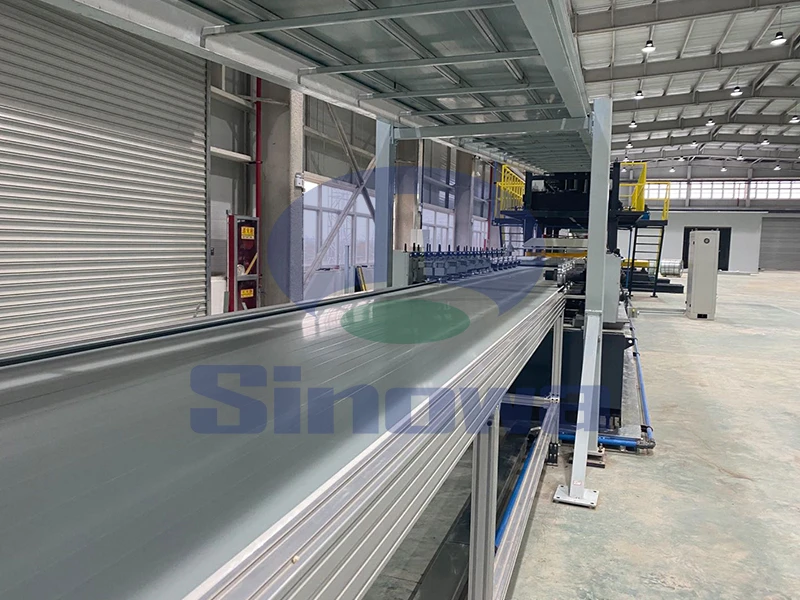
The core value foundation of a PU sandwich panel production line lies in its integrated structural design, which integrates multiple independent processing modules into a seamless continuous production system. This complete production configuration covers raw material unwinding, surface material forming, precise PU raw material mixing, in-situ foaming, composite lamination, constant-temperature curing, trimming and fixed-length cutting, forming a one-stop molding workflow. Each functional module is closely matched in operating speed and precision, avoiding production disconnection and quality instability caused by separate manual or semi-automatic equipment operation. The integrity of the equipment structure directly determines the overall operational stability and production efficiency of the line, serving as a basic factor affecting its comprehensive value. Lines with integrated and compact structural layouts reduce intermediate material handling links and equipment failure rates, bringing more stable long-term operation benefits for panel production.
Automation intelligence is a pivotal factor that differentiates the grade and comprehensive value of PU sandwich panel production lines. Modern production lines are equipped with intelligent central control systems that realize unified regulation of all production links, from raw material feeding ratio to foaming temperature, lamination pressure and cutting size. High-precision sensor components monitor real-time production data, automatically adjust operating parameters according to production demands, and correct subtle deviations in the production process. Compared with semi-automatic equipment that relies heavily on manual debugging and operation, fully automated lines greatly reduce human intervention, lower labor operation errors and production cost consumption. The degree of intelligent parameter control also directly affects the consistency of finished panel quality, effectively avoiding common defects such as uneven foaming, insufficient bonding and irregular plate size.
Production capacity and operational efficiency constitute key indicators influencing the comprehensive valuation of PU sandwich panel production lines. Different line configurations support distinct daily and hourly output levels of finished panels, adapting to small-batch customized production and large-scale mass production scenarios respectively. High-efficiency production lines feature optimized transmission structures and accelerated foaming and curing cycles under the premise of ensuring product quality, realizing uninterrupted continuous operation for a long time. The matching degree between equipment operating speed and process rhythm avoids idle equipment or material accumulation problems. In actual industrial production, high-capacity lines can significantly improve production turnover efficiency, shorten product delivery cycles, and create higher production benefits for manufacturers, which is fully reflected in the overall equipment configuration value.
The precision level of core foaming and mixing systems is an essential part of determining the performance and value of PU sandwich panel lines. The polyurethane foam core of sandwich panels relies on accurate proportioning and high-speed mixing of liquid chemical raw materials to form uniform and stable foam structures. High-quality production lines adopt precision metering and mixing devices to ensure stable raw material delivery ratios and uniform mixing effects, which guarantees the compactness and consistent thermal insulation performance of the foam core. Advanced mixing structures eliminate dead mixing zones, preventing local uneven foaming, hollow cores or insufficient curing of the panel core layer. The precision of this core process directly determines the yield rate of finished products and the long-term service performance of panels, making it a core embodiment of equipment technical value.
The lamination and curing system configuration greatly affects the molding quality and comprehensive value of PU sandwich panel manufacturing lines. After the PU raw materials are mixed and injected between upper and lower surface materials, the panels enter the double-belt lamination and curing stage, which is the key link for composite molding and foam curing. Excellent production lines are equipped with stable constant-temperature heating structures and uniform pressure lamination devices, which make the foam expand evenly and fully bond with the surface materials. The temperature and pressure control stability of the curing system ensures complete polymerization of polyurethane materials, forming a firm composite structure without delamination or cracking. Reasonable curing channel length and temperature gradient design adapt to different panel thickness and material types, improving the versatility of the production line and its overall application value.
Raw material adaptability and equipment versatility are important factors that affect the long-term use value of PU sandwich panel lines. High-quality production lines can adapt to various surface materials, including different types of metal sheets and conventional non-metal decorative plates, and support the production of panels with different thicknesses and specifications. The adjustable design of key modules such as feeding, foaming and lamination allows the equipment to switch production flexibly according to market product demands, without the need for large-scale equipment transformation or replacement. This strong versatility enables a single production line to meet diversified production needs of building insulation panels, greatly improving the utilization rate of the equipment. In contrast, single-function production lines with narrow material adaptability have limited application scenarios and lower long-term return on investment.
Operational stability and failure resistance directly determine the service life and comprehensive cost-performance of PU sandwich panel production lines. Professional production lines adopt high-strength mechanical structures and wear-resistant core components, which can adapt to long-term continuous industrial operation and reduce component wear and failure probability. Optimized mechanical transmission design reduces equipment vibration and operational noise during high-speed operation, ensuring stable production accuracy for a long time. Stable equipment operation can effectively reduce downtime loss, maintenance frequency and later maintenance cost consumption. Production lines with poor structural stability are prone to frequent failures, which not only affects production progress but also increases subsequent maintenance and replacement costs, resulting in lower overall comprehensive value in long-term use.
Energy consumption performance has become an increasingly important dimension for evaluating the comprehensive value of modern PU sandwich panel production lines. Traditional production lines usually have high energy consumption in heating, transmission and operation links, resulting in long-term high operating costs. New-generation optimized production lines adopt energy-saving heating systems and efficient transmission structures, which effectively reduce invalid energy consumption while ensuring production efficiency and product quality. Intelligent energy regulation systems can automatically adjust energy output according to real-time production load, avoiding energy waste during equipment idling and low-load operation. Low-energy-consumption equipment can continuously reduce the daily operating cost of production enterprises in the long-term production process, bringing more stable economic benefits and improving the overall cost-performance of the production line.
After-sales service support and technical upgrade space indirectly affect the overall value and use cycle of PU sandwich panel production lines. Complete supporting service systems including equipment installation and commissioning, operational technical guidance, regular maintenance guidance and fault troubleshooting can ensure the stable operation of the equipment in the whole life cycle. In addition, excellent production line designs reserve technical upgrade interfaces, which can adapt to subsequent production process optimization and functional expansion, avoiding equipment elimination caused by technological iteration. Production lines without perfect after-sales support often face problems such as difficult fault solving and blocked technical upgrades, which shorten the effective service life of the equipment and reduce the overall return on investment.
Overall configuration matching and customized functional requirements are the final factors that shape the comprehensive value of PU sandwich panel production lines. Standardized basic configuration meets conventional panel production needs, while customized functional modules such as high-precision trimming, automatic stacking, intelligent quality detection and special material adaptation can further improve production automation and product refinement. Manufacturers can select reasonable equipment configurations according to their own production scale, product positioning and market demand. Reasonable configuration matching can balance production efficiency, product quality and equipment input cost, realizing the optimal cost-performance ratio. The comprehensive value of the production line is ultimately reflected in stable production capacity, high-quality product output and sustainable economic benefits brought to production enterprises.
Gallery of PU Sandwich Panel Production Line






Tags: pu sandwich panel production line, pu sandwich panel production line manufacturer, pu sandwich panel production line supplier, china pu sandwich panel production line, pu sandwich panel production line for sale
https://www.sandwichpanelmanufacturingline.com/blog/pu-sandwich-panel-production-line-price.html
-

A reliable PU sandwich panel production line serves as the core equipment for manufacturing high-performance building insulation panels. This professional PU sandwich panel line features automated feeding, foaming and molding processes to ensure consistent panel thickness and structural stability. The well-designed polyurethane sandwich panel production line effectively improves production efficiency while reducing material waste in daily operation. Each calibrated polyurethane sandwich panel line can adapt to different panel sizes to meet diverse construction needs. With precise temperature and pressure control, the advanced continuous PU sandwich panel line produces panels with excellent thermal insulation and weather resistance. Meanwhile, the optimized PIR sandwich panel production line upgrades the foaming formula to enhance fire resistance performance. The high-efficiency PIR sandwich panel line maintains stable operation during long-term mass production, delivering durable and high-quality sandwich panels for various architectural and industrial applications.
-

The phenolic panel production line realizes automated and continuous manufacturing of high-performance thermal insulation panels through streamlined and coordinated processing procedures.
-

Modern insulation panel manufacturing relies on professional automated equipment to ensure stable product quality and high production efficiency. The rock wool sandwich panel production line features precise material lamination and forming processes to produce rigid, heat-insulating building panels. Meanwhile, the mineral wool sandwich panel production line adopts optimized assembly procedures to fabricate lightweight, soundproof panels widely used in architectural enclosure and thermal preservation projects.