How To Reduce Material Waste Of The Fully Automatic PU Sandwich Panel Production Line?
Publication Date: Oct 8, 2026
Fully automatic PU sandwich panel production lines often generate substantial material waste from inaccurate feeding, cutting errors and residual raw materials.
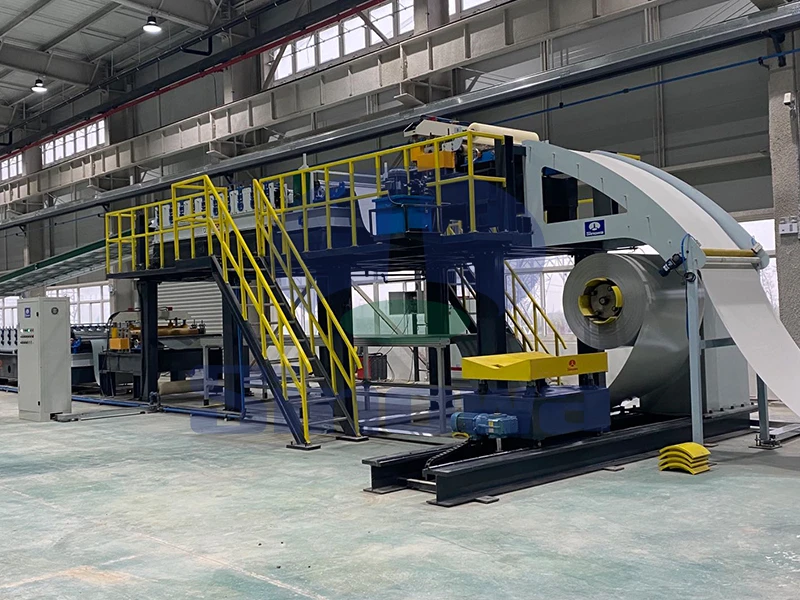
Precise raw material metering and mixing control serves as the foundational measure to cut material waste in fully automatic PU sandwich panel production. Most waste in PU foam production stems from disproportionate mixing of polyol and isocyanate, as well as excessive material output that exceeds actual molding demands. Modern automatic sandwich panel production lines can be optimized by upgrading intelligent metering systems that adjust raw material input in real time according to panel specifications, thickness and production speed. This dynamic adjustment eliminates the fixed-quantity feeding flaw of traditional equipment, which frequently causes surplus foam materials. Additionally, fine-tuning mixing parameters such as temperature and stirring speed ensures full chemical reaction of PU raw materials, avoiding unreacted residual materials that are discarded due to poor forming quality. Stable and accurate metering not only reduces raw material overconsumption but also lowers the rate of defective semi-finished products from uneven foaming, realizing primary waste control at the source of production.
Optimization of synchronous production process coordination effectively reduces intermittent waste and material scrapping in continuous production. Many automatic sandwich panel manufacturing lines produce unnecessary waste due to mismatched operating speeds among feeding, foaming, laminating and forming procedures. When individual process segments operate asynchronously, accumulated semi-finished products or untimely material supply often lead to extrusion deformation, surface damage or incomplete foaming of panels, which have to be scrapped. By integrating a unified linkage control system, all production procedures can maintain consistent operating rhythm and speed. The synchronized operation ensures that PU foam spraying, surface material laying and pressure forming proceed in a coordinated manner, eliminating material waste caused by process stagnation or speed deviation. Moreover, continuous and stable process operation reduces frequent equipment start-stop times, which usually generate a large amount of invalid residual materials during machine debugging and restarting, further improving continuous material utilization efficiency.
Intelligent precision cutting technology is crucial for minimizing edge trimming and sizing waste in finished panels. Traditional cutting processes rely on fixed parameter settings, resulting in large edge allowances to avoid dimensional errors, which produces massive leftover materials during trimming. Upgrading the production line with automatic laser positioning and adaptive cutting systems can achieve high-precision sizing according to customized panel dimensions. The intelligent system automatically calculates the optimal cutting layout for raw materials, maximizing the utilization rate of each batch of base materials and reducing redundant edge materials. Meanwhile, real-time detection of panel flatness and dimensional deviation allows the system to fine-tune cutting trajectories instantly, preventing batch waste caused by systematic cutting errors. This precise cutting mode greatly reduces the volume of leftover fragments and defective panels generated in the final sizing stage, turning marginal material waste into effective usable products.
Equipping production lines with professional waste recycling systems realizes secondary utilization of residual materials and reduces overall resource loss. A large amount of recyclable waste is inevitably produced during production, including trimmed PU foam edges, unformed residual foam and slightly defective panel fragments. Installing centralized collection devices at cutting, forming and cleaning positions can automatically gather these waste materials without manual leakage. The collected PU foam waste can be crushed and reprocessed into auxiliary filling materials after professional treatment, which can be applied to low-load thermal insulation and filling scenarios in subsequent production. Meanwhile, residual surface materials from trimming can be sorted and reused for small-sized panel processing. This closed-loop recycling mode converts originally discarded waste into usable production resources, greatly lowering the overall raw material consumption per production batch.
Regular equipment maintenance and parameter calibration avoid hidden material waste caused by equipment aging and parameter deviation. Long-term continuous operation of fully automatic PU sandwich panel production lines leads to gradual wear of spraying nozzles, metering pumps and transmission components, which easily cause unstable material output, uneven foam spraying and inaccurate material proportioning. These subtle equipment failures often do not trigger alarm systems but continuously produce unqualified products and residual materials, forming long-term hidden waste. Formulating a regular maintenance plan to clean blocked spraying components, replace worn parts and calibrate metering accuracy can ensure stable equipment operation status. Regular parameter calibration corrects drifting production data, guarantees consistent material output and reaction effect in each production cycle, and eliminates incremental waste caused by equipment performance degradation, maintaining long-term efficient material utilization of the production line.
Real-time production data monitoring and abnormal early warning mechanisms help intercept material waste risks in advance. Traditional production modes rely on manual inspection, which often fails to detect minor abnormal fluctuations in material consumption, foaming effect and process parameters in a timely manner, leading to expanded waste volume. Building a full-process data monitoring system can track key indicators such as real-time raw material consumption, foaming density and panel yield throughout production. The system automatically identifies abnormal data deviations, such as sudden increases in single-panel material consumption or continuous emergence of defective products, and sends early warnings. Operators can quickly locate fault points and adjust process parameters or check equipment status before large-scale waste occurs. This proactive monitoring mode replaces passive waste disposal, effectively controlling abnormal material loss and reducing defective product rates in the production process.
Optimization of raw material storage and pre-processing procedures reduces invalid waste caused by material deterioration and improper handling. PU raw materials are sensitive to temperature, humidity and storage time, and improper storage can easily cause raw material deterioration, failure to react normally, or reduced foaming performance, resulting in discarded invalid materials. Standardizing raw material storage environments to maintain constant temperature and dryness avoids material deterioration caused by extreme environmental changes. Implementing first-in-first-out material management prevents long-term stockpiling of raw materials. In addition, adding automatic preheating and filtering procedures before raw material feeding can remove impurities and inconsistent components in raw materials, ensuring stable reaction quality. Effective pre-processing and storage management reduce waste from deteriorated and impure raw materials, stabilizing the qualified rate of subsequent production.
Reasonable production scheduling and batch optimization avoid overproduction and model-switching material waste. Frequent switching of panel specifications and disorderly production scheduling are important causes of material waste in automatic lines. Each specification switch requires equipment cleaning, parameter resetting and material debugging, producing a large amount of transitional residual materials and trial-produced defective products. By optimizing production scheduling, similar panel specifications can be arranged for centralized batch production to reduce frequent model switching. Reasonably matching production batch size with order demand also avoids overproduction, which leads to finished product backlog and eventual scrapping due to long-term storage. Scientific scheduling minimizes transitional waste caused by production adjustment, making material consumption precisely match actual production demand and improving overall material utilization efficiency.
Professional operator skill training and standardized operation management reduce human-induced material waste. Despite high automation of the production line, improper manual operation still causes unnecessary waste, including unreasonable parameter setting, irregular equipment operation and untimely handling of minor production abnormalities. Systematic professional training for operators can improve their proficiency in equipment operation, parameter adjustment and abnormal problem judgment. Formulating unified standardized operation procedures clarifies operational norms for each production link, from raw material feeding to finished product collection. Standardized operation avoids random parameter modification and misoperation, ensures each production link proceeds in accordance with optimal material consumption standards, and eliminates human errors that lead to defective products and material waste, forming a human factor guarantee for waste reduction.
Continuous technological iteration and process optimization sustainably improve material utilization levels in long-term production. Material waste reduction is not a one-time reform but a long-term iterative optimization process. Manufacturers can regularly summarize waste data in the production process, analyze key waste links and targeted optimize production processes and equipment functions. Introducing upgraded automatic control algorithms can further improve the accuracy of material feeding and process matching. Optimizing foam formula properly can enhance material reaction efficiency and reduce unit raw material consumption while ensuring product performance. Continuous technological and process improvement enables the continuous PU sandwich panel production line to adapt to changing production demands, gradually reduce marginal waste, and achieve long-term stable improvement of material utilization and green production efficiency.
Tags: fully automatic pu sandwich panel production line, fully automatic pu sandwich panel production line manufacturer, fully automatic pu sandwich panel production line supplier, china fully automatic pu sandwich panel production line, fully automatic pu sandwich panel production line for sale
-
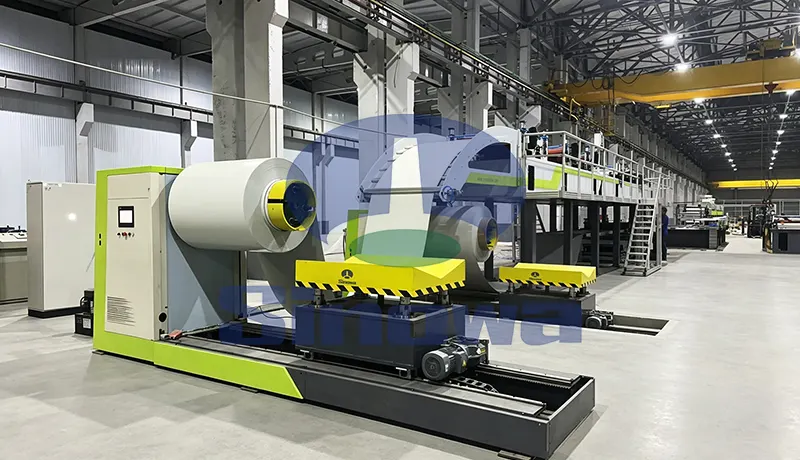
A reliable PU sandwich panel production line serves as the core equipment for manufacturing high-performance building insulation panels. This professional PU sandwich panel line features automated feeding, foaming and molding processes to ensure consistent panel thickness and structural stability. The well-designed polyurethane sandwich panel production line effectively improves production efficiency while reducing material waste in daily operation. Each calibrated polyurethane sandwich panel line can adapt to different panel sizes to meet diverse construction needs. With precise temperature and pressure control, the advanced continuous PU sandwich panel line produces panels with excellent thermal insulation and weather resistance. Meanwhile, the optimized PIR sandwich panel production line upgrades the foaming formula to enhance fire resistance performance. The high-efficiency PIR sandwich panel line maintains stable operation during long-term mass production, delivering durable and high-quality sandwich panels for various architectural and industrial applications.
-
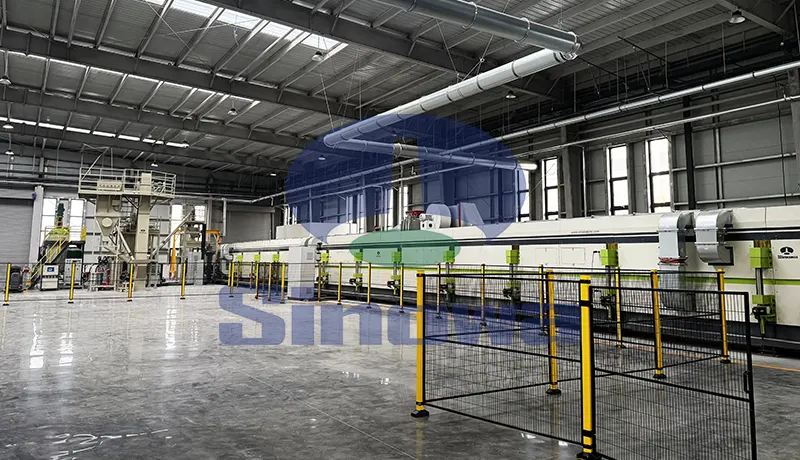
The phenolic panel production line realizes automated and continuous manufacturing of high-performance thermal insulation panels through streamlined and coordinated processing procedures.
-
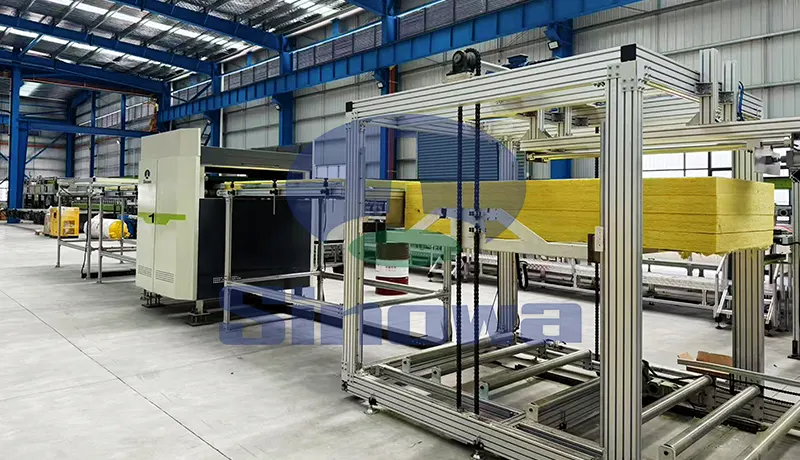
Modern insulation panel manufacturing relies on professional automated equipment to ensure stable product quality and high production efficiency. The rock wool sandwich panel production line features precise material lamination and forming processes to produce rigid, heat-insulating building panels. Meanwhile, the mineral wool sandwich panel production line adopts optimized assembly procedures to fabricate lightweight, soundproof panels widely used in architectural enclosure and thermal preservation projects.