How To Solve The Problem Of Panel Edge Cracking In The Fully Automatic PU Sandwich Panel Production Line?
Publication Date: Oct 12, 2026
Panel edge cracking is a common quality defect in fully automatic PU sandwich panel production, severely undermining panel durability and appearance.
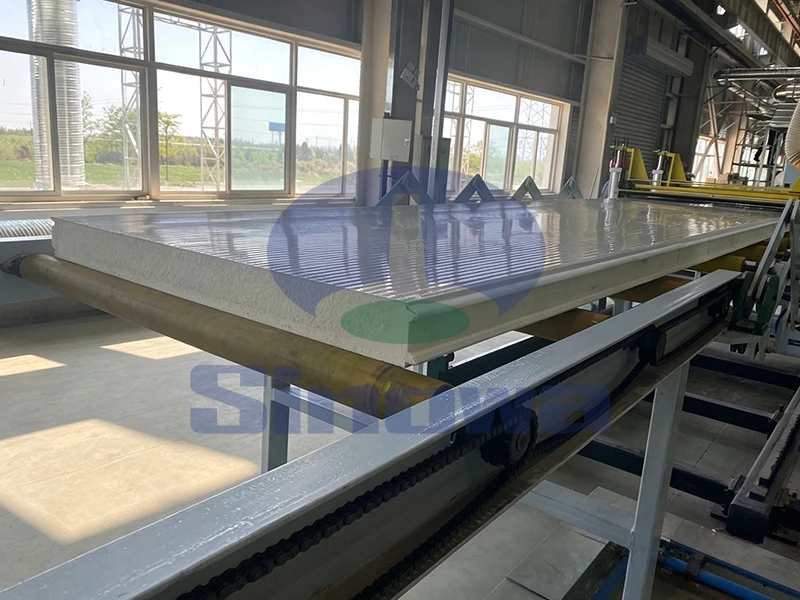
Edge cracking of PU sandwich panels in fully automatic production lines mostly stems from unreasonable foam reaction and filling states at panel edges during continuous molding. In the automatic foaming stage, the PU raw material mixing ratio deviation will directly change the foam curing speed and structural compactness at the edges. If the isocyanate and polyether components are not proportionally matched, the edge foam will have uneven cell structures, with excessive tiny gaps and insufficient density. Such loose edge structures cannot bear slight external stress in subsequent molding and cooling processes, resulting in fine cracks that gradually expand. Meanwhile, unstable foaming temperature in the fully automatic production environment will disrupt the normal chemical reaction of PU materials. Too low temperature slows down the curing reaction of edge foam, leading to incomplete molding, while excessively high temperature causes rapid surface curing and internal residual reaction stress, both of which induce edge cracking defects in mass continuous production.
Unreasonable setting of edge pressing and guiding equipment parameters is another key factor triggering panel edge cracking in fully automatic production lines. The continuous production mode relies on synchronous operation of guide rails and pressing belts to fix panel dimensions and shape edges. When the gap of side guide devices is improperly adjusted, the edge of the panel will be squeezed unevenly during transmission. Excessively narrow gaps cause rigid extrusion on the edge foam and surface plate, producing forced deformation and micro cracks; overly wide gaps lead to insufficient edge compaction, loose foam filling and weak structural integrity. In addition, inconsistent operating speed between the pressing system and foaming system in automatic lines will cause periodic stress on panel edges. The asynchronous operation makes the edge foam bear intermittent stretching and extrusion force before complete curing, destroying the integrated structure and forming continuous edge cracks on finished panels.
Raw material quality inconsistency and improper pretreatment are easy overlooked causes of panel edge cracking in automated production. The surface state of the metal base plate directly affects the bonding tightness between the plate and PU foam at the edge. Residual oil stains, dust and oxide layers on the edge area of the base plate will reduce surface adhesion, resulting in poor combination between the plate body and foam. In the subsequent cooling and shaping process, the edge interface is prone to separation and cracking due to inconsistent shrinkage stress. Moreover, poor stability of PU auxiliary materials including surfactants and blowing agents will damage the closed-cell rate of edge foam. Insufficient surfactant dosage leads to uneven foam distribution at edges, while abnormal blowing agent volatilization causes local foam shrinkage and hollow structures, which gradually evolve into visible edge cracks after panel molding and placement.
Unbalanced temperature control in the curing and shaping stage greatly aggravates panel edge cracking in fully automatic production lines. After continuous foaming and pressing, PU sandwich panels need a stable curing environment to complete internal reaction and stress release. In automated production, the edge area of the panel is more exposed to ambient air compared with the middle area, leading to faster heat loss and inconsistent internal and external curing speeds. If the curing oven temperature is not uniformly distributed, the edge foam will cure incompletely with residual internal stress. When the panel is transported out of the constant-temperature curing area for natural cooling, the uneven shrinkage between the edge and the middle part will generate tensile stress beyond the foam’s bearing capacity, resulting in edge cracking. In addition, excessive curing time or overheating treatment will cause aging and brittleness of edge foam structure, reducing its toughness and making it prone to crack under minor external force.
Improper cutting and post-processing operations in automatic production lines are important inducements for panel edge cracking. The fixed-length cutting process of fully automatic equipment requires high precision of cutting tools and positioning systems. Long-term operation will cause wear and passivation of cutting blades, leading to uneven cutting force on panel edges during blanking. The uneven shear force will produce micro cracks at the cutting edge, which are not obvious in the short term but will expand gradually with storage and transportation. Meanwhile, inaccurate positioning of the automatic cutting system will cause oblique cutting and force torsion on the panel edge, destroying the original stable structure of the edge foam. In addition, rapid cooling or forced air cooling immediately after cutting will cause sharp temperature difference at the edge, triggering rapid shrinkage of local materials and inducing edge cracking defects.
To solve material-induced edge cracking problems, standardized raw material management and pretreatment processes must be established for automatic production lines. First, strict raw material inspection should be implemented to ensure stable component ratio and good activity of PU raw materials, and auxiliary materials should be matched according to continuous production characteristics to improve edge foam compactness and closed-cell rate. Regular cleaning and maintenance of base plate pretreatment equipment are required to completely remove oil, dust and oxide on the plate edge, improving the bonding performance between the plate and foam. In addition, raw material storage and use temperature should be controlled stably to avoid performance attenuation of PU materials caused by extreme temperature, ensuring consistent reaction effect of foam at each panel edge in continuous production and eliminating structural defects from the source.
Optimizing equipment parameter calibration and synchronous operation can effectively solve edge cracking caused by mechanical stress in automatic production. Regular calibration of side guide rails and pressing belt gaps is essential to ensure uniform and moderate compaction force on panel edges, avoiding structural damage caused by excessive extrusion or insufficient compaction. It is necessary to unify the operating speed of foaming, pressing and transmission systems to realize synchronous operation of each production link, eliminate intermittent stress on uncured edge foam, and maintain the integrity of edge structure. Meanwhile, daily inspection of equipment operation status should be strengthened to timely correct minor deviation of roller alignment and transmission deviation, prevent long-term cumulative mechanical errors from causing batch edge cracking of panels in continuous production.
Precise temperature and curing process optimization is crucial to reduce panel edge cracking in fully automatic production. The production line should adopt uniform temperature control mode for the curing area to reduce the temperature difference between panel edge and middle part, ensuring synchronous curing of internal and external foam structures. Reasonable adjustment of curing time and temperature parameters is needed to ensure complete reaction of edge foam and thorough release of internal stress, avoiding residual stress caused by incomplete curing and structural brittleness caused by over-curing. After the panel exits the curing oven, a slow cooling buffer link can be added to reduce the temperature difference between the panel and the ambient environment, make the edge foam shrink uniformly, and prevent cracking caused by unbalanced temperature stress.
Standardizing cutting and post-production processing procedures can effectively avoid edge cracking in the final production stage. Regular maintenance and replacement of cutting blades are required to ensure sharp cutting tools and uniform cutting force, reducing micro cracks at panel edges caused by rough cutting. The automatic positioning and cutting system should be calibrated regularly to guarantee flat and vertical cutting sections and eliminate torsion stress on edge structures. It is forbidden to adopt rapid forced cooling immediately after cutting; instead, natural cooling or gradient cooling should be used to stabilize the edge structure. Meanwhile, finished panels should be stacked flat in a dry and constant-temperature environment to avoid local extrusion and temperature humidity changes from inducing secondary edge cracking.
Long-term stable control of panel edge quality requires the establishment of a full-process monitoring and maintenance mechanism for fully automatic PU sandwich panel production lines. Real-time monitoring of raw material reaction state, equipment operation parameters, temperature changes and processing effects should be realized through the automatic production control system to timely discover and adjust abnormal factors causing edge cracking. Regular professional maintenance and debugging of production equipment should be arranged to eliminate potential mechanical failures and parameter deviations. In addition, production operators should receive professional training to master standardized operation specifications and defect judgment methods, ensuring that every production link is accurately controlled, so as to fundamentally solve the problem of panel edge cracking and improve the overall yield of finished panels.
Tags: fully automatic pu sandwich panel production line, fully automatic pu sandwich panel production line manufacturer, fully automatic pu sandwich panel production line supplier, china fully automatic pu sandwich panel production line, fully automatic pu sandwich panel production line for sale
-
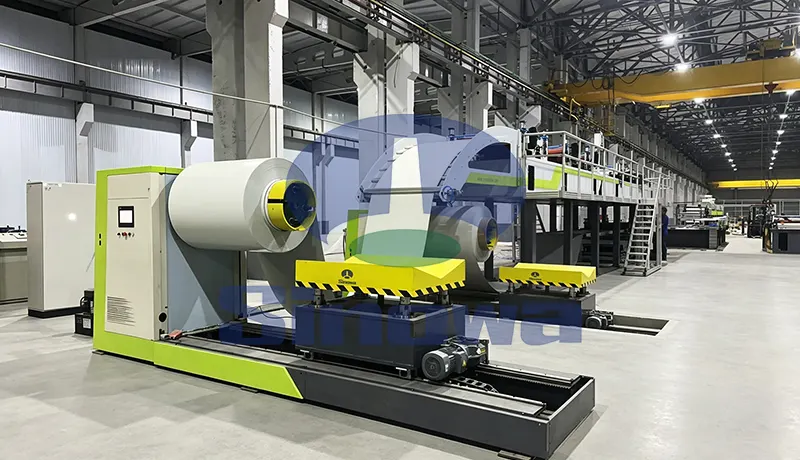
A reliable PU sandwich panel production line serves as the core equipment for manufacturing high-performance building insulation panels. This professional PU sandwich panel line features automated feeding, foaming and molding processes to ensure consistent panel thickness and structural stability. The well-designed polyurethane sandwich panel production line effectively improves production efficiency while reducing material waste in daily operation. Each calibrated polyurethane sandwich panel line can adapt to different panel sizes to meet diverse construction needs. With precise temperature and pressure control, the advanced continuous PU sandwich panel line produces panels with excellent thermal insulation and weather resistance. Meanwhile, the optimized PIR sandwich panel production line upgrades the foaming formula to enhance fire resistance performance. The high-efficiency PIR sandwich panel line maintains stable operation during long-term mass production, delivering durable and high-quality sandwich panels for various architectural and industrial applications.
-
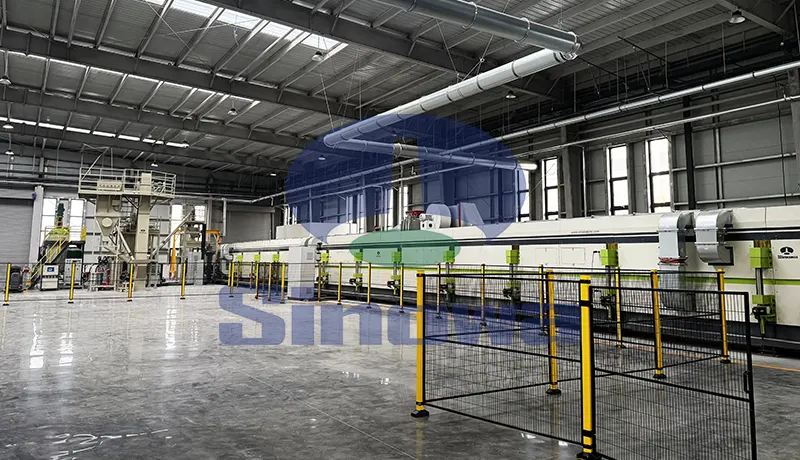
The phenolic panel production line realizes automated and continuous manufacturing of high-performance thermal insulation panels through streamlined and coordinated processing procedures.
-
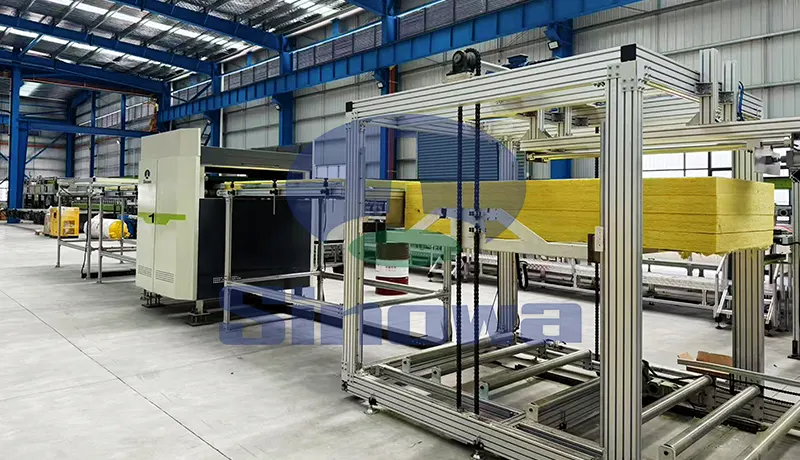
Modern insulation panel manufacturing relies on professional automated equipment to ensure stable product quality and high production efficiency. The rock wool sandwich panel production line features precise material lamination and forming processes to produce rigid, heat-insulating building panels. Meanwhile, the mineral wool sandwich panel production line adopts optimized assembly procedures to fabricate lightweight, soundproof panels widely used in architectural enclosure and thermal preservation projects.