How To Improve The Production Efficiency Of The Continuous PU Sandwich Panel Production Line?
Publication Date: Oct 26, 2026
Learn practical ways to boost production efficiency for continuous PU sandwich panel lines. Optimize raw material feeding, PU foaming mixing, curing temperature control, cutting workflows and preventive maintenance. Reduce unplanned downtime, cut defects and material waste, stabilize line speed and streamline on-site logistics for higher qualified output.
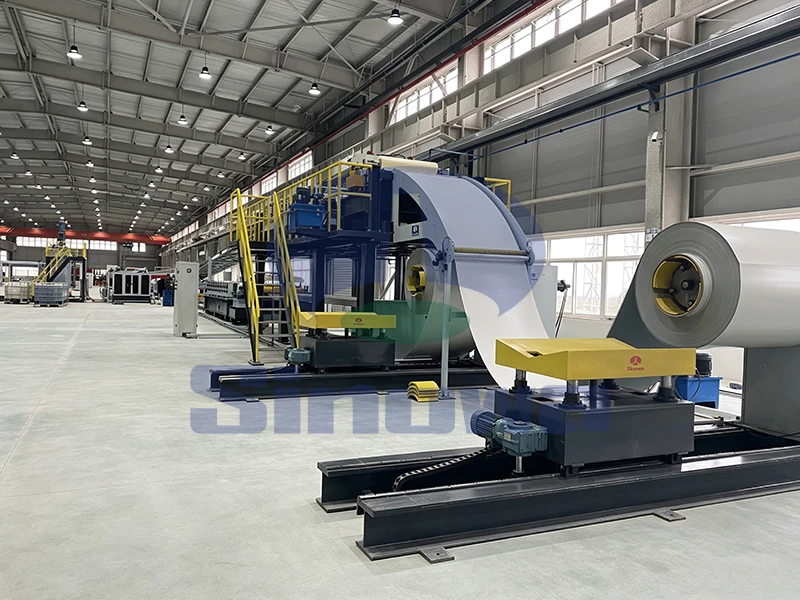
Optimising the operational rhythm of a continuous PU sandwich panel production line starts with a thorough review of material feeding and pre-treatment workflows, as unstable raw material supply is one of the most common hidden barriers to steady output. Many production lines suffer from intermittent pauses caused by inconsistent delivery speeds of surface facing materials, uneven preheating of polyol and isocyanate components, or minor blockages inside material transfer pipelines that operators only notice after a full stop occurs. To address these issues, production teams need to establish a stable feeding sequence that matches the linear speed of the forming machine, ensuring that roll materials, foaming chemical components and auxiliary additives arrive at the mixing station at a synchronised pace without premature accumulation or delayed supply. Preheating systems should be adjusted to maintain a narrow, consistent temperature window for the two main foaming raw materials, because even small temperature fluctuations can alter the reaction rate of the PU foam, leading to uneven foam density, poor bonding between foam core and surface facings, and batches of semi-finished products that require rework. Operators should also carry out regular visual checks of filter screens and delivery hoses during non-stop inspection windows, clearing residual cured PU material before it builds up and restricts flow. These routine checks do not require long shutdown periods, and they reduce unplanned downtime significantly over long production runs. It is equally important to standardise the preparation work before each production shift, so that raw material tanks are topped up, roll materials are correctly aligned and spliced, and auxiliary dosing systems are calibrated before the line starts running. When preparation work is rushed, the line often begins production under suboptimal conditions, generating defective products in the early stage of each shift and wasting raw materials and machine operating time. By embedding systematic feeding preparation and real-time flow monitoring into daily operations, the line can maintain a smooth and continuous running state, cutting down the frequency of sudden stops and laying a solid foundation for higher overall production efficiency. Every small delay avoided in the feeding stage accumulates into measurable gains in total output, while also lowering the consumption of raw materials wasted on defective panels.
Fine-tuning the high-pressure foaming mixing unit is another core approach to lifting the productivity of the continuous PU sandwich panel line, because the mixing quality directly determines the stability of the foaming reaction and the final product quality. When mixing pressure, mixing ratio and spray distribution are not properly adjusted, the PU mixture may foam too fast or too slowly, creating voids, cracks or soft spots inside the foam core. These defects force workers to slow down the line or discard finished panels, which directly drags down effective production capacity. Technicians need to conduct repeated trial adjustments under stable ambient conditions to lock in a suitable mixing ratio for the current formula, and avoid arbitrary changes to parameter settings unless raw material characteristics change noticeably. The mixing head requires scheduled cleaning and maintenance, as leftover cured PU residue can disrupt the internal flow path and distort the spray pattern onto the moving surface facings. Cleaning cycles can be planned to coincide with scheduled short breaks instead of triggering unexpected shutdowns in the middle of large production batches. The spray width and spray uniformity also need to match the width of the sandwich panel; uneven spraying will create areas with excessive foam or insufficient foam, and subsequent trimming processes will generate more waste. Operators should observe the foaming state right after the mixture leaves the mixing head, watching the expansion speed and fluidity of the foam, and make tiny parameter corrections promptly rather than waiting until defective panels come out of the curing zone. Training for frontline staff should focus on helping them recognise early signs of abnormal foaming, so they can respond quickly without waiting for senior technicians. When the foaming process stays stable, the line can run at a sustainable higher speed without sacrificing quality. Stable foaming also reduces the workload for the quality inspection team at the back end, since fewer panels need to be singled out for re-evaluation. Over time, precise control of the mixing and foaming stage reduces material loss and increases the proportion of qualified products coming off the line, which is a true improvement in effective production efficiency rather than just a superficial increase in line speed.
Controlling the temperature and curing environment along the continuous forming and curing tunnel plays an indispensable role in streamlining the production cycle of PU sandwich panels. After the liquid PU mixture is applied between the upper and lower surface facings, the foam goes through expansion, gelation and full curing inside the tunnel, and the speed of this chemical process is highly sensitive to ambient temperature, air circulation and heat distribution. If the temperature inside the tunnel is too low, the foam cannot cure completely within the set residence time; semi-cured panels will deform easily when cut or stacked, and many of them will be rejected in final inspection. If local temperature zones are overheated, the foam structure may become brittle, and the bonding layer between foam and facings can weaken. Many production lines have uneven heat distribution across the width of the tunnel, with hot spots near heating elements and cooler areas along the edges, which creates inconsistent curing results across a single panel. Production teams can rearrange internal air circulation equipment to promote balanced heat flow, so that every part of the moving panel receives the same level of thermal input as it travels through the tunnel. The residence time inside the tunnel must match the line running speed and curing conditions. When the line speed is raised, the tunnel temperature profile needs to be rebalanced accordingly, instead of simply increasing the temperature of a single zone. Operators should track the curing effect of panels exiting the tunnel regularly, checking hardness, dimensional stability and bonding strength, and adjust the heating profile gradually based on collected feedback. Good curing control removes the need to set aside extra storage space for secondary natural curing, which saves factory floor space and eliminates an extra handling step. Panels that are fully cured as they leave the tunnel can go straight to cutting and stacking, shortening the total manufacturing lead time. This reduces the time products stay in the production system, speeds up inventory turnover and allows the line to handle more production orders within the same daily operating window. Stable curing conditions also reduce the risk of hidden defects that only appear days after production, lowering after-production complaints and reprocessing work.
Optimising the continuous cutting, trimming and conveying section can eliminate bottlenecks that often appear at the rear part of the PU sandwich panel line, even when the foaming and curing sections run smoothly. As continuous long panels exit the curing tunnel, they move to sawing and trimming stations that cut the continuous slab into finished panels of specified lengths and trim uneven edge portions. If cutting equipment cannot keep pace with the incoming line speed, panels will pile up before the cutting station, forcing the upstream foaming section to slow down temporarily. This kind of downstream bottleneck limits the overall throughput of the whole line, even though the front sections have the potential to run faster. To resolve this, the mechanical response speed of cutting tools, positioning sensors and drive systems should be inspected and maintained regularly. Blunt cutting blades create rough edges, increase cutting resistance and require more power to operate; dull blades also increase the chance of panel shifting during cutting, leading to inaccurate length dimensions. Scheduled blade replacement and sharpening routines help maintain clean, fast cuts and reduce the frequency of dimensional defects. The positioning system that triggers each cut needs precise calibration, so that each finished panel meets length requirements without repeated test cuts that waste material. The scrap collection system for trimmed edge waste should run continuously alongside the cutting station, preventing trimmed foam and facing scraps from accumulating around the machinery and interfering with conveyor movement. Conveyor rollers and guiding plates must be aligned properly to keep panels moving straight without sideways deviation, because misalignment can cause jams at the cutting entrance. Operators should arrange the cutting sequence reasonably according to order requirements, grouping orders with similar panel lengths together as much as possible. Frequent switching between drastically different panel lengths requires repeated recalibration of the cutting controller, which consumes valuable production time. Batch arrangement reduces parameter adjustment frequency and improves the utilisation rate of cutting equipment. When the cutting and conveying section can match the speed of upstream production, the whole line maintains a consistent running rhythm, and production efficiency rises without sacrificing cutting accuracy or finished panel quality.
Digital monitoring and real-time data collection systems offer powerful support for identifying efficiency losses on the continuous PU sandwich panel line, as manual observation can easily miss subtle, cumulative problems. A basic monitoring setup tracks key operating parameters including line speed, raw material flow rates, mixing pressure, zone temperatures inside the curing tunnel, equipment running status and the number of defective products recorded each hour. These data streams can show patterns that human operators cannot easily spot, such as a slow downward trend in raw material flow over several hours caused by gradual pipe fouling, or temperature drift in one curing zone that only appears after the machine has warmed up fully. Instead of reacting only when obvious breakdowns happen, production managers can use historical data to predict when maintenance will be needed. For example, data may reveal that the mixing head tends to develop performance issues after a fixed number of operating hours, so maintenance can be scheduled during planned downtime rather than waiting for an unplanned failure that halts production in the middle of an order. Data can also quantify the source of defective products, showing whether most defects come from unstable mixing, poor curing, surface facing misalignment or cutting errors. Once the main source of waste is identified, improvement efforts can be targeted instead of spreading resources thinly across all stations. Frontline operators can view simplified real-time dashboards showing whether the line is running within the optimal parameter range, and receive gentle alerts when values drift outside the acceptable window. This helps them make small corrections early before defects multiply. It is important to note that data systems work best when paired with clear operational standards, not as a replacement for skilled operators. The data provides objective evidence of efficiency loss, while experienced staff interpret the information and carry out practical adjustments. Over weeks and months, accumulated production data creates a reference baseline for efficiency, making it easy to evaluate whether adjustment measures have brought real improvements and guiding continuous optimisation across the entire production line.
Implementing a structured preventive maintenance schedule is essential to reduce unplanned downtime and stabilise the long-term output capacity of the continuous PU sandwich panel production line. Many factories only carry out maintenance after equipment breaks down, which often leads to long shutdown periods, urgent spare part sourcing and rushed repairs that may not fully restore equipment performance. Preventive maintenance divides inspection, cleaning, lubrication, part replacement and calibration work according to operating hours, rather than waiting for faults to appear. Different components have different wear cycles: drive chains, conveyor bearings and sealing gaskets wear faster under continuous running conditions, while large main motors and frame structures require less frequent checks. Maintenance tasks can be sorted into daily checks carried out by shift operators, weekly deeper inspections by equipment technicians, and comprehensive monthly overhauls during planned line stops. Daily checks focus on obvious signs such as unusual noise, oil leakage, loose fasteners and abnormal temperature of motor housings. Weekly work includes lubricating moving parts, checking sensor signal stability and clearing residual PU material from guide rails and rollers. Monthly overhauls involve disassembling key parts of the mixing unit, inspecting heating pipelines and verifying the accuracy of temperature and pressure sensors. Spare parts for high-wear components should be kept in reasonable stock near the production area, so that replacement can happen quickly during planned maintenance windows. Every maintenance activity should be recorded, noting the time, work content, parts replaced and any hidden risks discovered. These maintenance records build a service history for each piece of equipment, helping technicians understand wear patterns and adjust maintenance cycles to fit actual operating intensity. When preventive maintenance is executed consistently, sudden breakdowns become far less frequent. Less unexpected downtime means the line can achieve the planned operating hours reliably, and stable equipment condition also keeps product quality more consistent. Although maintenance occupies a small amount of planned production time, the loss avoided from emergency shutdowns is much larger, bringing a net gain in total effective production output over the long term.
Optimising raw material management and storage conditions helps reduce quality fluctuations and material waste, both of which restrict the overall efficiency of continuous PU sandwich panel manufacturing. The chemical raw materials used for PU foaming are sensitive to moisture, temperature and prolonged storage. If polyol or isocyanate absorb moisture from the surrounding air before entering the mixing head, side reactions will occur during foaming, creating gas bubbles inside the foam core and lowering product quality. Storage tanks and delivery pipelines must maintain good sealing performance, and dry air protection can be adopted for raw material storage areas where ambient humidity is high. Raw material storage zones should be separated from areas with water vapour, cleaning liquid and other contaminants, and the stacking order of material drums should follow the principle of first-in, first-out to avoid long-term storage that degrades material activity. Before raw materials are connected to the feeding system, simple pre-inspection can check for abnormal colour, viscosity or sedimentation. Bad batches of raw materials caught before feeding prevent dozens or hundreds of defective panels from being produced, saving both raw materials and machine operating time. Surface facing rolls also need proper storage to avoid deformation, wrinkling or contamination by dust and oil. Damaged facing rolls cause splicing delays and surface defects on finished panels, forcing the line to slow down for roll replacement. Material handling procedures should reduce unnecessary manual movement, as repeated lifting and shifting increases the risk of damage and consumes labour time. Material consumption data should be tracked against finished panel output. If material consumption rises unexpectedly without a corresponding change in product specification, it may signal poor mixing efficiency, foam overflow or excessive trimming waste, prompting the team to trace the root cause promptly. Tighter raw material management reduces the chance of quality accidents triggered by unstable material performance, cuts waste rates and ensures that the production line can run continuously without being interrupted by material quality problems. Stable incoming material quality creates a stable foundation for all the process parameters set on the line, making other optimisation measures more effective.
Developing systematic operator training and standardised operating procedures unlocks human potential to support higher production efficiency on the continuous PU sandwich panel line. Even the most advanced production equipment cannot reach its designed capacity if operators lack a clear understanding of process logic and correct handling methods. New operators often rely on simple on-the-job guidance from senior workers, which can pass on inconsistent habits and overlook critical details. Formal training should cover the working principle of each station, the purpose of key process parameters, how to recognise early defect signals, correct response steps for common abnormal conditions and standard shutdown procedures. Training should combine classroom explanation with guided practical operation, allowing learners to practise adjustment actions under supervision before they independently operate the line. Standard operating documents describe the correct sequence for starting the line, switching product specifications, adjusting parameters and shutting down safely, leaving as little room as possible for random personal operation habits. When every shift follows the same standard procedure, product quality stays consistent between day and night shifts, and the number of misoperations drops sharply. Regular skill refresh sessions can share experience from past abnormal events, teaching the whole team how similar problems were solved and helping everyone build faster judgement. Communication between shifts is also important. Handover records should clearly note the current running parameters, minor abnormal observations, maintenance work completed and upcoming production arrangements. Clear handover prevents the next shift from repeating adjustments that have already been tested, or continuing to run with a known hidden problem. Operators who understand the full production process are more likely to propose practical improvement ideas, because they see the connections between different stations. A capable, well-aligned operating team can maintain stable line speed, minimise misoperation defects and handle small abnormalities quickly, which directly translates into longer effective running time and higher qualified output. Investing in operator capability is a low-cost, high-return way to lift overall line performance that complements equipment upgrades and process tuning.
Rational layout optimisation of the production workshop and material flow path reduces non-value-added handling time and eliminates physical bottlenecks around the continuous PU sandwich panel line. Many factories arrange equipment and storage areas according to the space available at the time of installation, without considering the whole flow of raw materials, semi-finished panels, finished products and waste. When raw material storage is located far from the feeding station, transport equipment has to travel long distances repeatedly, and feeding preparation takes more time between batches. Finished panels that come off the cutting station may require long-distance movement to the stacking and packaging area, increasing the chance of surface scratching or edge damage during transfer. Waste collection points that are poorly positioned mean workers spend extra time moving scrap away, and accumulated waste can block access routes and emergency passages. Reorganising the workshop flow arranges raw material storage close to the feeding end of the line, finished product stacking and packaging areas right after the cutting section, and waste collection points beside trimming stations. Material movement follows a one-way flow from raw material entry, through the production line, to finished goods exit, avoiding cross-traffic and backtracking that slows down internal logistics. Sufficient space should be reserved beside key stations for routine maintenance, so technicians do not need to move stacked panels or stored materials to access equipment. The layout also needs to leave enough space for temporary buffer storage to absorb small fluctuations in line speed between upstream and downstream sections. Buffer zones prevent a minor slowdown at one station from spreading and stopping the entire line immediately. Lighting and sightlines at monitoring positions should be improved so operators can clearly observe the foam application, panel forming and cutting process without obstruction. A well-designed layout reduces auxiliary labour spent on moving materials and products, lowers the risk of handling damage and creates a safer working environment. Every movement saved is time that can be directed toward productive operation. When internal logistics flow smoothly, the production line is less likely to be indirectly interrupted by material congestion or handling delays, supporting sustained high-efficiency operation day after day.
Continuous performance review and iterative improvement mechanisms ensure that efficiency gains on the continuous PU sandwich panel line can be sustained and further enhanced over time. Optimising production efficiency is not a one-time project that ends after adjusting parameters or fixing one bottleneck. Raw material batches change, order structures shift, equipment wears gradually and new product specifications are introduced, all of which alter the operating conditions of the line. A regular review cycle brings production supervisors, equipment technicians and frontline operators together to analyse recent production results. Discussions focus on actual operating hours, downtime breakdown, defective product proportion, raw material waste rate and output against planned targets. The team identifies which bottleneck is the most limiting factor in the current stage, tests targeted improvement measures on a small scale, and collects data to verify whether the expected benefit is achieved before rolling the change into formal operation. If a measure fails to improve efficiency or creates new quality risks, the team records the outcome and adjusts the approach instead of forcing the change to continue. Successful adjustments are written into standard operating procedures so that all shifts adopt the improved method. Small incremental improvements accumulate steadily; a reduction of a few minutes of avoidable downtime each day adds up to many extra production hours over a full year. The review culture also encourages operators to report minor problems and improvement suggestions without hesitation, rather than accepting unstable operation as normal. Benchmarking against the line’s own historical best performance helps the team track progress objectively, instead of comparing against external targets that ignore the specific constraints of the production setup. The goal of this iterative cycle is not to push the line to run at maximum speed recklessly, but to find the stable, balanced operating state that delivers the highest amount of qualified finished panels with reasonable resource consumption. By embedding regular review and learning into daily production management, the line maintains a long-term upward trend in production efficiency and adapts flexibly to changing production demands, keeping operations stable, economical and productive throughout its service life.
Gallery of Continuous PU Sandwich Panel Production Line
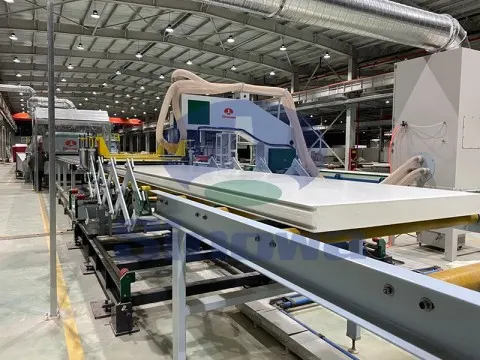
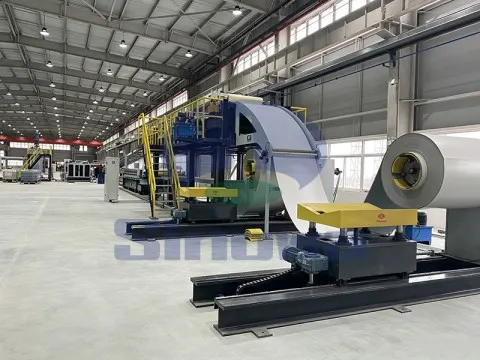
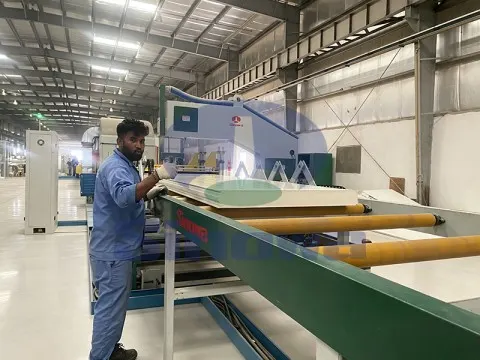
Tags: continuous pu sandwich panel production line, continuous pu sandwich panel production line manufacturer, continuous pu sandwich panel production line supplier, china continuous pu sandwich panel production line, continuous pu sandwich panel production line for sale
-
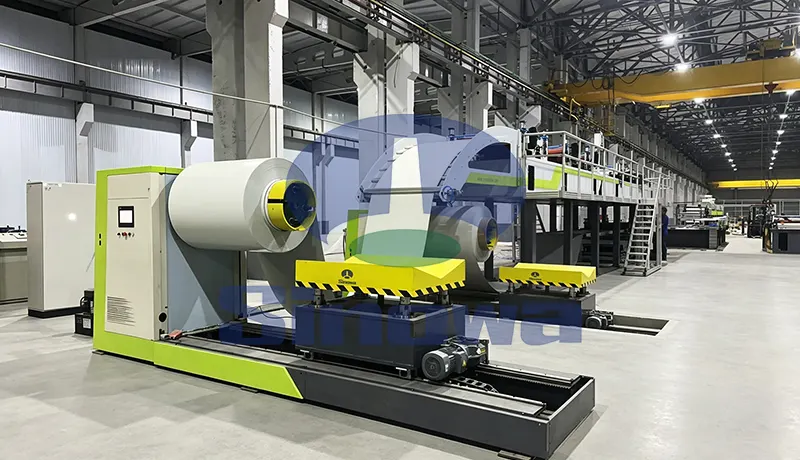
A reliable PU sandwich panel production line serves as the core equipment for manufacturing high-performance building insulation panels. This professional PU sandwich panel line features automated feeding, foaming and molding processes to ensure consistent panel thickness and structural stability. The well-designed polyurethane sandwich panel production line effectively improves production efficiency while reducing material waste in daily operation. Each calibrated polyurethane sandwich panel line can adapt to different panel sizes to meet diverse construction needs. With precise temperature and pressure control, the advanced continuous PU sandwich panel line produces panels with excellent thermal insulation and weather resistance. Meanwhile, the optimized PIR sandwich panel production line upgrades the foaming formula to enhance fire resistance performance. The high-efficiency PIR sandwich panel line maintains stable operation during long-term mass production, delivering durable and high-quality sandwich panels for various architectural and industrial applications.
-
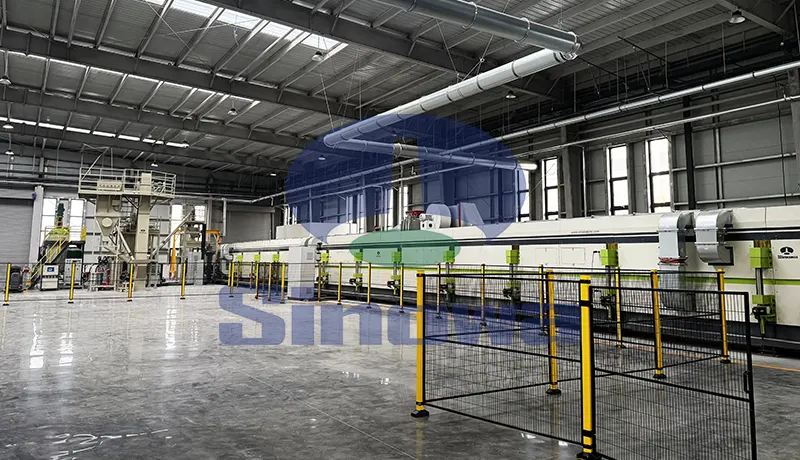
The phenolic panel production line realizes automated and continuous manufacturing of high-performance thermal insulation panels through streamlined and coordinated processing procedures.
-
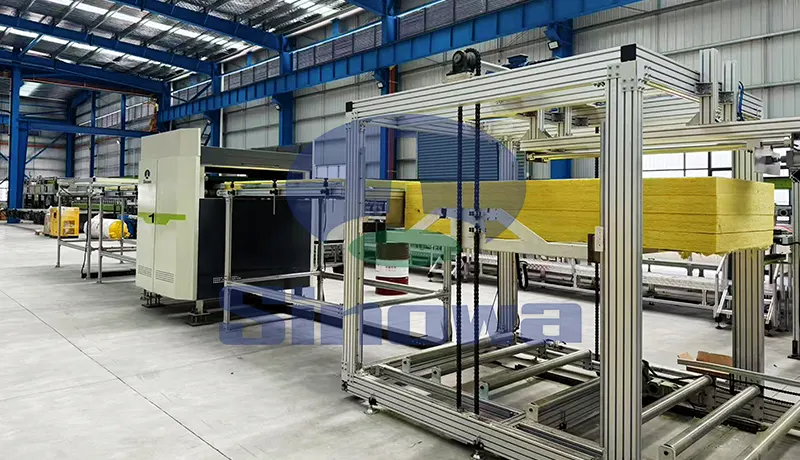
Modern insulation panel manufacturing relies on professional automated equipment to ensure stable product quality and high production efficiency. The rock wool sandwich panel production line features precise material lamination and forming processes to produce rigid, heat-insulating building panels. Meanwhile, the mineral wool sandwich panel production line adopts optimized assembly procedures to fabricate lightweight, soundproof panels widely used in architectural enclosure and thermal preservation projects.