PLC Controlled PU Sandwich Panel Line
Publication Date: Oct 12, 2026
The PLC controlled PU sandwich panel line is an automated production system for manufacturing high-performance polyurethane sandwich panels. It integrates precise material processing, foaming, lamination and cutting processes, delivering stable, efficient and high-quality panel production with minimal manual intervention.
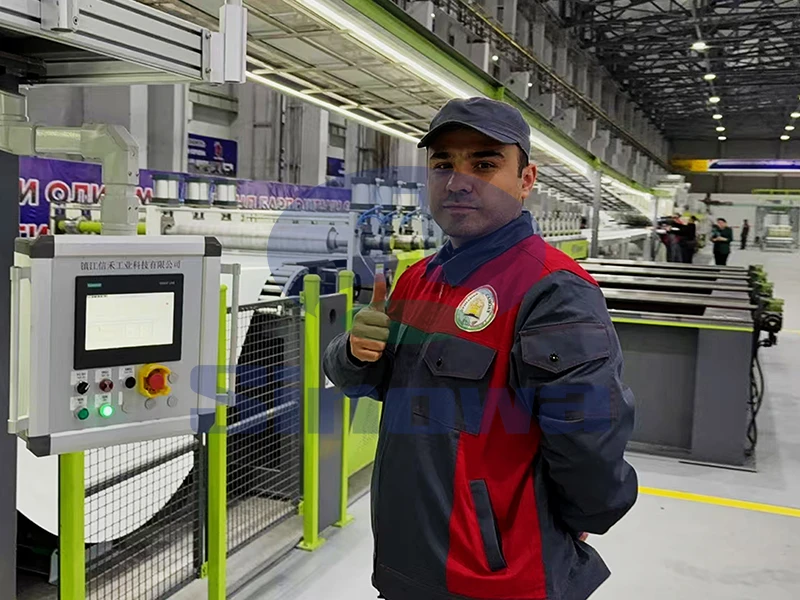
The core advantage of the PLC controlled PU sandwich panel line lies in its centralized intelligent control mode that unifies the operation of all production modules. Serving as the central control brain, the programmable logic controller coordinates every procedural link from raw material feeding to finished product output, replacing traditional discrete manual operation and mechanical control modes. The system connects with a user-friendly human-computer interaction terminal, allowing operators to set, adjust and store all production parameters through a simple touch interface. Key operational indicators including substrate transmission speed, PU raw material proportioning, foaming flow rate and laminating pressure can be precisely regulated in real time. This integrated control mechanism eliminates operational deviations caused by manual experience differences, realizing standardized and normalized production of sandwich panels and laying a solid foundation for consistent product quality in batch manufacturing.
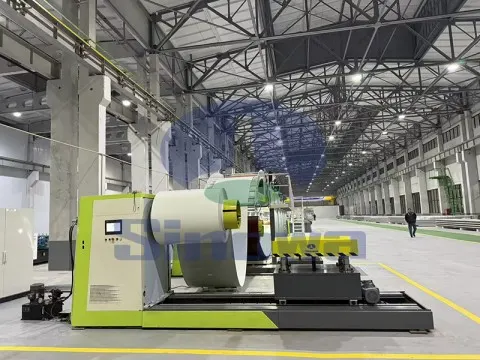
Raw material pretreatment and feeding management constitute the initial key stage of the entire production workflow, fully regulated by PLC program logic. The system automatically controls the conveying and arrangement of upper and lower metal substrates, ensuring flat and continuous material feeding without wrinkling or offset during transmission. Meanwhile, it precisely manages the delivery of two core PU chemical raw materials and auxiliary additives, implementing quantitative and constant-speed feeding through linked metering equipment. The PLC system dynamically monitors feeding status in real time, automatically fine-tuning feeding parameters according to production speed changes to avoid material accumulation or shortage. By standardizing the pretreatment and feeding process, the production line eliminates preliminary preparation errors, ensures the uniformity of raw material state before processing, and creates stable preconditions for subsequent foaming and composite molding procedures.
Precision PU foaming and mixing is the most critical process determining the thermal insulation and structural performance of finished panels, relying entirely on PLC precise regulation. Polyurethane foam forms through the chemical reaction of two main liquid raw materials, and the mixing ratio, uniformity and pouring flow rate directly affect panel core density and pore structure. The PLC system controls high-precision metering pumps to stabilize raw material delivery speed and proportion, maintaining high accuracy of material matching throughout continuous production. It also adjusts mixing gun operating frequency and pouring speed in linkage with substrate moving speed to ensure even and continuous distribution of PU foam on the substrate surface. Real-time temperature monitoring and compensation functions optimize the chemical reaction environment, avoiding abnormal foaming problems such as uneven pores, hollow cores or excessive density that compromise product insulation and structural stability.
Automatic composite lamination and pressing processes operate stably under synchronous PLC control to ensure panel structural compactness and bonding strength. After uniform PU foam pouring, the upper and lower substrates and intermediate foam core enter the lamination unit automatically. The PLC system precisely adjusts laminating pressure and running speed according to preset production parameters, realizing uniform pressing of the entire panel surface without local pressure deviation. The zone-based pressure control mode ensures consistent bonding tightness across different panel areas, effectively fitting the metal substrate and PU foam core closely without gaps or delamination. The system supports dynamic parameter adjustment for different panel thickness specifications, automatically matching corresponding pressure and speed values to meet diversified production demands. This intelligent pressing control significantly improves the overall flatness and structural integration of semi-finished panels.
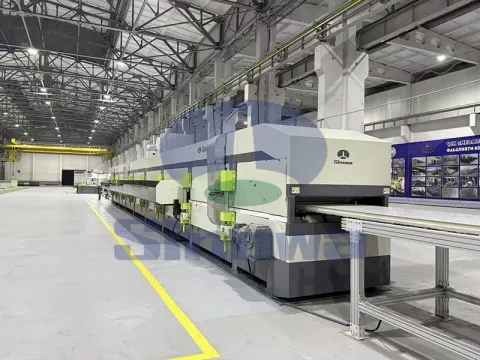
Constant-temperature curing and shaping is a key link for stabilizing panel performance, with operational parameters fully locked and optimized by the PLC control system. Semi-finished composite panels are continuously transported into the sealed curing channel, where the PLC system maintains a stable internal temperature environment through real-time monitoring and automatic adjustment of heating components. The constant-temperature environment provides optimal conditions for PU foam molecular cross-linking reaction and adhesive curing, enabling the foam to complete full expansion and solidification stably. The system precisely controls curing time by adjusting transmission speed, ensuring each panel obtains sufficient reaction time according to its thickness and material characteristics. This standardized curing process avoids quality defects such as incomplete curing or excessive aging, effectively fixing the panel’s overall structure and stabilizing its thermal insulation and mechanical properties for long-term use.
Fixed-size cutting and edge trimming processes achieve high-precision finished shaping under PLC automatic control. After completing curing and shaping, panels are conveyed to the cutting unit, where the PLC system automatically invokes preset size parameters to control the cutting tool’s operating track, speed and stroke. It supports flexible switching of different panel length and width specifications without manual mechanical debugging, realizing rapid adjustment of production dimensions. The high-precision program control effectively reduces cutting errors, ensuring consistent dimensional accuracy of each finished panel. Meanwhile, the system drives the automatic edge trimming device to remove residual foam and uneven edges, smoothing panel edges and improving product appearance uniformity. The integrated cutting and trimming process not only improves production precision but also simplifies post-processing procedures and enhances overall production efficiency.
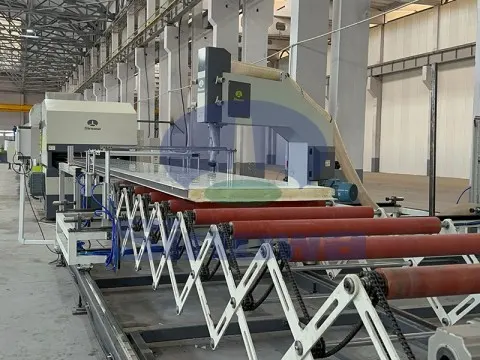
Finished product conveying and automatic stacking are realized through PLC linkage control, completing the final stage of automated production. After cutting and trimming, qualified panels are automatically transported by the conveying system, with the PLC system monitoring conveying status in real time to prevent panel collision, stacking disorder or conveying stagnation. The system controls the stacking device to perform orderly lifting, translation and placement actions according to preset rules, realizing neat and standardized stacking of finished products. It can automatically count finished panels and record production volume data, providing intuitive production data support for production management. This fully automatic finishing process completely replaces manual carrying and stacking, reducing labor investment while avoiding surface scratches or structural damage caused by manual operation, ensuring intact finished product quality.
The PLC system’s real-time monitoring and fault self-diagnosis functions greatly improve the operational stability and safety of the production line. During continuous operation, the system collects real-time data of all production units including material feeding, foaming, pressing and curing through multiple sensors, and displays operational status intuitively on the human-computer interface. Once abnormal conditions such as material blockage, parameter deviation or equipment operation failure occur, the system will trigger automatic alarm and perform targeted protective actions, including decelerating operation or emergency shutdown. It can automatically record fault information and abnormal parameter data, providing clear troubleshooting clues for maintenance personnel. This intelligent monitoring and protection mechanism effectively reduces equipment failure rate, avoids large-scale defective product generation, and ensures long-term stable continuous operation of the production line.
Parameter storage and intelligent formula switching functions endow the PLC controlled production line with strong production flexibility and adaptability. The system can store multiple sets of mature production parameter formulas corresponding to different panel thicknesses, densities and performance requirements. When switching production specifications, operators only need to select the corresponding formula on the touch terminal, and the PLC system will automatically synchronously adjust all linked equipment parameters including feeding ratio, foaming speed, pressing pressure and curing temperature. The whole switching process is completed quickly and accurately without repeated manual debugging, effectively shortening production line conversion time and improving production flexibility. This function enables the equipment to meet diversified market customization demands while maintaining stable production quality and high operational efficiency.
Compared with traditional semi-automatic production equipment, the PLC controlled PU sandwich panel line achieves comprehensive upgrading in production efficiency, product quality and operational cost control. The highly integrated automatic control mode minimizes manual intervention links, reducing human-induced quality fluctuations and operational errors. Precise parameter control optimizes material utilization, effectively reducing raw material waste in foaming and processing links. The streamlined continuous production mode greatly improves hourly output and shortens production cycles. In addition, the centralized control mode simplifies daily equipment operation and maintenance, reduces technical dependence on operators, and lowers long-term production and operation costs. These comprehensive advantages make the equipment widely applicable to the mass production of high-quality thermal insulation sandwich panels for construction and industrial fields.
Gallery of PLC Controlled PU Sandwich Panel Line
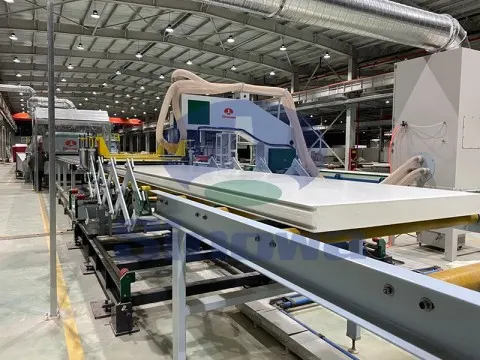
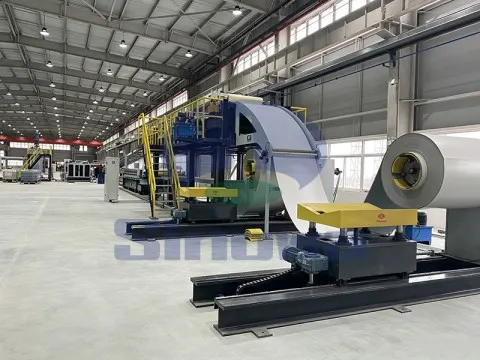
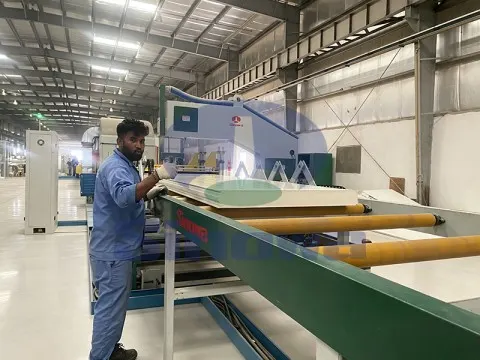
Tags: plc controlled pu sandwich panel line, plc controlled pu sandwich panel line manufacturer, plc controlled pu sandwich panel line supplier, china plc controlled pu sandwich panel line, plc controlled pu sandwich panel line for sale
https://www.sandwichpanelmanufacturingline.com/blog/plc-controlled-pu-sandwich-panel-line.html
-
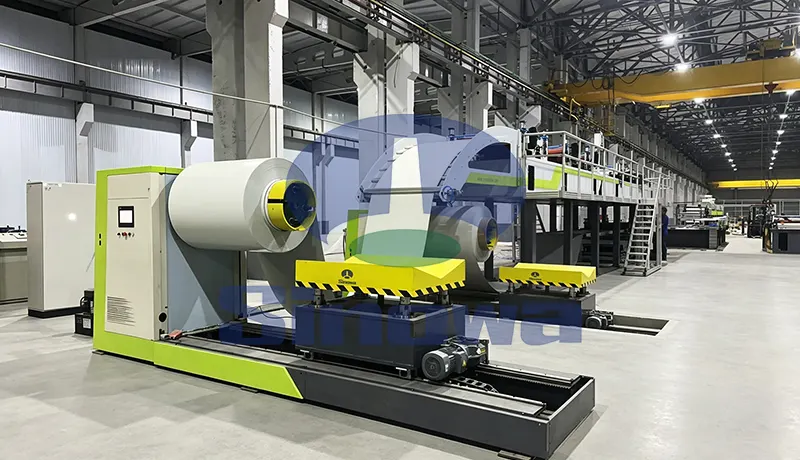
A reliable PU sandwich panel production line serves as the core equipment for manufacturing high-performance building insulation panels. This professional PU sandwich panel line features automated feeding, foaming and molding processes to ensure consistent panel thickness and structural stability. The well-designed polyurethane sandwich panel production line effectively improves production efficiency while reducing material waste in daily operation. Each calibrated polyurethane sandwich panel line can adapt to different panel sizes to meet diverse construction needs. With precise temperature and pressure control, the advanced continuous PU sandwich panel line produces panels with excellent thermal insulation and weather resistance. Meanwhile, the optimized PIR sandwich panel production line upgrades the foaming formula to enhance fire resistance performance. The high-efficiency PIR sandwich panel line maintains stable operation during long-term mass production, delivering durable and high-quality sandwich panels for various architectural and industrial applications.
-
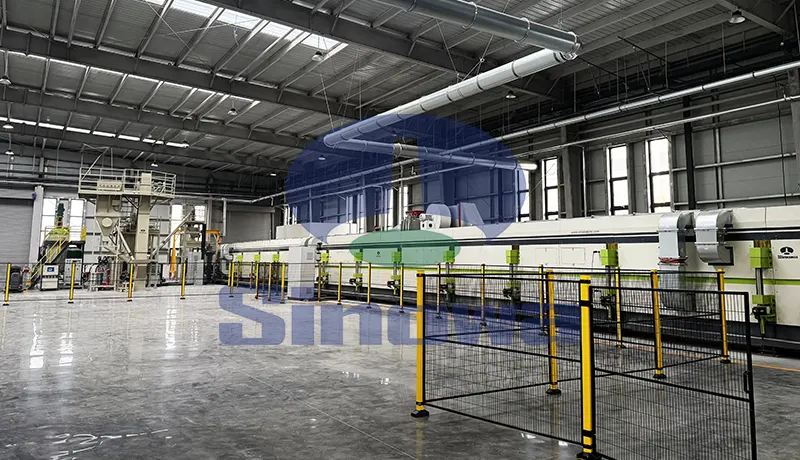
The phenolic panel production line realizes automated and continuous manufacturing of high-performance thermal insulation panels through streamlined and coordinated processing procedures.
-
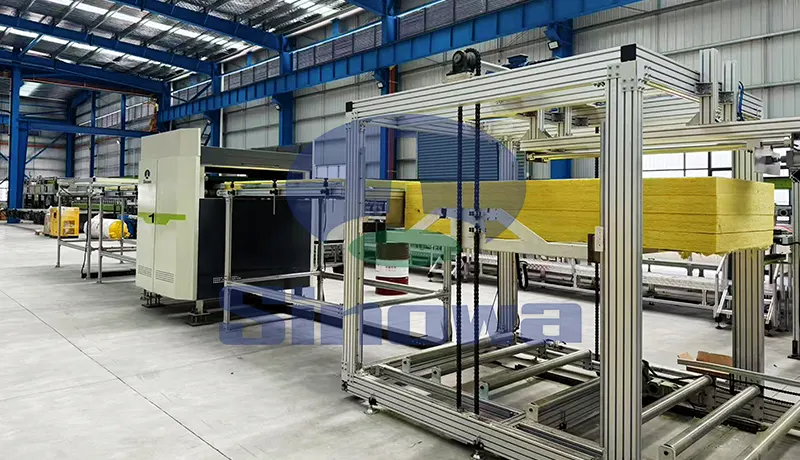
Modern insulation panel manufacturing relies on professional automated equipment to ensure stable product quality and high production efficiency. The rock wool sandwich panel production line features precise material lamination and forming processes to produce rigid, heat-insulating building panels. Meanwhile, the mineral wool sandwich panel production line adopts optimized assembly procedures to fabricate lightweight, soundproof panels widely used in architectural enclosure and thermal preservation projects.