Can One Foaming Machine Serve Both Continuous And Discontinuous PU Sandwich Panel Line?
Publication Date: Oct 28, 2026
A foaming machine can feed both continuous and discontinuous PU sandwich panel lines only under strict low-volume conditions. It cannot run both lines simultaneously; quality stability, flow control and scheduling limits make dedicated foaming units better for most panel factories.
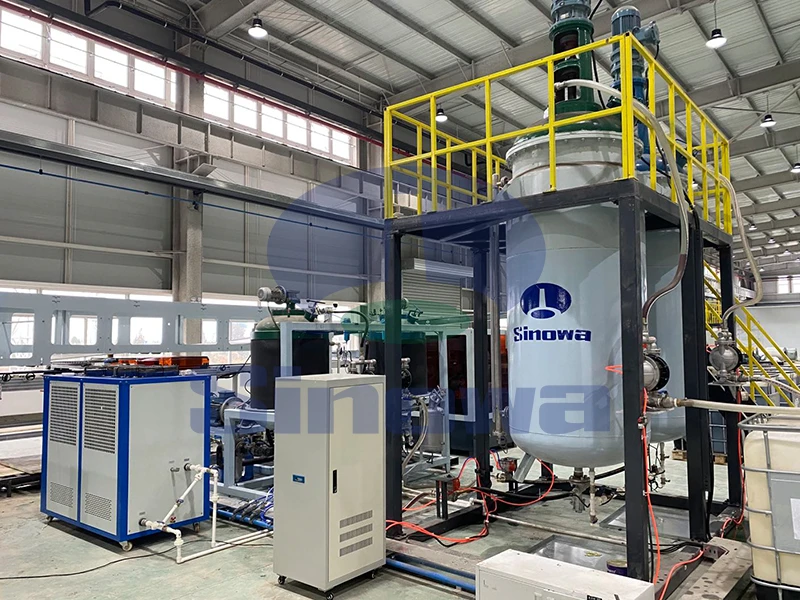
It is a common question among operators and plant planners working with polyurethane sandwich panel production whether a single foaming machine can support both continuous and discontinuous production lines, and the answer lies not in a simple yes or no, but in a careful evaluation of the core working logic of foaming equipment and the differences between the two production modes. The foaming machine functions as the heart of the whole panel manufacturing process, responsible for accurate metering, uniform mixing, and stable delivery of polyol and isocyanate raw materials, and these basic functional requirements exist in both continuous and discontinuous lines. Continuous production runs without frequent stops, with panels moving forward at a set speed on the forming conveyor, requiring the foaming machine to maintain a consistent output flow over long hours and match the linear speed of the substrate feeding. Discontinuous production, by contrast, works in batches, where each mold cavity is filled separately, followed by a pause for curing before the finished panel is demolded, which means the foaming machine needs to start and stop dosing repeatedly and adjust the injection volume for each individual cavity. At first glance, the basic metering and mixing unit of a foaming machine seems capable of handling both scenarios, but the control logic, flow stability range, and response speed of the equipment will face completely different test conditions when switching between the two working modes. Many production teams initially assume that purchasing one foaming unit can cut equipment investment and save workshop space, yet they often overlook the hidden conflicts in operating parameters that will emerge once trial production begins. Even if the hardware of the foaming pump and mixing head can physically supply material to both sets of molds or conveyors, the dynamic changes in demand between steady continuous feeding and intermittent batch injection create a series of challenges that cannot be resolved only through simple pipeline switching. Operators also need to recognize that raw material characteristics such as reaction time, viscosity change after mixing, and foaming rise time must coordinate with the rhythm of each production line, and a set of default parameters optimized for one mode will rarely fit the other perfectly without extensive adjustment.
The first major technical barrier for one foaming machine to serve both continuous and discontinuous PU sandwich panel lines comes from the matching of output flow and material delivery rhythm. Continuous production demands a steady, uninterrupted material flow that aligns with the constant travel speed of the upper and lower facing materials, so that the mixed PU material can spread evenly across the width of the panel and complete foaming and curing within the fixed forming channel. Any fluctuation in flow rate will directly lead to uneven foam density, inconsistent thickness, voids inside the core material, or surface defects on the finished panel. Discontinuous production requires pulse-type material output: the foaming machine injects a fixed amount of mixed material into a closed mold in a short time, then stops feeding completely while the chemical reaction proceeds inside the mold. This frequent start-stop cycle creates pressure fluctuations inside the material pipelines and mixing chamber, which can disrupt the stable metering state that continuous production relies on. When the foaming machine switches back to continuous operation after a batch injection cycle, it often takes a period of time for the pump pressure and mixing ratio to return to the calibrated stable state, and the transitional material produced during this stabilization phase usually fails to meet product quality requirements. The design of the mixing head also plays an important role here. A mixing head tuned for continuous work usually maintains a low, continuous circulation of raw materials to avoid blockage and keep the mixing state consistent, while a mixing head for discontinuous injection needs to open and close rapidly to complete quantitative injection and clean the mixing chamber after each shot. Modifying a single mixing assembly to satisfy both stable circulation and fast on-off injection will increase the complexity of mechanical structure and raise the risk of material accumulation and curing inside the head, which can trigger frequent shutdowns for cleaning and maintenance. Even with advanced variable-frequency pump systems that can adjust flow across a wide range, the transient pressure spikes generated during discontinuous shot injection will interfere with the precision of ratio control, and small deviations in the proportion of polyol and isocyanate will alter the foaming reaction profile and damage the consistency of the finished sandwich panel core.
Material distribution and pipeline layout form another critical factor limiting the shared use of one foaming machine for two different PU sandwich panel production lines. To connect the foaming unit to both a continuous forming line and a set of discontinuous molds, the workshop needs to build a branched material delivery pipeline with switching valves to redirect mixed PU material to different production stations. The mixed PU material has a fast reaction rate once the two components combine, and any stagnation of material inside branch pipes, valve cavities, or dead corners will lead to premature curing and blockage. In continuous production, the material flows along a single, smooth path toward the spreading device above the moving substrate, with almost no standing time inside the pipeline. In discontinuous production, the material path leads to individual mold stations, and the switching action of valves means that sections of the branch line will sit idle between injection cycles. Residual cured foam will gradually build up in these idle sections, narrowing the inner diameter of the pipeline and changing the flow resistance over time, which slowly distorts the metering accuracy and flow distribution effect. Adding flushing systems to clean the pipelines after each discontinuous injection can reduce blockage risks, but flushing operations consume extra raw materials and cleaning agents, extend the cycle time of discontinuous production, and introduce foreign substances that may contaminate the foam if the flushing process is not precisely controlled. Moreover, the distance from the mixing head to the material application point differs greatly between the two line types. Continuous lines often place the spreading nozzle only a short distance from the mixing outlet to ensure fresh mixed material lands on the substrate immediately, while discontinuous molds may be arranged in a scattered layout across a larger area of the workshop, creating longer and unequal delivery distances. The difference in material travel time changes the effective reaction time available before foaming, so the same mixed material will show different fluidity and expansion behavior when it reaches the continuous spreading station versus the discontinuous mold cavity. It becomes extremely difficult for technicians to adjust raw material formulas to compensate for such variable delay times without compromising the performance of panels from either line.
Control system architecture and parameter management bring additional layers of complexity when a single foaming machine is expected to support both continuous and discontinuous PU sandwich panel manufacturing. The control program built for continuous production centers on maintaining long-term steady-state operation: it monitors real-time conveyor speed, adjusts material flow proportionally, records long-run stability data, and triggers alarms for gradual drift in pressure or ratio. The control logic for discontinuous production is event-driven, with each production cycle triggered by mold closing signals, followed by preset injection volume, injection duration, hold time, and cleaning sequences. These two sets of control objectives require different response priorities from the controller. When the same control platform alternates between steady-flow regulation and shot-count batch control, the system must store two entirely separate libraries of process parameters, including target flow, injection weight, mixing pressure, alarm thresholds, and interlock logic. Switching between parameter sets manually leaves room for human error, such as loading continuous parameters into a discontinuous batch run, which leads to overfilling or underfilling of molds and wasted raw materials. Automated parameter switching reduces operational mistakes but requires deep customization of the control software, and the customized program will be harder to troubleshoot and update compared with standard control systems dedicated to one production mode. Safety interlock rules also diverge significantly. Continuous lines rely on interlocks linked to substrate breakage, conveyor stall, and spreading blockage, while discontinuous systems tie safety protection to mold position, clamping pressure, and door locking status. Merging these interlock conditions into one system can create conflicting trigger signals. For example, a safety pause triggered by a discontinuous mold alarm may stop the foaming machine entirely and disrupt the continuous line that was running at the same time, even if the continuous line has no fault. Most standard foaming machine controllers do not come with native support for isolating the safety domains of two independent production lines, and custom modification of interlock logic carries hidden safety risks that cannot be ignored during daily operation.
Product diversity and quality tolerance requirements further determine the practical feasibility of sharing one foaming machine across continuous and discontinuous PU sandwich panel lines. Continuous lines are typically used for large-batch production of panels with fixed width, fixed thickness, and relatively uniform performance targets, where quality control focuses on the consistency of foam density along the entire length of the panel. Discontinuous lines excel at flexible production, capable of producing panels with customized sizes, special surface facings, variable thickness, and localized structural reinforcement according to separate order requirements. These two product categories often require different foaming reaction profiles. Panels made on continuous lines usually need a slower, more controlled rise curve to spread evenly under the restraint of the upper and lower moving facings inside the forming channel. Panels produced in discontinuous molds may need faster initial expansion to fill every corner of the closed mold cavity before the gel point, and sometimes require adjusted curing speed to match the demolding cycle. Even with the same raw material combination, changing the reaction profile means adjusting catalyst content, blowing agent proportion, and other auxiliary components, and these formula adjustments cannot be completed instantly between production runs. If the plant alternates between continuous mass orders and small-batch customized orders frequently, the time spent on formula testing, equipment calibration, and trial sample production between switches will take up a large share of effective production hours. Quality inspection standards for the two panel types also differ in focus. Continuous panels are checked for longitudinal uniformity and surface flatness, while discontinuous panels are inspected for full cavity filling, edge integrity, and dimensional accuracy of individual molded units. When defects appear, troubleshooting becomes far harder because the production team must first confirm whether the problem originates from the foaming machine’s shared metering system, the unique conditions of the continuous line, or the special mold setup of the discontinuous line. Isolating the source of defects consumes more testing materials and working time than when each line has its own dedicated foaming equipment.
Maintenance cycle and component wear patterns are not identical when a foaming machine alternates between continuous steady operation and intermittent discontinuous injection, which affects the long-term reliability of the shared equipment. A foaming machine running continuously experiences stable, low-frequency cyclic stress on pumps, seals, and drive components. The components heat up to a stable working temperature and remain in that thermal state for hours, and wear develops slowly and predictably over time. Maintenance plans for such equipment are built around regular periodic inspection of wear parts and routine filter replacement. The same foaming machine working in discontinuous mode undergoes repeated mechanical shocks at each start and stop of injection. Each shot creates a sudden pressure change inside the pump chamber and seals, accelerating fatigue wear of high-pressure seals, check valves, and the moving parts of the mixing head. The frequent thermal cycling, as the machine heats up during injection and cools down during idle waiting periods between batches, also speeds up aging of rubber and polymer sealing elements. When the machine switches back and forth between the two operating modes, wear becomes irregular and difficult to predict. Some parts that wear slowly under continuous operation will fail much sooner under discontinuous pulse loading, and maintenance personnel cannot rely on a single fixed maintenance schedule to catch failures ahead of time. Unplanned downtime has a magnified impact in this shared setup, because a breakdown of the single foaming unit stops both the continuous line and all discontinuous mold stations at once, bringing the whole PU sandwich panel production area to a complete halt. In a configuration with separate foaming machines, a fault on one unit only stops one production stream, and the other line can continue processing orders. Spare parts stocking also grows more complicated. The plant must prepare spare components suited for both steady continuous use and high-cycle discontinuous injection, and the stocking volume and variety of spare parts increase compared with a single-purpose foaming machine, raising indirect operational costs even if the initial equipment purchase cost appears lower.
Production scheduling and capacity matching represent another practical challenge that many manufacturers underestimate when planning to run two types of PU sandwich panel lines off one foaming machine. The total material output capacity of the foaming machine must be sized to meet the peak demand of either the continuous line running at full speed or the discontinuous line running with multiple molds injecting at the same time, but it cannot satisfy both peak loads simultaneously. This means the two production lines can never operate at maximum throughput at the same time. The production scheduler must arrange the work sequence carefully: either run the continuous line for a long uninterrupted block of time, then shut it down and reconfigure the foaming machine to serve discontinuous molds for a batch period, or limit the running speed of the continuous line while running a small number of discontinuous injection cycles intermittently. Either arrangement restricts the overall output potential of the workshop. If orders come in that require both continuous standard panels and customized discontinuous panels to be delivered within a tight window, the shared foaming machine becomes the bottleneck of the entire factory. Transition time between modes also eats into available production capacity. Each switch requires cleaning the mixing head, recalibrating the material ratio, testing sample panels, adjusting the spreading device or mold injection position, and verifying that foam quality meets requirements. The length of this transition period varies based on the complexity of formula changes and pipeline cleaning needs, and repeated switching over a week can accumulate into a substantial loss of productive time. Workforce allocation is affected as well. Operators need to master the operation and adjustment skills for both production modes, understand the defect characteristics of both panel types, and be capable of reconfiguring the foaming system safely. Training requirements become heavier, and the risk of operational error rises compared with having dedicated teams for each line. Even experienced technicians need time to re-adapt every time the machine switches mode, which slows down the pace of production after each transition.
There are limited scenarios where a single foaming machine can technically feed both continuous and discontinuous PU sandwich panel lines, provided the production constraints are clearly accepted and strictly followed. These suitable scenarios usually share several common traits: low overall production volume, infrequent switching between the two production modes, and a large gap between the peak material demand of the continuous line and the discontinuous line. For example, a workshop mainly focused on discontinuous customized panel orders may only run the continuous line occasionally for small batches of standard panels, and the continuous line runs at a reduced speed that does not demand high flow stability over very long stretches. In this case, the foaming machine can be configured primarily for discontinuous shot injection and temporarily adjusted to low-speed continuous feeding when needed. The product specifications in such cases also tend to be similar, using the same basic PU formula, foam density target, and reaction characteristics, so only minor fine-tuning of parameters is needed instead of a full formula overhaul. The pipeline layout is kept short, with minimal branch dead space, and the switching valve design includes built-in self-cleaning structures to reduce residual material buildup. Even under these favorable conditions, the factory still accepts inherent trade-offs: lower maximum total output, longer changeover time between product batches, higher risk of sporadic quality defects during mode transitions, and the risk of total shutdown if the foaming unit fails. This kind of arrangement is usually a temporary solution for small-scale operations with unstable order structures, rather than an optimized layout for high-volume, stable manufacturing. It is important to distinguish technical possibility from economic rationality. While it may be physically possible to route material from one foaming machine to both lines, the hidden costs of yield loss, transition time, maintenance burden, and restricted scheduling often erase the savings gained from buying only one foaming unit instead of two. Many manufacturers that test this mixed setup eventually separate the foaming systems once their order volume grows and delivery pressure increases.
Alternative intermediate solutions exist for factories that want to balance equipment investment and production flexibility without fully committing to the risks of a single shared foaming machine. One common approach is to select a foaming machine designed for one primary production mode and reserve a simple interface for occasional material supply to the secondary line, with clear rules that the secondary line can only operate when the primary line is idle. This avoids simultaneous demand conflicts and reduces the frequency of parameter switching. Another option uses a centralized raw material supply system that feeds two independent metering and mixing units. The raw material storage and preheating section is shared, while separate pumping and mixing heads serve the continuous line and discontinuous molds respectively. This design retains some savings on storage and pre-treatment infrastructure, yet keeps the critical metering, mixing, and control functions independent, so the two lines can run concurrently without interfering with each other’s ratio stability and control logic. This hybrid layout strikes a middle ground, lowering overall investment compared with two complete standalone foaming systems while avoiding most of the technical and operational bottlenecks of a single shared mixing unit. Some plants also adopt a mobile foaming unit that can be moved between stations, but this solution is more suited for very intermittent trial production and small job orders, and it lacks the stability needed for extended continuous panel production. When evaluating these alternatives, manufacturers need to map out their order mix, expected annual output, frequency of product changes, and acceptable downtime risk. The core evaluation standard should not be whether one foaming machine can physically deliver material to two lines, but whether the chosen configuration can consistently deliver qualified panels at the required production rate over the long term, while keeping waste, maintenance workload, and scheduling complexity within manageable limits.
In conclusion, a single foaming machine is not a universal solution that can reliably serve both continuous and discontinuous PU sandwich panel lines under general production conditions, even though limited conditional operation is achievable in low-volume and low-switching scenarios. The fundamental mismatch lies in the opposing operational requirements of steady long-duration flow for continuous forming and repeated pulsed quantitative injection for discontinuous mold filling, which create conflicts in pressure stability, pipeline behavior, control logic, component wear, and production scheduling. Each mode places unique demands on the foaming process, foam reaction timing, and quality control focus, and reconciling these demands within one machine inevitably introduces compromise in stability, capacity, or yield. Manufacturers considering this layout must weigh the upfront equipment savings against the cumulative hidden costs of transition downtime, defective products, accelerated component wear, production bottlenecks, and total production outage risk. For most commercial production environments where consistent quality, flexible order fulfillment, and reliable throughput are priorities, dedicated foaming equipment matched to each type of PU sandwich panel line remains the more dependable choice. The discussion around shared foaming machines ultimately highlights a key principle in PU processing equipment selection: the foaming system is not merely a material pump, but an integrated process subsystem whose performance must align closely with the rhythm, constraints, and quality targets of the production line it supports. Any connection between a foaming machine and multiple production stations must respect the inherent chemical and mechanical characteristics of polyurethane foaming, rather than treating material delivery as a simple task that can be freely redirected without consequence. Careful planning of process matching, rather than chasing the lowest number of equipment units, creates a more stable and sustainable PU sandwich panel production operation over the full lifecycle of the plant.
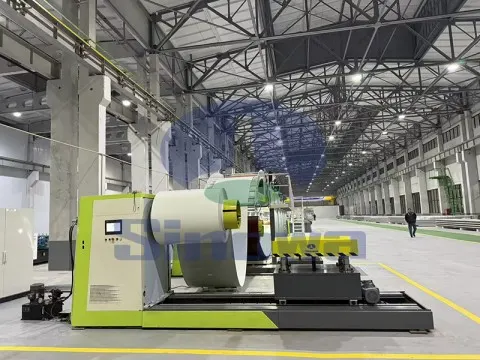
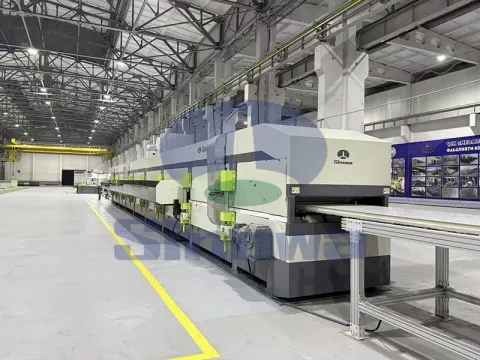
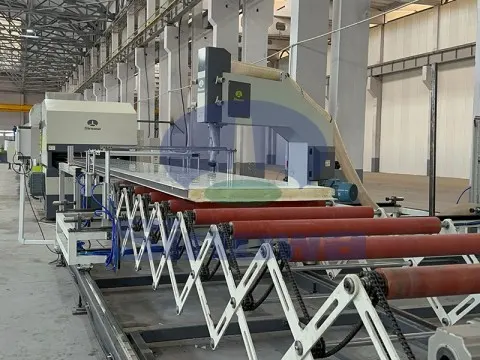
Gallery of Continuous PU Sandwich Panel Line
Tags: continuous pu sandwich panel line, continuous pu sandwich panel line manufacturer, continuous pu sandwich panel line supplier, china continuous pu sandwich panel line, continuous pu sandwich panel line for sale
-
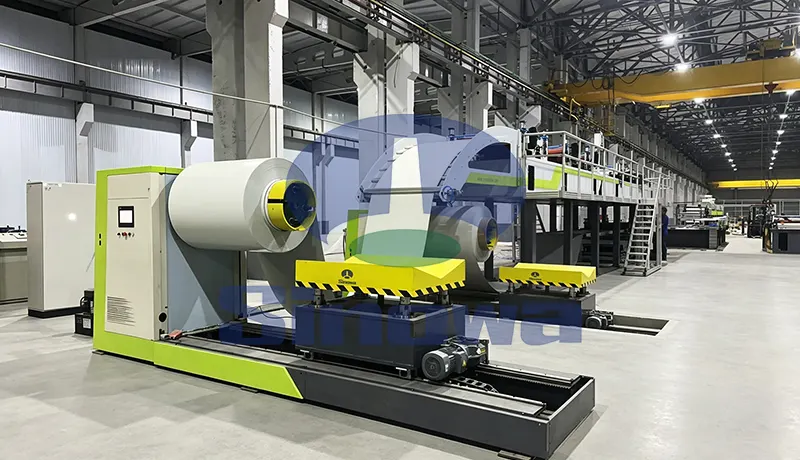
A reliable PU sandwich panel production line serves as the core equipment for manufacturing high-performance building insulation panels. This professional PU sandwich panel line features automated feeding, foaming and molding processes to ensure consistent panel thickness and structural stability. The well-designed polyurethane sandwich panel production line effectively improves production efficiency while reducing material waste in daily operation. Each calibrated polyurethane sandwich panel line can adapt to different panel sizes to meet diverse construction needs. With precise temperature and pressure control, the advanced continuous PU sandwich panel line produces panels with excellent thermal insulation and weather resistance. Meanwhile, the optimized PIR sandwich panel production line upgrades the foaming formula to enhance fire resistance performance. The high-efficiency PIR sandwich panel line maintains stable operation during long-term mass production, delivering durable and high-quality sandwich panels for various architectural and industrial applications.
-
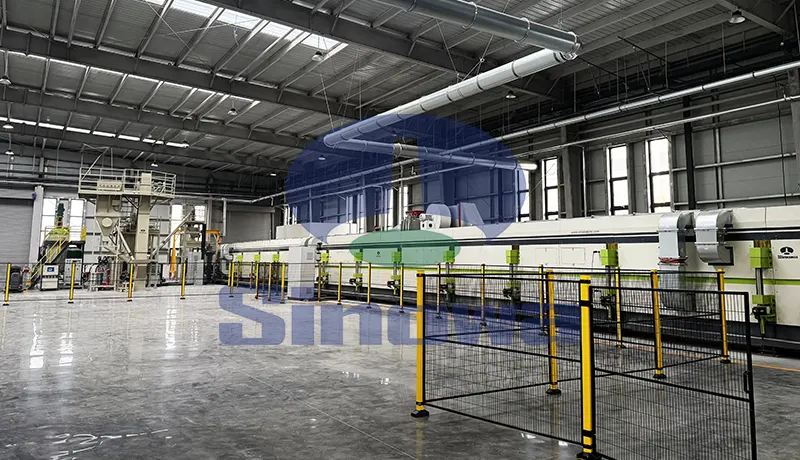
The phenolic panel production line realizes automated and continuous manufacturing of high-performance thermal insulation panels through streamlined and coordinated processing procedures.
-
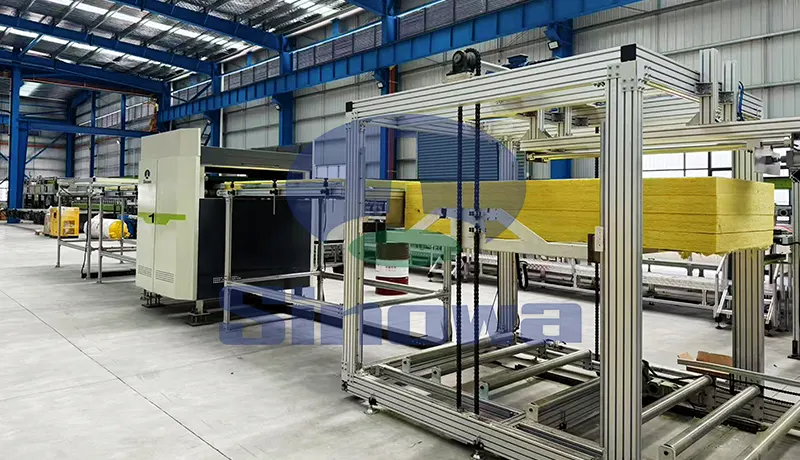
Modern insulation panel manufacturing relies on professional automated equipment to ensure stable product quality and high production efficiency. The rock wool sandwich panel production line features precise material lamination and forming processes to produce rigid, heat-insulating building panels. Meanwhile, the mineral wool sandwich panel production line adopts optimized assembly procedures to fabricate lightweight, soundproof panels widely used in architectural enclosure and thermal preservation projects.