What Causes Bubble Holes In Panels From The PU Sandwich Panel Production Line?
Publication Date: Oct 5, 2026
Bubble holes are a prevalent structural defect in PU sandwich panels produced by automated production lines, undermining panel durability and surface flatness.
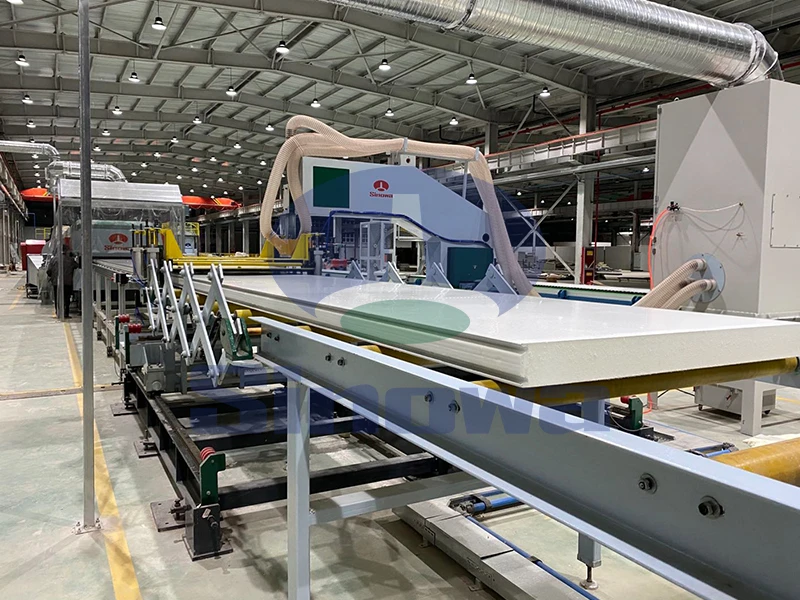
Excessive moisture contamination in raw materials stands as the most primary cause of bubble holes in PU sandwich panels. PU sandwich panel production relies on the chemical reaction between polyol and isocyanate components to form foam cores, and water triggers an auxiliary chemical reaction with isocyanate to generate carbon dioxide gas. Unlike intentional blowing agents, this randomly produced gas fails to discharge evenly during foam curing, forming irregular bubble holes of varying sizes inside and on the surface of panels. Moisture intrusion occurs through multiple channels: polyol and auxiliary additives easily absorb moisture from humid air during long-term storage, while improperly sealed raw material containers lead to continuous moisture accumulation. Additionally, residual moisture on the surface of metal or composite base panels before lamination also participates in chemical reactions, leaving tiny pinholes and large hollow bubbles in the finished panels after foam molding and solidification.
Inadequate and uneven material mixing in production line equipment directly induces bubble hole defects in PU panels. The automated production line adopts a high-pressure mixing mode to blend two-component PU materials, and stable mixing efficiency is the premise of uniform foam molding. When the mixing chamber suffers from partial clogging caused by residual cured foam or impurity deposits, the stirring speed and material shearing force become uneven. Local areas have insufficient fusion of polyol and isocyanate, leading to inconsistent reaction rates across the foam layer. Some regions react rapidly to produce excessive gas, while others react slowly and cannot discharge gas in time, forming scattered bubble holes. Moreover, unreasonable mixing speed settings also cause problems. Excessively high stirring speed traps a large amount of external air into the liquid material, while low speed fails to disperse gas evenly, both resulting in persistent bubble defects that cannot be eliminated during subsequent lamination and curing processes.
Poor mold venting design and abnormal mold surface conditions are key equipment-related factors leading to panel bubble holes. The continuous molding process of PU sandwich panels requires closed mold spaces to ensure flat panel forming, yet insufficient vent holes or unreasonable vent positions in production molds hinder the discharge of internal air and reaction-generated gas. During rapid foam expansion, residual gas is squeezed and trapped between the foam core and base panel, forming enclosed bubble holes that remain permanently after foam curing. Meanwhile, unpolished mold surfaces with uneven textures affect the fluidity of PU foam materials. The foam cannot fully fit the mold surface, creating tiny gaps that accumulate air bubbles. Excessive or unevenly coated release agents on molds also form barrier layers, preventing gas overflow and inducing dense fine bubble holes on the panel surface.
Unreasonable production temperature parameters trigger bubble hole formation by disrupting PU foam reaction balance. Temperature directly affects the reaction speed, foam fluidity and gas volatilization efficiency of PU materials. When the preheating temperature of the production line is too low, the PU material reaction speed slows down, the foam fluidity decreases significantly, and the gas generated by the reaction cannot spread and discharge smoothly, thus accumulating to form bubbles. In contrast, excessively high preheating and curing temperatures cause local overheating of the foam layer, leading to violent and uneven gas generation. A large amount of gas is produced in a short time, and the rapid curing speed of the foam locks the undischarged gas inside the panel, forming large irregular hollow holes. In addition, inconsistent temperature distribution in different areas of the molding platform causes unbalanced foam reaction, further exacerbating the uneven distribution of bubble holes on panel surfaces and interiors.
Air entrapment during material feeding and lamination processes is a common operational cause of panel bubble defects. In the automated feeding stage of PU production lines, unstable material delivery pressure leads to intermittent material flow, and gaps in the material pipeline allow external air to mix into the liquid PU raw materials. The tiny air bubbles mixed in the materials will not disappear automatically and will expand with the foam reaction, forming visible bubble holes in the finished panels. During the panel lamination process, improper matching speed between the upper and lower base panels and the foam injection equipment causes asynchronous fitting. Unsmooth lamination operation fails to exhaust the air between the base panel and the foam layer completely, and the trapped air is fixed in the panel structure as the foam solidifies. Even subtle operational deviations in continuous production will accumulate, resulting in a large number of bubble hole defective products in batches.
Improper selection and proportioning of auxiliary materials contribute to bubble hole generation in PU sandwich panels. Surfactants and catalysts are essential auxiliary materials for adjusting PU foam molding quality, and their dosage and matching ratio directly affect gas discharge and cell structure stability. Insufficient surfactant content reduces the surface tension regulation effect of the foam system, making it difficult for tiny reaction gas bubbles to merge and discharge, thus forming dense micro-bubbles inside the panel. Excessive catalyst dosage accelerates the foaming reaction speed excessively, causing the foam to cure quickly before internal gas is fully released and leaving closed bubble holes. In addition, expired or deteriorated auxiliary materials will lose their regulatory activity, disrupting the stable foaming environment and leading to irregular bubble defects that are difficult to avoid in continuous production.
Pipeline blockages and equipment pressure fluctuations in production lines induce persistent bubble hole problems. Long-term continuous operation of PU production lines leads to residual cured PU materials and impurity sediments in material delivery pipelines, mixing heads and injection ports. These blockages cause unstable material delivery volume and pressure, resulting in uneven material output during foam injection. Local insufficient material supply leads to sparse foam structures and hollow holes, while excessive local material accumulation produces concentrated gas that cannot escape, forming large bubbles. Meanwhile, abnormal pressure fluctuations in the high-pressure mixing system break the material mixing balance. The uneven pressure makes the two-component materials mix incompletely, triggering inconsistent local reactions and forming scattered bubble holes throughout the panel foam layer.
Unstable production environment humidity exacerbates bubble hole defects in PU panels. The foaming and curing process of PU sandwich panels is highly sensitive to ambient humidity. In high-humidity production environments, suspended water molecules in the air continuously adhere to the surface of base panels and production equipment, and also dissolve into the exposed liquid PU materials. These additional moisture sources continuously react with isocyanate to produce extra carbon dioxide gas beyond the normal foaming system. The randomly generated gas cannot be controlled and discharged uniformly, forming irregular bubble holes of different sizes. In dry and low-humidity environments, excessive air flow in the workshop accelerates the surface curing speed of the foam, forming a hardened surface layer in advance, which locks the internal unexhausted gas and forms closed bubble holes inside the panel.
Incomplete foam cell opening and unbalanced internal stress cause delayed bubble hole formation in panels. In the normal molding process of qualified PU foam, the internal cell structure will open and interconnect during the later stage of reaction, allowing residual gas to discharge freely. When the production parameter matching is poor, the cell opening process is incomplete, and most internal cells remain closed. A small amount of residual gas trapped in closed cells cannot escape, and under the action of internal stress generated by foam curing, tiny cell structures expand gradually, forming visible bubble holes after the finished panels are placed for a period of time. This delayed defect is easily ignored in on-site inspection, and the unbalanced stress distribution inside the panel will also cause bubble holes to gradually expand, affecting the long-term structural stability of the sandwich panels.
Accumulated equipment dirt and irregular daily maintenance further aggravate bubble hole defects in continuous production. Long-term operation of production equipment leads to the accumulation of dust, residual materials and degraded release agents on the surface of molds, mixing chambers and conveyor platforms. These impurities form tiny isolation points on the contact surface between materials and equipment, hindering the uniform flow of PU foam and the normal discharge of gas. Impurities also act as nucleation points for gas aggregation, inducing concentrated bubble formation locally. In addition, infrequent equipment calibration and maintenance lead to long-term deviation of mixing speed, molding pressure and temperature parameters. Small parameter deviations accumulate in continuous batch production, resulting in a stable occurrence of bubble hole defects, which greatly reduces the yield of qualified PU sandwich panels.
Gallery of PU Sandwich Panel Production Line
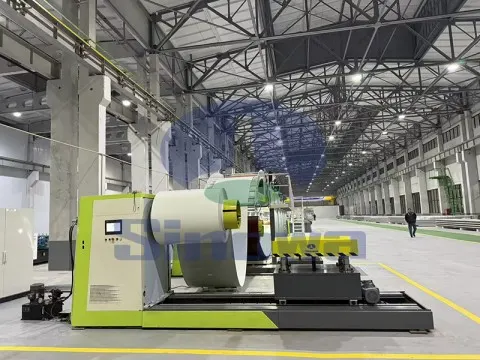
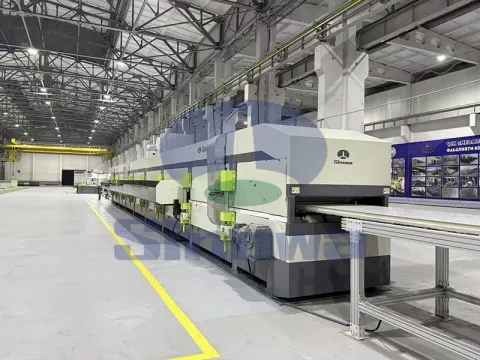
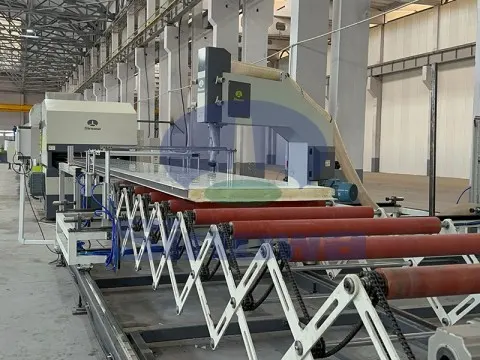
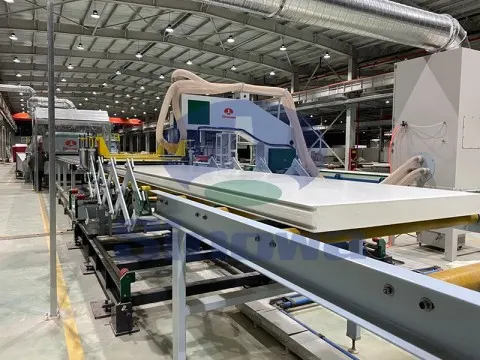
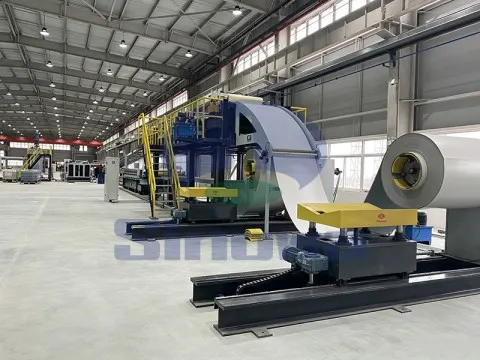
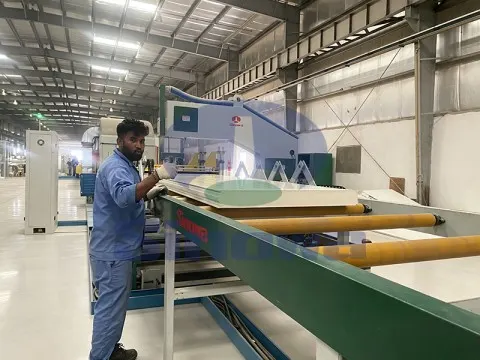
Tags: pu sandwich panel production line, pu sandwich panel production line manufacturer, pu sandwich panel production line supplier, china pu sandwich panel production line, pu sandwich panel production line for sale
-
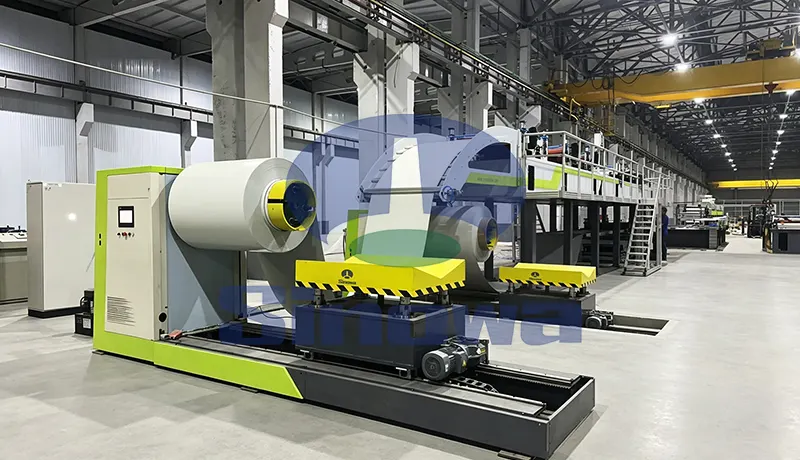
A reliable PU sandwich panel production line serves as the core equipment for manufacturing high-performance building insulation panels. This professional PU sandwich panel line features automated feeding, foaming and molding processes to ensure consistent panel thickness and structural stability. The well-designed polyurethane sandwich panel production line effectively improves production efficiency while reducing material waste in daily operation. Each calibrated polyurethane sandwich panel line can adapt to different panel sizes to meet diverse construction needs. With precise temperature and pressure control, the advanced continuous PU sandwich panel line produces panels with excellent thermal insulation and weather resistance. Meanwhile, the optimized PIR sandwich panel production line upgrades the foaming formula to enhance fire resistance performance. The high-efficiency PIR sandwich panel line maintains stable operation during long-term mass production, delivering durable and high-quality sandwich panels for various architectural and industrial applications.
-
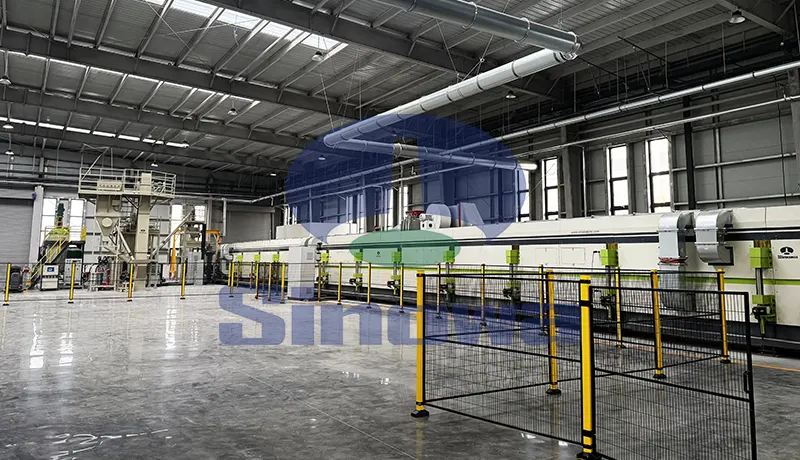
The phenolic panel production line realizes automated and continuous manufacturing of high-performance thermal insulation panels through streamlined and coordinated processing procedures.
-
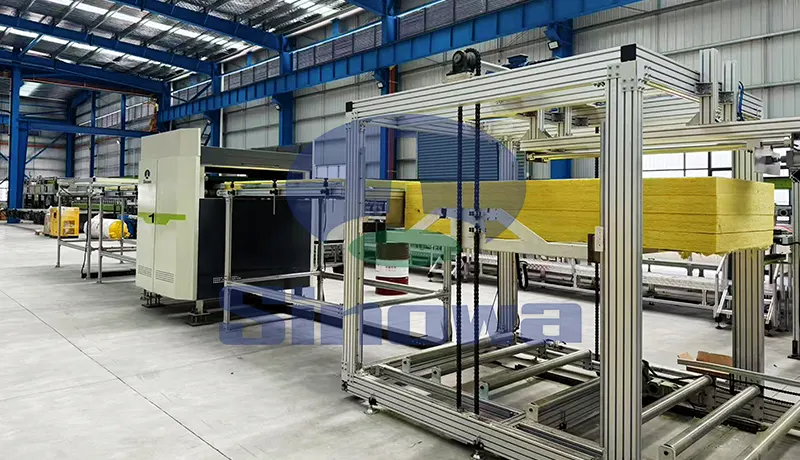
Modern insulation panel manufacturing relies on professional automated equipment to ensure stable product quality and high production efficiency. The rock wool sandwich panel production line features precise material lamination and forming processes to produce rigid, heat-insulating building panels. Meanwhile, the mineral wool sandwich panel production line adopts optimized assembly procedures to fabricate lightweight, soundproof panels widely used in architectural enclosure and thermal preservation projects.