PU Sandwich Panel Making Machine
Publication Date: Sep 28, 2026
PU Sandwich Panel Making Machine, complete continuous production line. Manufacture thermal-insulated PU sandwich panels used in construction and cold chain. Reliable operation, flexible customization, overseas after-sales support.
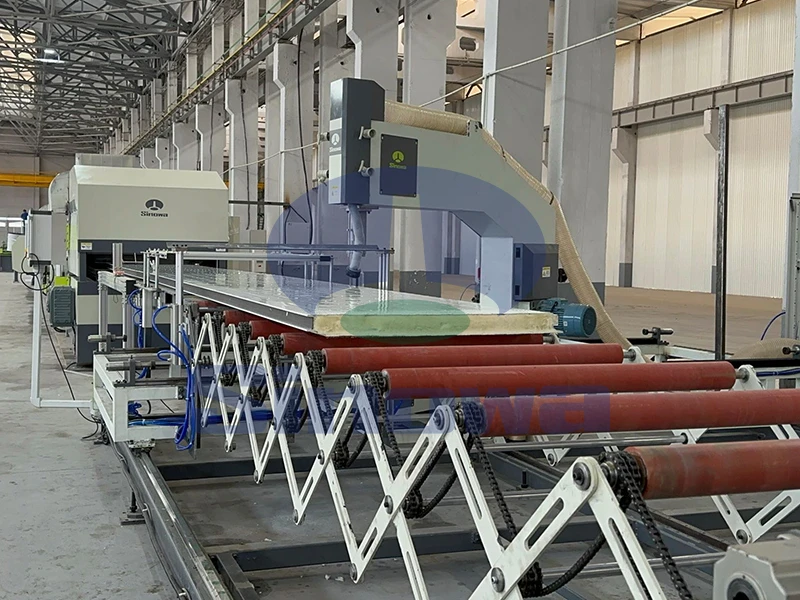
PU sandwich panel making machine is an integrated automated production device for manufacturing polyurethane composite panels. It integrates foaming, laminating, curing and cutting processes, delivering high-efficiency, stable production of insulated panels for diverse construction and industrial applications.
Core Working Principle of the Machine
The operation of a PU sandwich panel machine relies on the seamless integration of mechanical transmission, chemical foaming reaction, and automated thermal control systems. At its core, the equipment completes the composite molding process of surface materials and polyurethane foam core through continuous linear operation, abandoning traditional fragmented and manual-dependent production modes. The entire workflow starts with the precise feeding of upper and lower surface substrates, which are flattened and shaped by professional roller systems to ensure uniform flatness and consistent thickness. Meanwhile, the machine’s high-precision foaming module mixes polyurethane raw materials in accurate proportions, converting liquid raw materials into uniform foam slurry. This slurry is evenly injected between the two layers of surface materials, and under constant temperature and pressure conditions, physical foaming and chemical cross-linking reactions occur continuously. The foam gradually fills the entire interlayer space, forming a dense, pore-uniform core structure that tightly bonds with the surface layers. After full curing and shaping, the integrated panel structure achieves stable overall performance, laying a solid foundation for high-quality finished products. This one-step forming mechanism effectively avoids layered separation and uneven foaming problems common in semi-automatic production, ensuring the structural integrity of each panel.
Main Structural Components and Functional Modules
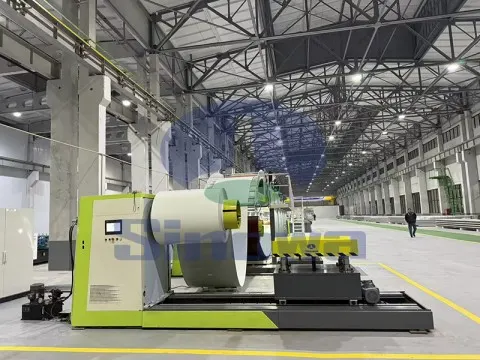
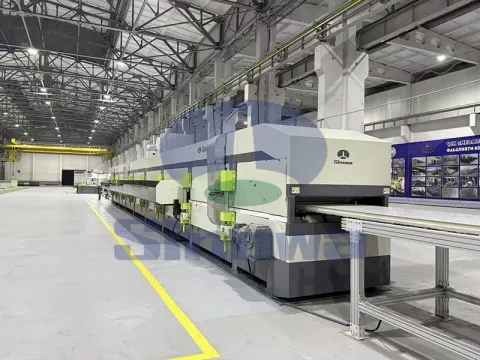
A complete PU sandwich panel making machine consists of multiple independent and collaboratively operating functional modules, each undertaking exclusive production tasks to form a closed-loop automated production system. The uncoiling and feeding module is responsible for stably releasing coiled surface materials, with automatic deviation correction functions to avoid material offset during transmission and ensure continuous feeding accuracy. The roller forming module processes flat coiled materials into customized plate shapes through multi-group precision rollers, adapting to different panel appearance requirements for roof and wall applications. The core foaming and injection module is the key unit of the entire equipment, equipped with high-pressure mixing and spraying devices to ensure uniform mixing of PU raw materials and even distribution of foam across the entire plate width. The constant-temperature laminating and curing module provides a stable thermal environment for foam molding and bonding, controlling heating temperature and transmission speed to guarantee sufficient curing of the composite structure. In addition, the fixed-length cutting module realizes precise sizing of finished panels, while the conveying and stacking module completes automatic transmission and orderly collection of finished products. All modules operate in synchronous coordination, realizing uninterrupted assembly line production and greatly reducing manual operation intervention.
Unique Advantages of Continuous Production Mode
Modern PU sandwich panel machines adopt a fully continuous production mode, which has obvious comprehensive advantages compared with traditional intermittent production equipment. Intermittent production relies on batch processing and manual auxiliary handling, which is prone to product specification differences and low production efficiency, while continuous equipment realizes one-time molding from raw material feeding to finished product output without intermediate pause and repeated positioning. This continuous operation mode eliminates production gaps and human-induced quality fluctuations, ensuring consistent specifications and stable performance of each batch of panels. In terms of production efficiency, the assembly line operation greatly shortens the single-panel production cycle and supports large-scale, mass production to meet the demand of large engineering projects. In terms of product quality, the automated full-process control realizes precise adjustment of foaming density, bonding strength and panel thickness, making the foam core structure denser and the bonding between layers firmer. Moreover, the continuous production mode optimizes raw material utilization, reducing waste generated by repeated debugging and batch switching, and effectively lowering overall production costs while improving production stability and consistency.
Precision Control System for Stable Operation
The stable and high-precision operation of PU sandwich panel making machines is inseparable from an intelligent automatic control system that covers the entire production process. The system centrally regulates all production links including raw material mixing ratio, foaming volume, laminating pressure, curing temperature and transmission speed, realizing digital and standardized production management. Operators can set various production parameters through the centralized control interface according to different product requirements, and the system will automatically adjust the operating state of each module without frequent manual debugging. The real-time monitoring function of the system can track the operating status of key components and production data in real time. Once abnormal parameters such as uneven foaming or unstable transmission speed are detected, the system will automatically trigger early warning and fine-tune parameters to avoid defective products. In addition, the control system has a parameter memory function, which can store the parameter settings of conventional panel specifications. When switching production types, it can quickly call up corresponding parameters to improve production switching efficiency. This intelligent control mode not only reduces the technical threshold of equipment operation but also ensures long-term stable and high-precision operation of the equipment.
Material Adaptability and Product Customization Capacity
High-performance PU sandwich panel making machines feature strong material adaptability and flexible customization capabilities, meeting the diversified production needs of different application scenarios. In terms of surface materials, the equipment can adapt to multiple types of metal and non-metal substrates, realizing stable composite molding of different surface materials without adjusting the main equipment structure. For the core polyurethane foam layer, the equipment can adjust foaming density and pore structure through parameter optimization, producing panels with different thermal insulation and structural strength performances. In terms of product specifications, the machine supports flexible adjustment of panel thickness, width and length, capable of producing thin lightweight panels for interior decoration and thick high-strength panels for exterior wall thermal insulation and roof waterproofing. It can also produce panels with different surface shapes and edge structures to adapt to different installation and engineering design requirements. This flexible customization ability enables the equipment to break the limitation of single product type, meet the personalized needs of different industries and projects, and greatly expand the application scope of PU sandwich panels.
Product Performance and Quality Guarantee Mechanism
Panels produced by professional PU sandwich panel making machines have excellent comprehensive performance, and the equipment’s structural design and production process form a complete quality guarantee mechanism. The precise high-pressure foaming technology ensures that the PU foam core has uniform and closed pore structures, which endows the finished panels with outstanding thermal insulation and heat preservation performance, effectively reducing heat transfer and meeting building energy-saving needs. The integrated one-step molding process enables seamless bonding between the surface layer and the foam core, avoiding hollowing, delamination and cracking problems that easily occur in traditional composite processes, and significantly improving the overall structural stability and service life of the panels. The constant-temperature curing system ensures thorough reaction and full molding of polyurethane raw materials, making the foam core have stable hardness and toughness, and enabling the panels to resist external pressure and impact. In addition, the fixed-length cutting and finishing process ensures neat panel edges and accurate overall dimensions, improving the installation fit and overall aesthetic effect of the product. Every production link is precisely controlled, forming a systematic quality guarantee from raw material molding to finished product output.
Energy Saving and Environmental Protection Production Characteristics
Modern PU sandwich panel making machines are designed with energy-saving and environmental protection concepts, realizing green and low-consumption production in the manufacturing process. In terms of energy consumption control, the equipment adopts optimized heating and transmission structures, which can accurately control the curing temperature and working power according to production speed, avoiding invalid energy consumption caused by long-term high-power operation. The intelligent power adjustment system automatically matches energy output with production load, effectively reducing comprehensive energy consumption per unit product. In terms of raw material utilization, the precise proportional mixing and quantitative injection technology completely avoids excessive raw material addition and leakage waste, greatly improving the utilization rate of polyurethane raw materials. Meanwhile, the closed foaming and production environment effectively reduces the volatilization of trace substances in raw materials, avoiding environmental pollution caused by material diffusion. In addition, the continuous production mode reduces intermediate handling links and mechanical loss, lowering equipment wear and energy waste. The green production characteristics of the equipment not only reduce the operating cost of production enterprises but also make the produced panels conform to the development trend of green building materials.
Daily Operation and Maintenance Essentials
Scientific daily operation and regular maintenance are crucial to maintaining the long-term stable operation and extending the service life of PU sandwich panel making machines. In daily operation, operators need to conduct pre-production inspection on key modules, checking the operating state of the uncoiling system, the cleanliness of the foaming injection device and the accuracy of the control system parameters to ensure no abnormal conditions before startup. During production, it is necessary to monitor the equipment operation status in real time, avoid overload operation and irregular parameter adjustment, and ensure synchronous and stable operation of each functional module. After daily production, residual raw materials on the foaming and laminating devices need to be cleaned in time to prevent material solidification from affecting subsequent production accuracy. For regular maintenance, the transmission parts such as rollers and conveyor belts need regular lubrication and wear inspection to replace severely worn parts in time. The foaming mixing system needs periodic cleaning and debugging to ensure the accuracy of raw material mixing ratio and injection volume. The control system circuit and sensor devices should be inspected regularly to guarantee sensitive and accurate signal transmission. Standardized maintenance can effectively reduce equipment failure rate, maintain stable production efficiency and ensure consistent product quality for a long time.
Wide Application Fields of Finished Products
Panels manufactured by PU sandwich panel making machines are widely used in multiple fields due to their excellent thermal insulation, lightweight, high strength and easy installation characteristics. In the construction industry, these panels are commonly used for exterior wall thermal insulation, roof waterproof insulation, interior partition and ceiling decoration of industrial plants, commercial buildings and public facilities, effectively improving building energy-saving performance and shortening construction cycles. In cold chain logistics, the panels serve as the core materials for cold storage, refrigerated warehouses and fresh-keeping workshops, relying on their superior thermal insulation performance to maintain stable internal temperature and reduce cold loss. In temporary construction facilities, lightweight and easy-to-assemble PU sandwich panels are widely used in prefabricated houses, temporary office buildings and construction dormitories, featuring fast installation and good weather resistance. In addition, the panels are also applied in special fields such as clean workshops, industrial anti-corrosion buildings and agricultural greenhouse insulation, meeting the special performance requirements of different scenarios for thermal insulation, anti-corrosion and dust prevention. The diversified application scenarios fully reflect the high practical value and market adaptability of the equipment’s finished products.
Development Trends and Technical Upgrades
With the continuous upgrading of building material industry standards and market demand, PU sandwich panel making machines are developing towards higher intelligence, higher efficiency and stronger versatility. In terms of intelligent upgrading, the new generation of equipment is gradually equipped with remote monitoring and data analysis functions, which can record production data in real time, analyze production efficiency and product quality trends, and provide data support for production optimization. In terms of production efficiency, equipment transmission and foaming technologies are continuously optimized, realizing faster production speed while ensuring product quality, and further improving large-scale production capacity. In terms of product versatility, upgraded equipment can produce multi-functional composite panels with fire resistance, anti-corrosion and sound insulation properties by adjusting process parameters and matching different auxiliary materials. Meanwhile, the equipment’s energy-saving and environmental protection performance is continuously optimized, with lower energy consumption and higher raw material utilization rate, adapting to the green development trend of the manufacturing industry. In addition, the equipment is developing towards modular and integrated design, making installation, debugging and maintenance more convenient, and better meeting the flexible production needs of modern manufacturing enterprises.
Market Value and Industrial Significance
PU sandwich panel making machines occupy an important position in the modern building material manufacturing industry, with prominent market value and industrial significance. As core equipment for producing high-efficiency energy-saving composite panels, it replaces traditional backward manual and semi-automatic production modes, realizes standardized and large-scale production of high-quality thermal insulation panels, and effectively promotes the upgrading of the building insulation material manufacturing industry. The high-efficiency and low-consumption production characteristics of the equipment help production enterprises reduce operating costs and improve product market competitiveness. The produced PU sandwich panels meet the growing demand for energy-saving, green and lightweight building materials in the construction industry, and play an important role in promoting building energy conservation and emission reduction. In addition, the equipment’s flexible customization ability drives the diversified development of sandwich panel products, expands the application boundary of composite building materials, and provides reliable equipment support for the construction of prefabricated buildings, cold chain infrastructure and energy-saving industrial facilities. With the continuous development of the construction industry and the improvement of green building requirements, the market demand for high-performance PU sandwich panel making machines will continue to grow, and its industrial driving effect will become more significant.
Gallery of PU Sandwich Panel Making Machine
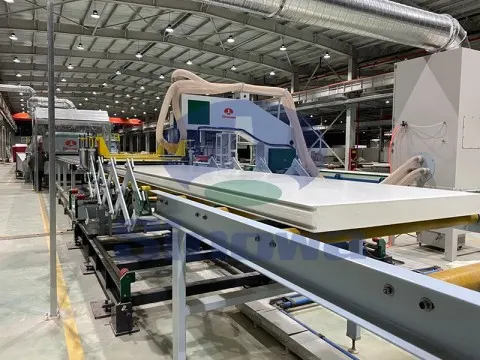
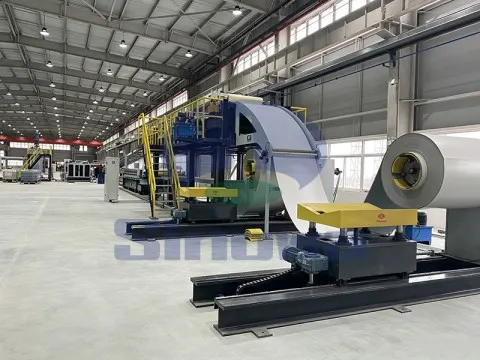
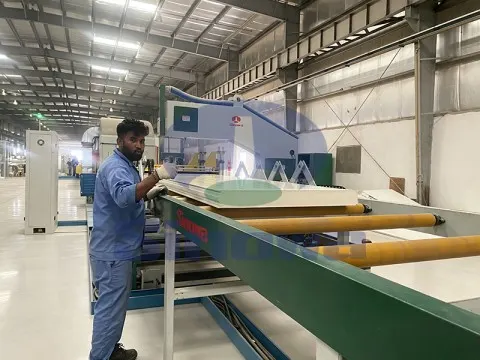
Tags: pu sandwich panel making machine, pu sandwich panel making machine manufacturer, pu sandwich panel making machine supplier, china pu sandwich panel making machine, pu sandwich panel making machine for sale
-
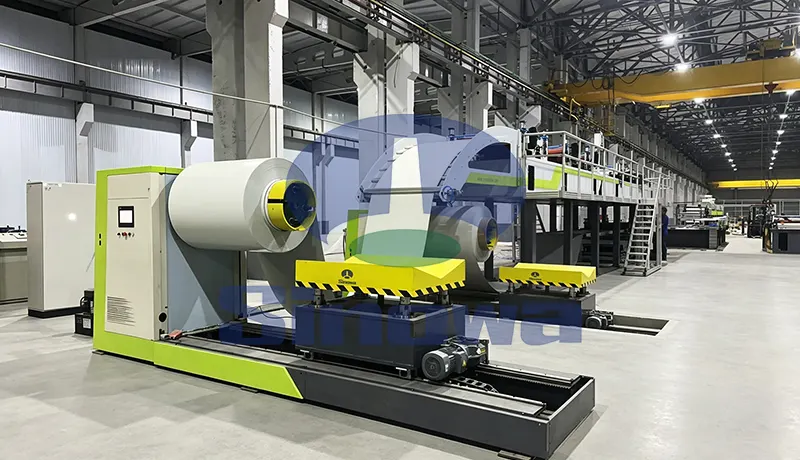
A reliable PU sandwich panel production line serves as the core equipment for manufacturing high-performance building insulation panels. This professional PU sandwich panel line features automated feeding, foaming and molding processes to ensure consistent panel thickness and structural stability. The well-designed polyurethane sandwich panel production line effectively improves production efficiency while reducing material waste in daily operation. Each calibrated polyurethane sandwich panel line can adapt to different panel sizes to meet diverse construction needs. With precise temperature and pressure control, the advanced continuous PU sandwich panel line produces panels with excellent thermal insulation and weather resistance. Meanwhile, the optimized PIR sandwich panel production line upgrades the foaming formula to enhance fire resistance performance. The high-efficiency PIR sandwich panel line maintains stable operation during long-term mass production, delivering durable and high-quality sandwich panels for various architectural and industrial applications.
-
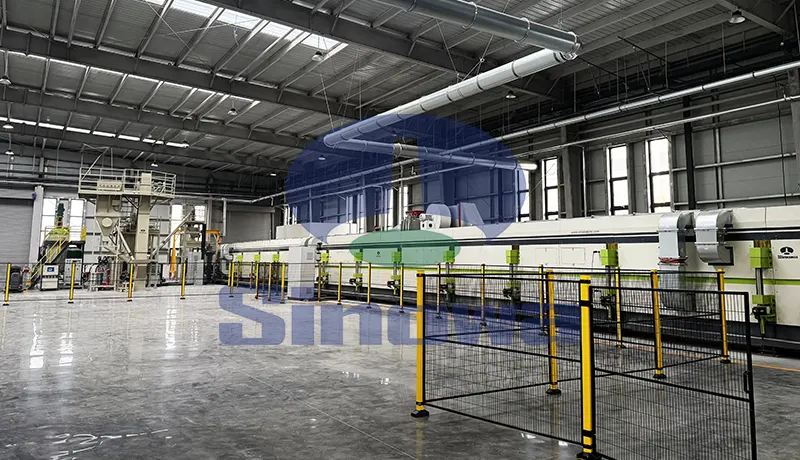
The phenolic panel production line realizes automated and continuous manufacturing of high-performance thermal insulation panels through streamlined and coordinated processing procedures.
-
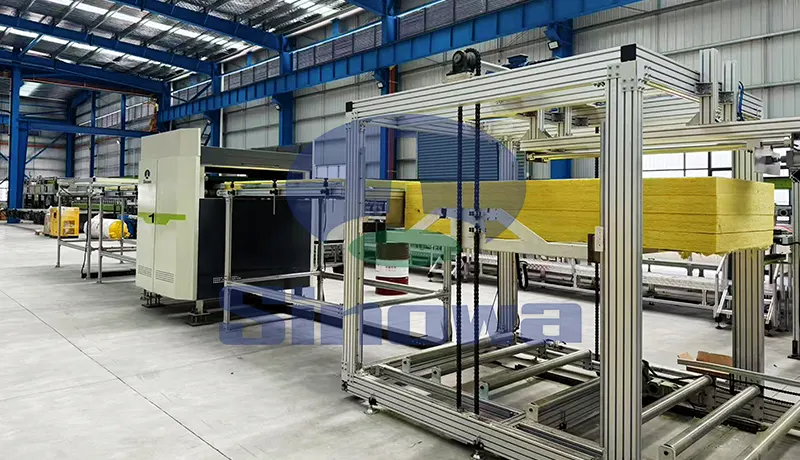
Modern insulation panel manufacturing relies on professional automated equipment to ensure stable product quality and high production efficiency. The rock wool sandwich panel production line features precise material lamination and forming processes to produce rigid, heat-insulating building panels. Meanwhile, the mineral wool sandwich panel production line adopts optimized assembly procedures to fabricate lightweight, soundproof panels widely used in architectural enclosure and thermal preservation projects.