PU Sandwich Panel Machine Cost
Publication Date: Oct 12, 2026
The cost of PU sandwich panel machines varies greatly based on automation levels, structural configurations, functional modules, and operational accessories.
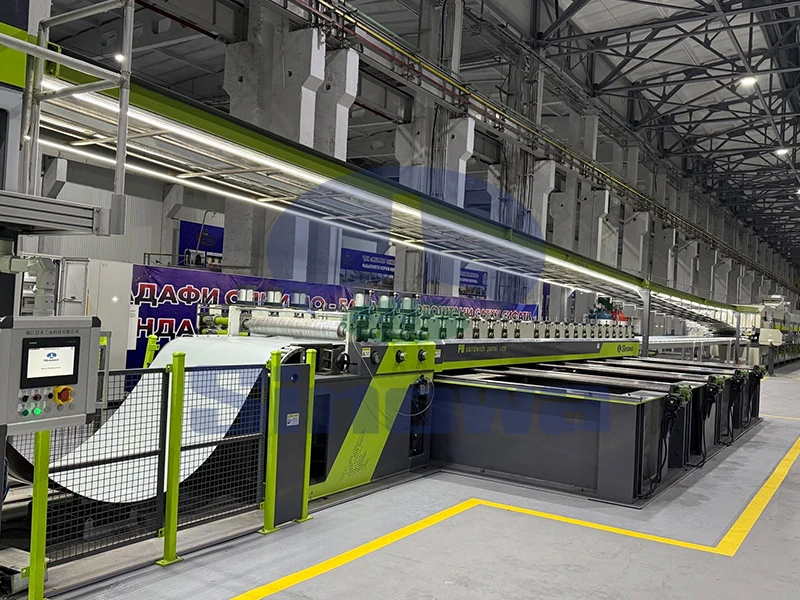
Automation degree stands as the most dominant factor shaping the overall cost of PU sandwich panel machines. Semi-automatic models feature manual auxiliary feeding, simple foam injection control, and offline panel cutting, with simplified mechanical structures and basic electrical systems. These machines require regular manual intervention in production processes, leading to lower manufacturing costs for equipment producers and reduced initial investment for purchasers. In contrast, fully automatic integrated lines adopt centralized PLC control, automated raw material feeding, precise foam proportioning, continuous panel molding, and automatic finished product stacking. The integration of intelligent control systems, high-precision transmission components, and multi-functional linkage mechanisms greatly elevates equipment manufacturing difficulty and material consumption, directly driving up overall equipment costs. Additionally, highly automated models reduce manual labor input and production error rates, forming a long-term cost advantage that balances higher upfront spending.
Machine production capacity and operational efficiency exert profound impacts on cost positioning in the market. Equipment designed for low-volume, small-batch production features compact structural designs, limited molding widths, and slower operating speeds. Its core components adopt conventional industrial-grade materials and standard configurations, effectively controlling production costs and making it suitable for small-scale processing demands. High-capacity production machines, however, are engineered with enlarged molding chambers, enhanced power drive systems, and optimized heat dissipation structures to support long-hour continuous operation. These upgraded structural designs require high-strength wear-resistant materials and customized component processing, which significantly increase production costs. Moreover, high-efficiency equipment delivers higher daily output, shortening production cycles and improving unit product profit margins, which justifies its higher initial cost for large-scale manufacturers pursuing mass production.
Functional configuration diversity is a key variable that widens the cost gap of PU sandwich panel machines. Basic standard machines only support conventional PU foam sandwich panel production, with single molding specifications and fixed foam injection parameters, covering only general building insulation panel manufacturing needs. Their standardized component assembly and simple functional design keep costs at a relatively low level. Upgraded multi-functional models integrate adjustable thickness molding systems, multi-density foam switching functions, and compatible processing structures for different surface materials. Some advanced configurations also add real-time parameter monitoring, automatic fault detection, and material waste recovery modules. Each additional functional module requires independent mechanical structures, electrical control units, and debugging processes, increasing raw material consumption, assembly labor, and technical research and development costs, thus raising the total equipment investment.
Core component quality and material selection directly determine machine manufacturing costs and subsequent operational costs. Low-cost equipment usually adopts ordinary carbon steel frames, conventional motors, and common injection pump components, which meet basic production requirements but have limited wear resistance and stability. These materials reduce upfront manufacturing costs but lead to frequent component aging and replacement in long-term operation. High-cost premium machines utilize high-strength alloy steel for main frames, wear-resistant precision injection pumps, and energy-efficient servo motors. These high-quality materials and components undergo strict processing and precision calibration, greatly improving equipment stability, durability, and energy-saving performance. Although the initial component procurement and processing costs are higher, they effectively lower later maintenance frequency, component replacement costs, and energy consumption expenses over the equipment service life.
Equipment structural design and manufacturing craftsmanship bring invisible cost differences for PU sandwich panel machines. Simplified structural designs with fewer integrated components and conventional welding processes reduce production cycles and processing difficulty, cutting down manufacturing costs. Such machines have loose structural matching and poor operational stability, prone to vibration and parameter deviation during high-speed operation. Premium machines adopt integrated modular structural design, precision CNC cutting, and seamless welding craftsmanship, ensuring tight matching between components and overall structural firmness. The refined manufacturing process requires sophisticated processing equipment, skilled technical workers, and repeated quality inspection procedures, which increase labor and time costs in production. Meanwhile, optimized structural design reduces equipment failure risks and improves production consistency, creating stable operational value for users.
After-sales service packages and technical support systems constitute an important part of the total machine investment cost. Basic equipment transactions only include simple product delivery and short-term fault warranty services, with no additional technical guidance or after-sales support, so the overall equipment pricing is relatively low. Comprehensive service packages cover long-term quality warranty, on-site installation and commissioning, professional operator training, regular equipment maintenance guidance, and lifelong technical consultation. Providers offering full-cycle after-sales services need to build professional service teams, reserve complete spare parts, and develop standardized training systems, all of which generate continuous operational costs. These service costs are reasonably included in the total equipment quotation, enabling buyers to avoid additional spending on installation, debugging, and technical training in the early operational stage.
Logistics, installation, and commissioning expenses are easily overlooked auxiliary costs in the overall machine investment. Small-sized and lightweight semi-automatic machines have simple packaging requirements and convenient transportation conditions, with low logistics and handling costs. Their installation and commissioning processes are simple, requiring only basic mechanical docking and parameter debugging, with minimal labor and time costs. Large-scale fully automatic production lines feature huge equipment volume, heavy overall weight, and scattered component packaging, requiring professional large-scale logistics equipment and customized packaging protection to avoid damage during transportation. On-site installation involves multi-component docking, circuit debugging, and production parameter calibration, needing professional technical teams to complete long-cycle commissioning work. These auxiliary logistics and engineering service costs add up to a non-negligible part of the total equipment investment.
Market supply and demand relationship and industry iteration trends dynamically affect PU sandwich panel machine cost levels. In periods of sufficient market supply and stable industry demand, equipment producers face fierce market competition, prompting reasonable profit compression and relatively stable overall equipment costs. When market demand surges rapidly, production capacity of mainstream equipment cannot meet market needs, and short-term supply shortages will drive up overall equipment pricing. Additionally, with the continuous iteration of PU foam molding technology and intelligent manufacturing concepts, old-generation equipment with backward functions and low efficiency will gradually depreciate in cost. New-generation equipment with energy-saving, high-precision, and multi-functional advantages will maintain higher cost levels due to technical upgrading and market demand for advanced production capacity.
Long-term operational and maintenance costs are critical indicators for evaluating comprehensive machine investment value. Low-initial-cost equipment usually has high energy consumption, low production yield, and frequent minor faults in daily operation. Users need to spend continuously on component replacement, fault repair, and energy consumption, resulting in high long-term comprehensive costs. High-quality machines with higher upfront costs adopt energy-saving drive systems and precise control technologies, effectively reducing unit product energy consumption and material waste. Their stable operational performance lowers fault occurrence rates, reducing daily maintenance labor input and spare parts replacement frequency. Over the entire equipment service cycle, high-quality equipment often has lower comprehensive operational costs and higher long-term investment return rates.
Reasonable cost budget and equipment selection rely on matching machine performance with actual production demands. Small-scale processing projects with low output requirements and single product types can opt for cost-effective semi-automatic standard machines to control initial investment and avoid functional redundancy and capital waste. Medium and large production enterprises with high output demands, diverse product specifications, and long-term continuous production needs should prioritize high-performance fully automatic multi-functional lines. Although the upfront cost is higher, the advantages of high efficiency, low consumption, and stable operation can effectively improve production benefits. Comprehensive consideration of initial equipment cost, auxiliary investment, and long-term operational cost is essential to realize the most cost-effective equipment investment and production operation mode.
Gallery of PU Sandwich Panel Machine






Tags: pu sandwich panel machine, pu sandwich panel machine manufacturer, pu sandwich panel machine supplier, china pu sandwich panel machine, pu sandwich panel machine for sale
https://www.sandwichpanelmanufacturingline.com/blog/pu-sandwich-panel-machine-cost.html
-

A reliable PU sandwich panel production line serves as the core equipment for manufacturing high-performance building insulation panels. This professional PU sandwich panel line features automated feeding, foaming and molding processes to ensure consistent panel thickness and structural stability. The well-designed polyurethane sandwich panel production line effectively improves production efficiency while reducing material waste in daily operation. Each calibrated polyurethane sandwich panel line can adapt to different panel sizes to meet diverse construction needs. With precise temperature and pressure control, the advanced continuous PU sandwich panel line produces panels with excellent thermal insulation and weather resistance. Meanwhile, the optimized PIR sandwich panel production line upgrades the foaming formula to enhance fire resistance performance. The high-efficiency PIR sandwich panel line maintains stable operation during long-term mass production, delivering durable and high-quality sandwich panels for various architectural and industrial applications.
-

The phenolic panel production line realizes automated and continuous manufacturing of high-performance thermal insulation panels through streamlined and coordinated processing procedures.
-

Modern insulation panel manufacturing relies on professional automated equipment to ensure stable product quality and high production efficiency. The rock wool sandwich panel production line features precise material lamination and forming processes to produce rigid, heat-insulating building panels. Meanwhile, the mineral wool sandwich panel production line adopts optimized assembly procedures to fabricate lightweight, soundproof panels widely used in architectural enclosure and thermal preservation projects.