Prefab House PU Sandwich Panel Line
Publication Date: Oct 12, 2026
The PU sandwich panel production line serves as the core automated equipment for manufacturing insulated panels for prefab houses. It integrates multiple processing procedures to produce high-performance building panels with stable insulation, structural strength and durability for modular construction projects.
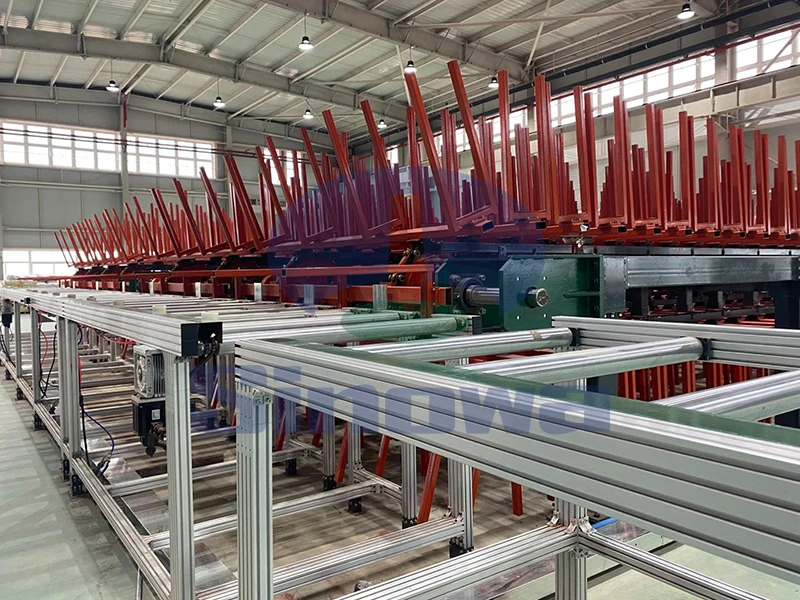
The overall operation of the PU sandwich panel production line features a fully continuous automated workflow that minimizes manual participation and optimizes manufacturing efficiency for prefab house construction. This integrated production system combines mechanical transmission, precise chemical dosing, constant-temperature forming and automatic conveying to form a closed-loop manufacturing process from raw material feeding to finished panel output. Unlike traditional intermittent production modes, this streamlined line avoids frequent process interruptions and parameter fluctuations, ensuring consistent product quality in every batch. All operational procedures are logically interconnected, with each functional unit working in precise synergy to adapt to large-scale and standardized prefab panel production demands. The systematic design also simplifies daily operation and subsequent maintenance, making it highly adaptable for long-term industrial production of prefab building materials.
Raw material preparation is the foundational stage of the entire PU sandwich panel production process, covering surface sheet processing and PU core material raw material deployment. For surface materials, the line is equipped with automatic unwinding and pre-treatment modules that release metal or decorative sheet coils steadily, while completing surface cleaning, smoothing and impurity removal. This pre-treatment effectively eliminates dust, oil stains and surface burrs, creating a clean and flat bonding base for subsequent PU foam adhesion. Meanwhile, the system conducts precise proportioning of polyol, isocyanate and auxiliary additives for PU foam raw materials. All material feeding speeds and component ratios are automatically adjusted by the system to match production speed, laying a solid foundation for uniform foaming and stable bonding performance of finished panels.
Roll forming technology is a key procedure that shapes the outer sheets of PU sandwich panels for prefab houses. After surface pre-treatment, the flat sheet materials are sent into the precision roll forming unit composed of multiple groups of profiling rollers. These roller sets adopt hierarchical compression design to gradually bend and shape the flat sheets into standard wall and roof panel profiles required for prefab buildings. The roller spacing and pressing strength are finely calibrated to ensure uniform sheet deformation without cracks or uneven radian. The modular roller structure allows flexible adjustment of profiling specifications, enabling the line to produce panels with different shapes and sizes to meet diverse prefab house design needs. The whole forming process runs continuously at a stable speed, guaranteeing the dimensional accuracy and surface flatness of each panel.
The high-pressure PU mixing and pouring system constitutes the core functional module of the production line, determining the thermal insulation and structural performance of finished panels. The system adopts digital metering units to accurately control the mixing ratio of PU raw materials, ensuring full fusion of all components before pouring. After high-pressure homogeneous mixing, the liquid PU mixture is evenly sprayed onto the moving lower surface sheet through a traversing pouring head. The spraying flow rate and moving trajectory are precisely synchronized with the line running speed to avoid material accumulation or sparse distribution. Within seconds after spraying, the liquid mixture triggers a mild chemical foaming reaction, expanding steadily to form a dense closed-cell foam layer. This precise foaming control prevents voids and density differences inside the core layer, ensuring consistent thermal insulation and compression resistance of the panels.
Laminating and thickness calibration processes ensure the overall structural uniformity and dimensional standardization of PU sandwich panels. After PU material pouring and initial foaming, the upper and lower surface sheets and the middle foam core layer enter the double-belt laminating unit. The upper and lower conveyor belts maintain a fixed and adjustable gap, which accurately defines the final thickness of the sandwich panel. The uniform pressing force generated by the belt system promotes tight composite bonding between the foam core and surface sheets, realizing integrated molding without gaps or delamination. The constant-pressure laminating environment also optimizes the internal cell structure of PU foam, enhancing the overall compactness and structural stability of the panel. This process effectively eliminates product defects caused by uneven pressing, greatly improving the yield rate of finished panels.
Constant-temperature curing is an indispensable post-forming process to stabilize the performance of PU sandwich panels for prefab houses. After laminating and shaping, the initially formed panels are transported into the independent curing passage with a constant-temperature control system. The enclosed curing environment maintains stable temperature conditions to promote complete cross-linking and solidification of PU foam molecules. This gradual curing process fully releases the internal stress generated during foaming and laminating, preventing panel deformation, warping or cracking in subsequent use. Sufficient curing also enhances the bonding strength between the core layer and surface sheets, as well as the overall rigidity and weather resistance of the panel. Reasonable curing time and temperature parameters ensure that the finished panels achieve optimal structural stability and long-term service performance.
Precision cutting and sizing processing endows PU sandwich panels with standardized dimensions for modular prefab house assembly. After completing curing and shaping, the continuous long panels are sent to the automatic cutting unit equipped with dual precision cutting blades. The system automatically sets cutting lengths according to production requirements, achieving fixed-length cutting with high accuracy. The cutting blades adopt wear-resistant and high-precision design to ensure smooth and flat panel sections without burrs, foam peeling or sheet deformation. The intelligent cutting system can flexibly switch sizing parameters to produce panels of different lengths, adapting to the diversified dimensional requirements of prefab house walls, roofs and partitions. The automatic cutting operation replaces manual measurement and trimming, greatly improving production efficiency and dimensional consistency of products.
Automatic conveying and stacking systems realize efficient finished product collection and orderly arrangement in the production line. After cutting and sizing, qualified panels are smoothly transported through the multi-section buffer conveyor system, which plays a role in stable transition and secondary cooling. The conveyor speed is intelligently matched with the front-end cutting process to avoid panel accumulation and collision damage. Subsequently, the automatic stacking device neatly stacks the finished panels according to set specifications, realizing unmanned collection of finished products. The stacking mechanism runs stably with uniform stress on panels, effectively preventing surface scratches and structural damage. This automated link simplifies finished product management, saves manual handling costs, and facilitates subsequent packaging, storage and transportation of panels.
The automated control system runs through the entire production line to realize intelligent and stable operation of all procedures. The core control unit integrates real-time monitoring of feeding speed, mixing ratio, pressing pressure, curing temperature and cutting parameters. All operational data is displayed and adjusted through an intuitive human-machine interface, allowing operators to monitor the production status in real time and make fine parameter adjustments according to production needs. The system is equipped with automatic fault detection and early warning functions, which can timely identify abnormal conditions such as material blockage and parameter deviation, and trigger protective measures to reduce production failures. The intelligent control mode ensures the coordination and stability of each production link, realizing standardized and efficient batch production.
PU sandwich panels produced by this professional production line deliver outstanding comprehensive performance suitable for various prefab house scenarios. The closed-cell PU foam core layer provides excellent thermal insulation and heat preservation effects, effectively reducing indoor and outdoor heat exchange and improving the energy-saving performance of prefab buildings. The integrated composite structure of metal sheets and foam core endows the panels with good compression resistance, bending resistance and structural toughness, adapting to different environmental loads. In addition, the panels feature lightweight characteristics, which reduce the overall load of prefab houses and simplify on-site assembly and construction. With stable chemical properties, the panels also resist aging and corrosion, ensuring long-term reliable service in different construction environments.
Gallery of Prefab House PU Sandwich Panel Line






Tags: prefab house pu sandwich panel line, prefab house pu sandwich panel line manufacturer, prefab house pu sandwich panel line supplier, china prefab house pu sandwich panel line, prefab house pu sandwich panel line for sale
https://www.sandwichpanelmanufacturingline.com/blog/prefab-house-pu-sandwich-panel-line.html
-

A reliable PU sandwich panel production line serves as the core equipment for manufacturing high-performance building insulation panels. This professional PU sandwich panel line features automated feeding, foaming and molding processes to ensure consistent panel thickness and structural stability. The well-designed polyurethane sandwich panel production line effectively improves production efficiency while reducing material waste in daily operation. Each calibrated polyurethane sandwich panel line can adapt to different panel sizes to meet diverse construction needs. With precise temperature and pressure control, the advanced continuous PU sandwich panel line produces panels with excellent thermal insulation and weather resistance. Meanwhile, the optimized PIR sandwich panel production line upgrades the foaming formula to enhance fire resistance performance. The high-efficiency PIR sandwich panel line maintains stable operation during long-term mass production, delivering durable and high-quality sandwich panels for various architectural and industrial applications.
-

The phenolic panel production line realizes automated and continuous manufacturing of high-performance thermal insulation panels through streamlined and coordinated processing procedures.
-

Modern insulation panel manufacturing relies on professional automated equipment to ensure stable product quality and high production efficiency. The rock wool sandwich panel production line features precise material lamination and forming processes to produce rigid, heat-insulating building panels. Meanwhile, the mineral wool sandwich panel production line adopts optimized assembly procedures to fabricate lightweight, soundproof panels widely used in architectural enclosure and thermal preservation projects.