PU Sandwich Panel Manufacturing Line
Publication Date: Oct 6, 2026
Fully automatic continuous PU sandwich panel manufacturing line for insulated roof, wall & cold room panels. High-precision PU foaming, lamination, curing & cutting. Stable output, energy-saving, ideal for prefab building insulation projects.
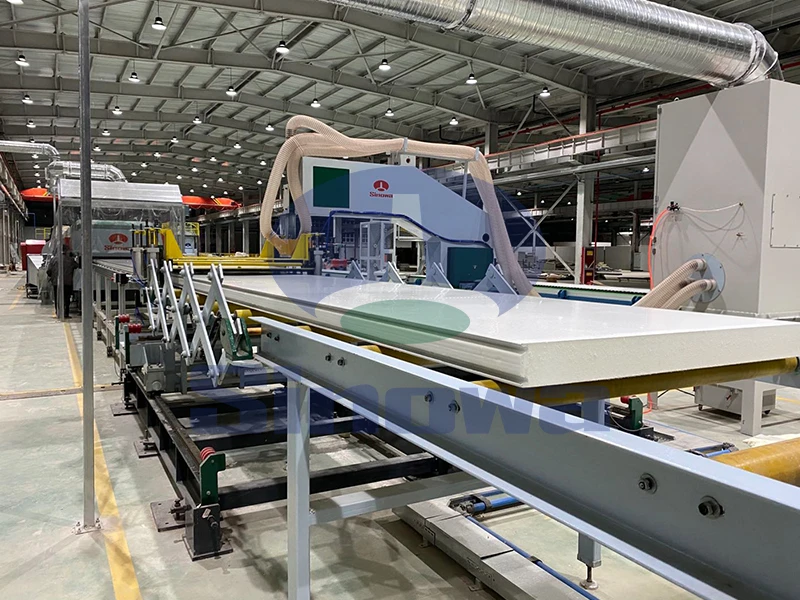
The PU sandwich panel manufacturing line is a continuous, automated production system designed to produce high-performance insulated composite panels. It integrates multiple precision processing units to complete raw material forming, foaming, lamination, curing and finishing in one streamlined workflow.
Core Composition and Operational Principle
A complete PU sandwich panel manufacturing line is composed of a series of interconnected functional modules that operate in synchronous coordination to realize uninterrupted industrial production. Each module undertakes a specialized processing task, forming a closed-loop production system from raw material input to finished product output. The core operational principle relies on continuous mechanical transmission and precise chemical reaction control, enabling polyurethane raw materials to foam, expand and solidify steadily between two layers of surface materials. Unlike intermittent production equipment, this assembly line features integrated linkage of all processes, effectively eliminating manual intervention errors and improving production consistency. The overall structure covers feeding pretreatment, roll forming, high-pressure foaming, composite lamination, constant-temperature curing, cooling shaping, fixed-length cutting, edge trimming and automatic stacking. Every functional unit is adjusted and synchronized through an intelligent control system to ensure stable running speed and matched processing rhythm, laying a solid foundation for standardized panel production with uniform thickness, stable structure and excellent overall performance.
Raw Material Feeding and Pretreatment System
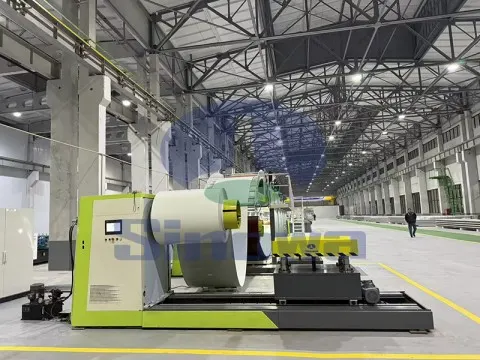
The raw material feeding and pretreatment system serves as the initial gateway of the entire production line, directly determining the bonding quality and surface finish of finished PU sandwich panels. This system mainly includes uncoiling equipment, leveling devices and multi-dimensional surface pretreatment units, which are responsible for conveying and refining upper and lower surface base materials. Common applicable surface materials cover various metal and non-metal plates with good flatness and ductility, meeting the diversified application needs of sandwich panels. During operation, the uncoiling unit steadily releases coiled raw materials at a constant speed, avoiding material deviation and tension unevenness that may cause plate deformation. The subsequent leveling process eliminates tiny warps and wrinkles on the plate surface, ensuring the flatness of base materials before formal processing. The pretreatment link further removes surface dust, oil stains and oxide residues through physical cleaning technologies. Some configurations are also equipped with micro-surface treatment processes to enhance the surface roughness of base plates, which significantly improves the adhesion between surface materials and PU foam core layers. Scientific and standardized pretreatment effectively avoids foaming hollowing, delamination and poor composite adhesion in subsequent processes, greatly extending the service life of finished panels.
Precision Roll Forming Process
Roll forming is a key molding process that shapes flat raw plates into standardized structural profiles for PU sandwich panels. This processing unit adopts multi-group continuous roller sets with high-precision calibration design, which can gradually bend and shape flat plates according to preset panel structural parameters without damaging the base material structure. All roller components are made of high-wear-resistant materials, ensuring long-term stable operation and long service life under continuous production conditions. The core advantage of the roll forming system lies in its gradual molding logic, which disperses the stress generated during plate bending and effectively prevents plate cracking, edge warping and surface scratch defects. In actual operation, the system can adapt to different plate thicknesses and profile specifications through parameter adjustment, realizing flexible production of various panel types. Meanwhile, the built-in deviation correction device monitors the plate transmission track in real time, automatically fine-tuning the feeding position to ensure consistent molding accuracy of each batch of plates. High-quality roll forming lays a good structural foundation for the subsequent composite lamination process, ensuring that the overall dimensional accuracy and structural stability of sandwich panels meet industrial production requirements.
High-Pressure PU Foaming and Mixing System
The high-pressure PU foaming and mixing system is the core functional module that determines the thermal insulation performance and structural compactness of sandwich panels. This system is responsible for precise proportioning, high-speed mixing and uniform pouring of polyurethane chemical raw materials, which is the key link to form the foam core layer of panels. The equipment adopts advanced high-pressure mixing technology, which can fully blend different PU components in an accurate ratio under stable pressure conditions. The precise ratio control system ensures the uniformity of foaming raw materials, avoiding performance differences caused by uneven component mixing. During the production process, the mixed liquid PU materials are evenly poured on the surface of the lower base plate through a special pouring nozzle. With the continuous transmission of the production line, the liquid materials slowly expand and fill the gap between the upper and lower plates, forming a dense and uniform foam structure after complete foaming. The system is equipped with independent temperature and pressure adjustment modules to adapt to different production environments and panel thickness specifications. Reasonable foaming parameter control can effectively avoid common defects such as foam hollowing, uneven density and excessive bubble pores, ensuring that the core layer has excellent thermal insulation, sound insulation and shock resistance.
Double-Belt Lamination and Composite Shaping
The double-belt lamination and composite shaping process undertakes the task of pressing and compounding the upper and lower surface plates with the foaming core layer, which directly affects the overall flatness, thickness accuracy and structural tightness of finished panels. The core equipment of this link is a high-strength double-belt pressing machine, which consists of upper and lower circulating wear-resistant conveyor belts. The two groups of belts maintain a stable and adjustable spacing, which accurately defines the final thickness specification of the sandwich panel. During operation, the initially compounded panel semi-finished product after PU pouring enters the closed lamination area, and the conveyor belts apply uniform and continuous static pressure on the upper and lower surfaces of the panel. This uniform pressure can make the foaming materials expand evenly in all directions, fully fit with the surface plates, and eliminate gaps between layers. Meanwhile, the closed lamination environment provides stable temperature conditions for the preliminary curing of PU foam, promoting the rapid combination of chemical components. The double-belt structure operates synchronously with the front-end production process, realizing continuous composite molding without intermittent pause. This processing method effectively improves the production efficiency while ensuring that each position of the panel bears consistent pressure, avoiding local thickness deviation and composite looseness, and realizing high-precision integral shaping of sandwich panels.
Constant-Temperature Curing and Solidification Process
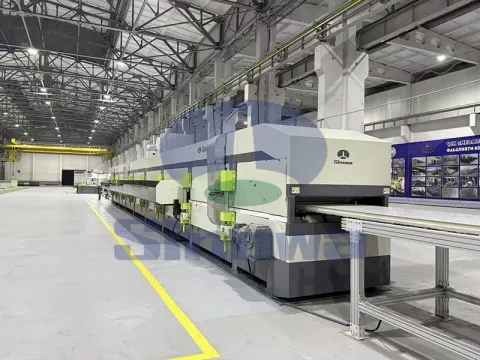
The constant-temperature curing and solidification stage is crucial for stabilizing the internal structure and comprehensive performance of PU sandwich panels. After lamination and composite shaping, the panel semi-finished products need to go through a continuous constant-temperature curing channel to complete the final chemical reaction and structural solidification of the PU foam core layer. The curing system adopts a fully enclosed temperature control structure, which can maintain a stable internal temperature environment to ensure that the foaming reaction proceeds fully and uniformly. In this process, the molecular structure of the PU foam layer is gradually stabilized, the bonding force between the core layer and the surface plate is further enhanced, and the overall hardness, toughness and structural stability of the panel are significantly improved. Reasonable curing time and temperature matching can effectively avoid incomplete reaction, soft core layer and easy delamination of panels. The curing channel is designed with a long-distance circulating transmission structure, which ensures that continuous produced panels can obtain sufficient curing time. Different from natural curing, the constant-temperature curing mode greatly shortens the production cycle, while ensuring the consistency of curing effect of each batch of products, making the mechanical and thermal insulation properties of panels more stable and reliable.
Cooling and Precision Shaping Treatment
After completing the constant-temperature curing process, the panels enter the cooling and precision shaping link to complete surface temperature reduction and final structural calibration. The high-temperature panels coming out of the curing channel have not yet completely stabilized in shape, and local thermal expansion may cause slight deformation or flatness deviation. The cooling system adopts multi-channel uniform air cooling technology, which reduces the surface and internal temperature of the panel at a constant speed through circulating cold air. The gradual cooling mode avoids panel cracking or structural deformation caused by rapid temperature difference. While cooling, the precision shaping device conducts fine calibration on the overall flatness and edge straightness of the panel. It corrects tiny structural deviations generated in the previous processes through micro-pressure adjustment and positioning correction. This process further optimizes the dimensional accuracy and appearance quality of the panels, eliminating minor defects such as edge warping and surface unevenness. Stable cooling and shaping treatment ensure that the internal stress of the panels is completely released, making the finished panels have stable structural performance and neat appearance, meeting the high-standard use requirements of various application scenarios.
Fixed-Length Cutting and Edge Finishing
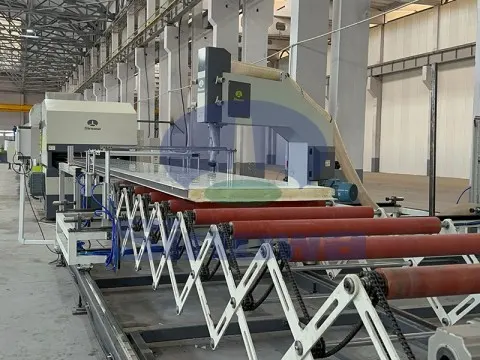
Fixed-length cutting and edge finishing are the core finishing processes to convert continuous long-strip semi-finished panels into standard finished products. This link adopts an automatic tracking and cutting system with high-precision positioning function, which can intelligently identify the running speed and length of long-strip panels in real time. According to preset product specification parameters, the system automatically completes fixed-length cutting without manual measurement and marking. The cutting equipment uses high-speed precision cutting tools, which can realize smooth and burr-free cutting sections, avoiding plate deformation and edge damage during cutting. After cutting, the edge finishing device conducts comprehensive trimming, deburring and dust removal treatment on the panel edges. It polishes rough cutting sections and cleans residual foam debris and metal scraps on the panel surface and edges. This series of finishing operations not only improves the appearance neatness of the panels, but also eliminates potential safety hazards caused by sharp edges and burrs during installation and use. In addition, the system supports flexible switching of cutting lengths, which can meet the customized production needs of panels with different specifications and improve the versatility of the production line.
Surface Protection and Film Lamination Process
The surface protection and film lamination process is an important auxiliary link to improve the durability and appearance quality of PU sandwich panels. After finishing cutting and edge trimming, the smooth surface of the panels is easily scratched, polluted or oxidized during transportation, stacking and subsequent construction. The automatic film lamination system can attach a layer of transparent protective film on the upper and lower surfaces of the panels in real time. The protective film has good wear resistance, anti-fouling and anti-oxidation properties, which can effectively isolate external dust, moisture and mechanical friction damage. The lamination equipment adopts synchronous pressing and pasting technology, which realizes flat and bubble-free film pasting through uniform roller pressure. The film lamination speed is fully synchronized with the panel transmission speed to avoid film wrinkling, deviation and peeling. This process not only protects the surface finish of finished panels, but also simplifies the on-site construction cleaning work. Users can tear off the protective film after construction is completed to obtain brand-new panel surface effect, greatly improving the product appearance and service retention rate.
Automatic Stacking and Post-Production Handling
The automatic stacking and post-production handling system is the final terminal link of the entire PU sandwich panel production line, realizing automatic collection and arrangement of finished products. After completing all processing and finishing procedures, the qualified finished panels are transmitted to the stacking station through the conveyor system. The intelligent stacking equipment adopts mechanical arm positioning and clamping technology, which can stably and accurately grab single panels and arrange them neatly according to fixed stacking specifications. The system can automatically adjust the stacking height and arrangement mode according to panel specifications, realizing orderly stacking of finished products. The automatic stacking mode replaces traditional manual handling, which greatly improves production efficiency and avoids panel damage, pollution and irregular stacking caused by manual operation. At the same time, the stacked finished panels are convenient for subsequent packaging, transportation and warehousing management. The whole post-production process realizes unmanned automatic operation, which optimizes the production workflow, reduces labor costs, and ensures the neatness and integrity of finished panel products, providing convenient conditions for subsequent product delivery and application.
Overall Production Line Advantages and Application Value
The integrated PU sandwich panel manufacturing line has outstanding comprehensive advantages in industrial production, with high automation, stable operation and strong production flexibility. The whole production process realizes continuous unmanned operation from raw material feeding to finished product stacking, which greatly improves production efficiency and batch production capacity compared with traditional intermittent equipment. The intelligent parameter control system ensures consistent product quality, effectively reducing the rate of defective products caused by human operation errors. The production line can adapt to the production of sandwich panels with different thicknesses, surface materials and structural specifications through simple parameter adjustment, meeting the diversified production needs of multiple industries. The produced PU sandwich panels have excellent thermal insulation, sound insulation, fire resistance and structural stability, with light weight and convenient installation. They are widely applicable in building enclosure structures, industrial workshops, cold storage insulation, clean rooms and other fields. The efficient and stable operation of the manufacturing line not only improves the industrial production level of sandwich panels, but also provides high-quality lightweight insulation building materials for modern engineering construction, with broad market application value and industrial promotion significance.
Gallery of PU Sandwich Panel Manufacturing Line
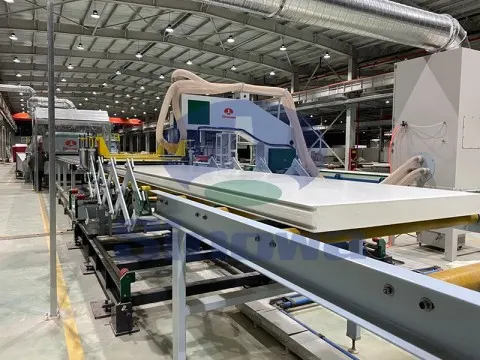
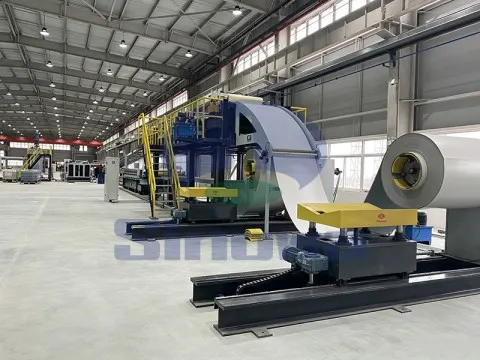
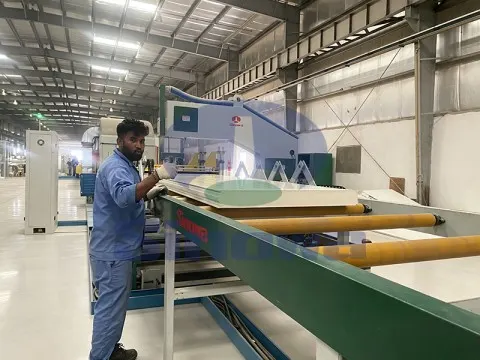
Tags: pu sandwich panel manufacturing line, pu sandwich panel manufacturing line manufacturer, pu sandwich panel manufacturing line supplier, china pu sandwich panel manufacturing line, pu sandwich panel manufacturing line for sale
-
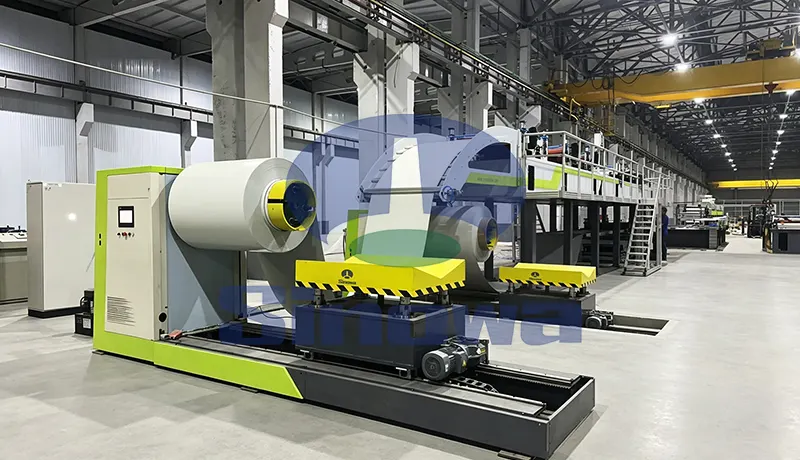
A reliable PU sandwich panel production line serves as the core equipment for manufacturing high-performance building insulation panels. This professional PU sandwich panel line features automated feeding, foaming and molding processes to ensure consistent panel thickness and structural stability. The well-designed polyurethane sandwich panel production line effectively improves production efficiency while reducing material waste in daily operation. Each calibrated polyurethane sandwich panel line can adapt to different panel sizes to meet diverse construction needs. With precise temperature and pressure control, the advanced continuous PU sandwich panel line produces panels with excellent thermal insulation and weather resistance. Meanwhile, the optimized PIR sandwich panel production line upgrades the foaming formula to enhance fire resistance performance. The high-efficiency PIR sandwich panel line maintains stable operation during long-term mass production, delivering durable and high-quality sandwich panels for various architectural and industrial applications.
-
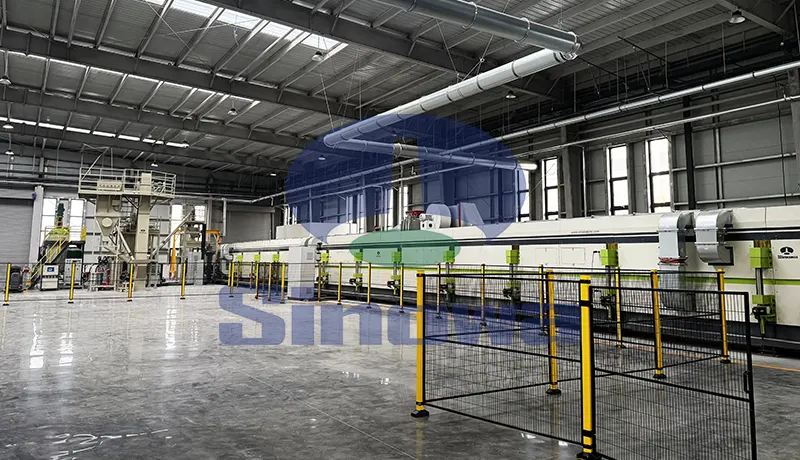
The phenolic panel production line realizes automated and continuous manufacturing of high-performance thermal insulation panels through streamlined and coordinated processing procedures.
-
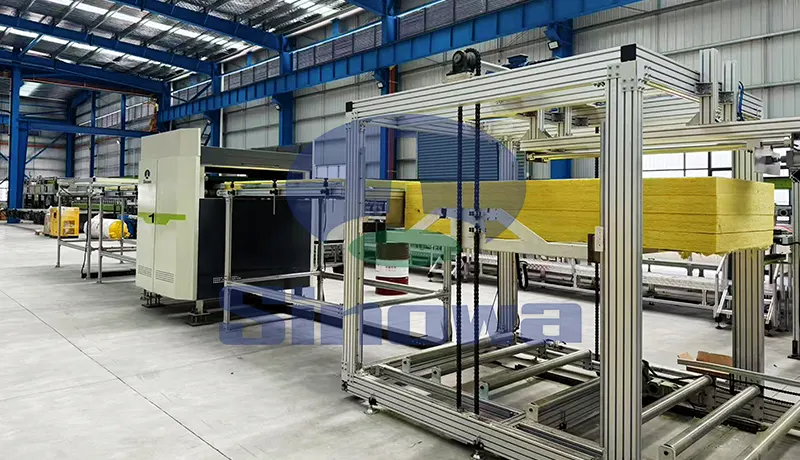
Modern insulation panel manufacturing relies on professional automated equipment to ensure stable product quality and high production efficiency. The rock wool sandwich panel production line features precise material lamination and forming processes to produce rigid, heat-insulating building panels. Meanwhile, the mineral wool sandwich panel production line adopts optimized assembly procedures to fabricate lightweight, soundproof panels widely used in architectural enclosure and thermal preservation projects.