Why Does The Continuous PU Sandwich Panel Production Line Have Inconsistent Panel Surface Flatness?
Publication Date: Oct 7, 2026
Inconsistent surface flatness of PU sandwich panels from continuous production lines stems from intertwined mechanical, chemical, operational and environmental factors.
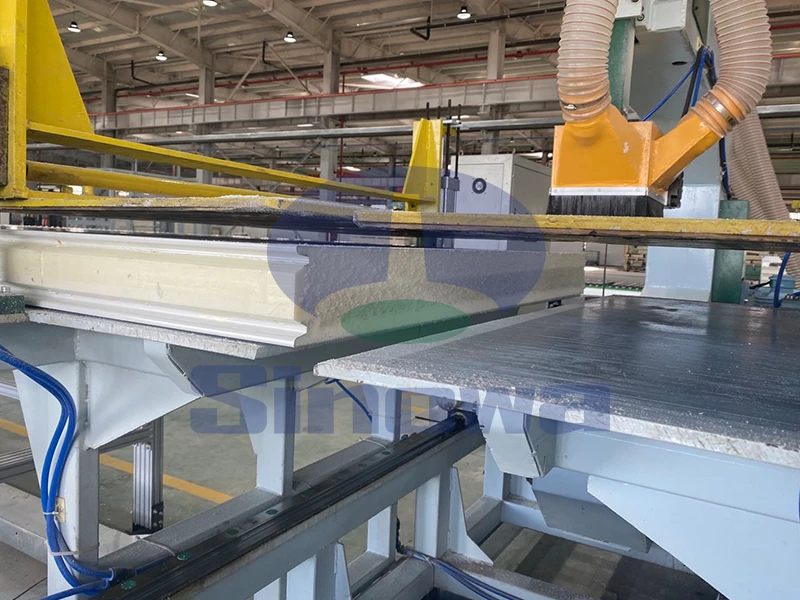
Mechanical misalignment of core production equipment is one of the most fundamental causes of uneven PU sandwich panel surface flatness. Long-term continuous operation of the production line inevitably leads to subtle displacement and deformation of key components, including pressing rollers, conveyor belts and forming stations. Initial installation deviations and cumulative mechanical vibration during high-load operation further aggravate the misalignment of equipment axes and working planes. When the upper and lower conveyor belts of the laminating unit fail to maintain complete parallelism, the pressure exerted on the panel surface varies horizontally and longitudinally. Local over-pressure compresses the panel core excessively to form sunken areas, while under-pressure positions retain uneven foam bulges, resulting in irregular wavy surfaces. Additionally, worn or uncalibrated roller gaps create inconsistent extrusion force on the surface sheet, destroying the flatness uniformity of finished panels.
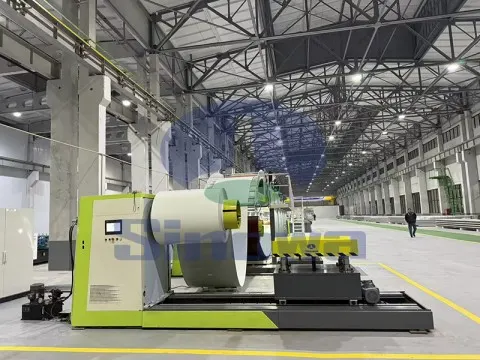
Unstable tension control of surface metal sheets directly triggers surface flatness defects in continuous PU sandwich panel production. The decoiling and feeding system determines the flatness state of the outer sheets before foaming and laminating. Unstable tension output caused by aging tension control components or improper parameter debugging leads to tight-loose alternating states of the metal sheet during continuous feeding. Sheets with excessive tension will produce micro tensile deformation and shrink after leaving the pressing unit, forming concave surface areas, while loose sheets accumulate redundant material and form local bulges. Moreover, asynchronous tension adjustment between left and right sides of the sheet causes unilateral deviation and torsion in the feeding process. This uneven strain distribution permanently affects the panel surface, and the deformation cannot be eliminated by subsequent lamination processing, resulting in persistent flatness inconsistencies.
Uneven pressure distribution in the hydraulic pressing system is a critical factor leading to panel surface flatness abnormalities. The continuous laminating process relies on stable and uniform hydraulic pressure to ensure consistent core density and surface fitting of PU sandwich panels. Aging hydraulic components, unbalanced oil circuit pressure and blocked pressure pipelines often cause inconsistent pressure output in different areas of the pressing platform. Areas with insufficient pressure cannot fully compact the foaming PU core, leading to low local density and easy post-curing warping. In contrast, over-pressed areas have excessively compacted core materials and uneven thickness, forming obvious surface height differences. Long-term uneven pressure operation also causes partial fatigue deformation of the pressing belt, further amplifying surface flatness errors and forming a cyclic production defect.
Mismatched PU foaming chemical parameters and poor mixing quality severely disrupt panel surface flatness. The foaming reaction of polyurethane core materials requires precise coordination of formula ratio, reaction speed and production line speed. Inaccurate chemical dosing leads to inconsistent foaming density and curing speed of PU materials in different panel sections. Materials with fast curing speed complete shaping first and generate shrinkage tension in advance, while slow-curing parts continue to expand, causing internal stress imbalance and surface warping. In addition, incomplete mixing of PU raw materials in the mixing head results in uneven distribution of foaming agents and curing agents. Local insufficient foaming forms hollow or thin areas, while excessive partial foaming causes bulges, creating irregular textures similar to orange peel on the panel surface.
Asynchronous operating speed of production line units causes cumulative flatness errors of sandwich panels. A continuous PU sandwich panel production line integrates multiple independent functional units, including feeding, foaming, laminating and shaping. Slight speed differences between adjacent units will produce subtle extrusion and traction force on semi-finished panels. Even tiny speed deviations will be continuously amplified in long-distance continuous production. When the foaming injection speed fails to match the conveyor belt moving speed, the PU core material cannot expand and fill uniformly in the limited space, resulting in uneven core thickness. Uncoordinated shaping unit speed will also cause inconsistent stress release of the panel surface, making the finished panel produce periodic wavy flatness defects along the length direction.
Thermal deformation and temperature imbalance in the production environment affect panel surface flatness stability. Continuous high-load operation of the production line generates sustained heat, leading to slight thermal expansion and deformation of equipment frames, rollers and conveyor belts. Different thermal expansion coefficients of various equipment components cause local height deviation of the working platform, destroying the overall flatness of the production operation surface. Meanwhile, uneven ambient temperature in the production workshop leads to inconsistent curing speed of PU core materials and surface sheets. Panels in high-temperature areas cure rapidly and shrink slightly, while low-temperature areas have delayed curing and uneven stress release. This temperature difference induced deformation remains after panel cooling and finalization, resulting in overall surface flatness inconsistencies of finished products.
Irregular wear and maintenance deficiency of key equipment components aggravate flatness defects of PU sandwich panels. Long-term continuous production causes gradual wear of conveyor belt surfaces, pressing rollers and guide rails. Partial wear of the conveyor belt leads to uneven surface friction and height difference, which is directly transmitted to the panel surface during lamination. Worn rollers lose their original cylindrical precision and produce uneven extrusion force on panels during operation. In addition, lack of regular cleaning and calibration of foaming and pressing equipment leads to residual material accumulation on component surfaces. These accumulated impurities change the local gap and pressure of the production unit, resulting in partial thickness deviation and surface unevenness of sandwich panels in continuous production.
Unreasonable feeding deviation and positioning errors trigger local flatness abnormalities of panels. In the continuous production process, offset feeding of surface sheets is a common operational problem that affects flatness. Slight center deviation of sheet feeding causes inconsistent stress on both sides of the panel during roll forming and lamination. The offset side bears excessive extrusion force and produces compressive deformation, while the other side has insufficient stress and loose fitting. Besides, inaccurate positioning of side baffles and guiding devices leads to unstable lateral positioning of panels. Minor lateral displacement during high-speed operation makes the PU core expand unevenly on both sides, forming edge warping and middle concave-convex defects, which seriously damage the overall surface flatness of finished panels.
Unstable physical properties of raw materials induce potential flatness defects in finished panels. Batch differences in the toughness, thickness uniformity and surface flatness of metal surface sheets will affect the final forming effect of sandwich panels. Sheets with uneven internal stress will release residual stress after lamination and curing, resulting in spontaneous warping and deformation. Meanwhile, inconsistent viscosity and activity of PU raw materials in different batches lead to unstable foaming multiples and curing shrinkage rates. The core material with uneven density distribution cannot provide uniform support for the surface sheet, making the panel surface produce irregular concave and convex changes. Such raw material-induced flatness problems are often scattered and difficult to eliminate through simple equipment adjustment.
Improper post-production cooling and shaping processes exacerbate panel surface flatness inconsistencies. After leaving the pressing unit, PU sandwich panels are in an incomplete curing state with unstable internal stress. Unreasonable cooling speed and uneven cooling air distribution cause inconsistent heat dissipation speed on different panel surfaces. Rapid cooling areas shrink rapidly and form tension differences, while slow cooling areas have delayed stress release, leading to overall torsion and warping of panels. In addition, uneven stacking and premature cutting of semi-finished panels before complete curing will produce external extrusion and gravity deformation. These post-process deformations will be fixed with the final curing of PU materials, forming permanent surface flatness defects of finished sandwich panels.
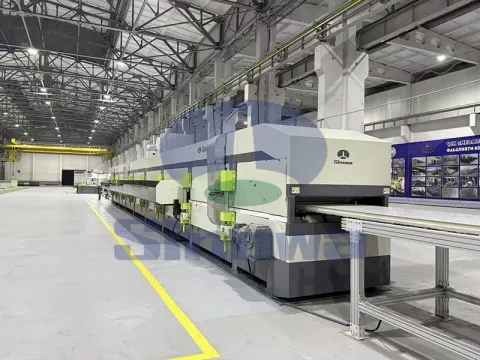
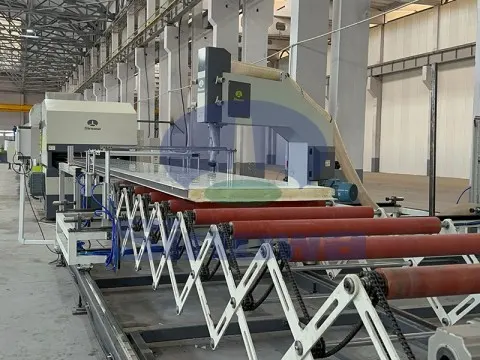
Gallery of Continuous PU Sandwich Panel Production Line
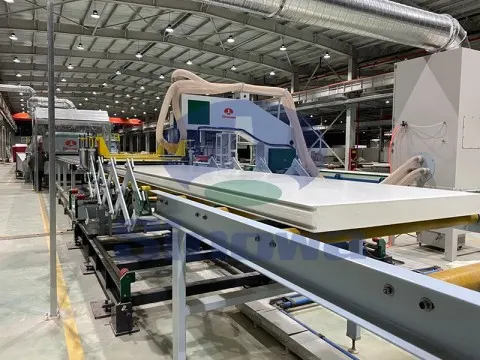
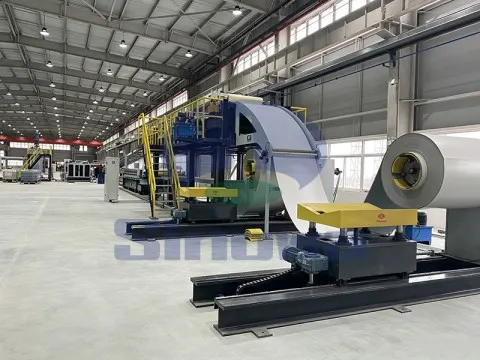
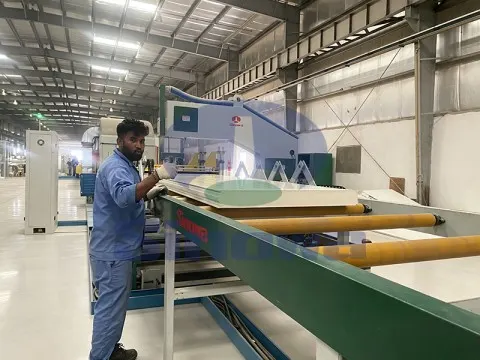
Tags: continuous pu sandwich panel production line, continuous pu sandwich panel production line manufacturer, continuous pu sandwich panel production line supplier, china continuous pu sandwich panel production line, continuous pu sandwich panel production line for sale
-
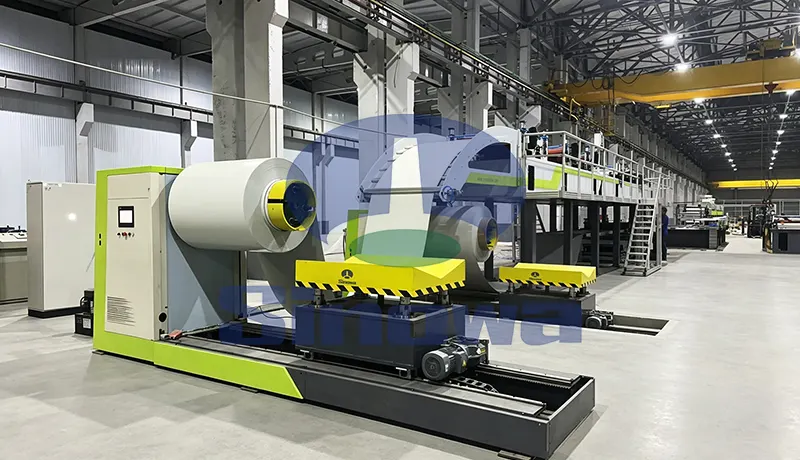
A reliable PU sandwich panel production line serves as the core equipment for manufacturing high-performance building insulation panels. This professional PU sandwich panel line features automated feeding, foaming and molding processes to ensure consistent panel thickness and structural stability. The well-designed polyurethane sandwich panel production line effectively improves production efficiency while reducing material waste in daily operation. Each calibrated polyurethane sandwich panel line can adapt to different panel sizes to meet diverse construction needs. With precise temperature and pressure control, the advanced continuous PU sandwich panel line produces panels with excellent thermal insulation and weather resistance. Meanwhile, the optimized PIR sandwich panel production line upgrades the foaming formula to enhance fire resistance performance. The high-efficiency PIR sandwich panel line maintains stable operation during long-term mass production, delivering durable and high-quality sandwich panels for various architectural and industrial applications.
-
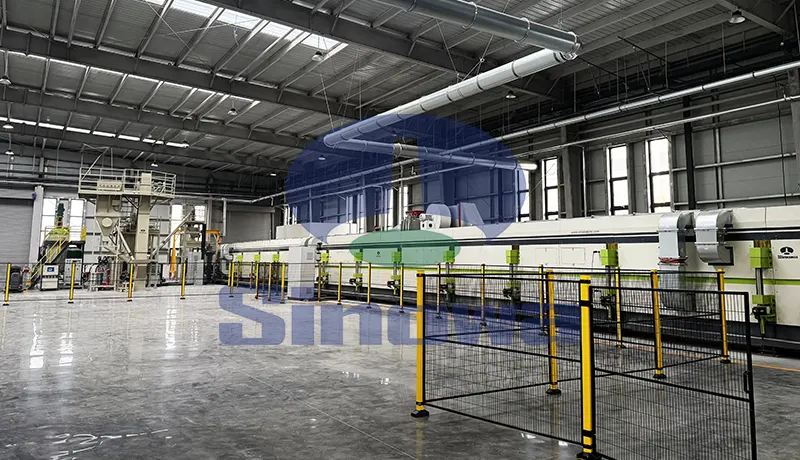
The phenolic panel production line realizes automated and continuous manufacturing of high-performance thermal insulation panels through streamlined and coordinated processing procedures.
-
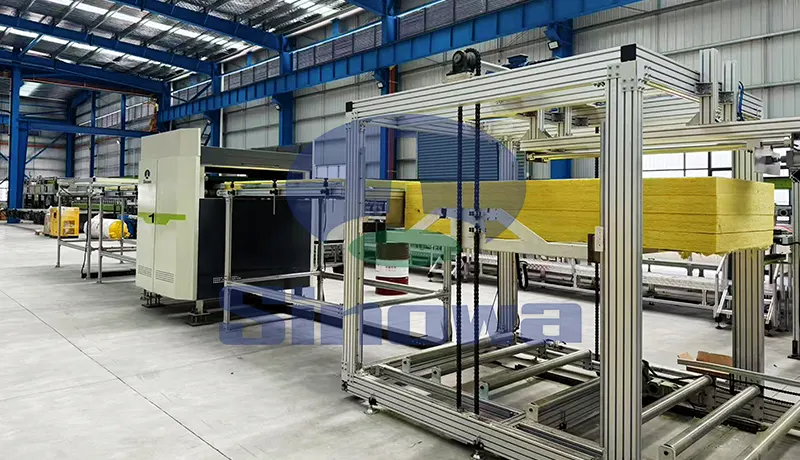
Modern insulation panel manufacturing relies on professional automated equipment to ensure stable product quality and high production efficiency. The rock wool sandwich panel production line features precise material lamination and forming processes to produce rigid, heat-insulating building panels. Meanwhile, the mineral wool sandwich panel production line adopts optimized assembly procedures to fabricate lightweight, soundproof panels widely used in architectural enclosure and thermal preservation projects.