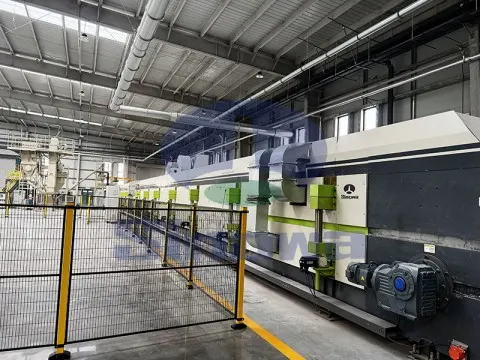
PIR Sandwich Panel Production Line
Publication Date: Sep 28, 2026
Fully automatic PIR sandwich panel production line for continuous manufacturing of fireproof, thermal-insulated PIR wall & roof panels. Complete turnkey solution with decoiler, foaming, cutting & stacking.
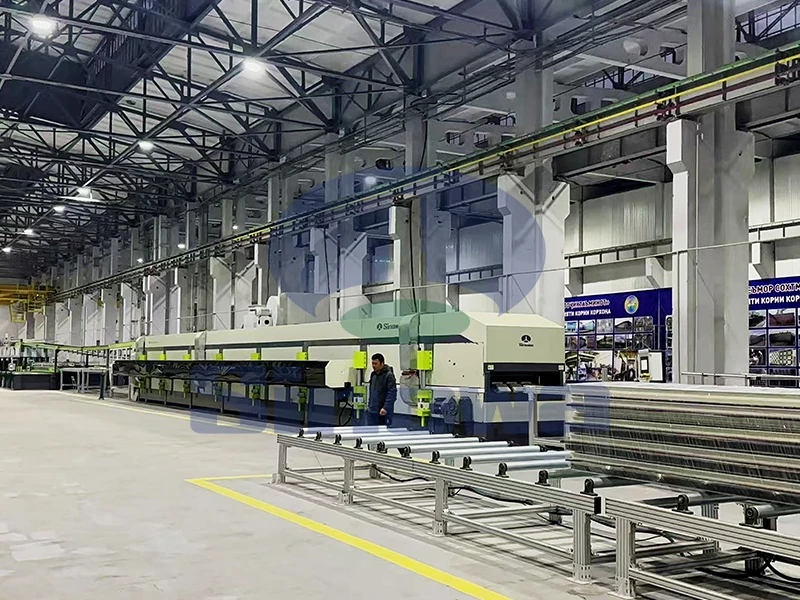
The PIR sandwich panel production line is an automated, integrated manufacturing system for high-performance polyisocyanurate composite panels. It streamlines full-process production from raw material treatment to finished products, delivering durable, heat-insulating, and fire-resistant building panels for modern construction industries.
Core Overview and Industrial Value of PIR Sandwich Panel Production Line
The continuous PIR sandwich panel line is a sophisticated automated manufacturing system tailored for mass production of polyisocyanurate composite building panels. Differentiated from traditional intermittent production equipment, this integrated line realizes uninterrupted, one-stop manufacturing covering raw material pretreatment, chemical foaming, composite molding, curing, and finished product cutting. It effectively addresses the drawbacks of conventional production modes, including low output efficiency, unstable product consistency, and excessive manual intervention. As a core equipment for lightweight energy-saving building material production, it supports the manufacturing of high-performance panels with excellent thermal insulation, structural stability, and flame retardancy. The industrial value of the production line lies in its ability to standardize panel production, unify product performance indicators, and adapt to large-scale construction project demands. It has become essential equipment for the modern green building industry, helping manufacturers optimize production workflows, reduce comprehensive production costs, and improve the overall quality of building enclosure materials. With the growing demand for energy-efficient and safe building structures worldwide, the automated PIR panel production line continues to gain widespread application in industrial plant construction, cold chain engineering, and public building renovation fields.
Basic Composition of the Full Production Line System
A complete PIR sandwich panel production line consists of multiple interconnected functional units, each undertaking independent and collaborative production tasks to ensure systematic and orderly operation. The main functional modules include surface material unwinding and pretreatment unit, precise chemical batching and mixing unit, continuous foaming and composite molding unit, constant-temperature curing unit, fixed-length cutting and finishing unit, as well as intelligent control and auxiliary transmission unit. Each module is precisely matched in operating speed and process parameters to form a closed-loop production system. The surface material processing unit is responsible for unwinding metal or non-metal facing materials, correcting material deviation, and conducting surface cleaning and priming treatment to enhance the bonding force between the surface layer and the core foam material. The batching and mixing unit serves as the core of core material production, adopting precision metering devices to control the proportion of polyol, isocyanate, and special catalysts required for PIR foam reaction. The molding and curing units undertake panel shaping and molecular stabilization, while the finishing unit realizes standardized cutting and edge trimming of finished panels. All units are coordinated by a centralized control system to avoid production disconnection and ensure continuous and stable operation of the entire line.
Raw Material Selection and Preprocessing Technology
High-quality raw materials and standardized preprocessing are the fundamental guarantees for superior performance of PIR sandwich panels. The production line involves two main types of raw materials: surface facing materials and PIR foam core raw materials. Common facing materials include color-coated metal sheets, stainless steel sheets, and composite inorganic plates, all of which require strict preprocessing before formal composite molding. The preprocessing process includes surface oil removal, dust cleaning, and uniform primer coating, which eliminates surface impurities that may affect bonding effect and increases the adhesion between the facing and foam core. For PIR core raw materials, liquid polyether polyol, polymeric isocyanate, trimerization catalysts, and foam stabilizers are adopted. These chemical materials are stored in sealed constant-temperature storage tanks in the production line to prevent component deterioration caused by temperature changes, moisture absorption, or air oxidation. Before batching, the system performs automatic material circulation and filtering to remove tiny impurities in the liquid materials and ensure the uniformity of chemical components. Unlike ordinary PUR foam raw materials, PIR formula requires higher isocyanate content and specialized catalyst matching, which puts forward higher requirements for raw material purification and preprocessing accuracy. Scientific raw material pretreatment effectively avoids foaming defects such as uneven core density, hollow bubbles, and poor bonding, laying a solid foundation for stable panel quality.
Precision Batching and High-Speed Mixing Process
The batching and mixing process is the key link determining the foaming quality and core performance of PIR sandwich panels. The production line is equipped with a fully automatic precision batching system composed of high-precision metering pumps, independent material conveying pipelines, and intelligent flow monitoring modules. Each chemical raw material is transported independently, and the system dynamically adjusts the conveying flow according to preset process parameters to ensure accurate proportioning of all components. Even tiny deviations in the ratio of PIR chemical components will affect the trimerization reaction degree of foam molecules, thereby changing the flame retardancy and dimensional stability of the core material, so the batching system maintains ultra-high measurement accuracy throughout the production process. After batching, all raw materials are sent to a high-speed stirring mixing chamber for instantaneous uniform mixing. The sealed mixing environment prevents external air from mixing in to avoid generating large bubbles inside the foam. Meanwhile, the system precisely controls the mixing speed and time to ensure full fusion of each component and form a homogeneous reaction solution. The mixed material is quickly sprayed between the upper and lower facing materials through a special spray head. The whole process is completed in a closed automatic state, avoiding manual operation errors and ensuring consistent reaction conditions for each batch of foam materials, which realizes standardized production of PIR foam cores.
Continuous Foaming and Composite Molding Principle
The continuous foaming and composite molding process is the core working link of the entire production line, directly determining the structural integrity and mechanical properties of sandwich panels. After the mixed PIR reaction liquid is sprayed on the lower facing material, the upper and lower facing materials are clamped and conveyed forward synchronously by the double-layer conveyor system of the molding unit. The conveyor system can stably control the spacing between the two layers of facings according to the preset panel thickness, ensuring uniform thickness of the finished product. In the closed molding cavity, the PIR liquid material undergoes rapid chemical reaction, including foaming, expansion, and curing molding. With the help of temperature and pressure control in the molding area, the material completes molecular polymerization and trimerization reaction, forming a compact and uniform closed-cell foam structure. The closed-cell structure effectively improves the thermal insulation performance and compressive strength of the panel, while ensuring lightweight characteristics. During the molding process, the primer on the inner surface of the facing material reacts with the foam material synchronously, realizing integrated composite bonding without gaps or delamination. The continuous conveying mode makes the foaming and molding process uninterrupted, avoiding the inconsistent density and structural defects caused by intermittent production. This molding principle enables the production line to stably manufacture high-integrity composite panels with consistent structural performance.
Multi-Stage Constant Temperature Curing Technology
Curing treatment is an indispensable post-molding process to stabilize the comprehensive performance of PIR sandwich panels, and the production line adopts an advanced multi-stage constant temperature curing system to complete this process. The initially molded semi-finished panels have not yet completed full molecular reaction, and the internal foam structure and bonding performance are in an unstable state. The multi-stage curing zone sets gradient temperature parameters according to the chemical reaction characteristics of PIR materials, realizing segmented heating and heat preservation. In the initial curing stage, low-temperature slow heating is adopted to accelerate the penetration and fusion of the bonding interface, preventing rapid temperature rise from causing internal stress and panel deformation. In the intermediate curing stage, the temperature is appropriately increased to promote the complete trimerization reaction of PIR foam molecules, optimize the closed-cell structure, and improve the compactness and stability of the core material. In the final curing stage, constant temperature heat preservation is carried out to balance the internal and external temperature of the panel, eliminate residual stress, and fix the overall structural performance. The entire curing process is carried out in a fully closed thermal insulation furnace, which avoids the influence of external temperature and humidity changes. The intelligent temperature control system realizes real-time monitoring and automatic adjustment of furnace temperature, ensuring that each panel obtains consistent curing effect and effectively improving the dimensional stability, bonding firmness, and service life of finished panels.
Fixed-Length Cutting and Precision Finishing Process
After completing curing and shaping, the continuous long-strip semi-finished panels enter the fixed-length cutting and finishing unit for final shaping treatment. The production line is equipped with an intelligent servo cutting system, which can accurately identify and set the cutting length according to production requirements, realizing automatic fixed-length cutting of continuous panels. The servo drive system ensures high-precision cutting size, effectively avoiding size deviation caused by mechanical transmission errors. The cutting tool adopts high-hardness wear-resistant materials, which can complete smooth cutting of composite panels with different thicknesses without damaging the surface facing materials or causing core material collapse. After cutting, the edge trimming and finishing device automatically polishes the panel edges and corners to remove burrs and residual foam materials, making the panel edges flat and neat. Meanwhile, the system completes preliminary inspection of panel surface flatness and edge bonding state to screen out semi-finished products with minor defects. The whole finishing process is automated and efficient, replacing traditional manual trimming, greatly improving production efficiency and product dimensional accuracy. The standardized finishing process ensures uniform appearance and size of finished panels, which is convenient for subsequent stacking, transportation, and on-site assembly and construction.
Intelligent Control and Automatic Operation System
Modern PIR sandwich panel production lines are equipped with a centralized intelligent control system, which realizes full-process automatic monitoring, parameter adjustment, and fault diagnosis of production. The core of the system is an industrial intelligent controller, which connects and controls all functional units of the production line uniformly. Operators can set production parameters such as panel thickness, length, raw material ratio, and curing temperature through the human-computer interaction interface. The system automatically optimizes and matches the operating speed and process parameters of each module to ensure the coordinated operation of the entire production line. In the production process, the real-time monitoring module collects data such as material flow, molding pressure, curing temperature, and operating speed in real time, and displays the production status dynamically. Once abnormal parameters or equipment faults occur, the system will automatically trigger an alarm and perform emergency protection operations to avoid defective products and equipment damage. In addition, the control system has a parameter storage function, which can save the process parameters of different types of panels, realizing one-click parameter switching for diversified production. The intelligent operation mode reduces manual operation links, lowers the dependence on skilled workers, and improves production stability and production efficiency while reducing human error rates.
Core Performance Advantages of Line-Produced PIR Panels
Panels produced by professional PIR continuous production lines have significant comprehensive performance advantages compared with traditional manually produced or intermittently produced panels. First, the precise chemical batching and uniform foaming process endows the PIR core material with a complete closed-cell structure, making the panels have excellent thermal insulation performance and low thermal conductivity, which can effectively reduce building energy consumption. Second, the sufficient trimerization reaction of PIR materials ensures outstanding thermal stability and flame retardancy. The core material will not melt or drip at high temperatures, with low smoke generation during combustion, improving the safety of building use. In terms of structural performance, integrated continuous molding and high-temperature curing make the bonding interface between the surface layer and the core material firm and not easy to delaminate, and the panels have good compressive resistance and bending resistance. In addition, the standardized production process ensures consistent thickness, flatness, and density of each panel, with stable product quality and low defect rate. These performance advantages make line-produced PIR sandwich panels suitable for high-demand scenarios such as ultra-low temperature cold storage, high-temperature industrial workshops, and high-standard public buildings, fully meeting the performance requirements of modern green energy-saving buildings.
Production Line Operation and Maintenance Management Points
Scientific daily operation and regular maintenance are key to ensuring the long-term stable and efficient operation of the PIR sandwich panel production line. In terms of daily operation, operators need to conduct pre-production inspection of key equipment such as metering pumps, mixing chambers, conveyor systems, and temperature control systems to ensure that all equipment is in normal working condition and process parameters are set correctly. During production, it is necessary to maintain a stable production speed and avoid frequent start-stop operations, which can prevent unstable foaming reaction and equipment wear caused by parameter fluctuations. For daily maintenance, regular cleaning of the batching and mixing system is required to prevent residual chemical materials from solidifying and blocking pipelines and affecting batching accuracy. The transmission components such as conveyor rollers and cutting tools need regular lubrication and wear detection to ensure stable transmission and precise cutting. The temperature control system and intelligent control module should be calibrated regularly to guarantee accurate temperature control and parameter monitoring. In addition, the production environment should be kept dry and clean to avoid moisture and dust from affecting chemical material performance and equipment operation. Standardized operation and maintenance can effectively extend the service life of the production line, reduce equipment failure rates, and maintain long-term stable production quality and efficiency.
Application Prospects and Development Trends of Production Lines
With the rapid development of green building and energy-saving environmental protection industries, the PIR sandwich panel production line has broad market application prospects and continuous technological upgrading space. At present, energy-saving and fire-resistant PIR sandwich panels have been widely used in cold chain logistics buildings, industrial factory enclosures, commercial building roofs and walls, and special environmental protection buildings. The market demand for high-performance panels continues to grow, driving the continuous optimization and upgrading of supporting production equipment. The future development trend of PIR sandwich panel production lines focuses on higher automation, intelligent customization, and energy-saving and environmental protection upgrading. The new generation of production lines will realize more refined parameter intelligent adjustment, which can adapt to the customized production of panels with different thicknesses, facing materials, and performance indicators. Meanwhile, the equipment will develop towards energy conservation and low consumption, optimizing heating and power transmission systems to reduce production energy consumption. In addition, the production line will strengthen environmental protection treatment of chemical reaction waste gas and residual materials to realize green and low-carbon production. With the continuous progress of building material technology, the intelligent and high-efficiency PIR sandwich panel production line will become the mainstream equipment of the green building material industry, promoting the iterative upgrading of the entire lightweight building enclosure material industry.
Gallery of PIR Sandwich Panel Production Line





Tags: pir sandwich panel production line, pir sandwich panel production line manufacturer, pir sandwich panel production line supplier, china pir sandwich panel production line, pir sandwich panel production line for sale
Related Informations
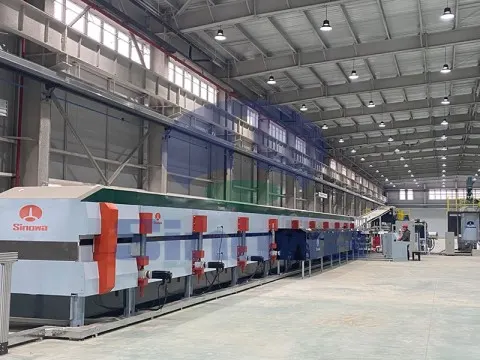
How To Troubleshoot Uneven Panel Density From PIR Sandwich Panel Production Line?

How To Solve Panel Delamination Problems Of Continuous PIR Sandwich Panel Production Line?