Continuous Foaming PU Sandwich Panel Line
Publication Date: Oct 15, 2026
Continuous Foaming PU Sandwich Panel Line. Fully automatic continuous PU/PIR panel production line with double belt curing. Manufacture insulated roof & wall sandwich panels. Stable foaming, high output, adjustable thickness for building & cold room projects.
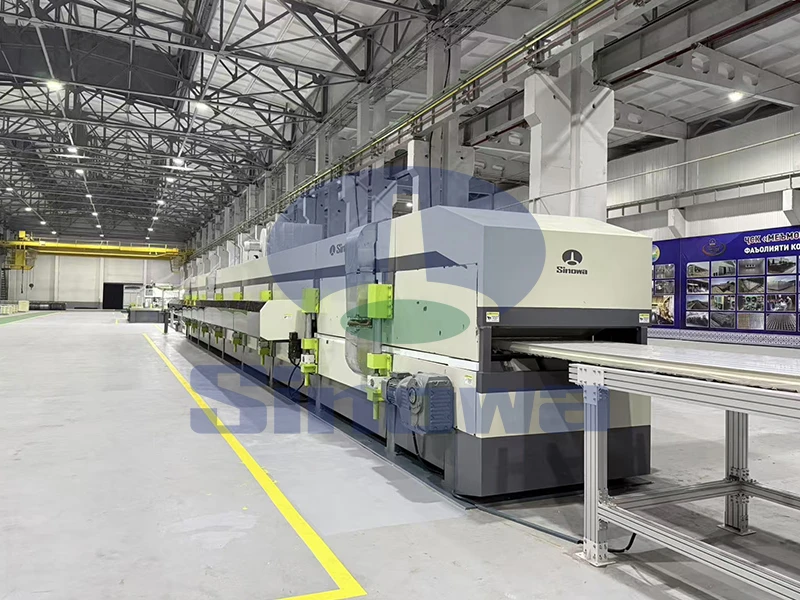
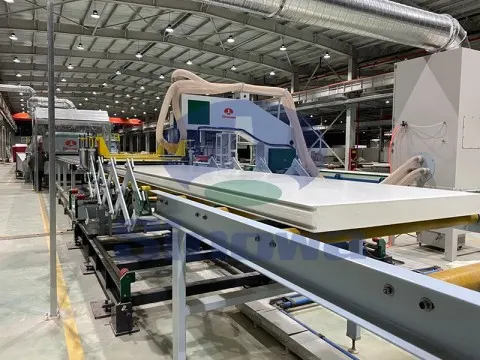
The continuous foaming PU sandwich panel line represents a fully integrated automated manufacturing system built for uninterrupted production of composite sandwich panels with polyurethane foam as the core material. Unlike intermittent production systems that rely on separate moulds and manual handling between batches, this line arranges all functional modules in a sequential flow, enabling raw materials to move continuously from unwinding of surface materials all the way to finished panel cutting and stacking without stopping the main production rhythm. The core logic behind this equipment is to combine surface facings and reactive liquid PU chemicals in a dynamic, controlled environment, allowing the foam to expand, cross-link and bond with both skins in a single continuous pass. Each section of the line is mechanically and electrically synchronized, so the speed of sheet feeding, chemical dosing, foaming reaction and curing remains matched to avoid defects such as uneven foam density, poor bonding or surface distortion. Operators monitor the overall running state through centralized control interfaces, adjusting parameters rather than performing heavy manual operations on the product itself. This continuous layout reduces idle time between production cycles and improves output consistency, which is critical for large-volume manufacturing of composite panels used in thermal insulation and enclosure structures. The design accommodates multiple types of surface materials, which can be shaped into different profiles before meeting the liquid PU mixture, creating finished panels with customized surface geometry while maintaining stable core performance throughout the whole production run. Every mechanical component is engineered to sustain long hours of steady operation, minimizing frequent shutdowns for maintenance and supporting stable long-term production campaigns.
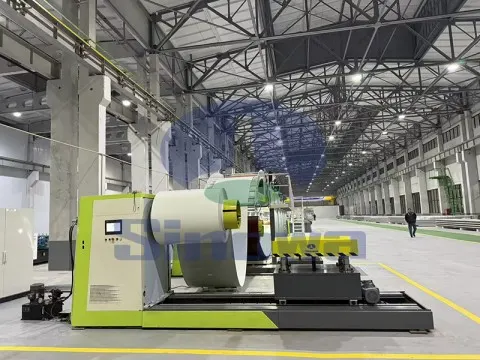
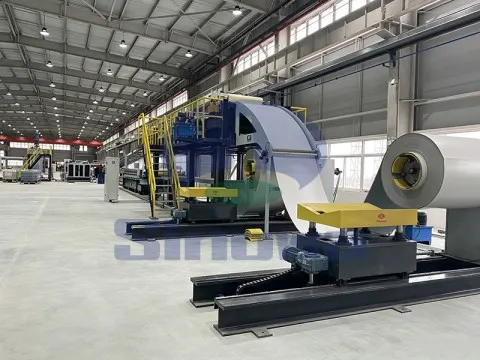
The initial segment of the continuous foaming PU sandwich panel line focuses on surface material unwinding and profiling, which lays the foundation for the subsequent composite forming process. Coils of facing material are mounted on unwinding stations, which release the sheet at a constant speed matched to the overall line pace. Tension control mechanisms maintain consistent flatness of the moving sheet, preventing wrinkling, stretching or deviation as the material feeds forward. After unwinding, the flat sheet passes through a series of forming rollers that gradually bend and shape the surface into the required profile. This profiling process creates ribs, grooves or edge interlocking structures on the panel surface, which later enhance mechanical strength and simplify assembly when panels are installed. Following profiling, preheating units raise the temperature of both upper and lower facings to a targeted range, eliminating surface moisture and improving chemical affinity between the solid skin and liquid PU foam. Proper preheating prevents weak bonding at the interface between foam and facing, a common defect that can appear if temperature conditions are not carefully managed. The upper and lower sheets travel along separate paths before converging at the foaming station, maintaining precise alignment so that the two facings remain parallel as the liquid foam is poured into the gap between them. All speed and tension parameters for this section are linked to the main control system, so any adjustment in line speed automatically recalibrates the unwinding and forming units to keep synchronization intact.
At the heart of the continuous foaming PU sandwich panel line sits the multi-component metering and high-pressure mixing station, where the chemical reaction that forms the PU foam begins. Raw liquid components are stored in insulated tanks that maintain stable temperature and viscosity, ensuring consistent flow properties during continuous dosing. The metering system delivers each component at accurately controlled volumetric flow rates, blending materials inside a high-pressure mixing head. The intense mixing action homogenizes the chemical streams instantly, generating a reactive liquid blend that flows out onto the moving lower facing sheet. A traversing pouring mechanism distributes the mixture evenly across the width of the sheet, so the expanding foam will fill the entire cavity between the two facings without localized shortages or accumulations. The chemical formulation defines the reaction rate, expansion ratio and final cellular structure of the foam core, and the metering system must preserve the exact proportion of ingredients throughout extended production runs. Even minor drift in component ratios can lead to changes in foam cell structure, thermal performance and mechanical strength, so pressure and flow sensors continuously feed real-time data back to the control system for automatic correction. This pouring process takes place dynamically as the sheet moves forward, meaning the reaction starts immediately after the liquid leaves the mixing head and continues as the assembly enters the double-belt curing section. The design of the mixing head also supports cleaning cycles that reduce material buildup, helping to maintain stable mixing quality over long production periods.
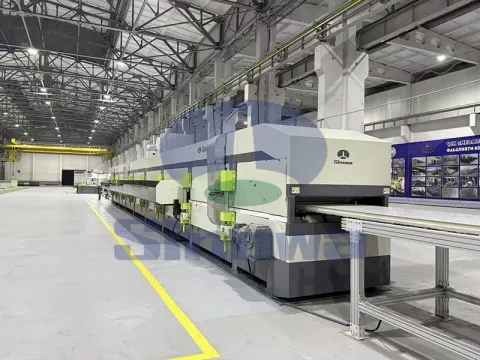
Immediately after the PU mixture is deposited onto the lower facing, the upper and lower sheets together with the reactive foam enter the double-belt conveyor system, the key forming and curing zone of the continuous foaming PU sandwich panel line. This double-belt unit acts as a continuously moving mould, where upper and lower endless belts run at identical speed and hold a fixed, adjustable gap between them to define the finished panel thickness. As the assembly travels inside the enclosed belt chamber, the liquid PU mixture undergoes foaming expansion and chemical cross-linking. The rising foam pressure pushes against both moving belts, while the belt system resists expansion beyond the preset thickness, ensuring uniform dimension across the full panel width and length. Heating elements integrated within the belt structure maintain stable curing temperature along the chamber, regulating the speed of chemical reaction and cell formation inside the foam core. Temperature distribution must remain homogeneous; cold spots can slow down curing and create soft foam regions, while excessive heat may cause premature degradation of cell structures. Side forming devices at the edges of the double belt shape the panel side profiles, trimming excess foam and forming accurate edge geometry for later panel connection. The length of the double-belt section is engineered to provide enough residence time for the foam to complete most of its reaction and achieve sufficient structural strength before exiting the press area. By the time the continuous panel ribbon leaves the double belt, the foam core has bonded firmly to both surface facings and holds its stable shape.
Once the continuous composite ribbon exits the double-belt curing section, it enters the post-curing zone, where residual chemical reactions continue to complete without active forming pressure. Even though the panel retains its shape after leaving the press, the foam matrix still requires additional time to finish cross-linking and stabilize its physical properties. The post-curing tunnel maintains controlled ambient temperature, allowing internal stress within the foam core to release gradually. If panels are cut or handled before adequate post-curing, internal stresses may trigger warping, dimensional shrinkage or separation between foam and facings. The continuous panel moves through this tunnel at the same line speed, so residence time is determined by tunnel length and production velocity. Operators tune the tunnel environment according to foam formulation and line speed to match the curing requirement of each panel type. Visual inspection points are arranged along this section, where staff or automated vision systems detect surface imperfections, uneven edges or bonding defects at an early stage. Any identified irregularity can be flagged so that downstream processing can separate defective sections. This stage bridges the gap between hot forming and cold finishing, stabilizing material performance before the panel proceeds to cutting. It also reduces the risk of deformation during subsequent handling, as fully cured composite structures maintain their dimensions more reliably when subjected to mechanical processing.
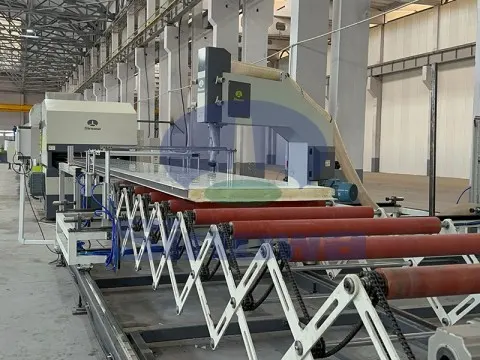
The continuous foaming PU sandwich panel line incorporates a flying saw cutting unit, which performs fixed-length cutting on the moving continuous panel ribbon without stopping the main production flow. Unlike stationary cutting machines that require material to halt, the flying cutting carriage travels synchronously with the panel during the cutting stroke, matching the line speed precisely. Once the cut finishes, the carriage returns rapidly to the starting position to wait for the next cutting trigger. Length signals are generated by high-resolution measuring devices that track the forward movement of the panel, sending real-time position data to the cutting controller. Operators input target length values into the system, and the cutter executes cuts automatically when the preset measurement is reached. In addition to length cutting, edge trimming mechanisms remove excess material from both sides of the panel, refining edge straightness and ensuring consistent panel width. The cutting tools are designed to deliver clean cuts without tearing the surface facing or crushing the foam core, preserving the integrity of the composite structure. Dust and debris generated during cutting are collected by extraction systems to keep the working area clean and prevent particles from adhering to panel surfaces. This on-the-fly cutting technology is one of the key advantages of continuous lines, as it eliminates repeated start-stop cycles and maintains uninterrupted material flow, supporting high hourly output while keeping dimensional variation within tight limits.
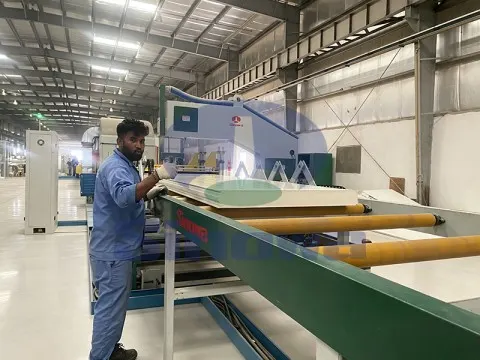
After cutting and edge trimming, finished panels move forward to the automatic handling and stacking station of the continuous foaming PU sandwich panel line. Conveyor rollers transfer individual panels away from the cutting zone, and positioning mechanisms align each panel accurately before stacking. Pneumatic or mechanical grippers lift finished panels and place them neatly into stacks, maintaining consistent alignment between panels. Separation layers can be inserted between stacked panels if needed, to protect surface coatings from scratches during storage and transportation. The stacking system counts finished panels automatically, recording production volume for each batch of material run. Once a stack reaches the preset quantity, the system signals for stack removal, and a new stacking cycle begins. This automated handling reduces direct human contact with panel surfaces, lowering the chance of surface damage and cutting injuries that are common in manual handling workflows. The layout of the stacking area is planned to allow smooth transfer of finished stacks to storage zones, without obstructing the continuous flow of panels coming from the cutting section. Operators at this station mainly oversee equipment status and remove completed stacks, rather than carrying heavy panels manually. The integration of stacking into the full production chain preserves the high efficiency of the continuous process and prevents finished product accumulation from becoming a bottleneck for upstream production modules.
The control system serves as the neural network of the continuous foaming PU sandwich panel line, coordinating every individual unit to work in synchronized harmony. A central human-machine interface allows operators to set production parameters, monitor real-time operating data and view historical running records. All key variables including line speed, raw material dosing ratios, temperature zones, panel thickness and cutting length are adjustable from this central platform. Communication links connect the control unit to drives, sensors, pumps and actuators spread across unwinding, foaming, pressing, curing and cutting sections. When one part of the line changes speed, the control system propagates adjustment signals to all linked modules instantly to preserve synchronization. Built-in monitoring sensors continuously track pressure, temperature, flow and position values. If any parameter drifts outside the predefined working range, the system triggers warning alerts, and in critical situations it can slow or stop the line to prevent large amounts of defective products. Data logs capture production information over time, supporting analysis of equipment performance and process trends. This centralized control architecture simplifies operation complexity, reducing the need for separate operators for each machine segment. It also supports flexible recipe switching, allowing users to save parameter sets for different panel types and quickly recall them when changing production targets, shortening transition time between different product runs.
The continuous foaming PU sandwich panel line delivers distinct operational benefits compared with discontinuous mould-based panel production equipment. The continuous workflow eliminates repeated loading, closing, opening and unloading of individual moulds, which are major sources of cycle time loss in batch manufacturing. Once the line stabilizes at target operating parameters, it can run for extended periods with steady output, and product consistency improves because the chemical and physical conditions that form the foam core remain far more uniform across panels. Labor requirements per unit of finished product decrease significantly, as fewer workers are needed to handle moulds and move semi-finished components between stations. Material waste rates can also be optimized when the process is well calibrated, thanks to precise chemical metering and controlled foaming that reduce scrap from uneven core formation or poor bonding. The technology supports a wide spectrum of panel specifications, with adjustable thickness, width, surface profile and foam formulation, so a single production platform can serve multiple application scenarios. Despite high system integration, the line is built with modular thinking, making it possible to upgrade or replace individual functional sections without reconstructing the whole plant. Maintenance tasks are scheduled based on runtime data, and wear parts can be inspected and replaced during planned downtime, avoiding unexpected long interruptions. These advantages make continuous foaming PU sandwich panel lines a preferred solution for large-scale manufacturing operations focused on composite insulation panels.
Looking at application prospects and technical evolution, the continuous foaming PU sandwich panel line continues to evolve in response to changing demands for composite building and cold-chain materials. Modern iterations of this equipment focus on refining chemical dosing precision, optimizing temperature control across the curing tunnel and enhancing automation for inspection and defect identification. Advanced sensing technologies are being introduced to detect internal foam defects that are not visible from the panel surface, enabling real-time quality screening during production. Improvements in mechanical design also reduce energy consumption for heating, driving and chemical pumping operations, lowering the operational resource demand of long production campaigns. The panels produced on such lines are widely adopted for building envelope systems, cold storage structures, industrial partition walls and prefabricated building components, where thermal insulation, structural stability and fast installation are essential. As demand rises for composite panels with customized surface finishes and modified foam core properties, the continuous line concept is adapted to accommodate new raw material formulations and facing options. The flexibility of the platform allows manufacturers to adjust their product portfolio without fully replacing core production infrastructure. Ongoing refinements in control algorithms and mechanical component reliability further extend service life and stabilize long-run performance, securing the position of continuous foaming PU sandwich panel technology within the modern composite material manufacturing sector.
Gallery of Continuous Foaming PU Sandwich Panel Line
Tags: continuous foaming pu sandwich panel line, continuous foaming pu sandwich panel line manufacturer, continuous foaming pu sandwich panel line supplier, china continuous foaming pu sandwich panel line, continuous foaming pu sandwich panel line for sale
https://www.sandwichpanelmanufacturingline.com/blog/continuous-foaming-pu-sandwich-panel-line.html
-
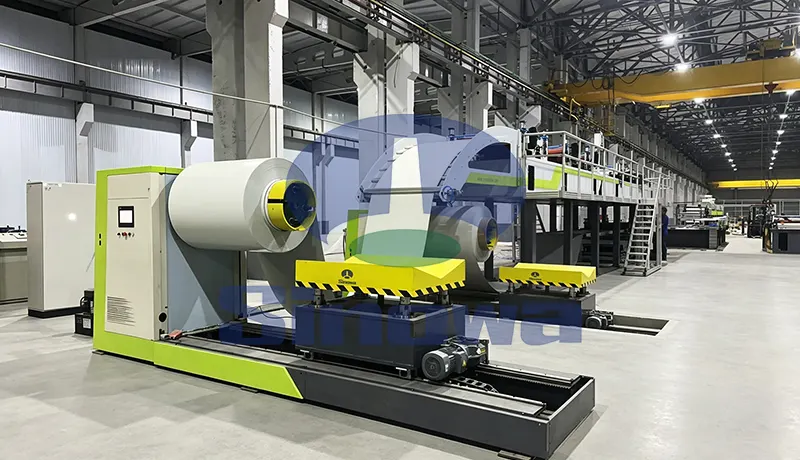
A reliable PU sandwich panel production line serves as the core equipment for manufacturing high-performance building insulation panels. This professional PU sandwich panel line features automated feeding, foaming and molding processes to ensure consistent panel thickness and structural stability. The well-designed polyurethane sandwich panel production line effectively improves production efficiency while reducing material waste in daily operation. Each calibrated polyurethane sandwich panel line can adapt to different panel sizes to meet diverse construction needs. With precise temperature and pressure control, the advanced continuous PU sandwich panel line produces panels with excellent thermal insulation and weather resistance. Meanwhile, the optimized PIR sandwich panel production line upgrades the foaming formula to enhance fire resistance performance. The high-efficiency PIR sandwich panel line maintains stable operation during long-term mass production, delivering durable and high-quality sandwich panels for various architectural and industrial applications.
-
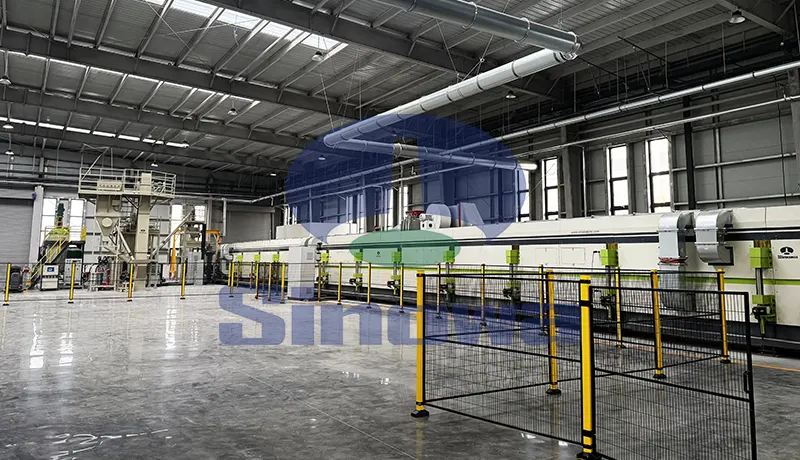
The phenolic panel production line realizes automated and continuous manufacturing of high-performance thermal insulation panels through streamlined and coordinated processing procedures.
-
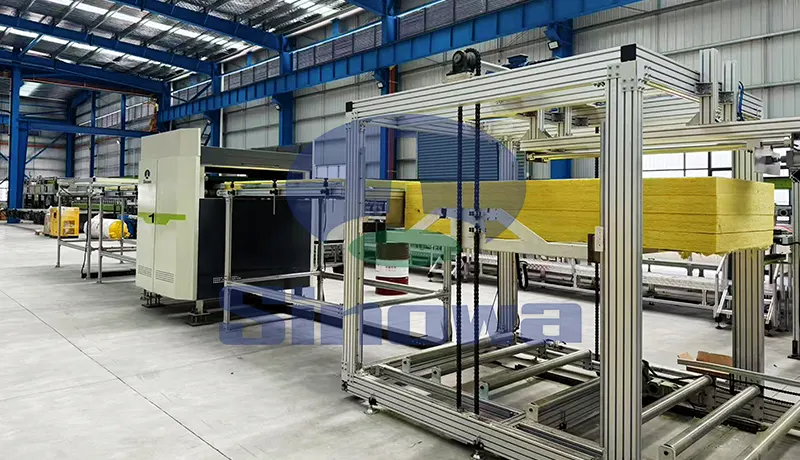
Modern insulation panel manufacturing relies on professional automated equipment to ensure stable product quality and high production efficiency. The rock wool sandwich panel production line features precise material lamination and forming processes to produce rigid, heat-insulating building panels. Meanwhile, the mineral wool sandwich panel production line adopts optimized assembly procedures to fabricate lightweight, soundproof panels widely used in architectural enclosure and thermal preservation projects.