Sound Insulation PU Sandwich Panel Line
Publication Date: Oct 15, 2026
Sound Insulation PU Sandwich Panel Line – automated continuous machinery to produce soundproof PU sandwich panels. Stable PU foaming & composite forming. Panels offer great sound & thermal insulation for building walls, roofs, workshops.
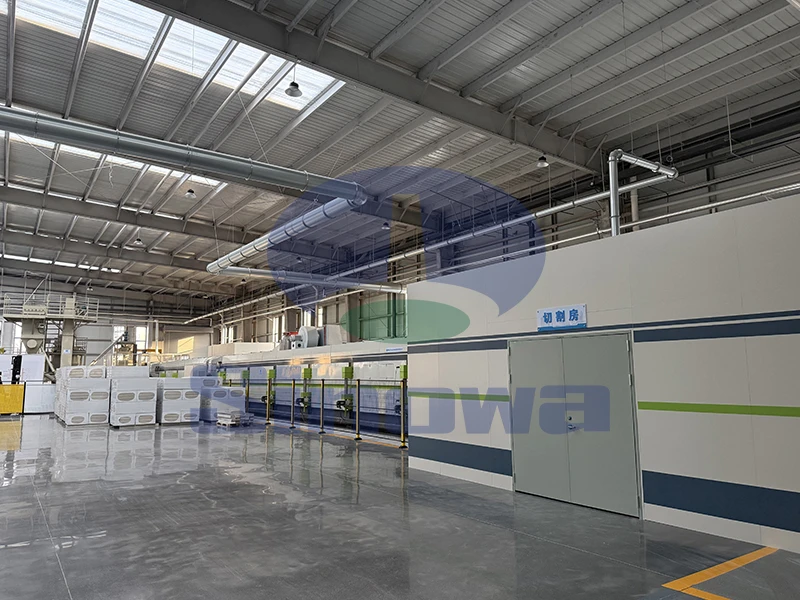
Sound Insulation PU Sandwich Panel Line represents a complete continuous manufacturing system engineered specifically to produce composite panels with optimized acoustic attenuation performance, distinguishing itself from conventional sandwich panel equipment that prioritizes only thermal insulation and basic structural integrity. At the heart of the design philosophy lies the understanding that sound transmission control relies on the synergy between rigid outer facings and carefully tailored polyurethane foam core, rather than any single material working alone. This production system arranges a series of interconnected processing units in a linear workflow, starting from raw coil unwinding all the way to finished panel stacking, so every physical parameter that influences sound insulation can be stabilized and regulated during continuous operation. Many noise-related defects in finished panels, such as uneven foam density, poor bonding between skins and core, internal voids or inconsistent cell distribution, originate from unstable conditions during foaming and lamination. The line addresses these risks through integrated sensing modules that track material speed, temperature, dosing volume and pressure in real time, adjusting operational parameters automatically to keep the foam microstructure uniform across the full width and length of each panel. Operators can adjust production recipes to modify foam cell characteristics, which directly alters how sound waves are trapped and dissipated inside the core. Unlike discrete batch production methods, the continuous configuration maintains steady reaction environments over extended runs, delivering panels with predictable acoustic behavior from the first meter to the last. This capability makes the line suitable for high-volume output of enclosure materials used in spaces where airborne noise and structural vibration must be controlled, balancing productivity with the refined material properties required for reliable sound reduction. Each processing station is mechanically synchronized to avoid relative movement between upper and lower facings, preventing weak bonding interfaces that would otherwise create acoustic leakage paths once panels are installed in walls or partition assemblies.
The opening phase of production within the sound insulation PU sandwich panel line centers on unwinding, surface preparation and roll forming of the outer facing materials, a stage often underestimated but critical to final acoustic results. Metal or composite coil stock is mounted on unwinding stations, feeding flat sheet material forward at a controlled linear speed, while tension control prevents wrinkling, stretching or localized deformation that could introduce resonant surfaces prone to vibrating under sound pressure. As the sheet moves onward, it passes through cleaning and surface treatment sections that remove dust, oil residue and oxidation; clean surfaces maximize adhesive bonding between facing and PU foam, eliminating tiny gaps where sound energy can bypass the foam core through air-borne leaks. Some production configurations include optional micro-perforation units at this stage, creating regularly distributed tiny openings across one side of the facing. These perforations serve as acoustic entry points, guiding incoming sound waves into contact with the foam core instead of reflecting all energy away at the outer surface. The material then enters roll forming banks, where sequential forming rollers gradually shape the sheet into profiles with interlocking edge joints. Precise edge forming matters because poorly fitted panel joints become the weakest points in assembled sound barriers, allowing noise to seep through seams even if the panel body performs well. Throughout forming, speed and tension remain matched between upper and lower sheet paths, ensuring both facings advance in perfect alignment as they approach the foaming station. Surface protective film can also be laminated in this segment to prevent scratches and surface damage during later handling, preserving the integrity of the outer skin that contributes mass-law sound blocking. Every mechanical adjustment in this segment targets consistency, as variations in sheet flatness, profile geometry or surface cleanliness will propagate into the foaming stage and compromise the uniform cell structure needed for effective noise reduction.
The foaming and high-pressure mixing station forms the technical core of the sound insulation PU sandwich panel line, where the acoustic properties of the panel are fundamentally defined through controlled chemical reaction of polyurethane raw materials. Two primary liquid components, polyol blend and isocyanate, are stored in insulated tanks and delivered through heated pipelines to a high-pressure mixing head. Temperature and flow rate of each stream are independently regulated, and the mixing head combines the two fluids under precise pressure before distributing the reactive mixture evenly across the moving lower facing sheet. The traversing pouring mechanism sweeps side to side, spreading liquid PU blend to avoid streaks, thick spots or unfilled zones that would create weak acoustic performance. Immediately after dispensing, the mixture begins an exothermic foaming reaction, expanding to fill the gap between upper and lower facings while adhering to both inner surfaces. The formulation can be fine-tuned to adjust cell size, cell openness and overall foam density, directly changing the way sound energy interacts with the core material. Smaller, evenly distributed cells create more internal surfaces for sound waves to collide against, converting vibrational acoustic energy into minor heat dissipation within the foam matrix. If dosing ratios drift or temperature fluctuates, inconsistent expansion creates large voids or overly dense regions, breaking the uniform acoustic path and producing panels with unpredictable noise attenuation. Side containment profiles keep expanding foam within the intended panel width, preventing overflow and maintaining consistent edge geometry. This whole foaming process happens dynamically as sheets keep moving, so timing of reaction onset, peak expansion and gelation must stay synchronized with line speed to ensure the foam reaches proper viscosity and strength before entering the double-belt curing section.
The double-belt laminating and continuous curing tunnel is where the newly formed composite assembly solidifies, locking in the sandwich structure and stabilizing the acoustic microstructure built during foaming. After PU material is poured and starts expanding, the paired upper and lower facings with reactive foam between them enter the gap between two heavy-duty, heatable endless conveyor belts. The belt system maintains a fixed, adjustable separation distance that defines finished panel thickness, while applying even clamping pressure across the entire panel width to restrain foam expansion and stop bubble coalescence or separation between skins and core. The curing tunnel is divided into multiple temperature zones, each held at a targeted setpoint to manage the exothermic reaction of polyurethane without thermal overshoot. Too much heat in early zones accelerates foaming too rapidly and creates irregular cells, while insufficient heat leaves the polymer under-cured and mechanically weak, prone to internal vibration when sound strikes the panel. As the continuous strip travels through the tunnel, the polymer cross-linking reaction completes gradually, turning liquid foam into rigid solid core permanently bonded to both outer facings. The belts move synchronously with the incoming sheet speed to avoid shearing forces that could delaminate the composite. Inside this enclosed environment, the foam matrix develops the stable cell structure required for consistent sound insulation, because any distortion or separation inside the panel at curing stage creates resonant cavities that degrade noise reduction. At the tunnel exit, the panel has achieved enough structural rigidity to retain its shape and resist delamination, although residual heat remains within the foam core and needs gradual removal in the subsequent cooling conveyor.
Once exiting the curing tunnel, the continuous long panel strip enters the cooling conveyor section, a vital transitional stage that relieves internal thermal stress and stabilizes dimensions before cutting and finishing operations. Heat trapped inside the polyurethane core after curing creates internal thermal gradients, and rapid uneven cooling would trigger warping, bowing or micro-cracks inside the foam, damaging the acoustic continuity of the panel. The cooling zone uses controlled airflow circulating around the moving panel to dissipate heat gradually, lowering core and skin temperatures toward ambient conditions in a balanced manner. Sensors monitor surface and internal temperatures, adjusting fan speed and air distribution to prevent hot spots along the panel length. During cooling, residual chemical reactions continue at a slower rate, completing final cross-linking and locking foam cell geometry into its permanent form. Dimensional shrinkage that naturally occurs as PU cools must be fully realized before cutting, otherwise panels may change size after cutting and cause fit issues during installation, creating gaps at joints that undermine sound insulation performance. The panel continues moving at the same line speed while cooling, preserving production continuity without halting upstream processes. This segment also gives the composite time to release minor internal stresses built up under belt pressure in the curing tunnel, reducing the chance of subtle delamination that would not be visible on visual inspection but could degrade acoustic performance. Operators monitor panel flatness through vision and contact sensors to detect warping early, adjusting cooling airflow or upstream curing temperatures accordingly. Stable cooling ensures every finished panel maintains uniform thickness and flat profile, supporting tight assembly on-site where panel edges interlock to form continuous noise barrier walls.
Following cooling, the continuous panel strip arrives at the flying cutting and edge finishing station, where the endless web is separated into individual panels of preprogrammed lengths, with trimming processes refining edges to preserve acoustic integrity. A tracking cutting system follows the moving panel without stopping the production line, measuring real-time length and activating the cutting mechanism at the exact target position. This flying cut avoids start-stop cycle delays and maintains continuous throughput, while delivering consistent cut dimensions across batches. After cutting, edge trimming tools remove excess foam and facing material along the sides, machining clean, straight edges that match the interlocking profile designed for assembly. Rough, uneven or crushed edges create poor contact between adjacent panels when erected on site, forming narrow gaps through which sound can transmit, lowering the overall noise blocking capability of the completed wall. The trimming operation removes crushed foam regions at panel margins that develop naturally during continuous foaming and curing, replacing irregular edges with uniform profiles for tight sealing. Dust and fine debris generated by cutting and trimming are extracted immediately by local ventilation systems to prevent foam particles from contaminating panel surfaces or accumulating on moving components. The cutting system also logs dimensional data for each finished panel, recording length, width and edge profile metrics for traceability. Minor adjustments to cutting speed and tool position compensate for small dimensional shifts caused by thermal variations upstream, ensuring finished panels fit together reliably and maintain the continuity required for sound insulation assemblies.
Automatic inspection and quality monitoring modules run in parallel with the main production flow, capturing physical data from each panel without interrupting continuous manufacturing, to identify defects that impact acoustic function. Non-contact scanning tools move across the panel surface to detect surface undulations, thickness deviations and areas of delamination between facing skins and PU core. Internal voids, large bubbles or regions of collapsed foam are particularly important targets, as these flaws create localized weak points in sound insulation. Visual cameras capture surface defects while thickness gauges sample across panel width, feeding measured values back to the central control system. If out-of-spec readings are detected, the system marks the affected panel segment automatically, and operators can trace the root cause back to earlier stations such as raw material dosing, curing temperature or belt pressure. Not all defects are visible to naked eyes; subtle separation between foam and skin creates hidden acoustic leakage, and these can be identified through combined thickness and vibration response checks. The inspection logic prioritizes parameters linked directly to sound transmission over purely cosmetic imperfections, aligning quality criteria with the core purpose of the production line. Data from every panel segment is stored digitally, allowing trend analysis to reveal gradual drift in foaming ratios or temperature control before serious batch defects develop. This real-time feedback loop keeps the whole line tuned to maintain consistent foam cell structure and composite bonding, the two primary factors governing the finished panel’s ability to reduce sound transmission.
After inspection, finished panels proceed to the automatic stacking and handling area, where they are organized, separated and prepared for packaging and transport in ways that protect their acoustic and structural integrity. A transfer mechanism moves individual cut panels from the output conveyor onto stacking platforms, using soft contact surfaces to avoid denting, scratching or crushing the panel edges and foam core. Compression damage to foam permanently alters cell structure at impacted zones, creating localized loss of sound insulation. Panels are stacked in controlled quantities, with protective separators placed between layers to prevent surface abrasion and distribute weight evenly so lower panels do not undergo permanent deformation. Edge protectors may be fitted to shield interlocking profiles from knocks during handling and shipping, preserving the precise joint geometry required for gap-free assembly. Stack height is limited to avoid excessive static load on bottom panels, preventing slow compression creep inside the PU foam core. Once stacked, bundles can be secured with wrapping film to keep panels clean and shielded from moisture during transit, because prolonged moisture absorption can modify foam cell properties and degrade long-term acoustic stability. Automated stacking reduces manual handling and human error, lowering the risk of dropping or misaligning panels. This final handling stage is often overlooked, yet physical damage after production can negate all the carefully controlled upstream processes. Careful stacking ensures panels arrive at project sites with the same composite structure and acoustic characteristics that were achieved during foaming and curing.
The versatility built into sound insulation PU sandwich panel line enables adjustment of panel configurations to address different noise environments, without full reengineering of the production workflow. By modifying raw material formulations, line speed, curing temperature and belt gap, manufacturers can produce panels with varied core thicknesses and foam densities, each suited to different noise reduction requirements. Changing facing materials also alters overall mass and resonant behavior of the composite, as heavier outer skins contribute additional sound blocking, while perforated facings support sound absorption at specific frequency bands. The interlocking joint profiles can be swapped through roll forming tool changes, producing panels for vertical wall partitions, horizontal ceiling assemblies or free-standing noise barriers. This flexibility supports customized panel dimensions and surface treatments while retaining the continuous automation that maintains consistent foam microstructure. The line can also integrate optional auxiliary modules such as surface embossing or anti-abrasion coating stations when panels are intended for demanding environments where physical wear might compromise outer skins over time. Although the line is optimized for acoustic performance, the resulting panels still retain the lightweight rigidity, moisture resistance and thermal insulation inherent to PU sandwich construction, allowing multi-functional use in building enclosures. Operators can save multiple production recipes within the control system, recalling pre-calibrated parameter sets for different panel types and reducing setup time between product runs. Recipe management ensures that every time a specific panel variant is produced, foaming conditions and lamination pressure repeat reliably to preserve predictable sound insulation behavior across separate production batches.
Sustained operation and maintenance of the sound insulation PU sandwich panel line focus on preserving precision in all the critical stations that define foam cell formation and composite bonding, ensuring long-term stability of acoustic panel output. Routine maintenance schedules target high-pressure mixing heads, dosing pumps, temperature sensors and double-belt tensioning systems, as wear or calibration drift in these components directly disturbs the foaming reaction and creates inconsistent core material. Mixing nozzles must be cleaned regularly to prevent residual PU buildup, which disrupts the uniform blending of polyol and isocyanate and causes uneven foam distribution. Belt tension and alignment are checked to maintain parallel upper and lower surfaces; skewed belts create variable pressure across panel width, leading to thickness variation and poor skin-core adhesion. Temperature sensors require periodic recalibration, because small measurement errors in curing zones can shift foam cell size and alter acoustic performance over time. Lubrication and inspection of roll forming, cutting and trimming equipment preserve profile accuracy and edge quality, keeping panel joints tight during field installation. The control software is continuously monitored to detect slow drift in flow, pressure and temperature readings before visible defects emerge. Training for line operators emphasizes understanding how each mechanical adjustment influences foam microstructure and sound transmission, rather than only managing speed and throughput. When maintained properly, the production line retains its ability to produce panels with consistent acoustic characteristics over long operating cycles, delivering composite materials that reliably reduce airborne noise and dampen structural vibration in built environments, while maintaining the efficient continuous manufacturing model that defines modern sandwich panel production technology.
Gallery of Sound Insulation PU Sandwich Panel Line
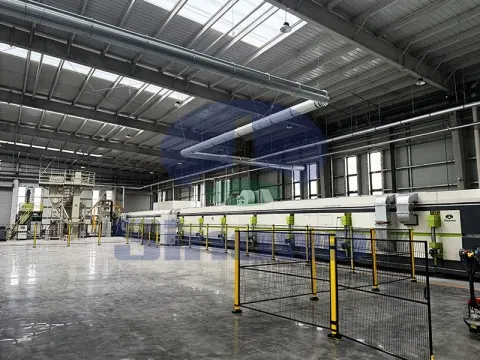
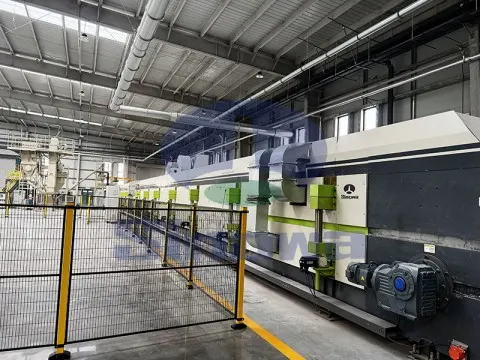
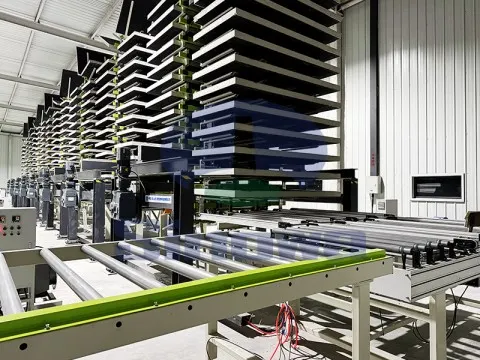
Tags: sound insulation pu sandwich panel line, sound insulation pu sandwich panel line manufacturer, sound insulation pu sandwich panel line supplier, china sound insulation pu sandwich panel line, sound insulation pu sandwich panel line for sale
https://www.sandwichpanelmanufacturingline.com/blog/sound-insulation-pu-sandwich-panel-line.html
-
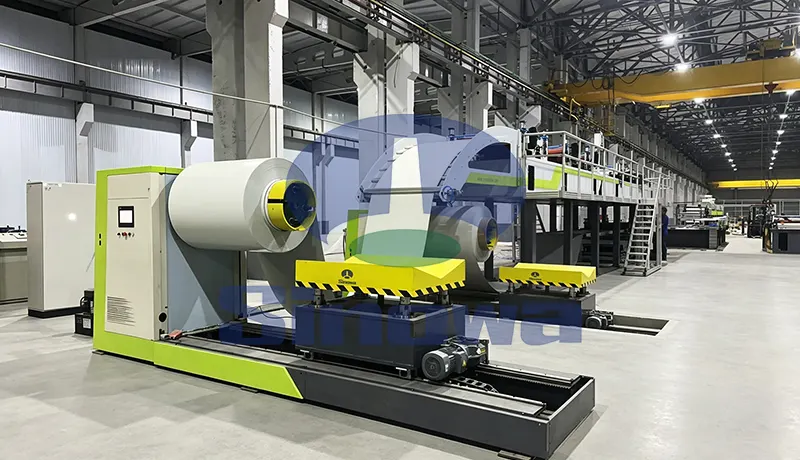
A reliable PU sandwich panel production line serves as the core equipment for manufacturing high-performance building insulation panels. This professional PU sandwich panel line features automated feeding, foaming and molding processes to ensure consistent panel thickness and structural stability. The well-designed polyurethane sandwich panel production line effectively improves production efficiency while reducing material waste in daily operation. Each calibrated polyurethane sandwich panel line can adapt to different panel sizes to meet diverse construction needs. With precise temperature and pressure control, the advanced continuous PU sandwich panel line produces panels with excellent thermal insulation and weather resistance. Meanwhile, the optimized PIR sandwich panel production line upgrades the foaming formula to enhance fire resistance performance. The high-efficiency PIR sandwich panel line maintains stable operation during long-term mass production, delivering durable and high-quality sandwich panels for various architectural and industrial applications.
-
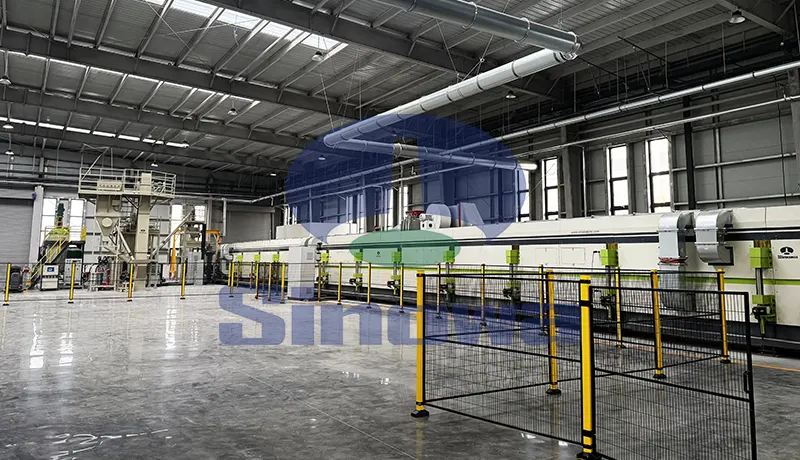
The phenolic panel production line realizes automated and continuous manufacturing of high-performance thermal insulation panels through streamlined and coordinated processing procedures.
-
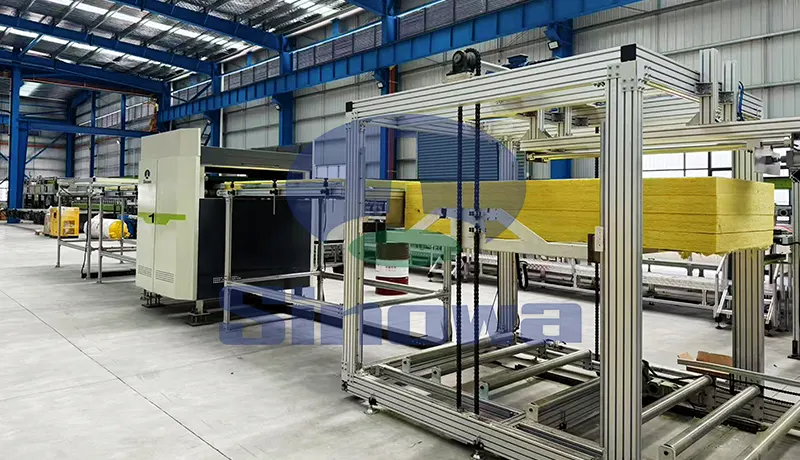
Modern insulation panel manufacturing relies on professional automated equipment to ensure stable product quality and high production efficiency. The rock wool sandwich panel production line features precise material lamination and forming processes to produce rigid, heat-insulating building panels. Meanwhile, the mineral wool sandwich panel production line adopts optimized assembly procedures to fabricate lightweight, soundproof panels widely used in architectural enclosure and thermal preservation projects.