Why Does The PU Sandwich Panel Production Line Have Unstable Foam Density?
Publication Date: Sep 30, 2026
Unstable foam density is a common quality issue in the PU sandwich panel production line, undermining panel insulation and structural stability. This problem stems from raw material, equipment, environmental and operational factors, which this article elaborates in detail.
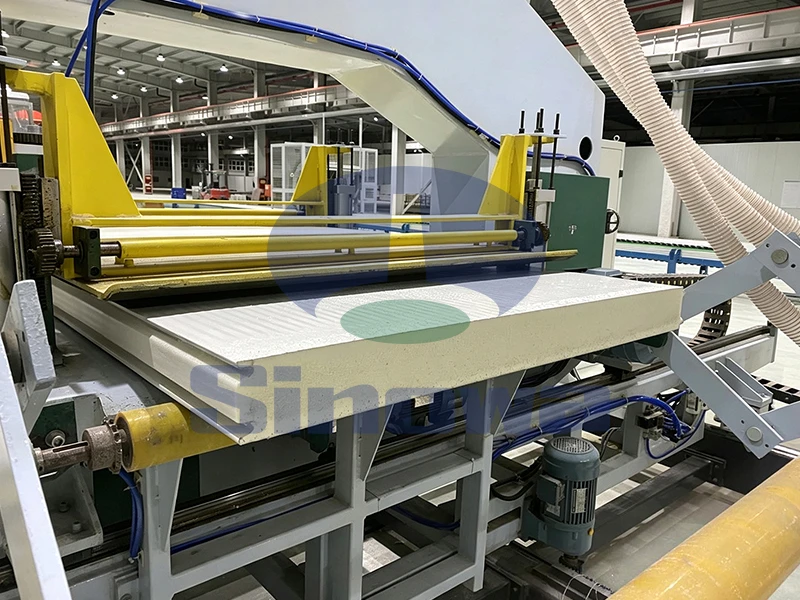
Raw material inconsistency is one of the primary triggers of unstable foam density in the PU sandwich panel production line. Polyol and isocyanate, the core raw materials for PU foam formation, require a fixed matching ratio to complete stable chemical foaming reactions. Minor fluctuations in the hydroxyl value of polyol or the NCO content of isocyanate will directly disrupt the foaming balance, leading to uneven foam pore structures and fluctuating density. In addition, trace impurities and inconsistent purity of auxiliary materials such as blowing agents and catalysts also affect the reaction rate. Excessive moisture in raw materials will cause extra chemical reactions to generate redundant gas, resulting in low and unstable foam density. Even subtle changes in raw material viscosity can hinder uniform mixing, further exacerbating density deviations in finished panels.
Inaccurate material metering is a key mechanical factor causing density instability in the PU sandwich panel production line. The continuous foaming process relies on precise metering equipment to deliver raw materials at a constant flow rate. Long-term operation of metering pumps often leads to wear of internal seals and gears, causing unstable pump output and inconsistent material supply per unit time. Meanwhile, blocked or aging material pipelines may cause intermittent material delivery, breaking the stable feeding state required for foaming. If the metering system fails to be calibrated regularly, cumulative flow errors will continue to expand, making the foam density of different batches of sandwich panels inconsistent. This subtle equipment failure is often overlooked but continuously affects the overall product quality stability.
Uncontrolled production temperature is a critical environmental factor interfering with foam density stability in the PU sandwich panel line. PU foam foaming is a temperature-sensitive chemical reaction, and temperature changes directly affect reaction speed and foam expansion degree. When the material temperature is too low, the chemical reaction slows down, insufficient foam expansion leads to excessive density and hard foam texture. When the temperature is too high, the reaction accelerates sharply, excessive gas generation causes over-expansion, resulting in low density and loose foam structure. In addition, unstable ambient temperature in the production workshop will cause temperature differences in the mixing and curing stages. Even small temperature drifts in the mixing head and conveyor platen will lead to obvious density deviations on the surface and inside of the same panel.
Insufficient raw material mixing uniformity directly leads to localized foam density differences in products from the PU sandwich panel production line. The high-quality PU foam requires full and uniform mixing of polyol, isocyanate and various additives in a very short time. Wear and aging of the mixing head blades will reduce the mixing efficiency, making partial materials fail to fully react. Unmixed raw material residues will form dense hard blocks in individual areas of the foam, while fully mixed areas present normal or low density, resulting in extremely uneven overall density. Besides, unreasonable mixing speed setting is also a common problem. Excessively low speed causes incomplete mixing, while excessively high speed brings excess air into the materials, forming large pores and reducing foam density stability.
Fluctuations in production line operating speed are an important operational cause of unstable foam density. The foaming and curing process of PU foam has a fixed time cycle, which needs to match the running speed of the PU sandwich panel production line. When the line speed is too fast, the foam does not have enough time to expand and cure completely before molding, leading to incomplete foaming and higher-than-standard density. When the line speed slows down suddenly, the foam expands excessively in the mold, resulting in low density and reduced structural compactness. Frequent speed adjustments and unstable motor operation in continuous production will cause irregular changes in foaming time, making it impossible to form a stable foam structure and bringing random density fluctuations to finished products.
Improper blowing agent dosage and state will seriously disrupt foam density balance in the PU sandwich panel production line. Blowing agents are the core substances that promote foam expansion and determine pore structure uniformity. Insufficient blowing agent dosage leads to insufficient gas generation, incomplete foam expansion and overall high density. Excessive dosage causes excessive gas release, over-expanded foam pores and low overall density. In addition, the volatilization state of blowing agents is easily affected by ambient humidity. High workshop humidity will cause partial blowing agents to volatilize in advance before reaction, changing the actual effective dosage. Unreasonable storage of blowing agents will also lead to component failure, affecting the foaming effect and causing unstable density of batch products.
Aging and incomplete maintenance of production equipment induce long-term foam density instability in the PU sandwich panel manufacturing line. Long-term continuous operation will lead to aging of key equipment components such as injection systems and conveyor systems. Worn injection nozzles cause uneven material injection volume, resulting in inconsistent foaming degree in different panel areas. Deformed conveyor platens affect the uniform pressure on foam during curing, leading to inconsistent density between the upper and lower layers of the panel. In addition, residual old foam and dirt inside the equipment will pollute new raw materials, interfere with chemical reactions, and form abnormal density areas. Irregular equipment maintenance will gradually accumulate these minor faults, evolving into continuous density fluctuation problems.
Unreasonable catalyst selection and dosage adjustment affect the reaction rhythm and foam density stability. Catalysts control the reaction speed and curing time of PU foam, and their matching degree with raw materials determines the uniformity of foaming. Too little catalyst leads to slow reaction, delayed foam curing and excessive density. Too much catalyst causes rapid violent reaction, instant over-expansion of foam and low density. In actual production, random adjustment of catalyst dosage according to experience without combining raw material states will break the foaming balance. Moreover, different types of catalysts have different temperature adaptabilities, and mismatched catalysts will cause inconsistent reaction speeds in different temperature environments, further aggravating foam density instability in the PU sandwich panel production line.
Air mixing in raw material pipelines is a hidden factor leading to unstable foam density in production. During the operation of the PU sandwich panel production line, poor sealing of material pipelines and frequent material replacement will cause air to mix into the liquid raw materials. The mixed air forms tiny bubbles in the materials, which will expand sharply during the foaming reaction, resulting in local low-density voids in the foam. A small amount of mixed air will cause sporadic density deviations, while continuous air intake will lead to large-area uneven density of products. In addition, air mixing will also cause material feeding discontinuity, making the material ratio in the mixing stage unstable and further worsening the overall density consistency of finished panels.
Irregular production operation and parameter debugging errors aggravate foam density instability problems. Many density fluctuations are caused by non-standard manual operations in actual production. Random modification of core parameters such as material ratio, injection pressure and mixing temperature without professional debugging will break the stable foaming system. New operators often fail to adjust parameters timely according to changes in ambient temperature and raw material batches, resulting in continuous density deviations of products. In addition, lack of real-time density detection during production makes minor density problems fail to be found and adjusted in time, leading to batch unstable foam density in the PU sandwich panel production line and affecting overall product quality consistency.
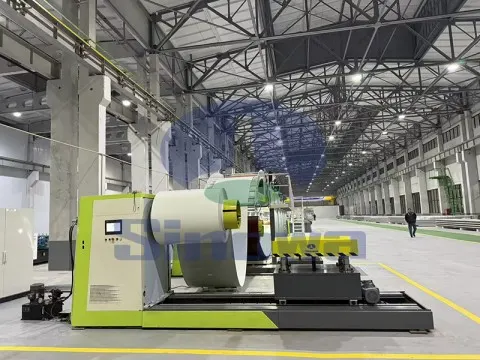
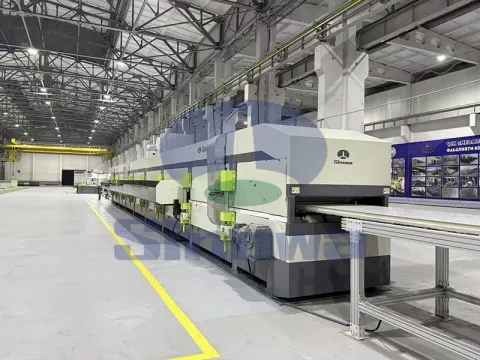
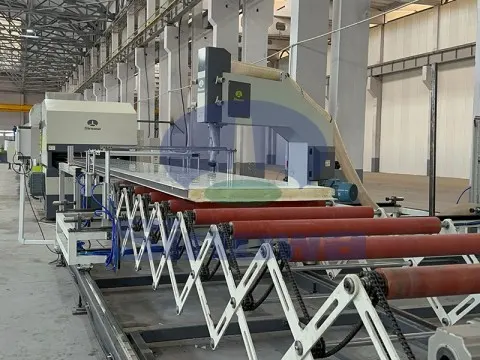
Gallery of PU Sandwich Panel Production Line
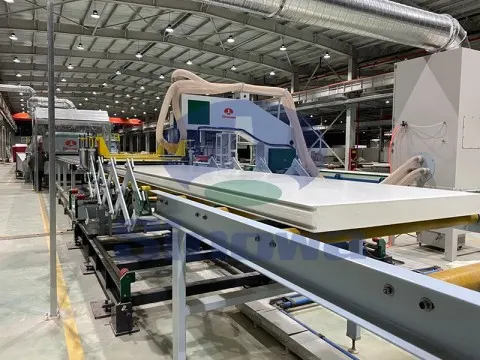
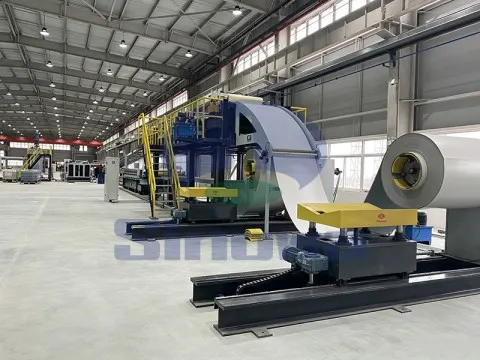
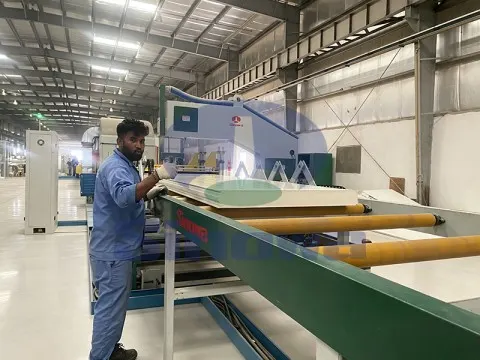
Tags: pu sandwich panel production line, pu sandwich panel production line manufacturer, pu sandwich panel production line supplier, china pu sandwich panel production line, pu sandwich panel production line for sale
-
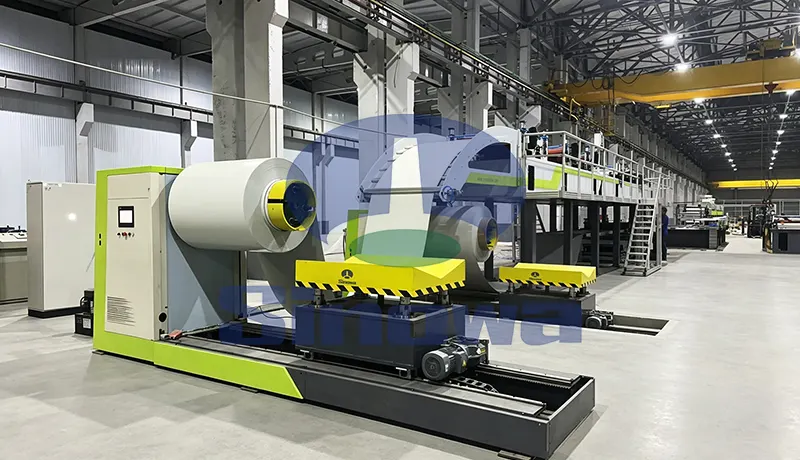
A reliable PU sandwich panel production line serves as the core equipment for manufacturing high-performance building insulation panels. This professional PU sandwich panel line features automated feeding, foaming and molding processes to ensure consistent panel thickness and structural stability. The well-designed polyurethane sandwich panel production line effectively improves production efficiency while reducing material waste in daily operation. Each calibrated polyurethane sandwich panel line can adapt to different panel sizes to meet diverse construction needs. With precise temperature and pressure control, the advanced continuous PU sandwich panel line produces panels with excellent thermal insulation and weather resistance. Meanwhile, the optimized PIR sandwich panel production line upgrades the foaming formula to enhance fire resistance performance. The high-efficiency PIR sandwich panel line maintains stable operation during long-term mass production, delivering durable and high-quality sandwich panels for various architectural and industrial applications.
-
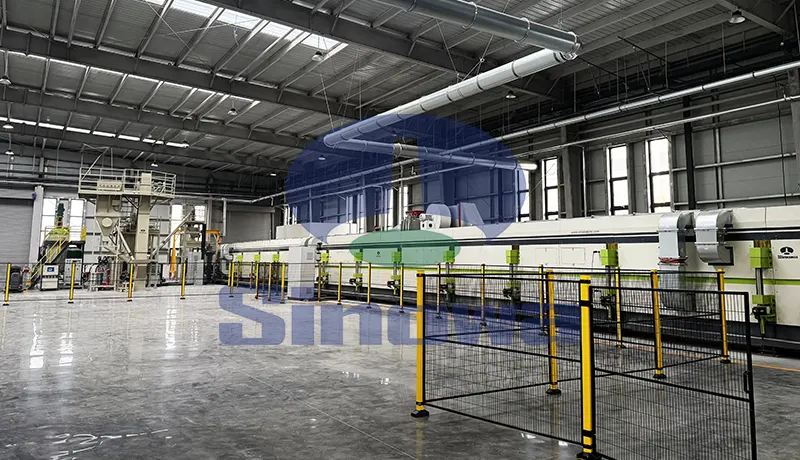
The phenolic panel production line realizes automated and continuous manufacturing of high-performance thermal insulation panels through streamlined and coordinated processing procedures.
-
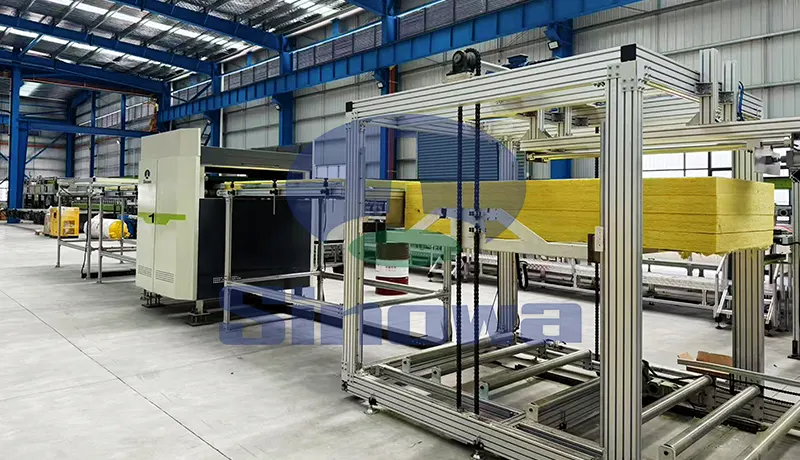
Modern insulation panel manufacturing relies on professional automated equipment to ensure stable product quality and high production efficiency. The rock wool sandwich panel production line features precise material lamination and forming processes to produce rigid, heat-insulating building panels. Meanwhile, the mineral wool sandwich panel production line adopts optimized assembly procedures to fabricate lightweight, soundproof panels widely used in architectural enclosure and thermal preservation projects.