How To Adjust The Speed Of The PU Sandwich Panel Production Line For Stable Production?
Publication Date: Sep 28, 2026
Adjusting the speed of a PU sandwich panel production line is core to stable manufacturing and consistent product quality. Proper speed matching coordinates material reaction, equipment operation and process flow, effectively avoiding common defects and improving overall production stability and efficiency.
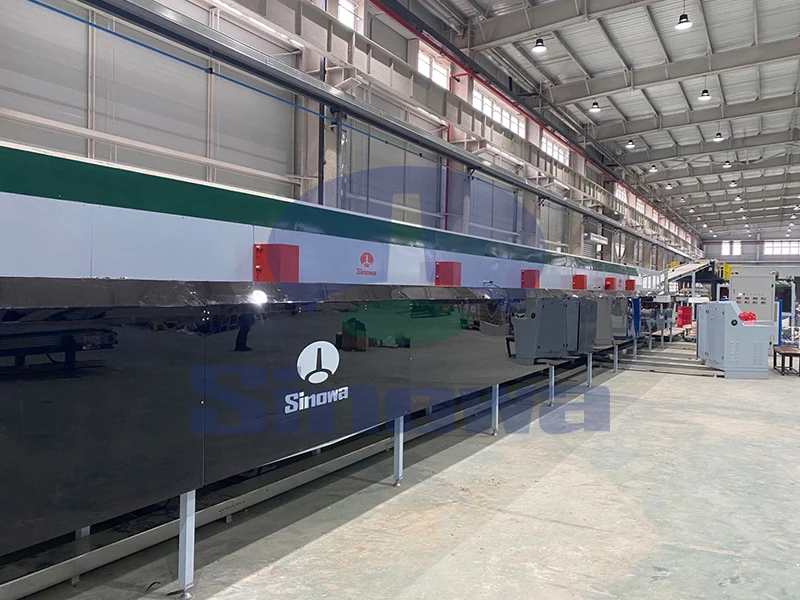
The foundation of stable speed adjustment lies in fully understanding the correlation between line speed and PU material foaming and curing characteristics. Polyurethane foam requires a fixed reaction cycle to complete uniform foaming, dense core formation and reliable bonding with upper and lower surface materials. If the production line runs too fast, the PU material cannot finish full foaming and curing within the limited process time, leading to hollow cores, insufficient bonding strength and uneven panel surfaces. Conversely, excessively low speed causes over-foaming, material expansion deformation and unnecessary material waste, while reducing production efficiency. Operators need to set the basic speed range according to the inherent reaction properties of PU raw materials, ensuring the line speed adapts to the natural rhythm of material chemical changes. This basic matching principle serves as the primary guideline for all subsequent fine speed adjustments and prevents fundamental quality fluctuations caused by speed mismatch.
Synchronous speed coordination among all functional units is essential to eliminate production fluctuations in PU sandwich panel manufacturing. A complete production line includes material feeding, leveling, foaming, pressing, curing and cutting units, each with independent operating speed parameters. Speed inconsistency between adjacent units easily causes material accumulation, stretching or slippage, which disrupts continuous production and damages panel structural uniformity. For instance, mismatched speed between the feeding unit and foaming unit leads to uneven PU material distribution on the base panel, while asynchronous speed between the pressing unit and curing unit results in incomplete composite bonding. Operators should utilize the centralized control system to realize synchronous acceleration and deceleration of all units, calibrate transmission speed parameters regularly, and eliminate speed deviation caused by mechanical transmission wear. Maintaining consistent operating rhythm across the entire line ensures smooth material circulation and stable product forming quality.
Linking line speed adjustment with pressing pressure and temperature parameters effectively stabilizes composite forming quality. The pressing and curing module determines the bonding firmness and structural stability of PU sandwich panels, and its core operating parameters are closely linked to production speed. When increasing line speed, the material’s residence time in the pressing and curing area is shortened, so appropriate increases in pressing pressure and heating temperature are required to compensate for the reduced reaction time, ensuring sufficient foaming and curing of PU materials. When reducing line speed, operators need to lower pressure and temperature correspondingly to avoid material overheating deformation and foam structure collapse. Blind speed adjustment without matching parameter modification will directly cause product defects. Real-time linkage adjustment of speed, pressure and temperature enables the production line to maintain optimal forming conditions under different operating speeds and avoids quality instability caused by single parameter change.
Precise calibration of PU material feeding rate according to line speed prevents structural defects of finished panels. The foaming effect of PU materials depends on the matching degree between material injection volume and line operating speed. There is a quantitative matching relationship between line speed, panel width, core thickness and PU material filling density. Too low feeding rate relative to line speed leads to insufficient material filling, forming voids and loose foam structures inside the panel. Excessively high feeding rate causes material accumulation and extrusion bulges on the panel surface, and also increases hydraulic load on pressing equipment. Operators need to calculate the standard feeding rate based on real-time line speed and product specifications, fine-tune the metering system parameters, and maintain a stable material supply speed. Regular verification of feeding speed accuracy ensures uniform material distribution in each production section and consistent density of finished panels.
Gradual speed regulation mode is critical to avoid sudden production state changes. Many production stability failures stem from abrupt speed increase or decrease, which impacts mechanical operation stability and material forming continuity. Sudden speed changes will cause instantaneous tension changes in base materials, leading to material deviation and wrinkling, and also disrupt the continuous foaming reaction of PU materials, resulting in inconsistent local foam density. In actual production adjustment, operators must adopt a gradual speed adjustment method with small amplitude changes, retain a stable operating interval after each adjustment, and observe product quality and equipment operating status. After confirming stable forming quality and normal equipment operation, proceed with the next round of fine-tuning. This gradual regulation mode effectively buffers the impact of speed changes on the production system and maintains continuous and stable production rhythm.
Real-time speed adjustment based on online quality monitoring data realizes dynamic stable production. Modern PU sandwich panel production lines are equipped with visual monitoring and quality detection modules, which can real-time feed back panel surface flatness, bonding uniformity and foam compactness. Operators can adjust the line speed dynamically according to monitoring data feedback. If the monitoring system detects incomplete local curing or weak bonding, it indicates that the current speed is too fast and needs to be moderately reduced to extend material reaction time. If panel surface bulges and excessive material consumption appear, the speed can be appropriately increased to avoid over-reaction of PU materials. Combining speed adjustment with real-time quality data changes the traditional passive adjustment mode, realizes active error correction in the production process, and greatly improves the overall stability of product quality.
Regular mechanical maintenance and speed calibration eliminate equipment-induced speed instability. Long-term continuous operation will cause wear of transmission parts such as conveyor belts, rollers and couplings, leading to speed deviation and inconsistent transmission accuracy of each unit. Minor mechanical failures such as roller slippage and transmission shaft jitter will cause intermittent speed fluctuations, resulting in periodic quality defects of panels. Enterprises need to formulate regular maintenance plans, check the wear degree of transmission components regularly, replace aging parts in time, and lubricate movable parts to ensure flexible and stable mechanical operation. In addition, regular speed calibration of the control system is required to correct parameter drift caused by long-term operation, ensuring that the actual operating speed of the equipment is consistent with the set value and eliminating hidden dangers of unstable production caused by mechanical and parameter errors.
Matching line speed with post-processing procedures ensures overall production stability. The cutting, stacking and packaging procedures after panel forming are important links affecting overall production continuity, and their operating speed must match the main line speed. If the post-processing speed is lower than the main line speed, finished panels will accumulate on the conveying platform, causing extrusion deformation and blocking subsequent production. If the post-processing speed is too fast, it will cause tension stretching of unfinished panels and damage the structural integrity of semi-finished products. Operators need to adjust the operating frequency of post-processing equipment synchronously according to the main line speed, optimize the action rhythm of cutting and stacking, and build a coordinated and consistent full-process operating speed system. The coordination of front and rear processes avoids production stagnation and product damage and guarantees long-term stable operation of the entire production line.
Reasonable speed adjustment according to raw material batch differences improves production adaptability. Even qualified PU raw materials from different production batches have subtle differences in viscosity, foaming activity and reaction rate, which affect the optimal matching speed of the production line. Using a fixed speed parameter for all material batches will cause occasional quality fluctuations. Before mass production of new material batches, operators need to conduct small-scale trial production, observe the foaming effect, bonding state and surface quality of trial-produced panels, and adjust the line speed appropriately according to the actual material reaction state. For raw materials with slow reaction speed, moderately reduce the line speed to ensure sufficient curing time; for materials with active reaction, increase the speed appropriately to avoid over-foaming. Targeted speed adjustment for material differences eliminates batch quality fluctuations and improves the stability of continuous mass production.
Formulating standardized speed adjustment operation specifications ensures long-term stable production consistency. Manual random adjustment is prone to operation errors and inconsistent parameter setting by different operators, leading to unstable production quality. It is necessary to summarize optimal speed matching parameters for different product specifications, material types and production states, and form unified and standardized operation procedures. The specifications should clarify the speed adjustment range, single adjustment amplitude, parameter linkage rules and quality inspection standards after adjustment. All operators must follow unified standards for speed regulation operation, and record each adjustment data for subsequent production optimization and problem tracing. Standardized speed adjustment operations reduce human error, realize standardized and precise production control, and lay a solid foundation for long-term stable and efficient operation of the PU sandwich panel production line.
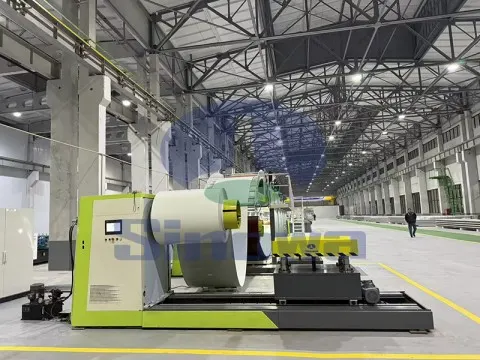
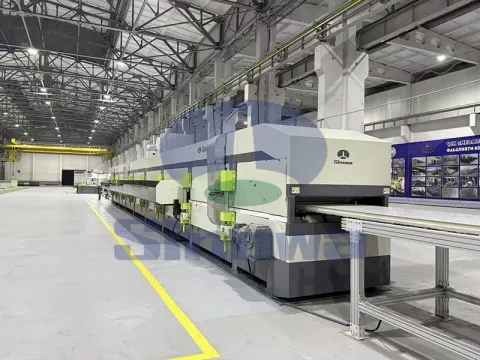
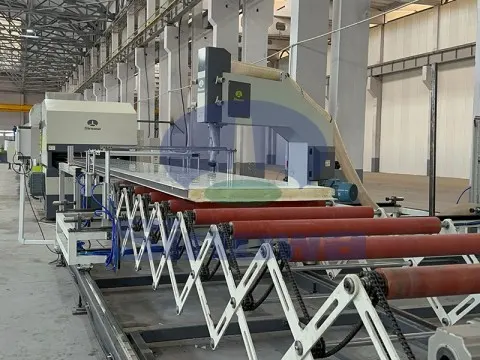
Gallery of PU Sandwich Panel Production Line
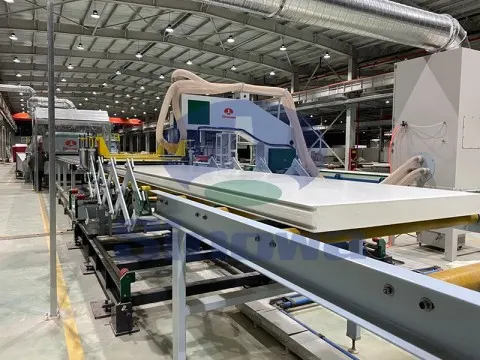
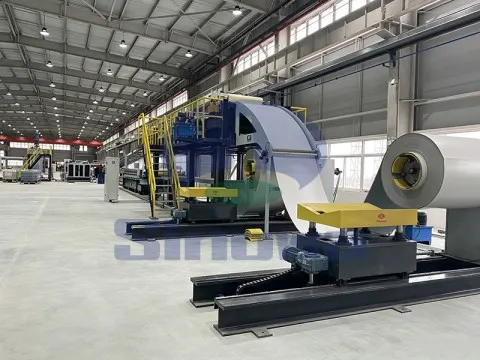
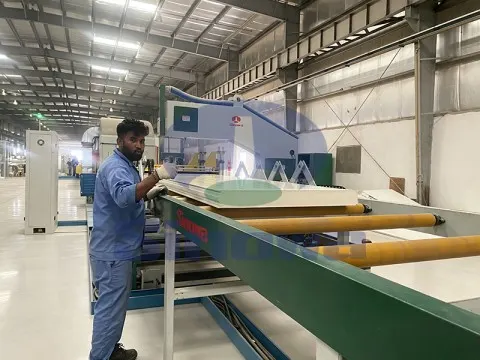
Tags: pu sandwich panel production line, pu sandwich panel production line manufacturer, pu sandwich panel production line supplier, china pu sandwich panel production line, pu sandwich panel production line for sale
-

A reliable PU sandwich panel production line serves as the core equipment for manufacturing high-performance building insulation panels. This professional PU sandwich panel line features automated feeding, foaming and molding processes to ensure consistent panel thickness and structural stability. The well-designed polyurethane sandwich panel production line effectively improves production efficiency while reducing material waste in daily operation. Each calibrated polyurethane sandwich panel line can adapt to different panel sizes to meet diverse construction needs. With precise temperature and pressure control, the advanced continuous PU sandwich panel line produces panels with excellent thermal insulation and weather resistance. Meanwhile, the optimized PIR sandwich panel production line upgrades the foaming formula to enhance fire resistance performance. The high-efficiency PIR sandwich panel line maintains stable operation during long-term mass production, delivering durable and high-quality sandwich panels for various architectural and industrial applications.
-

The phenolic panel production line realizes automated and continuous manufacturing of high-performance thermal insulation panels through streamlined and coordinated processing procedures.
-

Modern insulation panel manufacturing relies on professional automated equipment to ensure stable product quality and high production efficiency. The rock wool sandwich panel production line features precise material lamination and forming processes to produce rigid, heat-insulating building panels. Meanwhile, the mineral wool sandwich panel production line adopts optimized assembly procedures to fabricate lightweight, soundproof panels widely used in architectural enclosure and thermal preservation projects.