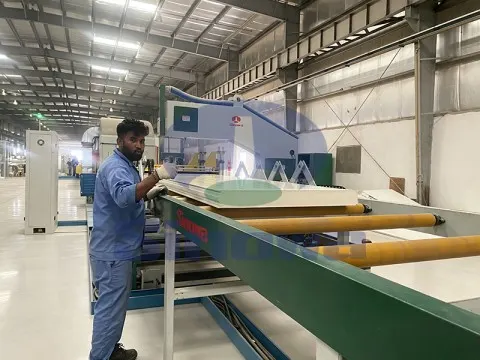
Insulation Board Production Line
Publication Date: Oct 6, 2026
Insulation Board Production Line: fully automatic continuous line for PU, rock wool, mineral wool, phenolic thermal insulation boards. PLC-controlled, high efficiency, stable quality, customizable for exterior wall, roof and cold storage panels.
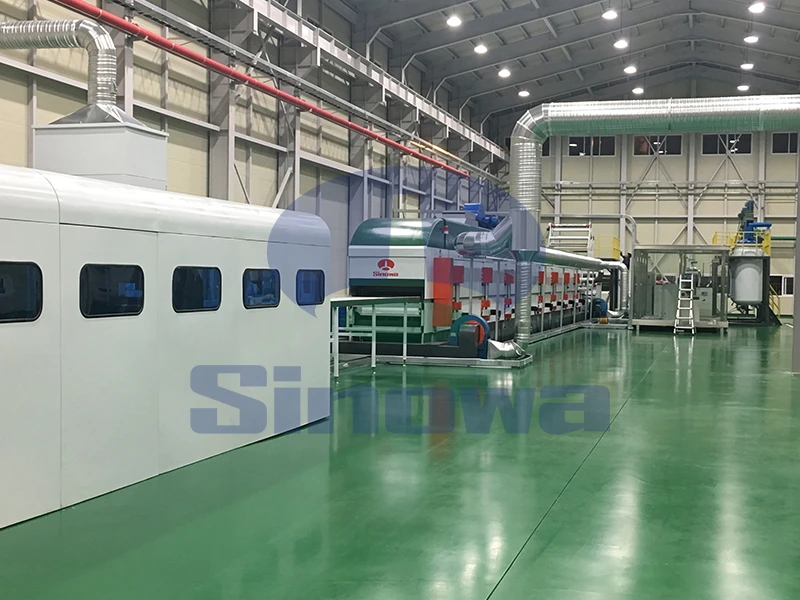
The insulation board production line is an integrated automated manufacturing system designed for continuous mass production of thermal insulation panels. It integrates multiple precision processes to produce high-performance boards widely used in construction, industrial insulation and energy-saving projects with stable quality.
Overall Structural Composition of the Production Line
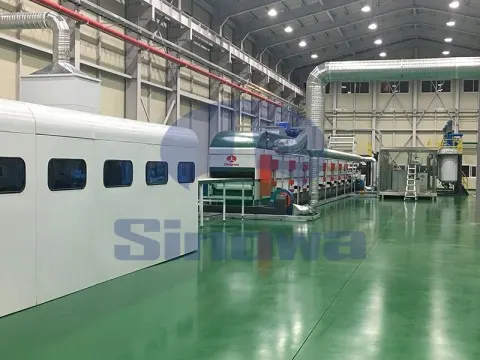
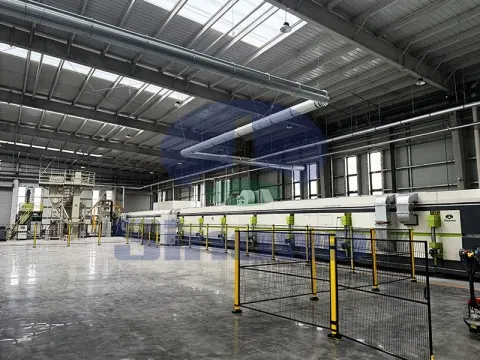
A complete insulation board production line is a highly integrated automated system composed of multiple interconnected functional modules, each undertaking independent and collaborative production tasks. The entire line covers raw material pretreatment, precise batching and mixing, continuous forming, constant-temperature curing, fixed-size cutting, cooling shaping and finished product stacking, forming a closed-loop manufacturing process. The core structural units include raw material storage and conveying systems, precision metering and mixing equipment, surface material unwinding and leveling mechanisms, double-belt composite forming devices, constant-temperature curing channels, intelligent cutting systems and automatic discharging and stacking units. All modules are linked by a centralized control system to realize synchronous operation and parameter coordination. Each equipment unit is optimized for matching operating speed and processing accuracy, avoiding production stagnation or quality deviation caused by mismatched procedures. This modular structural design not only ensures the continuity and efficiency of mass production but also facilitates daily equipment maintenance, partial function upgrading and production adjustment according to different board specifications, greatly improving the flexibility and practicability of the entire production line.
Raw Material Selection and Preprocessing Technology
Raw material quality and preprocessing effects directly determine the thermal insulation performance, structural stability and service life of finished insulation boards. Common core raw materials include polymer foaming materials, inorganic fiber materials and composite thermal insulation substrates, while surface materials cover various metal plates, flexible protective films and decorative base materials adapted to different usage scenarios. Before formal production, all raw materials need to go through strict preprocessing procedures to eliminate factors affecting product quality. Bulk granular raw materials are screened and purified to remove impurities and uneven particles, ensuring uniform material texture. Powder and liquid auxiliary materials are subjected to constant-temperature stirring and homogenization to avoid component precipitation and layering. Surface materials undergo leveling, tension adjustment and surface cleaning treatment to remove dust, wrinkles and surface defects, laying a foundation for tight subsequent composite bonding. In addition, raw material preprocessing also includes temperature and humidity adaptation treatment, adjusting the physical state of materials to adapt to subsequent foaming, bonding and forming processes. Standardized preprocessing operations effectively reduce product defect rates, ensure consistent raw material proportioning in each production batch, and lay a solid foundation for stable and reliable finished product performance.
Precision Batching and Mixing Process
Precision batching and mixing are the core links that determine the internal structure and thermal insulation performance of insulation boards. This process relies on high-precision automatic metering equipment to realize accurate proportioning of main materials, foaming agents, curing agents and functional additives. Different from manual batching, the automated metering system adopts real-time flow monitoring and quantitative feeding technology, which can accurately control the feeding amount of each material component and avoid performance differences caused by proportion deviations. After batching, all materials are sent to a closed high-speed mixing device for full homogenization treatment. The mixing equipment is equipped with adjustable speed and temperature control functions, which can adjust mixing parameters according to different material characteristics to ensure uniform dispersion of each component. For composite insulation materials, staged mixing technology is adopted to prevent chemical reactions in advance between different functional materials. The closed mixing environment also avoids material loss and external dust pollution, ensuring the purity and activity of mixed materials. Uniformly mixed materials have stable foaming activity and curing performance, which can form a fine and uniform internal pore structure in the subsequent forming process, effectively improving the thermal insulation, sound insulation and compression resistance of finished boards.
Automatic Feeding and Pouring Operation
The automatic feeding and pouring process undertakes the key task of transporting mixed raw materials to the forming area and realizing uniform material distribution. After the mixing process is completed, the fluid composite materials are automatically transported to the transverse pouring device through a sealed conveying pipeline. The pouring device adopts reciprocating mobile spraying technology, which can evenly distribute the mixed materials on the flat surface base material according to the set thickness and width standards. The system supports real-time adjustment of pouring flow and moving speed, which can adapt to the production requirements of insulation boards with different thickness specifications. During the pouring process, the equipment is equipped with anti-blocking and constant-pressure feeding functions to avoid material accumulation, intermittent feeding and uneven local thickness. Meanwhile, the synchronous feeding of upper and lower surface materials is realized through the automatic unwinding mechanism. The surface materials are stably conveyed to the composite station after tension control and leveling treatment, forming a matching structure with the intermediate pouring core material. The highly automated feeding and pouring links eliminate the errors and instability of manual operation, ensure the consistency of material distribution in each board, and provide reliable prerequisites for the integral forming and performance uniformity of insulation boards.
Continuous Laminating and Integral Forming System
Continuous laminating and forming is the key procedure to bond the core thermal insulation material with surface materials into an integral insulation board. This process is completed by a double-belt laminating forming device with precise pressure control function. After the core material is poured and laid flat, the upper and lower surface materials are closely combined with the foaming core material under the uniform pressure of the composite roller group. The laminating system can accurately adjust the pressing pressure and spacing according to the preset board thickness, ensuring that the core material and surface materials are tightly bonded without delamination or excessive compression. In the forming process, the gradual pressure design is adopted to make the foaming material fully expand and fill the entire composite space, forming a dense and uniform sandwich structure. The continuous linear forming mode realizes uninterrupted production of long-size insulation boards, avoiding the joint gaps and performance differences caused by segmented production. In addition, the forming equipment is equipped with deviation correction devices to dynamically adjust the conveying position of materials, ensuring the flatness and dimensional regularity of the board surface after forming. The integral forming technology effectively enhances the overall structural strength of insulation boards, improves the bonding firmness between layers, and enables the products to have stable mechanical properties in long-term use.
Constant Temperature Curing and Shaping Process
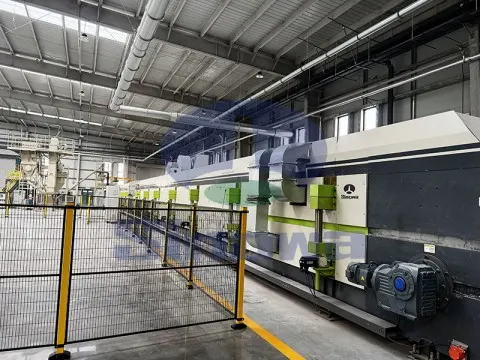
Constant temperature curing is an essential link to stabilize the internal structure and mechanical properties of newly formed insulation boards. After composite forming, the preliminary shaped boards are continuously sent to a closed constant-temperature curing channel for heat preservation and curing treatment. The curing channel maintains a stable internal temperature and air circulation environment, providing uniform reaction conditions for the foaming and curing of the core thermal insulation material. During the curing process, the internal chemical reaction of the core material is fully completed, the foam pore structure is completely shaped, and the bonding force between the core material and surface materials is further enhanced. The curing time and temperature parameters are adjustable according to different material formulas and board thicknesses, which can meet the curing requirements of various types of insulation boards. A graded temperature control mode is adopted inside the curing channel, realizing staged heating and constant temperature treatment to avoid quality problems such as internal cracking, surface deformation and uneven hardness caused by excessive temperature difference. After sufficient constant-temperature curing, the internal stress of the insulation board is completely released, the structural stability is significantly improved, and the product can maintain stable thermal insulation and mechanical properties in complex application environments.
Cooling and Stereotyped Treatment Technology
After completing the constant-temperature curing process, the insulation board needs to go through professional cooling and stereotyped treatment to eliminate residual internal temperature and fix the final product shape. The high-temperature boards coming out of the curing channel enter the automatic cooling conveying system, which adopts a combination of natural air cooling and forced air cooling to realize uniform heat dissipation of the board. The cooling system is equipped with multi-channel air circulation equipment to ensure that the upper and lower surfaces and the interior of the board dissipate heat synchronously, avoiding local temperature difference leading to shrinkage deformation and warping. The conveying speed of the cooling line is matched with the front-end production rhythm, ensuring that the board has sufficient cooling time to reach room temperature state. In the cooling process, the board is kept flat and stable through the limit conveying mechanism, effectively correcting tiny deformations generated in the curing process. Complete cooling and stereotyped treatment can stabilize the physical size and internal structure of the insulation board, prevent secondary deformation and cracking in subsequent cutting, transportation and use, and further improve the dimensional accuracy and structural stability of finished products, laying a foundation for subsequent precise cutting and finished product processing.
Precision Cutting and Trimming Processing
Precision cutting and trimming are responsible for cutting continuous long-size board blanks into finished products of standard specifications, removing redundant edges and defective parts. The production line is equipped with intelligent numerical control cutting systems, including longitudinal slitting and transverse cross-cutting functions, which can automatically complete fixed-length cutting and edge trimming according to preset parameter settings. The cutting equipment adopts high-speed fine-tooth cutting tools and stable transmission structures, which can realize smooth cutting sections without burrs, cracks and indentations. The numerical control system supports flexible adjustment of cutting length, width and edge trimming range, adapting to the production of insulation boards of various specification sizes. Before cutting, the automatic positioning and deviation correction system will calibrate the board position in real time to ensure the accuracy of cutting size. Edge trimming treatment removes the unformed loose edges on both sides of the board, ensuring the regularity of the product outline. In addition, the cutting process is equipped with dust removal and debris collection devices to keep the production environment clean and avoid debris adhesion affecting product surface quality. High-precision cutting and trimming processing ensures the dimensional uniformity and appearance quality of each finished insulation board, meeting the precise installation and use requirements of engineering projects.
Finished Product Inspection and Quality Control
Finished product inspection and quality control run through the entire production process, forming a full-link quality guarantee system for insulation boards. The production line is equipped with online real-time monitoring equipment, which dynamically detects key indicators such as board thickness, flatness, surface bonding quality and internal compactness during the production process. Abnormal data will trigger automatic early warning, and the system will timely adjust production parameters or screen out unqualified products. After cutting and trimming, finished products will undergo comprehensive manual and equipment sampling inspection, focusing on detecting thermal insulation performance, compressive strength, bonding firmness and appearance quality. Products with unqualified size, deformed appearance, loose internal structure or poor bonding will be independently screened and reprocessed. The quality control system also records all production data and inspection results, realizing traceable product quality management. By combining online real-time monitoring and offline sampling inspection, the production line effectively controls product quality differences, ensures that all delivered finished products have stable and reliable performance, and improves the overall qualification rate and market applicability of products.
Automatic Stacking and Intelligent Production Advantages
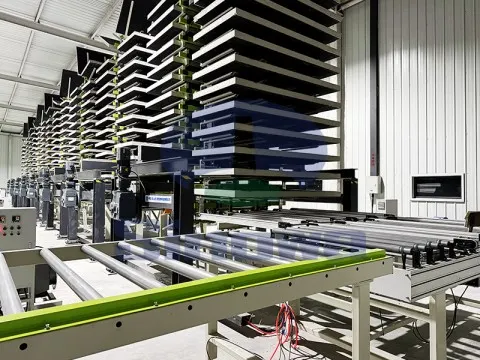
The final link of the insulation board production line is automatic finished product stacking and discharging, which realizes unmanned intelligent finishing of finished products. The qualified insulation boards are automatically conveyed to the stacking station through the conveying system, and the intelligent stacking equipment neatly stacks the boards according to the set number and specification standards. The stacking mechanism has precise positioning and anti-slip protection functions, which can avoid surface scratches and extrusion damage of boards during stacking. After stacking is completed, the equipment automatically completes discharging and transfers the finished product stacks to the storage area, realizing seamless connection with product storage and transportation. The fully automated post-processing mode greatly reduces manual intervention, improves production efficiency and reduces labor costs. In addition, the entire production line adopts centralized intelligent control, which can realize one-key parameter setting, production rhythm adjustment and equipment operation monitoring. The intelligent system can optimize production logic according to raw material changes and production requirements, reduce material waste and energy consumption, and improve production efficiency and economic benefits. While ensuring stable product quality, the intelligent and automated production mode realizes efficient, energy-saving and standardized manufacturing of insulation boards, meeting the large-scale and high-quality production needs of the modern thermal insulation material industry.
Gallery of Insulation Board Production Line
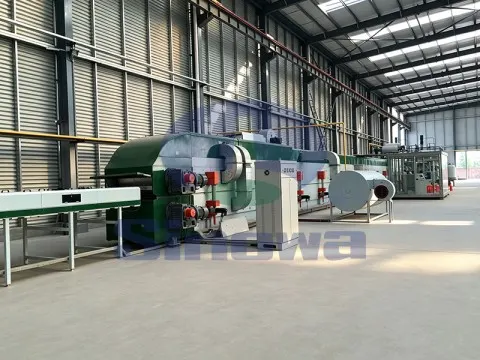
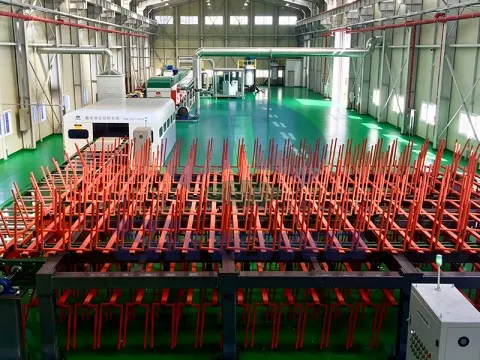
Tags: insulation board production line, insulation board production line manufacturer, insulation board production line supplier, china insulation board production line, insulation board production line for sale
Related Informations
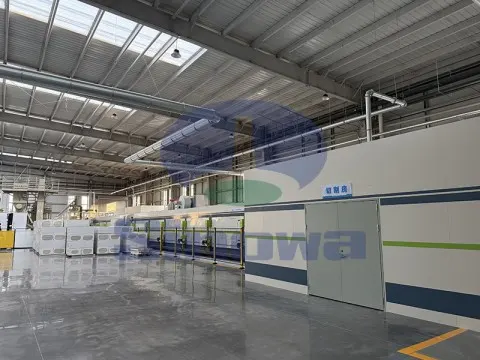
Sound Insulation PU Sandwich Panel Line
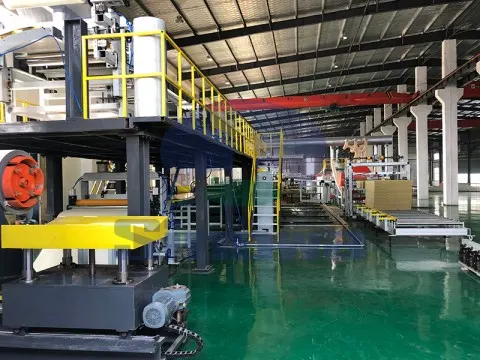
Wall Insulation Board Production Line