Insulated Sandwich Panel Production Line
Publication Date: Oct 6, 2026
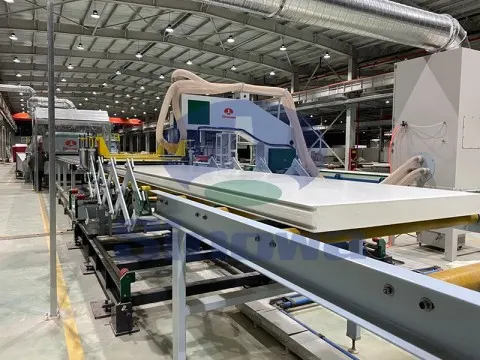
The insulated sandwich panel production line is an integrated automated manufacturing system for producing high-performance composite building panels. It completes continuous processing from raw material feeding to finished panel shaping, delivering insulated, durable panels widely used in modern construction and industrial facilities.
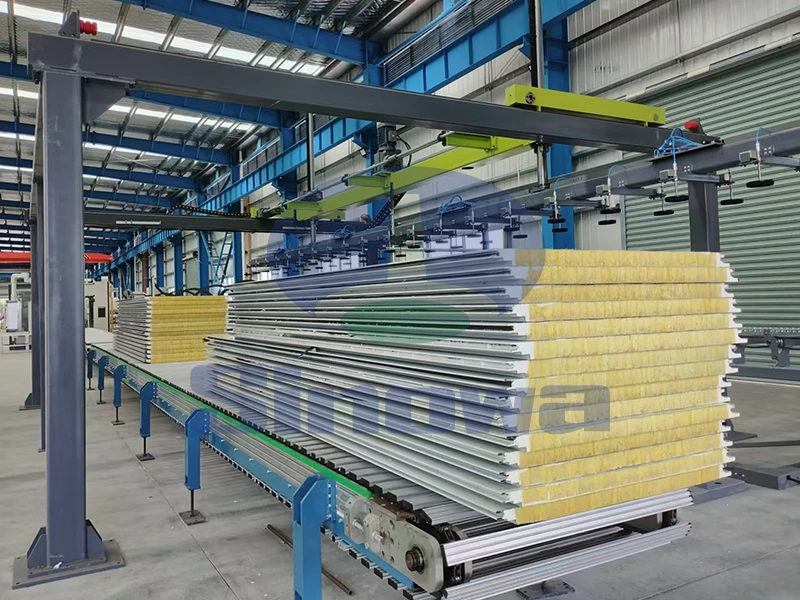
Basic Overview and Core Working Principle
The insulated sandwich panel production line is a continuous automated manufacturing system designed to produce multi-functional composite panels with thermal insulation and structural stability. Its core working principle relies on combining rigid outer facing materials with lightweight insulating core materials through precise mechanical pressing, gluing, and curing processes, forming a three-layer integrated panel structure with dual advantages of structural strength and thermal insulation. Unlike discrete manual or semi-automatic production modes, this assembly line realizes uninterrupted one-stop production, covering all key procedures from raw material unfolding and shaping to composite bonding and fixed-length cutting. The overall operation logic focuses on precise parameter matching, where mechanical motion, material transmission, and chemical bonding processes coordinate synchronously to eliminate production deviations. By maintaining stable pressure, uniform glue distribution, and constant curing temperature, the line ensures consistent structural integrity and performance uniformity of each panel batch. This systematic production mode not only optimizes panel surface flatness and internal bonding tightness but also effectively avoids common defects such as delamination, hollowing, and uneven thickness that occur in traditional production processes.
Composition of Core Production Equipment Modules
A complete insulated sandwich panel production line consists of multiple interconnected functional modules, each undertaking independent and collaborative production tasks to form a closed-loop manufacturing system. The front-end module is the uncoiling and leveling unit, which is responsible for stably releasing coiled metal or composite facing materials and eliminating material bending and deformation through multi-stage leveling rollers to ensure flat material feeding. Followed by the roll forming module, which shapes flat sheet materials into customized flat or corrugated profiles through groups of precision rollers, adapting to different panel appearance and structural requirements. The middle core modules include the core material feeding system and intelligent gluing system, where the feeding unit accurately conveys insulating core materials such as foam and mineral wool to the composite station, while the gluing system achieves uniform and quantitative adhesive coating through automatic flow control technology. The back-end core modules cover composite pressing, heating curing, fixed-length cutting, and finished product stacking units. Each module is equipped with independent servo control components, realizing synchronous speed matching and linkage operation. The modular design enables flexible line adjustment, allowing adaptation to different panel thicknesses, widths, and core material types without overall line transformation.
Raw Material Selection and Preprocessing Standards
Raw material quality and preprocessing effects directly determine the final performance and service life of insulated sandwich panels, making standardized material preparation a key pre-production link. The outer facing materials are mainly high-toughness anti-corrosion sheet materials with good surface flatness and structural rigidity, which provide mechanical protection and structural support for the panel. The core insulating materials are lightweight low-conductivity materials with excellent thermal insulation, sound insulation, and fire resistance, serving as the functional layer for energy conservation and noise reduction. Before formal production, all raw materials need to undergo strict preprocessing treatment. Coiled facing materials need tension adjustment and surface dust removal to ensure no impurities affect subsequent gluing and bonding effects. Insulating core materials require trimming and thickness calibration to guarantee consistent overall panel thickness and avoid local structural differences. In addition, adhesive materials need pre-mixing and constant-temperature standing to stabilize viscosity and activity, ensuring optimal bonding performance during composite processing. Scientific raw material selection and standardized preprocessing effectively reduce production defects, improve panel structural stability, and lay a solid foundation for the consistent quality of finished products in mass continuous production.
Uncoiling and Leveling Production Process
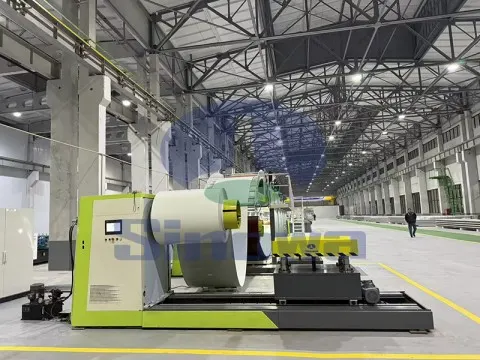
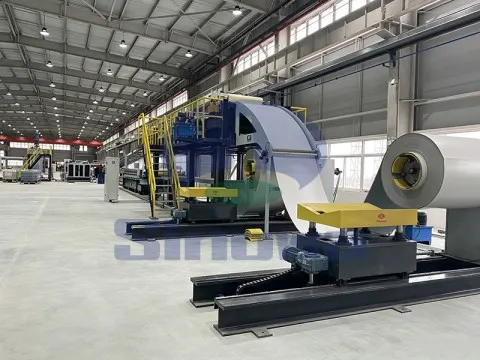
Uncoiling and leveling is the initial and foundational process of the entire sandwich panel production, laying the groundwork for subsequent precise forming and composite processing. The uncoiling unit adopts automatic tension control design, which can stably release coiled facing materials at a constant speed and avoid material stretching, wrinkling, or uneven feeding caused by tension fluctuation. Equipped with an automatic deviation correction device, the unit can real-time monitor material transmission tracks and fine-tune the feeding position to ensure lateral alignment of sheet materials throughout the production process. After uncoiling, the sheet materials enter the multi-group roller leveling system, which eliminates internal micro-stress and surface bending deformation generated during coiling and storage through gradual pressure adjustment. The leveling process adopts segmented pressure regulation according to different material thicknesses and hardness, realizing uniform stress release without damaging the surface coating of sheet materials. Qualified leveled sheet materials are continuously transmitted to the roll forming station at a stable speed, maintaining consistent flatness and dimensional accuracy. This process effectively solves the problem of unstable initial material state in traditional production, ensuring the accuracy of subsequent forming size and the uniformity of composite bonding gaps.
Roll Forming and Surface Shaping Technology
Roll forming and surface shaping is a key process to determine the appearance structure and dimensional accuracy of insulated sandwich panels. After leveling, the flat sheet materials pass through a series of precision arranged forming rollers, and undergo gradual cold bending and extrusion to complete the shaping of flat, corrugated, or special-shaped panel surfaces. The forming roller group adopts modular assembly design, which can be replaced and adjusted according to different panel specification requirements, realizing flexible switching of multiple panel styles. The whole forming process is completed at room temperature, which avoids material performance changes caused by high-temperature processing and retains the original mechanical properties and anti-corrosion coating integrity of the sheet materials. The production line is equipped with real-time size detection components during operation, which dynamically monitor the forming width, bending radian, and flatness of sheet materials. Once slight dimensional deviation is detected, the system will automatically fine-tune roller gaps and transmission speed to ensure consistent forming accuracy of each section of the panel. Reasonable roll forming technology not only ensures neat and uniform panel appearance but also improves the overall structural rigidity of the panel, enhancing its wind resistance and compression resistance in actual application scenarios.
Intelligent Gluing and Composite Bonding Process
Gluing and composite bonding is the core process that determines the internal structural firmness of insulated sandwich panels, directly affecting the panel's delamination resistance and overall durability. Modern production lines adopt automatic spraying and rolling composite gluing technology, completely replacing traditional manual gluing methods with uneven coating and low efficiency. The intelligent gluing system is equipped with high-precision flow control units, which can automatically adjust glue output and coating thickness according to different facing materials and core material types, realizing full coverage and uniform coating without dead ends or glue accumulation. Before composite bonding, the system will slightly treat the bonding surface of raw materials to enhance adhesive adhesion. Then, the upper and lower facing sheets and the middle insulating core material are accurately aligned and stacked through the transmission system, entering the composite bonding station. The whole bonding process maintains a stable material transmission speed to avoid dislocation and offset of internal layers. The precise gluing and composite technology ensures that the adhesive forms a dense and uniform bonding layer between layers, effectively improving the shear resistance and peel resistance of the panel, and preventing layer separation during long-term use.
Pressing and Heating Curing Mechanism
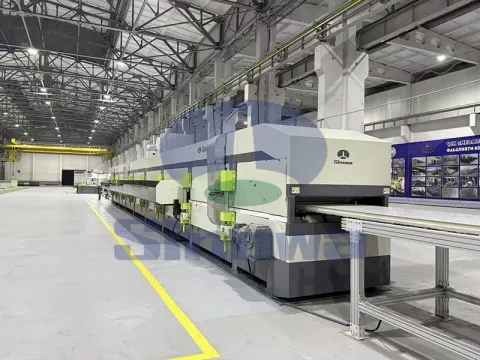
Pressing and heating curing is a key link to realize solid integration of multi-layer materials and stabilize panel performance. After composite lamination, the semi-finished panels are stably sent to the closed pressing and curing unit, which adopts circulating belt pressing structure to apply uniform and continuous pressure on the entire panel surface. The segmented pressure regulation design can adapt to different panel thicknesses and material hardness, ensuring consistent pressure distribution in all areas of the panel and avoiding local hollowing or insufficient bonding. Matching with the pressure system is the constant-temperature heating curing system, which provides stable and uniform heat through internal heating components to accelerate the curing reaction of the adhesive. The system precisely controls curing temperature and heating time according to adhesive characteristics and panel structure, ensuring thorough curing of the bonding layer without damaging the performance of the insulating core material. In the curing process, the synchronous transmission of the pressing belt ensures that the panel will not deform or shift during heating and shaping. After sufficient curing, the internal layers of the panel form an integrated stable structure, with significantly improved overall structural strength, bonding firmness and weather resistance, meeting the long-term use requirements of various complex environments.
Fixed-Length Cutting and Edge Trimming Processing
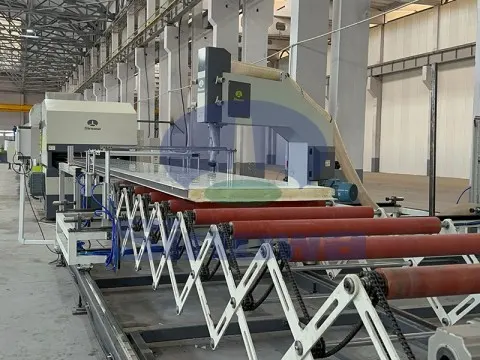
Fixed-length cutting and edge trimming are finishing processes to standardize panel size and optimize appearance quality. After curing and shaping, the continuous integrated panel is transmitted to the precision cutting unit, which adopts servo flying cutting technology to realize automatic fixed-length cutting according to preset size parameters. The cutting system features high positioning accuracy and fast response speed, which can complete stable cutting in the continuous transmission state of the panel, avoiding size errors and section burrs caused by static cutting. After cutting, the edge trimming device automatically polishes and trims the four sides of the panel, removing residual raw material edges and uneven cutting sections to ensure neat and smooth panel edges. In addition, the unit can complete fine processing such as edge sealing and groove opening according to customized requirements, optimizing panel assembly performance. The whole cutting and trimming process is automated and intelligent, with no manual intervention required, which not only improves production efficiency but also ensures consistent dimensional accuracy and appearance quality of each finished panel. Standardized finishing processing makes the panels more convenient for on-site assembly and installation in engineering applications.
Finished Product Inspection and Automatic Stacking
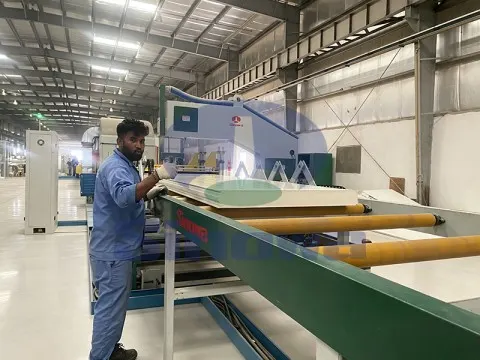
Finished product inspection and automatic stacking are the final links to control product quality and realize standardized finished product management. After cutting and trimming, all finished panels will pass through the online real-time inspection system, which detects key indicators including panel thickness uniformity, surface flatness, bonding integrity, and dimensional accuracy through non-contact detection components. The system can automatically identify defective products such as delamination, surface scratches, and size deviation, and classify and screen qualified and unqualified products in real time to prevent defective products from entering the finished product area. Qualified finished panels are automatically transmitted to the stacking unit, which adopts intelligent stacking technology to neatly stack panels according to specified layers and spacing, avoiding surface friction and extrusion damage during stacking. The automatic stacking mode ensures neat and orderly placement of finished products, facilitates subsequent packaging, transportation and storage management, and also reduces manual handling errors and panel damage risks. Perfect post-production inspection and stacking system builds a complete quality control barrier for the whole production process.
Production Line Operational Advantages and Performance Characteristics
The modern insulated sandwich panel production line has prominent operational advantages and comprehensive performance characteristics compared with traditional production equipment. First of all, it realizes full-process continuous automated production, integrating multiple complex processes into one linkage system, greatly improving production efficiency and realizing stable mass production. Secondly, the whole line adopts intelligent parameter control, with precise regulation of speed, pressure, temperature and glue consumption, which effectively reduces human-induced errors and ensures stable and consistent product quality. In terms of performance adaptability, the modular structure design enables the production line to adapt to various core materials and facing materials, and can produce panels with different thicknesses and specifications, with strong production flexibility. In addition, the optimized mechanical structure and energy-saving control system reduce energy consumption and material waste during production, realizing efficient and environmentally friendly manufacturing. The panels produced by this line have excellent overall performance, including light weight, high strength, good thermal insulation, sound insulation and weather resistance, and can adapt to various construction scenarios such as factory buildings, cold storage, and temporary buildings, with wide application value.
Industry Application Value and Future Development Trends
Insulated sandwich panel production lines occupy an important position in the modern construction and new energy material industries, with outstanding practical application value. The high-efficiency and standardized production mode provides high-quality lightweight building materials for industrial construction, cold storage engineering, clean workshops and other fields, effectively reducing building construction cycles and improving building energy-saving performance. The produced panels integrate thermal insulation, structural support and anti-corrosion functions, which can effectively reduce building energy consumption and meet the development requirements of green energy-saving buildings. With the continuous upgrading of the construction industry's energy-saving and environmental protection standards, the production line is also developing towards higher intelligence, energy conservation and customization. In the future, the production line will be further combined with digital monitoring and remote debugging technology to realize real-time optimization of production parameters and intelligent early warning of equipment failures. At the same time, it will adapt to the research and development of new environmental protection core materials, continuously optimize the production process, improve panel environmental protection performance and comprehensive durability, and provide more high-quality and diversified composite panel products for the construction industry.
Gallery of Insulated Sandwich Panel Production Line
Tags: insulated sandwich panel production line, insulated sandwich panel production line manufacturer, insulated sandwich panel production line supplier, china insulated sandwich panel production line, insulated sandwich panel production line for sale
-
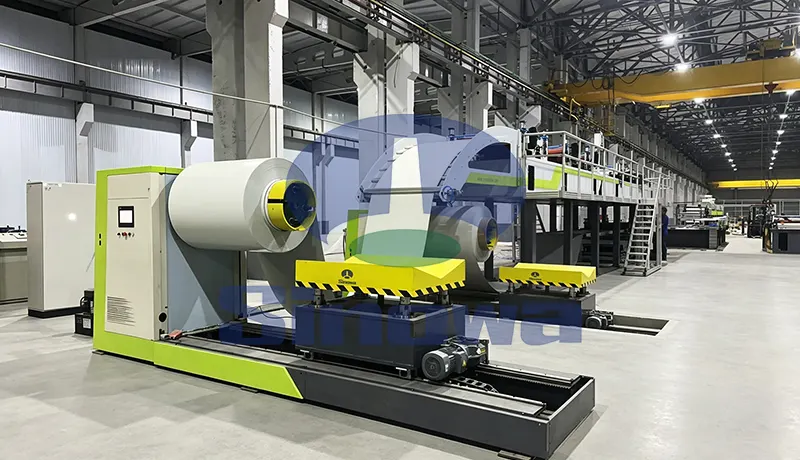
A reliable PU sandwich panel production line serves as the core equipment for manufacturing high-performance building insulation panels. This professional PU sandwich panel line features automated feeding, foaming and molding processes to ensure consistent panel thickness and structural stability. The well-designed polyurethane sandwich panel production line effectively improves production efficiency while reducing material waste in daily operation. Each calibrated polyurethane sandwich panel line can adapt to different panel sizes to meet diverse construction needs. With precise temperature and pressure control, the advanced continuous PU sandwich panel line produces panels with excellent thermal insulation and weather resistance. Meanwhile, the optimized PIR sandwich panel production line upgrades the foaming formula to enhance fire resistance performance. The high-efficiency PIR sandwich panel line maintains stable operation during long-term mass production, delivering durable and high-quality sandwich panels for various architectural and industrial applications.
-
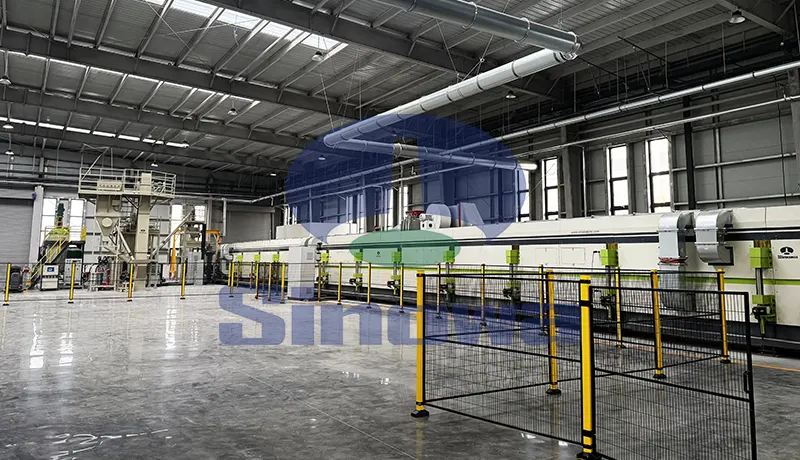
The phenolic panel production line realizes automated and continuous manufacturing of high-performance thermal insulation panels through streamlined and coordinated processing procedures.
-
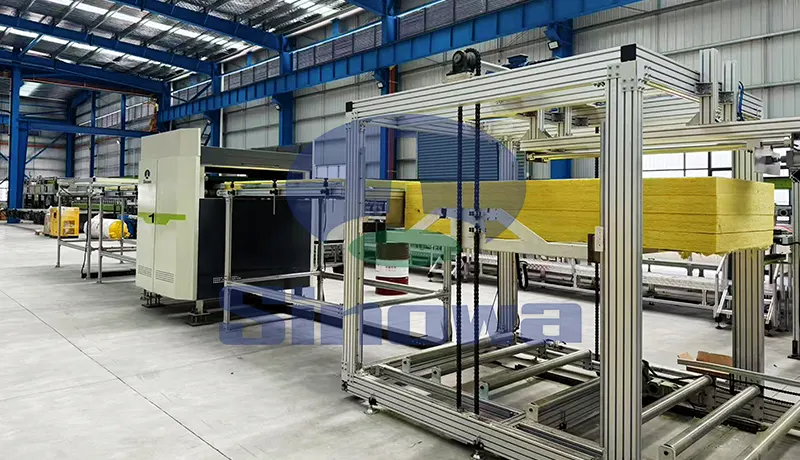
Modern insulation panel manufacturing relies on professional automated equipment to ensure stable product quality and high production efficiency. The rock wool sandwich panel production line features precise material lamination and forming processes to produce rigid, heat-insulating building panels. Meanwhile, the mineral wool sandwich panel production line adopts optimized assembly procedures to fabricate lightweight, soundproof panels widely used in architectural enclosure and thermal preservation projects.