Phenolic Insulation Board Manufacturing Line
Publication Date: Oct 6, 2026
The phenolic insulation board manufacturing line is a fully integrated automated production system dedicated to producing high-performance thermal and fire-insulation panels. It covers full procedures from raw material treatment to finished product shaping, featuring stable operation and consistent product quality for diverse insulation applications.
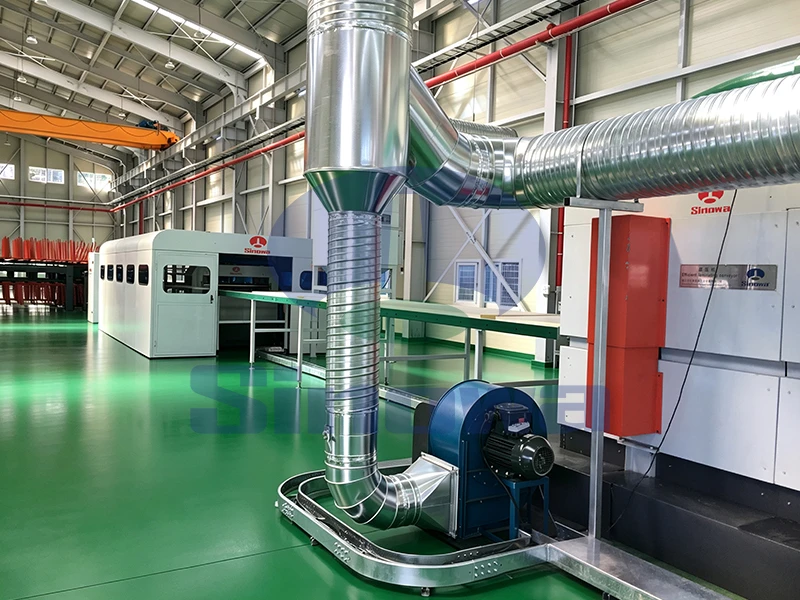
Modular Overall Structure of the Production Line
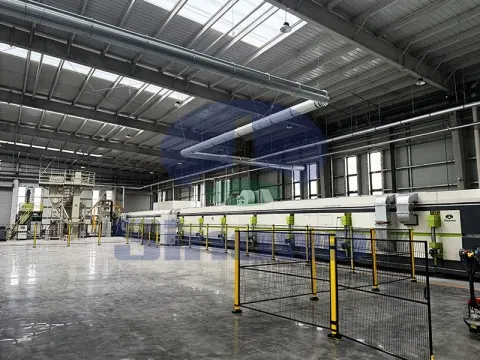
The phenolic insulation board manufacturing line adopts a scientific modular integrated layout, with all functional units closely interconnected to form a continuous and efficient production workflow. The complete system consists of multiple independent yet collaborative functional modules, including raw material metering and conveying unit, high-precision mixing unit, controllable foaming unit, continuous lamination molding unit, gradient temperature curing unit, precision trimming and cutting unit, as well as automatic finishing and conveying unit. Each module is designed with independent operation logic and linkage control functions, ensuring seamless connection between upstream and downstream processes. This modular design not only simplifies daily equipment maintenance and component replacement but also improves the overall flexibility of the production line. It can adapt to the production of phenolic boards with different densities, thicknesses and surface specifications by adjusting the operating parameters of each module without major equipment modification. The compact overall layout also saves factory space, reduces material transportation links in the production process, and effectively lowers operational energy consumption while improving production continuity and stability.
Scientific Raw Material Preparation and Proportioning
Raw material preparation is the foundational link that determines the basic performance of phenolic insulation boards, and precise proportioning and pretreatment are core to ensuring product consistency. The main raw materials applied in the production line include phenolic resin substrates, special foaming agents, high-efficiency curing agents, flame-retardant additives, smoke suppression components and auxiliary modifiers. Each raw material plays an irreplaceable role in the final product performance: phenolic resin acts as the base matrix to form the solid framework of the insulation board, foaming agents create uniform microporous structures for thermal insulation, curing agents promote rapid molding and solidification of materials, and various additives optimize fire resistance and environmental adaptability. The production line is equipped with automatic metering and feeding equipment, which realizes quantitative and fixed-rate conveying of all raw materials through intelligent sensing and precision control systems. Before formal mixing, all raw materials will undergo pretreatment such as impurity removal and viscosity adjustment to eliminate raw material fluctuations caused by storage and environmental changes. Strict raw material proportioning and pretreatment standards avoid performance differences between batches of products, laying a solid foundation for the stable thermal insulation, fire resistance and structural stability of finished phenolic boards.
High-Precision Continuous Material Mixing Process
Material mixing is a key intermediate process that directly affects the internal pore structure and comprehensive performance of phenolic insulation boards. The production line adopts a high-speed continuous mixing technology, which differs from traditional intermittent mixing modes and can realize uninterrupted homogeneous blending of multiple raw materials. After precise metering, all raw materials are transported to the sealed mixing cavity through independent conveying pipelines. The mixing unit is equipped with multi-group stirring structures with adjustable rotating speeds, which can carry out layered and gradient mixing according to the reaction characteristics of different raw materials. This mixing method fully integrates resin substrates, functional additives and foaming components, avoiding local uneven mixing, material agglomeration or component stratification. During the mixing process, the system monitors the material fluidity and mixing uniformity in real time through built-in sensors, and automatically adjusts stirring speed and mixing duration according to real-time data. The fully sealed mixing environment prevents external dust and impurities from entering, ensuring the purity of mixed materials. Uniformly mixed colloidal materials have stable reaction activity, which provides favorable conditions for subsequent controllable foaming and molding, and effectively avoids product defects such as uneven pore size and local hollowing of finished boards.
Intelligent Controllable Foaming Technology
Foaming is the core process that shapes the porous thermal insulation structure of phenolic boards, and the production line applies advanced gradient temperature-controlled foaming technology to achieve precise regulation of foam forming. The uniformly mixed colloidal materials are continuously and quantitatively injected into the closed molding cavity through precision pouring pipelines. The entire foaming area is equipped with distributed temperature sensors and heating components, which can realize real-time monitoring and dynamic adjustment of regional temperature. Different from constant-temperature foaming, gradient temperature control can simulate the optimal reaction temperature curve of phenolic materials, making the material complete slow expansion and uniform pore formation in a stepwise temperature rise environment. This controllable foaming mode effectively avoids excessive local foaming or insufficient expansion caused by temperature imbalance, ensuring that the internal micropores of the board are uniform, closed and compact. The system can flexibly adjust foaming temperature, expansion time and material injection volume according to the preset product density specifications. Reasonable foaming parameters enable the phenolic board to obtain lightweight characteristics while maintaining structural compactness, which is crucial for balancing the thermal insulation performance and mechanical strength of finished products. Stable foaming process also greatly reduces the rate of defective products caused by foaming anomalies.
Automatic Facer Lamination and Composite Molding
Facer lamination molding is an essential process for forming the complete sandwich structure of phenolic insulation boards and enhancing surface flatness and structural strength. The production line is equipped with an automatic facer unwinding and preheating system, which can continuously and stably convey upper and lower surface facers of different materials. Before lamination, the facers will pass through the constant-temperature preheating unit to adjust surface temperature and activity, which significantly improves the bonding firmness between facers and phenolic foam core materials. After the foaming materials are injected into the middle layer, the upper and lower facers are tightly compounded with the foam core through the automatic lamination unit to form an integrated sandwich structure. The lamination unit adopts flexible pressure control technology, which can uniformly apply constant pressure on the board surface without causing extrusion damage to the newly formed foam structure. The running speed of the lamination equipment is synchronized with the foaming and material injection speed, realizing fully continuous composite molding without intermittent pause. This one-piece molding process makes the combination of the core material and facers tighter and more uniform, avoiding common problems such as facer warping, degumming and partial bulging. The integrated composite structure greatly improves the overall flatness, wear resistance and structural stability of the phenolic insulation board.
Gradient Temperature Curing and Solidification Process
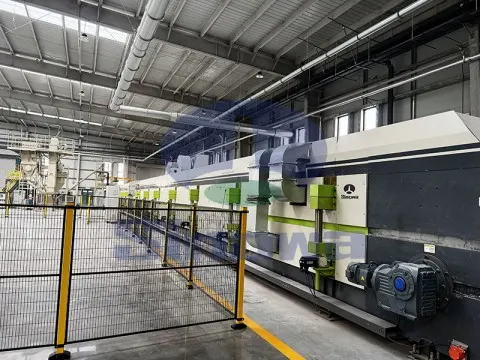
Curing and solidification is the key process to finalize the physical and chemical properties of phenolic insulation boards, enabling the foamed materials to complete cross-linking reaction and form stable solid structures. The production line is equipped with a long-distance gradient temperature curing oven, which divides the curing area into multiple temperature zones with independent temperature control functions. The initially molded composite boards enter the curing oven with the transmission device and complete staged curing through low-temperature preliminary shaping, medium-temperature cross-linking and high-temperature final solidification. The gradient temperature setting matches the exothermic reaction characteristics of phenolic resin cross-linking, which can effectively release internal reaction stress and avoid board deformation, warping or cracking caused by excessive instantaneous temperature. The system accurately controls the residence time of the board in each temperature zone according to product thickness and density specifications, ensuring that the internal cross-linking reaction is fully completed. During the curing process, the closed circulating hot air system in the oven ensures uniform temperature distribution in the entire curing space, making the curing degree of each part of the board consistent. Sufficient and uniform curing treatment stabilizes the thermal insulation, fire resistance and dimensional stability of phenolic boards, and improves the durability and anti-aging performance of finished products in long-term use.
Precision Cutting and Trimming Processing
After curing and solidification, the continuous integrated board needs precision cutting and trimming to meet standardized size specifications and neat edge quality. The production line is equipped with automatic tracking cutting and edge trimming equipment, which can realize real-time positioning and fixed-length cutting according to preset size parameters. The cutting unit adopts high-speed precision cutting tools with stable operation and smooth cutting sections, avoiding burrs, cracks and edge collapses on the board section. The intelligent tracking system can automatically correct the transmission deviation of the board, ensuring consistent cutting accuracy of each finished product. In addition to fixed-length cutting, the equipment also completes edge trimming treatment on the four sides of the board to remove irregular residual materials and uneven edges generated in the molding process. For special-shaped boards or customized sizes, the system can quickly adjust cutting parameters through electronic control settings without replacing equipment parts. The entire cutting and trimming process is fully automated, with high processing efficiency and low manual intervention. Standardized post-processing ensures uniform size and neat appearance of finished phenolic boards, improves product consistency, and facilitates subsequent stacking, packaging and on-site construction application.
Online Real-Time Quality Inspection Mechanism
Quality inspection runs through the entire production process of the phenolic insulation board line, adopting a full-process online real-time detection mode to ensure qualified product output. The production line is equipped with multiple sets of intelligent detection sensors and visual inspection devices, which monitor key indicators in real time, including material mixing uniformity, foaming pore structure, board thickness flatness, lamination bonding tightness and curing forming effect. In the raw material feeding and mixing stage, the system detects material ratio and fluidity to eliminate unqualified mixed materials in advance. In the foaming and molding stage, it monitors temperature, pressure and expansion state to prevent abnormal foaming defects. After cutting and trimming, the visual inspection system automatically identifies surface scratches, edge defects and dimensional deviations. All detection data is synchronously transmitted to the central control system for real-time recording and analysis. Once unqualified products are detected, the system will automatically mark and isolate them, and feed back abnormal data to the corresponding process units for parameter adjustment. This real-time online inspection mechanism realizes early discovery and timely correction of production problems, effectively controls product quality stability, and greatly reduces the proportion of defective products in mass production.
Automatic Conveying and Finished Product Sorting
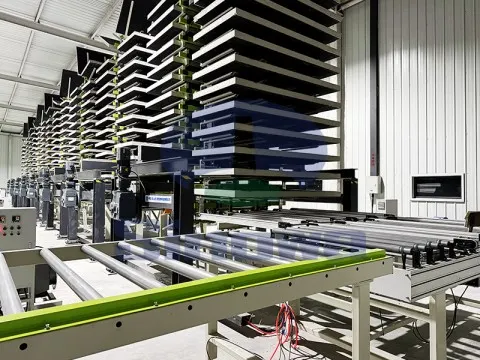
The finished product conveying and sorting system is an important link to realize automated continuous production and improve factory operation efficiency. After passing quality inspection, qualified phenolic insulation boards are automatically transported to the sorting and stacking area through the high-speed transmission line. The conveying system adopts stable roller transmission and anti-slip positioning design, which can avoid board displacement, collision and surface damage during transmission. The intelligent sorting device classifies finished boards according to different thicknesses, sizes and surface specifications, realizing automatic grouping and batch management of products. The automatic stacking equipment precisely stacks boards in a fixed order and height, ensuring neat and standardized stacking effect, which is convenient for subsequent packaging, storage and transportation. The entire conveying and sorting process is intelligently linked with the front-end production process, realizing seamless docking from cutting and inspection to stacking and warehousing. This fully automated post-processing mode reduces manual handling errors and labor costs, improves production efficiency, and ensures the integrity and appearance quality of finished phenolic boards before leaving the factory.
Production Line Operation Characteristics and Technical Advantages
The modern phenolic insulation board manufacturing line has prominent operational characteristics and technical advantages compared with traditional production equipment, focusing on high efficiency, stability, energy saving and intelligence. In terms of operation, the whole line realizes fully automated linkage control from feeding to finished product output, with simple daily operation and low dependence on manual experience. The modular design enables convenient equipment maintenance and flexible production switching, which can meet the diversified production needs of different insulation board specifications. In terms of product performance, precise parameter control in each process ensures that the produced phenolic boards have uniform pore structure, stable thermal insulation performance and excellent fire-retardant and smoke-suppression effects. In terms of energy consumption and environmental protection, the closed production structure and circulating temperature control system reduce heat loss and material waste, realizing low-consumption and clean production. In addition, the intelligent data monitoring system can record and analyze production data in real time, helping enterprises optimize production processes, improve production efficiency and stabilize product quality. These comprehensive advantages make the production line widely adaptable to various industrial and construction insulation scenarios, and become core equipment for efficient and standardized production of high-quality phenolic insulation materials.
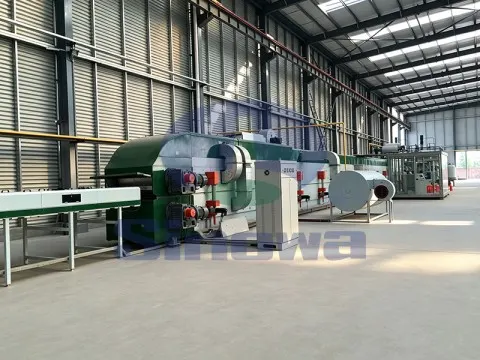
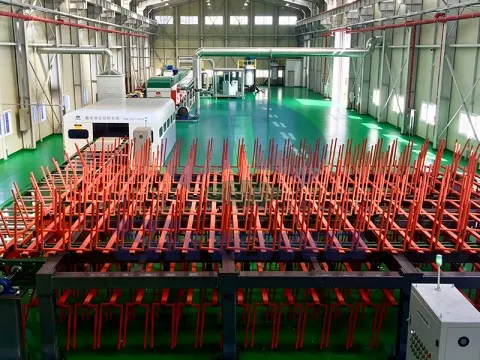
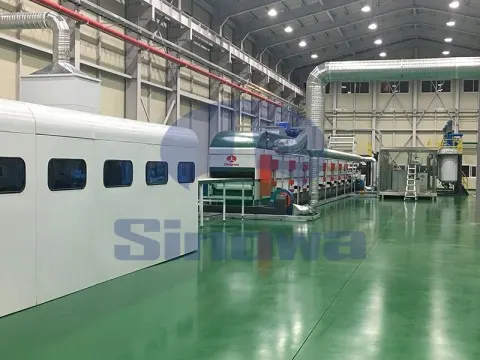
Gallery of Phenolic Insulation Board Manufacturing Line
Tags: phenolic insulation board manufacturing line, phenolic insulation board manufacturing line manufacturer, phenolic insulation board manufacturing line supplier, china phenolic insulation board manufacturing line, phenolic insulation board manufacturing line for sale
-
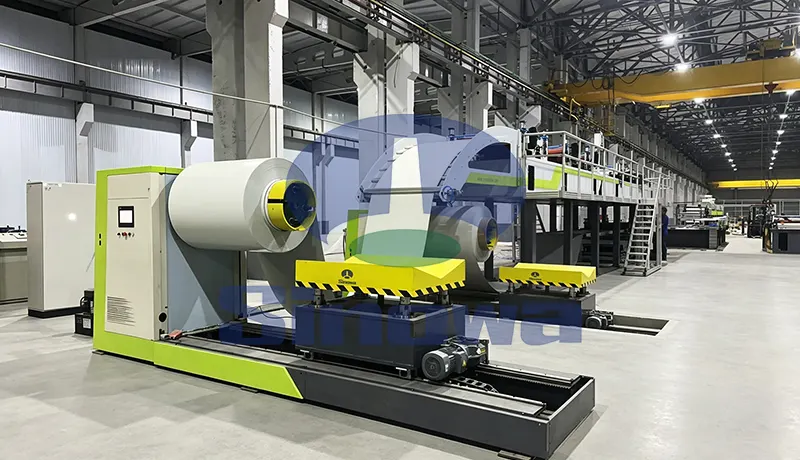
A reliable PU sandwich panel production line serves as the core equipment for manufacturing high-performance building insulation panels. This professional PU sandwich panel line features automated feeding, foaming and molding processes to ensure consistent panel thickness and structural stability. The well-designed polyurethane sandwich panel production line effectively improves production efficiency while reducing material waste in daily operation. Each calibrated polyurethane sandwich panel line can adapt to different panel sizes to meet diverse construction needs. With precise temperature and pressure control, the advanced continuous PU sandwich panel line produces panels with excellent thermal insulation and weather resistance. Meanwhile, the optimized PIR sandwich panel production line upgrades the foaming formula to enhance fire resistance performance. The high-efficiency PIR sandwich panel line maintains stable operation during long-term mass production, delivering durable and high-quality sandwich panels for various architectural and industrial applications.
-
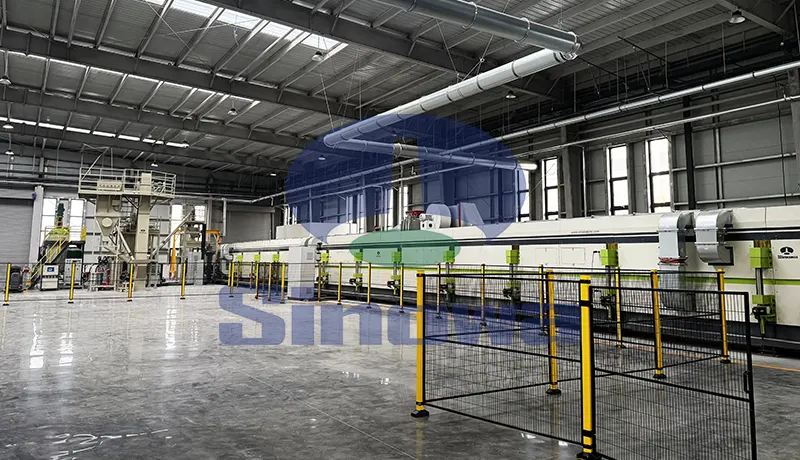
The phenolic panel production line realizes automated and continuous manufacturing of high-performance thermal insulation panels through streamlined and coordinated processing procedures.
-
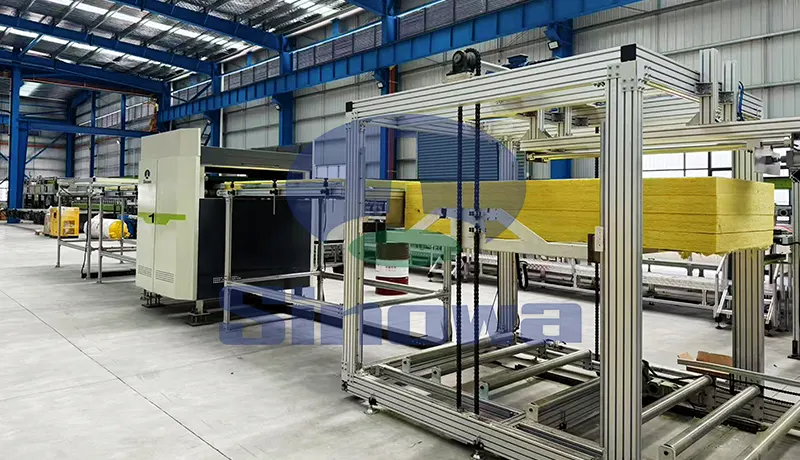
Modern insulation panel manufacturing relies on professional automated equipment to ensure stable product quality and high production efficiency. The rock wool sandwich panel production line features precise material lamination and forming processes to produce rigid, heat-insulating building panels. Meanwhile, the mineral wool sandwich panel production line adopts optimized assembly procedures to fabricate lightweight, soundproof panels widely used in architectural enclosure and thermal preservation projects.