Wall Insulation Board Production Line
Publication Date: Oct 14, 2026
Wall insulation board production line for continuous automatic insulation panel manufacturing. High efficiency, stable operation, customized solutions for various wall thermal insulation boards.
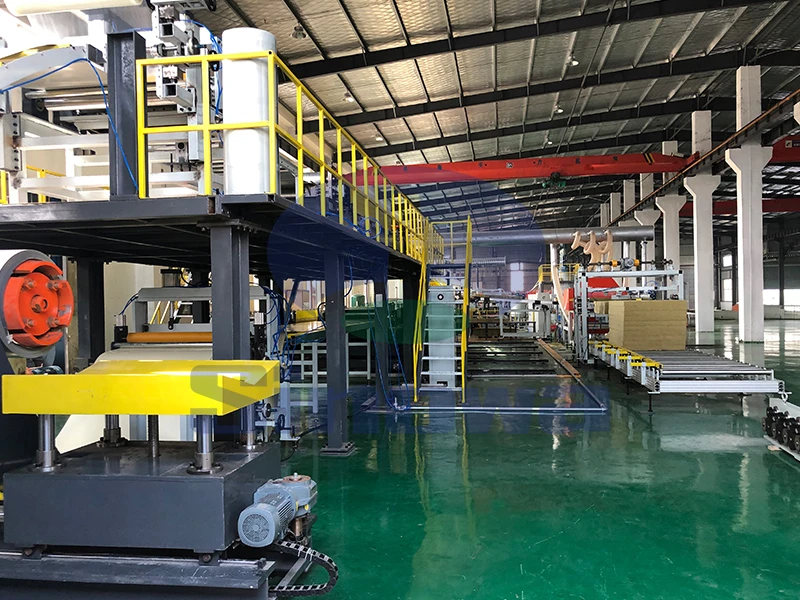
What a Wall Insulation Board Production Line Actually Does
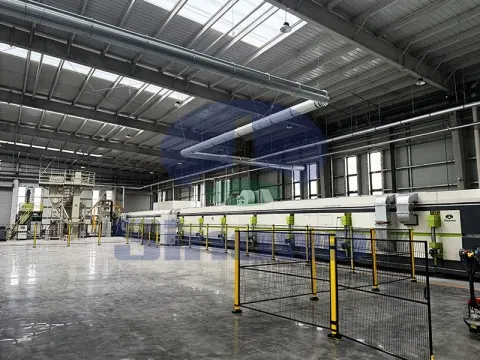
A wall insulation board production line is a fully integrated, end-to-end manufacturing system engineered to convert a diverse range of raw feedstocks into dimensionally consistent, performance-tested rigid insulation panels used across exterior wall cladding, interior partition assemblies, roof decking, and below-grade foundation protection. Unlike older, batch-based manufacturing workflows that rely on manual material loading, open mold pressing, and hand-trimmed finished pieces, these continuous production lines connect every step of the value chain into a synchronized flow, from initial material metering all the way to final wrapped, palletized product ready for site delivery. The core purpose of this integrated design is to eliminate the natural variability that plagues small-batch production, where differences in raw material purity, uneven curing, and imprecise cutting can lead to inconsistent thermal resistance, warped panels, and failed adhesive bonds during installation. Every component along the line is calibrated to move material at a matched, adjustable speed, so no stage becomes a bottleneck that creates uneven dwell time, over-compacted sections, or under-cured core material. The lines are built to serve the growing demand for high-performance building envelope materials that reduce ongoing heating and cooling loads, cut operational carbon emissions across occupied buildings, and create more stable indoor temperature environments for residents and commercial occupants. Rather than functioning as a single-purpose press machine, a complete production line brings together material handling, chemical or thermal processing, precision forming, finishing, inspection, and packaging into one connected system, giving manufacturers the ability to produce boards tuned to specific project needs without sacrificing the consistent quality required for large-scale construction deployments.
Raw Material Feeding and Formulation Flexibility Across Input Types
The front-end feeding and metering section of a wall insulation board production line is designed to accommodate a wide range of base material inputs, from mineral fiber blends derived from volcanic rock and recycled glass to organic polymer foam feedstocks, cement-bonded wood fiber mixes, and lightweight granular fillers. Unlike dedicated, single-material production setups that require extensive reconfiguration when switching between board types, modern feeding systems use modular hoppers, variable-speed screw conveyors, and precision gravimetric metering devices to adjust recipe ratios on the fly, allowing manufacturers to shift between higher-density structural panels, lighter-weight interior sound insulation boards, and semi-rigid exterior insulation products without full line teardown. The feeding stage also includes built-in screening and magnetic separation units to remove stray metal fragments, oversized clumps, and foreign debris that could damage downstream cutting blades or create weak spots in finished board structure. Integrated dust collection hoods positioned at every transfer point capture loose particulate as materials move between hoppers and processing units, keeping airborne material levels low enough to support comfortable, clean workshop operations and reducing material loss from scattered fine particles. Operators can adjust feed rates for each raw material component directly from a central control panel, tweaking blend ratios to match specific target properties—such as higher tensile strength for panels used in windy coastal regions, or improved sound absorption for interior studio and theater partitions—without manual hand-mixing that introduces human error. This flexibility means a single production line can serve multiple construction market segments, rather than being locked into a single board formulation, helping manufacturers respond quickly to shifting project demand without investing in separate dedicated equipment for every product variant.
Core Forming and Curing Zones That Define Final Board Performance
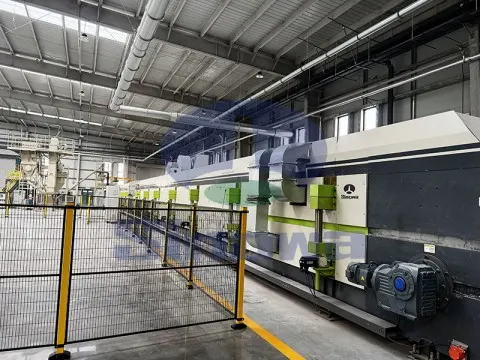
The central forming and curing section represents the heart of the production line, where raw blended materials are transformed into a continuous, uniform board mat with the structural and thermal properties required for long-term building use. For fiber-based insulation lines, this zone includes a series of calibrated roller press stations that gently compress the loose fiber mat to a precise, adjustable thickness, distributing fibers evenly across the full width of the mat to eliminate dense clumps or thin spots that would create inconsistent thermal performance. For foam-based board lines, this section encloses a temperature-controlled continuous tunnel where liquid polymer precursors are poured onto a moving carrier, expanding into a uniform cellular structure as they travel through the tunnel at a matched line speed. The curing environment within these zones is tightly regulated, with adjustable temperature and humidity levels tuned to the specific material being processed, ensuring that chemical cross-linking, fiber binder activation, or cement hydration proceeds at a steady, predictable rate that leaves no under-cured core sections or over-baked surface layers. Inline non-contact thickness sensors positioned every few meters along the curing tunnel send real-time feedback to the roller press controls, automatically adjusting pressure and gap settings to maintain consistent board thickness across the full production run, even as material density shifts slightly from incoming feedstock variations. This closed-loop control eliminates the need for constant manual adjustment, and prevents the common production defects that lead to warped boards after installation, such as uneven internal stress trapped during an inconsistent curing process. The result is a continuous board mat with a homogeneous internal structure, where air pockets and fiber distribution are uniform across every square meter, delivering predictable thermal resistance and structural rigidity no matter which section of a finished panel is examined during on-site installation.
Precision Cutting and Dimensional Stability Control for On-Site Installation Ease
As the fully cured continuous board mat exits the forming tunnel, it moves directly into the precision cutting section, where it is divided into standard, installation-friendly panel sizes that fit easily through doorways, up scaffolding, and across construction site work platforms. The cutting system uses synchronized rotary and guillotine-style blades that move in lockstep with the traveling board mat, so cuts are made cleanly without dragging, tearing, or creating rough, fibrous edges that need extra site trimming. Longitudinal cutting blades run along the full length of the line to split the wide continuous mat into narrower panel widths, while transverse cross-cutting stations slice the long mat into set panel lengths, with automatic positioning that adjusts cut timing to match real-time line speed fluctuations. This synchronized cutting approach eliminates the ragged edges and dimensional mismatches that occur when boards are cut on a stopped line, where board movement during the cut can lead to angled ends or uneven width. After cutting, panels move across a smooth conveyor bed where edge inspection sensors check for square corners and consistent dimensions, automatically flagging any pieces that fall outside acceptable dimensional ranges for rework or diversion to secondary processing. The cutting section is also tuned to account for post-cutting material relaxation, allowing a small, pre-calculated amount of dimensional movement as the newly cut boards cool and internal stress equalizes, so final dimensions remain stable long after boards leave the factory, with no unexpected shrinkage or expansion that would create gaps between installed panels. For installers, this precision translates directly to faster on-site work, as panels fit together tightly without excessive trimming, uneven seams, or wasted material from ill-fitting pieces that need to be cut down on the job.
Surface Treatment and Lamination Stations That Extend Board Service Life
Most insulation boards require specialized surface treatment to create a strong, durable bond with the subsequent layers of a building wall assembly, and the surface treatment stations integrated into production lines are designed to apply these coatings and facings in a perfectly uniform, continuous process. Common treatment steps here include spraying a thin, open-texture interface coating across the board face to create a porous surface that bonds strongly with exterior mortar and render layers, laminating a layer of fiberglass scrim to improve impact resistance, or applying a reflective foil facing to reduce radiant heat transfer through panels used in attic and roof applications. The lamination stations use calibrated rubber roller presses to press facing materials firmly into the board surface, eliminating trapped air bubbles, lifted edges, or partial adhesive coverage that would cause delamination over time. Coating spray nozzles are calibrated to deliver a consistent, thin film across the full board width, with automatic shutoff when the line is paused to avoid over-applying material and wasting coating product. Vision sensors positioned after the coating and lamination stations scan the full board surface, detecting missed coating spots, wrinkles in fiberglass facing, or uneven adhesive spread before panels move further down the line, allowing operators to correct coating settings immediately rather than discovering defects after boards have been packaged and shipped. These surface treatments do more than just improve bond strength: they also protect the raw board core from moisture uptake during temporary outdoor storage on construction sites, reduce fine fiber release from mineral wool panels during handling, and add a level of puncture resistance that prevents accidental damage during installation. The modular design of these treatment stations means manufacturers can add or remove specific lamination steps as needed, producing boards tailored to different climate zones and wall assembly types without reconfiguring the entire production line.
Inline Quality Monitoring Systems That Reduce Production Waste
Modern wall insulation board production lines integrate a network of inline quality monitoring sensors across every production stage, replacing the older model of relying solely on end-of-line manual inspection that only catches defects after they have already wasted material, energy, and production time. At the feeding stage, sensors track incoming material density and moisture content, alerting operators if feedstock falls outside expected ranges before it enters the expensive forming and curing stages. Along the curing tunnel, thermal imaging cameras map the temperature profile across the full board width, identifying cold spots or overheated zones that would create inconsistent curing, while ultrasonic sensors scan the internal board structure to detect hidden voids, dense clumps, or delaminated sections that are invisible to the naked eye. After cutting and surface treatment, high-resolution visual inspection stations scan every board face, picking up small defects like surface scratches, uneven coating, chipped corners, or misaligned lamination that would otherwise be missed by quick manual checks. All sensor data feeds into a central production dashboard, where operators can track trends in material consistency, defect rates, and process stability across full production shifts, adjusting feed rates, curing temperatures, or cutting settings proactively rather than reacting to batches of rejected finished boards. This closed-loop monitoring dramatically reduces production waste, as small process drifts are corrected early before they lead to entire batches of off-spec material. The system also automatically diverts any defective boards into a separate recycling conveyor, where trim scraps and off-spec panels can be ground up and reintroduced into the raw material feed stream, minimizing sent material to landfill and reducing overall raw material consumption. For manufacturers, this level of continuous quality control means finished board performance is far more predictable, with far fewer surprise defects discovered at construction sites, where rejected panels lead to costly project delays and rework.
Energy and Emission Control Built Into Continuous Line Operations
Energy use represents one of the largest ongoing operational costs for insulation board manufacturing, and production lines designed for long-term operation integrate built-in energy recovery and emission control systems that cut both utility expenses and environmental impact over the full equipment lifecycle. The largest energy consumers on most lines are the curing tunnels and, for mineral fiber boards, the high-temperature melting furnaces, and modern designs capture waste heat exiting these units to pre-heat incoming raw material feedstock before it enters the main processing zones, reducing the total energy required to bring materials up to target processing temperatures. Variable-frequency drive motors on every conveyor, roller press, and pump adjust their power use to match real-time line speed, so equipment does not run at full power during low-production periods, short line changeovers, or temporary pauses, eliminating the wasted energy common with older fixed-speed drive systems. Fume extraction units connected to curing and processing zones pull exhaust air through filtration systems, capturing fine particulate and volatile organic compounds from coating and adhesive materials before releasing cleaned air back into the workshop, reducing airborne contaminants and supporting a healthier work environment. Closed material transfer chutes used for most raw material movement eliminate open conveyor paths that would let fine dust escape into the workshop, cutting both material loss and the need for separate, energy-intensive shop floor ventilation systems. These design choices do more than reduce operational overhead: they also lower the overall carbon footprint of every produced insulation board, aligning the manufacturing process with the core value proposition of the finished product itself, which exists to cut building energy use and reduce long-term operational emissions. Over years of continuous operation, the cumulative energy savings from these integrated systems often offsets a meaningful share of the original equipment investment, making the line more economically sustainable for manufacturers of all sizes.
Line Capacity Scaling to Match Diverse Project Demand Profiles
Wall insulation board production lines are built with a modular, scalable design that allows manufacturers to match production capacity to their specific market demand, rather than forcing an oversized, underutilized investment or a cramped line that cannot keep up with peak order volumes. The basic core line modules—feeding, forming, curing, cutting—can be extended or shortened by adding or removing tunnel sections, conveyor lengths, and processing stations, allowing lines to be configured for low-volume, custom production serving small regional contractors, or high-volume continuous operation serving large metropolitan construction markets. The line speed controls are designed for smooth, adjustable operation across a wide range of throughput levels, so manufacturers can slow the line down when producing smaller batches of specialized board types, or speed up to maximum throughput during seasonal demand peaks, when construction activity surges ahead of cold winter heating seasons or before summer cooling periods. Unlike rigid, fixed-speed production systems that either run at full capacity or stop entirely, these adjustable lines let operators dial production output to match exact order backlog, avoiding overproduction that leads to long-term warehouse storage of finished boards, or underproduction that leads to missed project delivery deadlines. The modular design also means lines can be upgraded gradually as a manufacturer’s business grows, rather than requiring a full equipment replacement: a producer can start with a shorter mid-capacity line, then add additional curing tunnel length, a higher-speed cutting station, or an extra surface treatment module as order volumes increase. This scalability means even smaller manufacturers can enter the insulation board market without the upfront investment of a full high-volume line, gradually expanding their capacity as they build relationships with local construction clients, and contributing to a more distributed, resilient supply of insulation materials for building projects across different regions.
Safety and Operational Ergonomics for Long-Term Production Sustainability
A production line can only deliver consistent long-term value if it is designed to keep operators safe, reduce physical strain, and make routine maintenance straightforward for workshop teams. Every moving component along the line—from conveyor rollers, cutting blades, and press stations to rotating mixer units—is enclosed in fixed, interlocked safety guards that stop equipment immediately if a guard is opened during operation, eliminating the risk of accidental contact with moving parts. Emergency stop buttons are positioned every few meters along the full line length, so an operator spotting a jam, defect, or safety hazard can stop the entire system in seconds, no matter where they are standing along the production floor. The central human-machine interface is mounted at a comfortable standing height, with clear, color-coded status indicators that let operators identify process issues at a glance, without leaning over control panels or climbing to read display screens. Routine maintenance points—like blade replacement, conveyor lubrication, and filter changes—are positioned at accessible working heights, so maintenance teams do not need to use ladders, disassemble large machine sections, or work in awkward positions to complete scheduled upkeep. Equipment noise levels are dampened with insulated enclosures around high-speed motors, cutting stations, and pump units, reducing persistent workshop noise that contributes to long-term occupational fatigue and hearing strain for operators. Material handling points for finished board stacking are positioned at a height that lets workers lift panels without excessive bending, reducing repetitive strain injuries that are common in manual material handling tasks. These ergonomic and safety design choices mean the production line can operate reliably for decades, supported by a stable, experienced workforce that stays with the operation over time, rather than suffering from high staff turnover caused by uncomfortable, unsafe working conditions.
Post-Production Handling and Packaging for Safe Cross-Destination Shipping
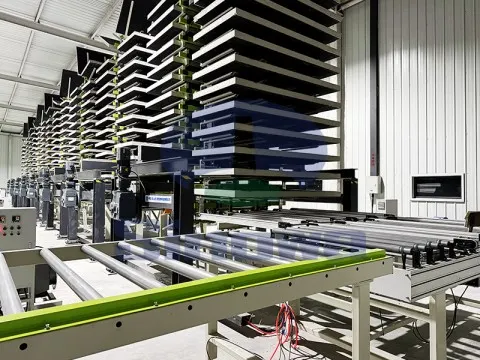
Once panels pass final quality checks, they move into the post-production handling and packaging section, which is engineered to protect finished boards through long-haul shipping, temporary outdoor storage, and on-site handling without damage. Automatic robotic stackers arrange cut boards into uniform, stable stacks, aligning edges neatly to prevent uneven load distribution that would cause stacks to tip during transport. Corner protectors made of recycled paper are placed on the four corners of each board stack, followed by a tight, stretch-wrapped film layer that holds the entire stack together, preventing panels from shifting, rubbing against each other, or absorbing moisture during wet weather shipping. The packaging system can adjust wrap tightness based on panel type: softer, lower-density boards get a gentler wrap pressure to avoid crushing edges, while denser structural boards get a tighter wrap to hold up to rough intermodal handling across road, rail, and short-sea shipping routes. Built-in label printers attached to the packaging station automatically apply clear identification labels to each stack, noting board dimensions, material type, production batch, and intended project destination, so warehouse teams and site crews can quickly identify the right panels without unpacking stacks to inspect them. For longer shipping routes, optional added strapping bands can be applied across each palletized stack, adding extra structural support to prevent stack collapse during rough transit. This level of careful packaging means boards arrive at construction sites in the same condition they left the factory, with no broken corners, warped panels, or water-damaged sections that would need to be discarded on site. For project managers, this translates to lower material waste, as nearly 100% of delivered boards are usable for installation, and fewer last-minute emergency orders to replace damaged material that arrives after long transport.
Long-Term Value Contributions Beyond the Factory Floor
The ultimate impact of a well-designed wall insulation board production line extends far beyond the factory walls, shaping the performance, comfort, and sustainability of every building where its finished panels are installed. The consistent, uniform insulation boards produced by these lines create a continuous thermal barrier across building envelopes, cutting the amount of energy needed to heat or cool interior spaces over decades of building use, reducing utility costs for occupants and lowering the overall operational carbon footprint of entire communities. For residents, these uniform insulation boards eliminate cold spots on interior walls, reduce unwanted outdoor noise transfer between adjacent units, and prevent the surface condensation that leads to mold growth on interior wall surfaces, creating healthier, more comfortable living and working environments. The local production capacity supported by these lines also makes high-performance insulation materials more accessible to smaller building projects, renovation work, and affordable housing developments that might otherwise rely on thinner, less consistent insulation sourced through long, fragmented supply chains. By manufacturing insulation boards closer to end construction markets, production lines cut the transportation emissions associated with shipping heavy building materials across vast distances, further reducing the overall environmental impact of building projects. The process consistency delivered by these continuous lines also raises the overall quality bar for the entire insulation material market, as more manufacturers deliver reliably performing boards that meet real-world building needs, rather than variable, batch-produced panels that underperform after installation. Over time, the widespread deployment of consistently produced wall insulation panels from these lines supports broader progress toward more energy-efficient, resilient built environments, where buildings require fewer resources to operate, are more comfortable to occupy, and contribute less to long-term environmental impact across their full service life.
Gallery of Wall Insulation Board Production Line
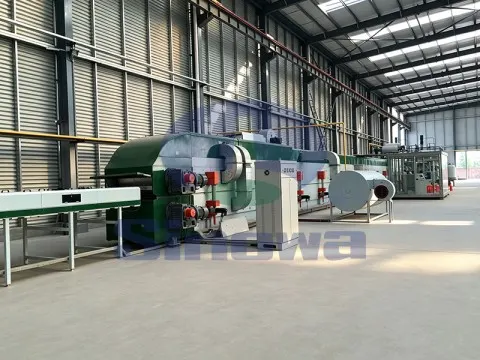
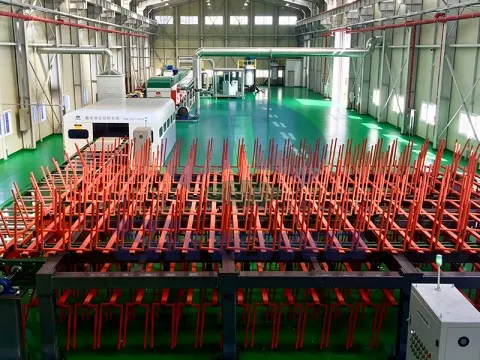
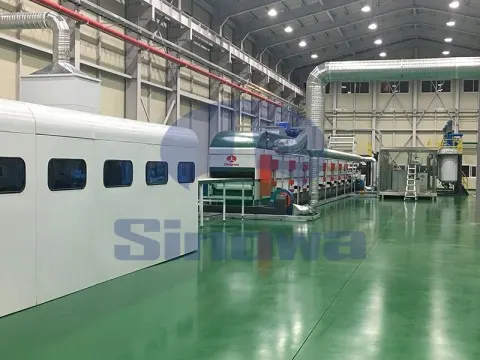
Tags: wall insulation board production line, wall insulation board production line manufacturer, wall insulation board production line supplier, china wall insulation board production line, wall insulation board production line for sale
-
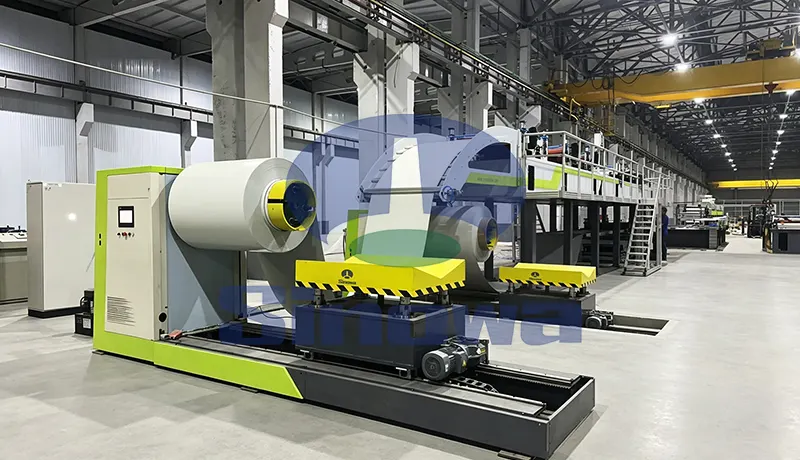
A reliable PU sandwich panel production line serves as the core equipment for manufacturing high-performance building insulation panels. This professional PU sandwich panel line features automated feeding, foaming and molding processes to ensure consistent panel thickness and structural stability. The well-designed polyurethane sandwich panel production line effectively improves production efficiency while reducing material waste in daily operation. Each calibrated polyurethane sandwich panel line can adapt to different panel sizes to meet diverse construction needs. With precise temperature and pressure control, the advanced continuous PU sandwich panel line produces panels with excellent thermal insulation and weather resistance. Meanwhile, the optimized PIR sandwich panel production line upgrades the foaming formula to enhance fire resistance performance. The high-efficiency PIR sandwich panel line maintains stable operation during long-term mass production, delivering durable and high-quality sandwich panels for various architectural and industrial applications.
-
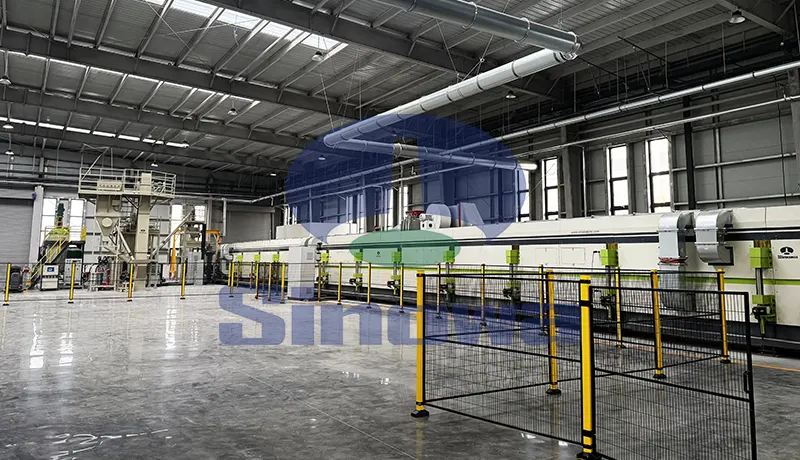
The phenolic panel production line realizes automated and continuous manufacturing of high-performance thermal insulation panels through streamlined and coordinated processing procedures.
-
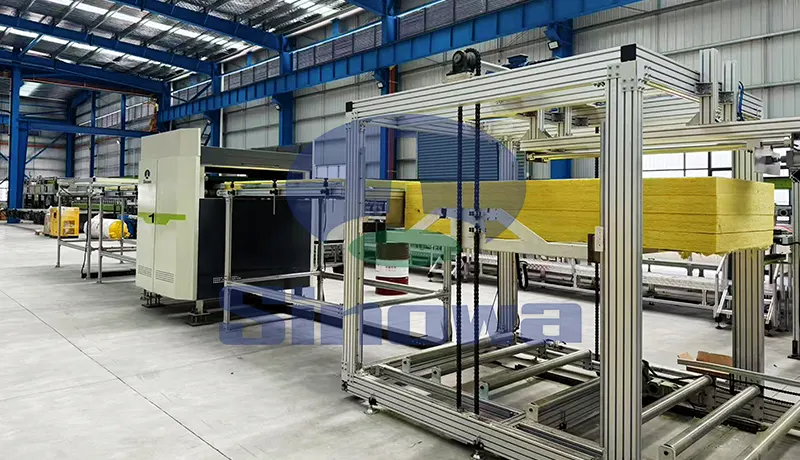
Modern insulation panel manufacturing relies on professional automated equipment to ensure stable product quality and high production efficiency. The rock wool sandwich panel production line features precise material lamination and forming processes to produce rigid, heat-insulating building panels. Meanwhile, the mineral wool sandwich panel production line adopts optimized assembly procedures to fabricate lightweight, soundproof panels widely used in architectural enclosure and thermal preservation projects.