What Causes Delamination Issues On The Rockwool Sandwich Panel Production Line?
Publication Date: Oct 8, 2026
Delamination of rockwool sandwich panels is a common production defect where metal skins separate from rockwool cores. This issue stems from material flaws, improper adhesive application, faulty mechanical operation, poor environmental control and irregular production processes, undermining panel stability and service performance.
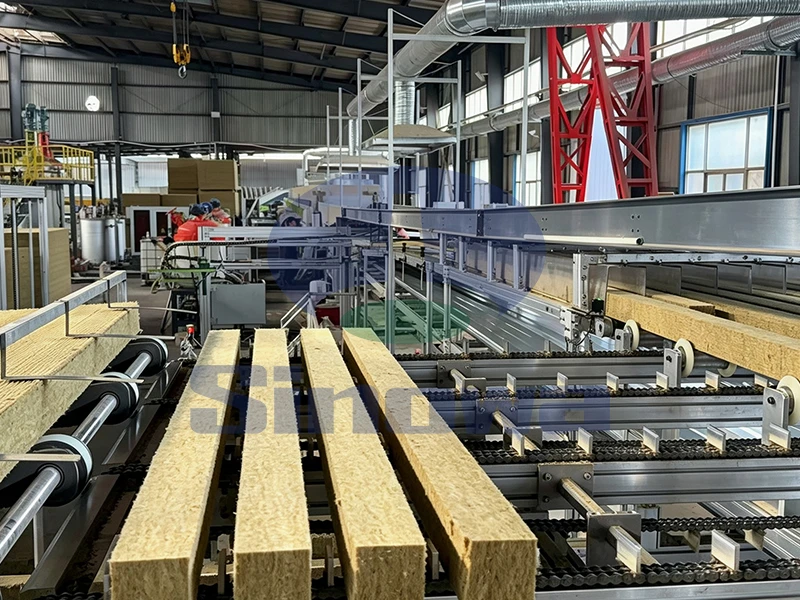
Unqualified rockwool core materials are one of the fundamental triggers of delamination in sandwich panel production. Rockwool cores with uneven internal density create inconsistent stress distribution across the entire panel structure during lamination. Dense areas bear excessive compression while loose areas fail to form tight bonding with adhesives, leaving numerous weak bonding points inside the panel. Moreover, low-quality rockwool often contains excessive residual dust and loose fiber debris on its surface. These fine particles form a barrier layer between the rockwool core and adhesive, preventing effective contact and chemical integration between the two materials. In addition, rockwool is highly hygroscopic, and cores stored in unsealed environments easily absorb ambient moisture. The trapped moisture turns into water vapor under production heating conditions, generating internal pressure that destroys preliminary bonding structures and causes subtle separation between layers, which gradually develops into obvious delamination after panel molding.
Improper adhesive selection and uneven coating application directly weaken the bonding performance of rockwool sandwich panels and induce delamination. Different rockwool fiber structures and metal skin surfaces require matched adhesive properties to achieve stable bonding. Using adhesives with mismatched viscosity, curing speed or tensile strength makes it impossible to form a durable adhesive film, resulting in easy layer separation under slight external force. In actual production, uneven adhesive coating is a prevalent problem. Excessively thin coating in local areas leads to insufficient adhesive filling between fibers and metal surfaces, failing to provide enough bonding force. Conversely, overly thick adhesive layers will produce internal shrinkage stress during the curing process, cracking the adhesive film and breaking the bonding integrity. Additionally, discontinuous coating and missing glue spots caused by unstable equipment operation create direct weak zones that evolve into delamination defects after panel forming and cooling.
Inaccurate adhesive open time control is a easily overlooked key factor leading to sandwich panel delamination. Adhesives used for rockwool panel lamination have a fixed effective bonding window after coating, known as the open time. If the lamination pressing process is carried out too early, the adhesive cannot complete preliminary wetting and penetration on the rockwool fiber surface and metal skin, resulting in poor adhesion and low bonding compactness. In contrast, delaying the pressing operation beyond the valid open time causes the adhesive surface to pre-cure and form a dry film. This pre-cured film loses adhesive activity and cannot fuse with the rockwool core and metal skin during pressing, forming a virtual separation layer inside the panel. In continuous production lines, unstable operating speed often causes inconsistent open time of adhesives on different panel sections, leading to partial delamination that seriously affects the overall product qualification rate.
Abnormal pressing pressure and mechanical failures of laminating equipment are major mechanical causes of panel delamination. Stable and uniform pressing pressure is essential for tight bonding between rockwool cores and metal skins. Insufficient overall pressing pressure fails to squeeze out residual air between layers and cannot promote full adhesive penetration into rockwool fiber gaps, leaving hollow bonding areas. Uneven pressure distribution across the press platform is more problematic, as edge areas of panels often bear far less pressure than the middle areas, resulting in frequent edge delamination defects. Besides, long-term operation may cause slight deformation of press platens, aging pressure sensors and unbalanced cylinder pressure output. These mechanical anomalies lead to inconsistent pressure output in different production batches, making bonding quality unstable. Vibration generated by faulty equipment operation also disturbs the preliminary bonding state during adhesive curing, causing micro-separation between layers.
Poor surface pretreatment of metal skins severely hinders effective bonding and triggers delamination issues. Metal skins used for sandwich panels often carry surface contaminants such as dust, oil stains, rust spots and residual release agents before lamination. These pollutants completely isolate the adhesive from the metal substrate, preventing chemical adhesion and mechanical biting between the two materials. Even tiny invisible dust particles can form isolation points that reduce local bonding strength. In addition, over-cured back coatings on metal skins will form smooth and glossy surfaces without microscopic roughness. Such surfaces lack effective mechanical anchoring points for adhesives, making the adhesive film prone to peeling off from the metal skin after curing. Insufficient surface cleaning procedures or incomplete pretreatment in production lines leave these hidden dangers, leading to delayed delamination that occurs after product storage and use.
Uncontrolled production environment temperature and humidity indirectly induce and aggravate sandwich panel delamination. High workshop humidity increases the moisture content of rockwool cores and makes metal skin surfaces prone to condensation. The residual moisture between layers damages adhesive molecular structure, reduces adhesive toughness and bonding strength, and produces vapor pressure during subsequent heating and curing to separate bonded layers. Excessively low ambient temperature slows down the adhesive curing reaction speed, resulting in incomplete curing of internal adhesives even if the surface seems molded. Insufficiently cured adhesives have poor structural stability and are easy to crack and separate under slight stress. Meanwhile, drastic temperature fluctuations in the production workshop cause inconsistent thermal expansion and contraction of metal skins and rockwool cores. The different deformation amplitudes of the two materials generate shear stress at the bonding interface, damaging the fragile uncured bonding structure and forming delamination defects.
Improper post-lamination cutting and processing operations cause secondary delamination of rockwool sandwich panels. In standardized production, panels need to complete full adhesive curing before fixed-size cutting and edge trimming. Many production lines pursue processing efficiency and carry out cutting operations before the adhesive reaches complete curing state. The mechanical shear force and impact force generated by cutting will tear the incompletely stable bonding interface, causing micro-delamination inside the panel. In addition, uneven cutting tool pressure and unbalanced feeding speed lead to local stress concentration on panel edges. Long-term accumulation of such stress expands tiny separation gaps, forming visible edge delamination. Rough edge trimming and excessive grinding in subsequent processing also destroy the tight bonding state of panel edges, gradually extending separation defects from edges to the middle of panels.
Thermal stress mismatch between rockwool cores and metal skins is a long-term cause of latent delamination defects. Metal materials and rockwool fiber materials have completely different thermal expansion and contraction coefficients. During production, the panel undergoes heating curing and rapid cooling molding processes, and the two layers produce asynchronous deformation. The metal skin expands and contracts more drastically, while the rockwool core has small deformation range and stable size. This deformation difference generates continuous shear stress at the bonding interface. If the adhesive cannot resist such long-term cyclic stress, fatigue cracking will occur at the bonding interface, leading to gradual layer separation. Panels with such latent defects may not show abnormalities after production, but delamination problems will gradually appear under temperature changes in the later service process, affecting product durability.
Unstable continuous production line operation and irregular process parameter adjustment cause batch delamination problems. In automated production, coordinated operation of multiple equipment units is required to maintain stable bonding quality. Sudden changes in line speed, frequent start-stop of equipment and inconsistent matching parameters between gluing and pressing processes will break the stable production state. For example, accelerated line speed shortens adhesive open time and pressing time, while reduced speed leads to excessive adhesive curing. Random adjustment of gluing volume, pressing temperature and pressure parameters by operators without standardized debugging will cause parameter mismatch in each production link. Long-term non-standard operation makes the bonding state of each panel inconsistent, resulting in a large number of delamination defective products in batches and reducing overall production quality stability.
Lack of regular equipment maintenance and daily production quality inspection amplifies delamination issues in rockwool sandwich panel production. Long-term operation of gluing equipment leads to nozzle blockage and pipeline residue accumulation, resulting in unstable adhesive output and uneven coating. Wear and aging of laminator parts cause continuous pressure deviation and equipment vibration, which cannot be found and corrected in a timely manner without regular maintenance. Meanwhile, incomplete daily quality inspection procedures fail to detect subtle problems such as insufficient adhesive curing, local weak bonding and tiny edge separation in time. These minor defects are retained in finished products and gradually deteriorate into obvious delamination during storage, transportation and use. Perfect maintenance and inspection mechanisms are essential to eliminate hidden dangers of delamination from the source of production.
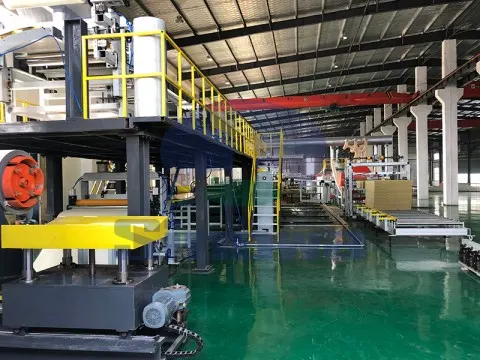
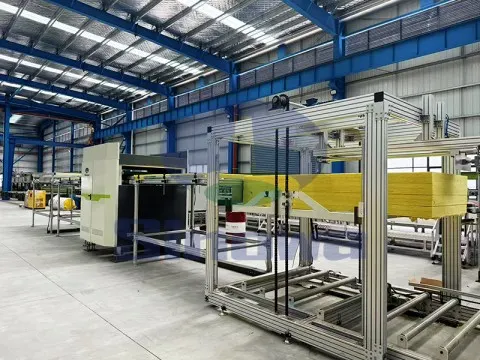
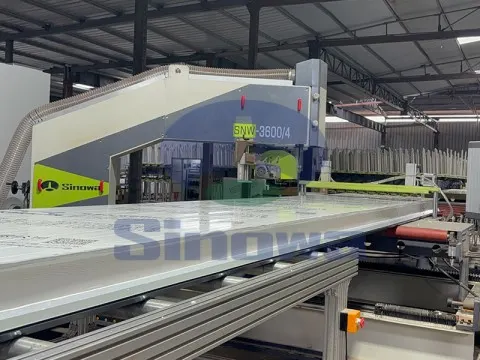
Gallery of Rockwool Sandwich Panel Production Line
Tags: rockwool sandwich panel production line, rockwool sandwich panel production line manufacturer, rockwool sandwich panel production line supplier, china rockwool sandwich panel production line, rockwool sandwich panel production line for sale
-
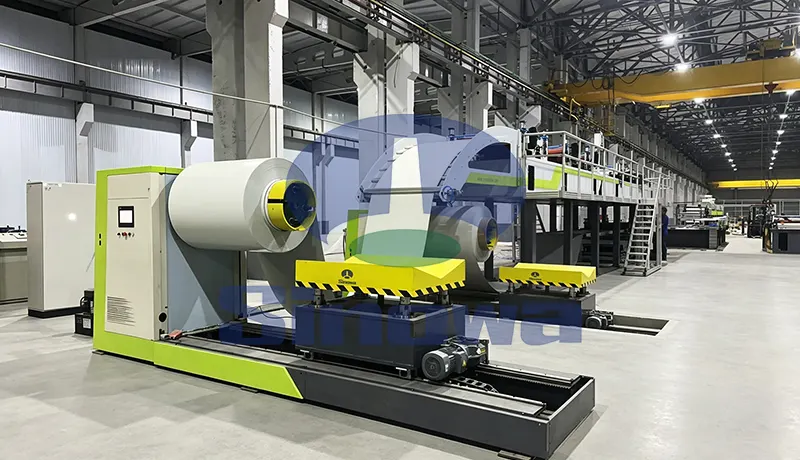
A reliable PU sandwich panel production line serves as the core equipment for manufacturing high-performance building insulation panels. This professional PU sandwich panel line features automated feeding, foaming and molding processes to ensure consistent panel thickness and structural stability. The well-designed polyurethane sandwich panel production line effectively improves production efficiency while reducing material waste in daily operation. Each calibrated polyurethane sandwich panel line can adapt to different panel sizes to meet diverse construction needs. With precise temperature and pressure control, the advanced continuous PU sandwich panel line produces panels with excellent thermal insulation and weather resistance. Meanwhile, the optimized PIR sandwich panel production line upgrades the foaming formula to enhance fire resistance performance. The high-efficiency PIR sandwich panel line maintains stable operation during long-term mass production, delivering durable and high-quality sandwich panels for various architectural and industrial applications.
-
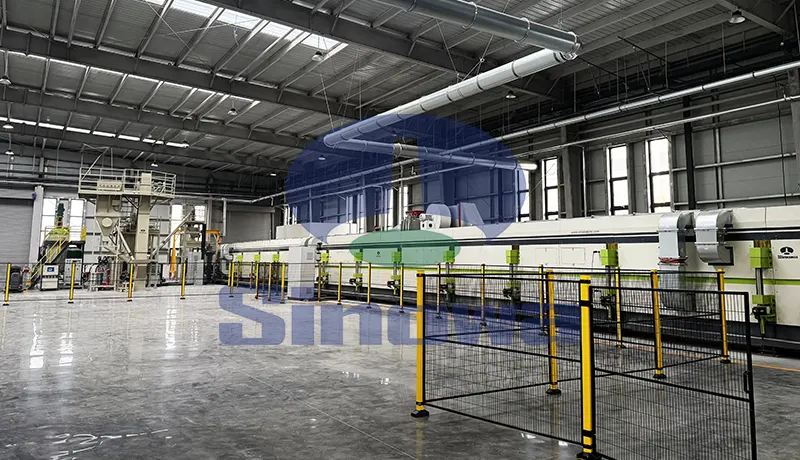
The phenolic panel production line realizes automated and continuous manufacturing of high-performance thermal insulation panels through streamlined and coordinated processing procedures.
-
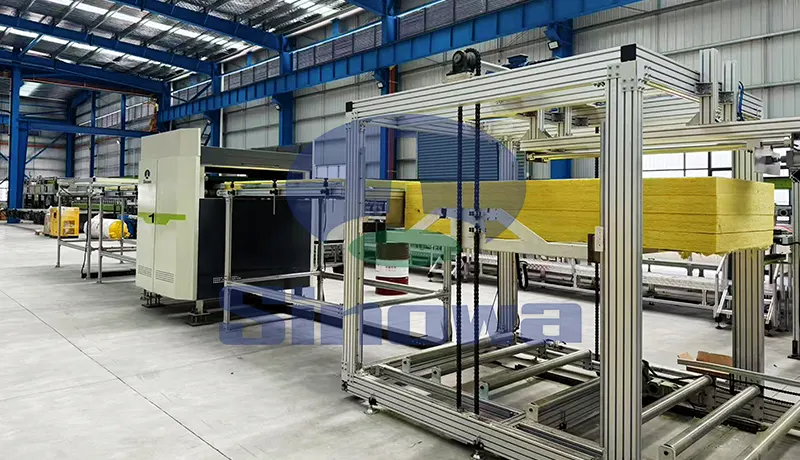
Modern insulation panel manufacturing relies on professional automated equipment to ensure stable product quality and high production efficiency. The rock wool sandwich panel production line features precise material lamination and forming processes to produce rigid, heat-insulating building panels. Meanwhile, the mineral wool sandwich panel production line adopts optimized assembly procedures to fabricate lightweight, soundproof panels widely used in architectural enclosure and thermal preservation projects.