Insulation Panel Making Machine
Publication Date: Oct 6, 2026
The insulation panel making machine is an integrated automated production system for manufacturing composite insulation panels. It streamlines full-process production from raw material processing to finished panel shaping, featuring high efficiency, stable operation and flexible adaptability for diverse construction and industrial insulation needs.
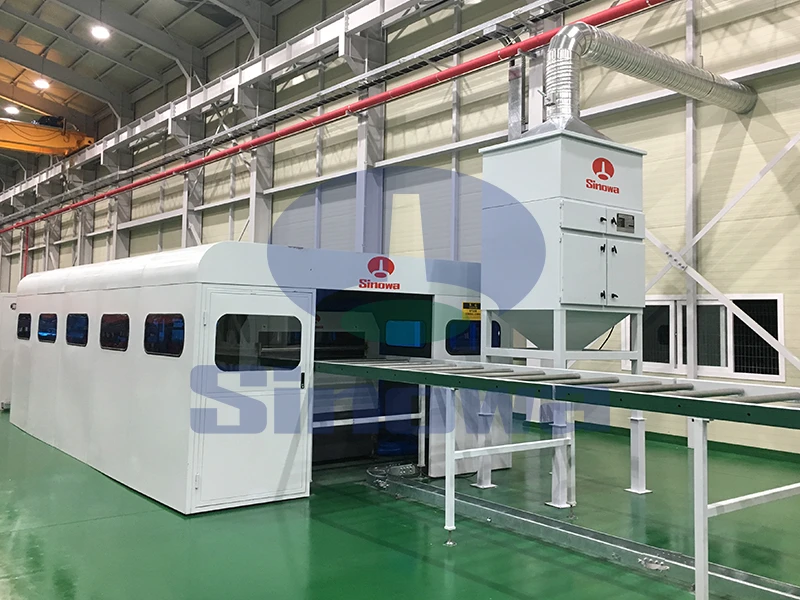
Basic Overview and Core Design Concept
The insulation panel making machine is a highly integrated continuous production device tailored for composite thermal insulation panel manufacturing, serving as core equipment in the energy-saving building material industry. Its overall design abides by the principles of streamlined operation, structural integration and intelligent control, abandoning the fragmented and inefficient processing mode of traditional discrete equipment. The entire production system combines mechanical transmission, precise material processing, constant temperature curing and precision cutting modules, realizing one-stop manufacturing of insulation panels with different core materials and structural specifications. The core design logic focuses on unifying production efficiency and product uniformity, effectively avoiding quality deviations caused by manual intervention and semi-automatic operation. It can adapt to multiple flexible production demands, switching freely between different panel thicknesses and material combinations while maintaining stable operating status. Moreover, the equipment is optimized for structural compactness, saving production space and reducing unnecessary mechanical energy consumption, which lays a solid foundation for large-scale and standardized insulation panel production in modern industrial scenarios.
Main Structural Components and Functional Layout
A complete insulation panel making machine consists of multiple independent and coordinated functional modules, each undertaking exclusive production tasks to ensure orderly and continuous processing. The front-end module is the automatic uncoiling and leveling unit, which is responsible for unfolding metal coil materials and eliminating surface wrinkles and deformations to guarantee flat raw materials for subsequent processing. Followed by the roll forming unit, it adopts multi-group precision roller sets to press flat metal sheets into diverse profile shapes, meeting the structural requirements of wall and roof insulation panels. The middle core functional area covers automatic feeding, glue coating and composite laminating modules, where insulation core materials are accurately laid and bonded with surface materials via uniform adhesive coating. The rear-end parts include constant temperature curing, fixed-size cutting and automatic stacking modules. The curing unit stabilizes the composite structure of panels through controllable temperature environments, while the servo cutting system realizes precise sizing according to production demands. All modules are connected by synchronous conveying systems, achieving seamless docking of each process and forming a closed-loop continuous production layout.
Working Principle and Complete Production Flow
The working operation of the insulation panel making machine follows a scientific and standardized production logic, with each process linked closely to ensure product structural stability and performance consistency. The whole flow starts with raw material pretreatment: metal coiled materials are uncoiled, leveled and conveyed to the forming mechanism for profile processing, while bulk insulation core materials are sorted and quantitatively fed through the automatic feeding system. Next, the high-precision gluing system evenly sprays special adhesive on the inner surface of the formed metal sheets, ensuring full contact between surface materials and core materials without gaps or missing glue areas. Subsequently, the multi-layer materials enter the composite laminating unit, where constant pressure and synchronous conveying enable tight bonding of all layers. After compounding, the semi-finished panels pass through the constant temperature curing channel, where stable temperature conditions promote full adhesive curing and enhance overall structural firmness. Finally, the panels are cut into specified sizes by the flying cutting device, and finished products are automatically stacked and sorted, completing the entire automated production process without manual intervention in the whole flow.
Adaptable Processing of Diverse Core Materials
One of the most prominent advantages of the insulation panel making machine is its strong material adaptability, which supports the processing of various mainstream insulation core materials to meet different application scenario demands. The equipment is compatible with lightweight foam-based core materials, which feature excellent thermal insulation performance and low density, suitable for light-duty building enclosure structures. It also adapts to inorganic fiber core materials with outstanding sound insulation and fire resistance, ideal for industrial buildings and public facilities with high safety requirements. In addition, the machine can process composite mixed core materials that integrate multiple performance advantages, balancing thermal insulation, sound absorption and structural stability. The adjustable feeding and laminating parameters allow the equipment to adapt to core materials with different thicknesses and densities, realizing flexible switching of product types. The internal foaming and compounding structure is optimized to avoid uneven density and internal voids of core materials during processing, ensuring that each batch of finished panels has uniform internal structure and stable comprehensive performance, greatly expanding the application scope of produced insulation panels.
Intelligent Control and Operational Stability
Modern insulation panel making machines are equipped with mature intelligent control systems, realizing digital and automated management of the whole production process. The core control panel integrates parameter setting, operation monitoring and fault diagnosis functions, allowing operators to adjust production speed, panel thickness, curing temperature and cutting size through simple parameter input. The system supports real-time monitoring of the operating status of each functional module, automatically identifying abnormal conditions such as material jamming, parameter deviation and equipment overload, and triggering early warning prompts to avoid production failures and defective products. In terms of operational stability, the equipment adopts synchronous transmission technology to ensure consistent running speed of each processing unit, preventing material displacement and layered deviation during production. The key mechanical components are made of wear-resistant and high-strength materials, reducing equipment wear and failure rate during long-term continuous operation. The intelligent constant temperature system maintains stable curing environment parameters, effectively ensuring the bonding firmness and structural uniformity of finished panels and improving overall production stability.
Production Efficiency and Energy-Saving Advantages
Compared with traditional semi-automatic insulation panel production equipment, the integrated insulation panel making machine achieves a qualitative leap in production efficiency and energy-saving performance. The continuous streamlined production mode eliminates the waiting and docking time between discrete processes, realizing uninterrupted batch production and greatly improving daily output of finished panels. The synchronous operation of multiple functional modules avoids repeated material handling and secondary processing, reducing redundant production links and improving overall production efficiency. In terms of energy saving, the equipment adopts optimized heating and power transmission structures, effectively reducing invalid energy consumption during operation. The intelligent temperature control system adjusts heating power in real time according to production speed and panel specifications, avoiding long-term high-power idle operation. Meanwhile, the lightweight and compact structural design reduces the load of power transmission components, further lowering overall energy consumption. The efficient production mode not only shortens the production cycle of single panels and reduces labor input, but also reduces unit production energy consumption, bringing significant cost and energy-saving benefits for large-scale production.
Finished Product Performance and Quality Consistency
The insulation panels produced by professional insulation panel making machines have excellent comprehensive performance and stable quality consistency, fully meeting the practical application demands of various scenarios. In terms of thermal insulation performance, the precise core material laying and uniform compounding process ensure the integrity of the insulation layer, effectively blocking heat transfer and achieving stable heat preservation and energy-saving effects. For structural performance, the constant-pressure laminating and constant-temperature curing process make the bonding between surface materials and core materials tight and firm, avoiding delamination, bulging and cracking in long-term use. The finished panels also have good sound insulation, waterproof and wind resistance properties, adapting to complex outdoor and industrial environments. Thanks to the unified intelligent parameter control, the thickness, flatness and structural density of each batch of products maintain high consistency, avoiding the quality differences of manual production. The precise cutting and finishing process ensures neat panel edges and accurate overall dimensions, reducing subsequent processing procedures and improving the overall qualification rate of finished products.
Daily Maintenance and Fault Prevention Measures
Scientific daily maintenance and standardized fault prevention are key to ensuring the long-term stable operation of the insulation panel making machine and extending its service life. Daily maintenance mainly includes regular cleaning, component inspection and lubrication maintenance. Operators need to clean residual materials and adhesive residues on the surface of conveying and processing modules every day to avoid material accumulation affecting equipment operation and product precision. Regular inspection of key components such as transmission rollers, glue coating nozzles and cutting blades is required to check for wear, deformation and blockage, and replace worn parts in a timely manner. Lubricating the transmission bearings and guide rails regularly can reduce mechanical friction loss and ensure smooth equipment operation. In terms of fault prevention, it is necessary to strictly follow standardized operation procedures to avoid parameter misoperation and overload production. Regular calibration of intelligent control parameters and precision processing components ensures production accuracy. In addition, regular inspection of circuit and temperature control systems can effectively avoid electrical faults and curing parameter abnormalities, reducing equipment failure rate and maintenance costs.
Main Application Scenarios of Produced Panels
Insulation panels manufactured by the insulation panel making machine have diverse and wide application scenarios, covering multiple fields of modern construction and industrial insulation. In the building construction field, they are widely used for wall and roof enclosure of industrial workshops, logistics warehouses and factory buildings, providing excellent thermal insulation and weather resistance for large-span buildings. In the cold chain and refrigeration industry, the panels serve as the main enclosure materials for cold storage rooms and constant-temperature warehouses, effectively maintaining internal temperature stability and reducing refrigeration energy consumption. In addition, the panels are also applied in temporary engineering buildings, integrated houses and public facility renovation projects, with lightweight and easy-installation features improving construction efficiency. Some high-performance panels produced by adjustable equipment can also be used for special scenarios such as sound insulation workshops and heat-insulating enclosure structures, meeting the differentiated performance demands of different industries and showing strong market adaptability and application value.
Industry Development Value and Application Prospects
With the continuous advancement of energy-saving and green building concepts, the insulation panel making machine has become indispensable core equipment in the building energy-saving material industry, with important industry development value. It replaces traditional backward production modes, realizes standardized, large-scale and intelligent production of insulation panels, and promotes the upgrading of the insulation building material industry. The efficient and energy-saving production characteristics of the equipment reduce the production cost of energy-saving panels, making green insulation materials more popular and widely used in the construction field. At the same time, the equipment’s flexible production capacity can keep up with the market’s differentiated and customized product demands, driving the diversified development of insulation panel products. In the context of the booming green building and new energy industries, the market demand for high-performance insulation panels continues to grow, which further expands the application prospect of insulation panel making machines. With the continuous upgrading of intelligent and energy-saving technology, the equipment will achieve higher production efficiency, lower energy consumption and stronger customization capabilities, bringing greater development momentum to the entire industry.
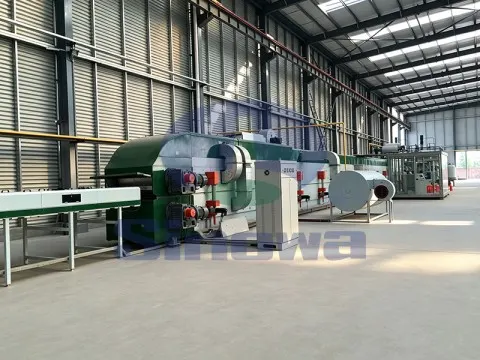
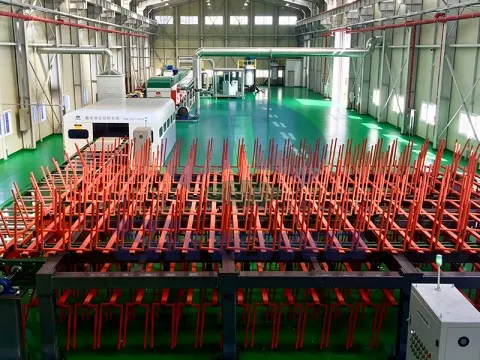
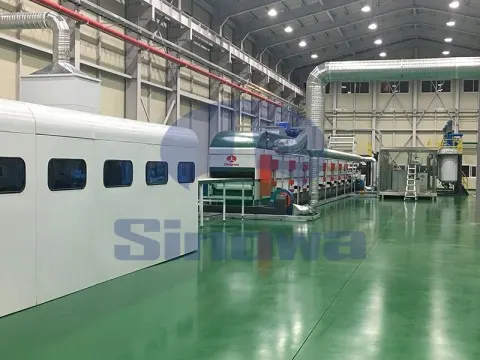
Gallery of Insulation Panel Making Machine
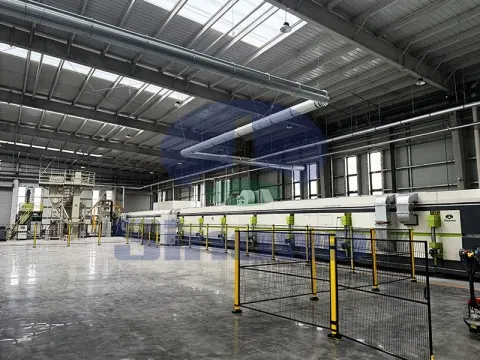
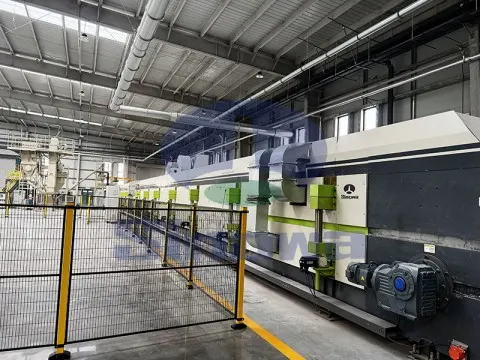
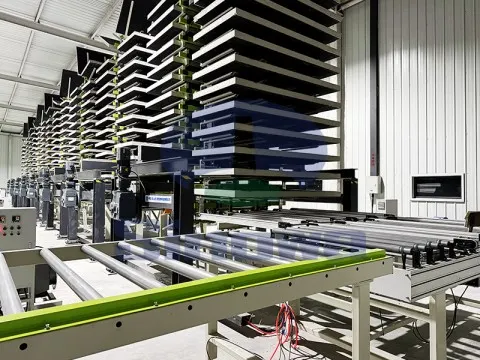
Tags: insulation panel making machine, insulation panel making machine manufacturer, insulation panel making machine supplier, china insulation panel making machine, insulation panel making machine for sale
-
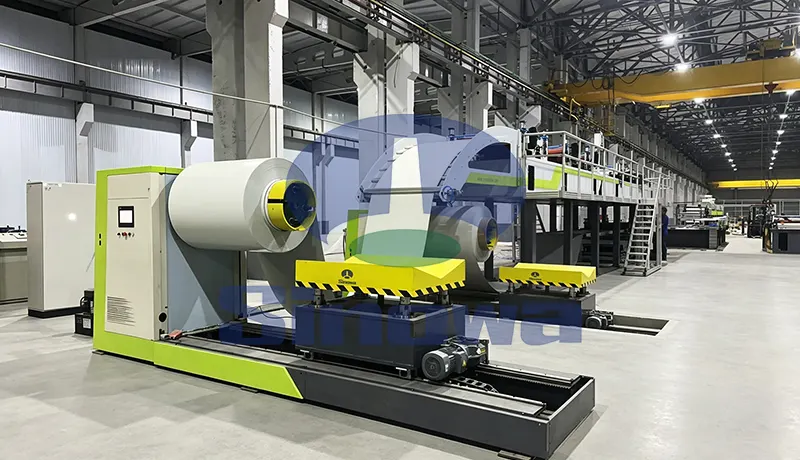
A reliable PU sandwich panel production line serves as the core equipment for manufacturing high-performance building insulation panels. This professional PU sandwich panel line features automated feeding, foaming and molding processes to ensure consistent panel thickness and structural stability. The well-designed polyurethane sandwich panel production line effectively improves production efficiency while reducing material waste in daily operation. Each calibrated polyurethane sandwich panel line can adapt to different panel sizes to meet diverse construction needs. With precise temperature and pressure control, the advanced continuous PU sandwich panel line produces panels with excellent thermal insulation and weather resistance. Meanwhile, the optimized PIR sandwich panel production line upgrades the foaming formula to enhance fire resistance performance. The high-efficiency PIR sandwich panel line maintains stable operation during long-term mass production, delivering durable and high-quality sandwich panels for various architectural and industrial applications.
-
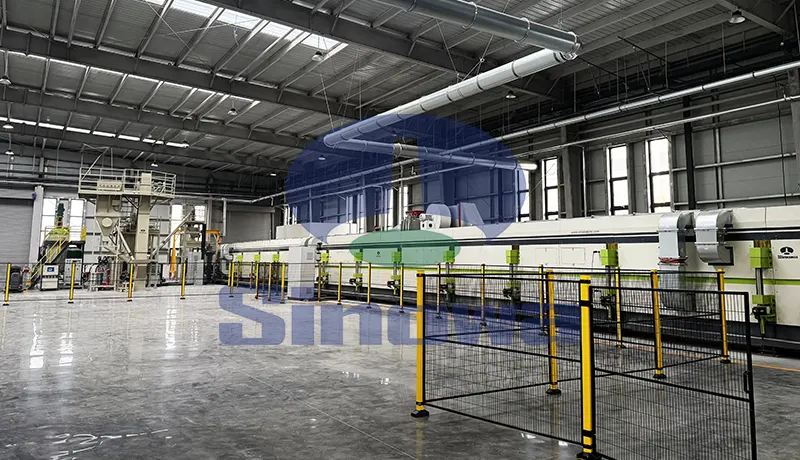
The phenolic panel production line realizes automated and continuous manufacturing of high-performance thermal insulation panels through streamlined and coordinated processing procedures.
-
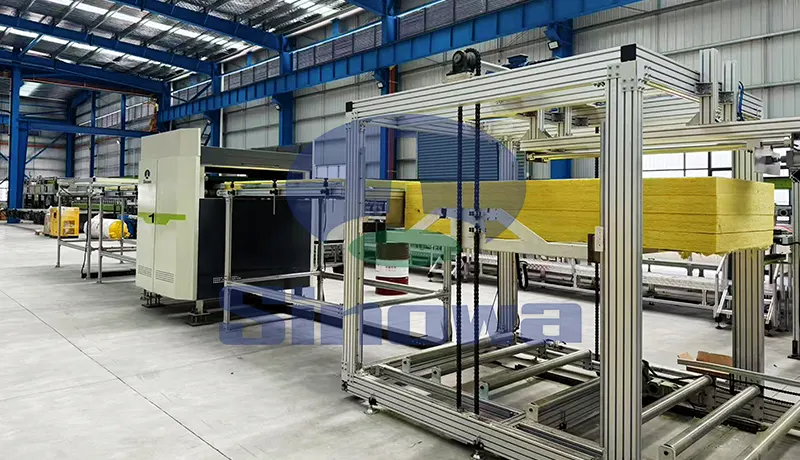
Modern insulation panel manufacturing relies on professional automated equipment to ensure stable product quality and high production efficiency. The rock wool sandwich panel production line features precise material lamination and forming processes to produce rigid, heat-insulating building panels. Meanwhile, the mineral wool sandwich panel production line adopts optimized assembly procedures to fabricate lightweight, soundproof panels widely used in architectural enclosure and thermal preservation projects.