Rock Wool Insulated Panel Production Line
Publication Date: Oct 6, 2026
The rock wool insulated panel production line is an integrated automated manufacturing system for functional building panels. It processes mineral raw materials into high-performance insulation panels through melting, fiber forming, bonding, composite molding and finishing, supporting efficient and stable industrial production.
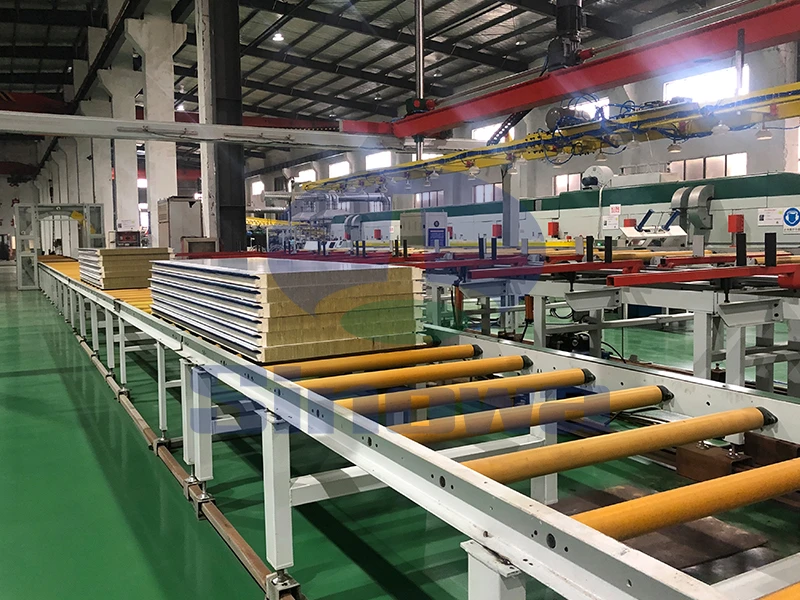
Core Composition and Operational Logic of the Production Line
A complete rock wool insulated panel production line consists of multiple interconnected functional modules that work in a synchronized sequential manner to achieve continuous and automated manufacturing. Each module undertakes an independent processing task while coordinating with adjacent units to avoid production stagnation and ensure overall operational efficiency. The core functional areas cover raw material pretreatment, high-temperature fiberization, adhesive treatment, core material molding, surface layer forming, composite lamination, constant-temperature curing, precision cutting, surface finishing and automatic stacking. Different from scattered single equipment, the integrated production line realizes unified parameter linkage and mechanical transmission, eliminating manual intervention errors in intermediate links. The operational logic follows the material processing sequence strictly. Raw materials enter the production line from the feeding end, undergo physical and chemical modification step by step, and finally form finished panels with stable structural performance. The modular design also endows the production line with flexible adjustability, enabling it to adapt to different panel thicknesses and structural specifications by modifying equipment operating parameters, which greatly expands its application scope in building thermal insulation and enclosure material manufacturing.
Raw Material Selection and Pretreatment Process
Raw material quality is the fundamental determinant of rock wool panel insulation performance and structural stability, making scientific selection and standardized pretreatment essential initial steps of production. The main raw materials for production are natural mineral ores and recyclable mineral byproducts with stable physical properties, which feature high temperature resistance and chemical inertness. Before formal processing, all raw materials need to go through strict pretreatment procedures including crushing, screening, cleaning and proportional blending. The crushing process breaks bulk raw materials into uniform fine particles to ensure consistent melting efficiency in subsequent high-temperature equipment. Screening removes impurity particles and unqualified large-grain materials to prevent defects such as uneven fiber forming in later stages. The proportional blending link adjusts the material ratio according to production demands, optimizing the flexibility and toughness of the final rock wool fiber. In addition, surface drying treatment is carried out on pretreated materials to remove residual moisture, avoiding bubble generation and structural loose problems caused by water vapor volatilization during high-temperature melting. Standardized pretreatment effectively stabilizes the basic performance of raw materials, lays a foundation for consistent product quality, and reduces equipment wear and production failure rate in subsequent processing links.
High-Temperature Melting and Centrifugal Fiberization Technology
High-temperature melting and centrifugal fiberization are the core processes that transform solid mineral raw materials into fibrous rock wool substrates, determining the fineness and uniformity of rock wool fibers. Pretreated mineral particles are continuously sent to closed high-temperature melting equipment, where the materials are heated evenly until they form a homogeneous molten liquid state. The closed heating environment avoids heat loss and external impurity pollution, ensuring the stability of molten material composition. After full melting, the high-temperature liquid flows steadily to high-speed centrifugal spinning equipment. Driven by high-speed rotating wheels, the molten liquid is thrown outward under strong centrifugal force and stretched into ultra-fine mineral fibers with uniform diameter. During the fiber forming process, a stable air cooling system works synchronously to rapidly cool the newly formed fibers, fixing their fibrous structure and preventing fiber adhesion and agglomeration. Meanwhile, auxiliary functional agents are evenly sprayed on the fiber surface to endow the fibers with basic hydrophobic and dust-proof properties. The precision-controlled melting temperature and centrifugal speed ensure that the produced fibers have consistent thickness and excellent structural uniformity, which directly improves the thermal insulation and sound absorption performance of the finished rock wool panels.
Binder Spraying and Fiber Blank Forming
Independent rock wool fibers lack integral structural stability, so binder spraying and fiber blank forming processes are required to gather discrete fibers into continuous and uniform wool blanks. The production line is equipped with an automatic precise spraying system that quantitatively sprays environment-friendly water-based adhesive on the surface and internal gaps of scattered rock wool fibers. The system adjusts spraying flow and atomization pressure in real time according to fiber density and production speed, realizing full coverage of adhesive without local accumulation or insufficient spraying. Uniform adhesive distribution ensures that each fiber can form effective bonding points with adjacent fibers. After spraying, the fibers are conveyed to the fiber laying and gathering equipment, where staggered laying and uniform compaction are completed through mechanical pendulum distribution technology. This laying mode forms a three-dimensional cross fiber structure, greatly enhancing the overall compactness and tensile strength of the fiber blank. The initially formed fiber blank has continuous specifications and stable density, eliminating local hollow or loose phenomena. This process not only shapes the basic outline of the rock wool core material but also builds a stable internal bonding structure, providing reliable structural support for subsequent composite molding and curing processing.
Surface Layer Material Preparation and Forming
Rock wool insulated panels are typical composite materials with rock wool fiber as the core insulation layer and metal sheets as the protective surface layers. The surface layer material preparation process is responsible for processing raw metal coils into flat and smooth surface substrates suitable for composite lamination. The production line is equipped with automatic coil unwinding and leveling equipment, which continuously unfolds coiled metal materials and eliminates surface wrinkles and internal stress through multi-group leveling rollers. After leveling, the surface materials go through surface cleaning and film covering treatment to remove dust and oil stains generated during processing, and attach protective films to prevent surface scratch and corrosion in subsequent processing. For panels with special surface requirements, the equipment can complete fine trimming and edge smoothing to ensure neat and uniform material edges. The whole surface layer processing process adopts continuous automated operation, which maintains the flatness and dimensional consistency of surface materials. High-quality surface layer processing not only improves the appearance flatness of finished panels but also enhances the overall structural rigidity and weather resistance of composite panels, enabling the panels to resist external physical impact and environmental erosion in long-term use.
Integrated Composite Lamination Process
Composite lamination is the key link to combine the rock wool core material and metal surface layers into an integral panel structure, directly affecting the bonding firmness and overall flatness of finished products. The production line adopts double-belt synchronous composite technology, which realizes precise alignment and fitting of upper and lower surface layers and the middle rock wool fiber blank. Before lamination, the equipment carries out real-time detection on the thickness and flatness of the core material and surface materials to adjust the lamination gap and pressure parameters adaptively. In the composite process, uniform and stable mechanical pressure is applied to the whole panel surface, making the surface layers closely fit with the rock wool core material and fully extrude redundant air between layers. This operation effectively avoids interlayer hollowing, delamination and other quality defects. Meanwhile, the low-temperature preheating auxiliary system works synchronously to activate the adhesive on the core material surface, accelerating the preliminary bonding reaction between layers. The synchronous operation of double belts ensures consistent conveying speed and lamination pressure in all parts of the panel, avoiding uneven stress and local warping. The integrated composite process realizes one-time integral forming of the panel structure, ensuring the overall structural integrity and interlayer bonding stability of semi-finished panels.
Constant-Temperature Curing and Structural Shaping
After composite lamination, the semi-finished panels need to go through constant-temperature curing treatment to complete the solidification of the adhesive and realize permanent structural shaping. The production line is equipped with a closed constant-temperature curing channel with uniform internal temperature distribution, which provides a stable curing environment for composite panels. During the curing process, the internal molecular reaction of the adhesive is fully completed under constant temperature conditions, forming a high-strength bonding layer between rock wool fibers and between the core material and surface layers. This process permanently fixes the composite structure of the panel, greatly improving the interlayer peeling resistance and overall structural stability of the product. The curing time and temperature are precisely controlled according to the panel thickness and core material density, ensuring thorough curing inside and outside the panel without overheating damage to the surface material. The closed channel design avoids the influence of external temperature and humidity changes on the curing effect, ensuring consistent curing quality of each batch of products. After curing, the internal structure of the panel becomes compact and stable, with no residual stress, laying a key foundation for the excellent mechanical and insulation properties of the finished product.
Precision Cutting and Dimension Trimming
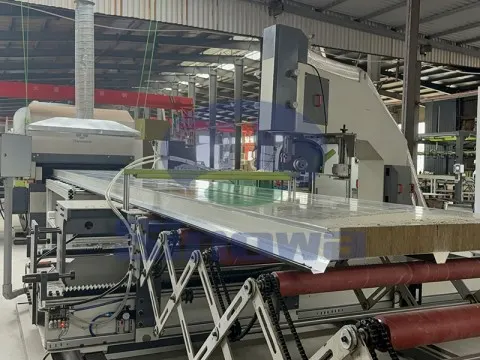
Cured semi-finished panels are continuous long-strip structures, which need precision cutting and dimension trimming to form standard finished products with fixed specifications. The production line is equipped with automatic tracking and cutting equipment, which can intelligently identify the panel conveying speed and complete fixed-length cutting in real time. The cutting tool adopts high-precision blade design, which realizes smooth and neat cutting sections without burrs, fiber falling or surface layer deformation. After cutting, the edge trimming process is carried out to polish and trim the panel edges and corners, eliminating tiny defects generated during cutting. For the edge structures that need sealing treatment, the equipment completes automatic edge sealing and shaping to enhance the edge tightness and structural durability of the panel. The whole cutting and trimming process adopts automated parameter control, which can flexibly switch cutting dimensions according to production requirements and adapt to multiple panel specification production. Precision processing ensures that the dimensional error of finished panels is controlled within a tiny range, realizing high assembly accuracy in on-site construction and improving the overall installation efficiency and sealing effect of building enclosure structures.
Surface Finishing and Defect Inspection
Surface finishing and quality inspection are important guarantee links to screen qualified products and optimize product appearance quality. After cutting and trimming, the panels enter the finishing process, where the equipment removes residual dust, adhesive residues and tiny impurities on the panel surface and cutting sections. Manual auxiliary finishing is carried out for individual subtle defects to ensure the smooth and clean surface of all finished panels. Subsequently, the automatic inspection system conducts comprehensive detection on the panels, covering surface flatness, interlayer bonding state, section compactness and overall dimensional accuracy. The system can intelligently identify subtle quality defects such as local bulges, tiny delaminations and dimensional deviations that are difficult to distinguish by human eyes. Unqualified products will be automatically marked and separated from the production line for reprocessing or scrapping, while qualified products enter the subsequent stacking and packaging link. The standardized finishing and inspection mechanism effectively controls product quality consistency, eliminates defective products from entering the finished product link, and ensures that all delivered products have stable and reliable comprehensive performance.
Automatic Stacking and Intelligent Production Management
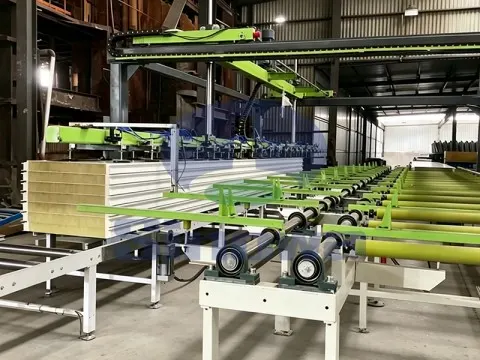
The final stage of the production line focuses on automatic stacking and intelligent production management, realizing unmanned finishing of finished products and efficient production operation. Qualified finished panels are conveyed to the automatic stacking platform through the roller conveying system. The stacking equipment adopts intelligent positioning and grabbing technology, which neatly stacks panels according to fixed layers and spacing, ensuring stable stacking structure and no surface extrusion damage. After stacking, the equipment completes automatic bundling and protective packaging to prevent surface scratch, dust pollution and moisture erosion during storage and transportation. In terms of production management, the whole production line is connected with an intelligent control system, which monitors and records the operating parameters of each processing link in real time, including melting temperature, fiber forming speed, lamination pressure and curing time. The system can automatically adjust operating parameters according to production batch changes, realize real-time early warning of equipment abnormal operation, and generate production data reports. The intelligent management mode reduces manual management costs, improves production line operation stability and production efficiency, and facilitates production data statistics, quality traceability and production schedule optimization, realizing standardized and intelligent whole-process production management.
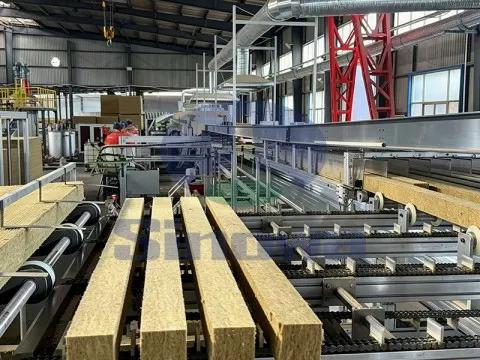
Gallery of Rock Wool Insulated Panel Production Line
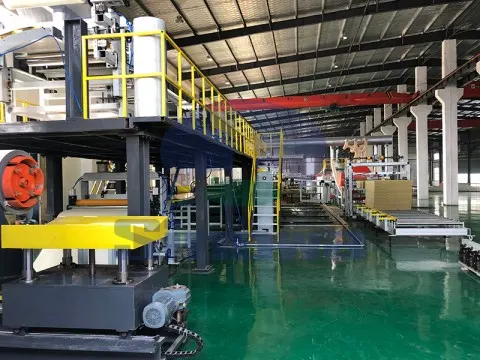
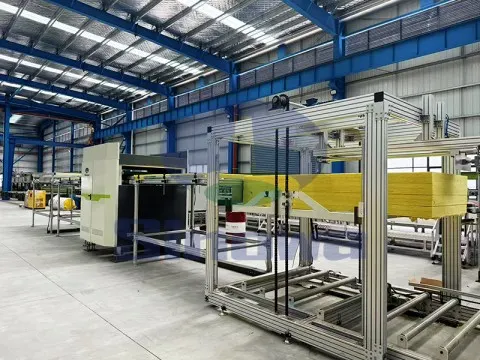
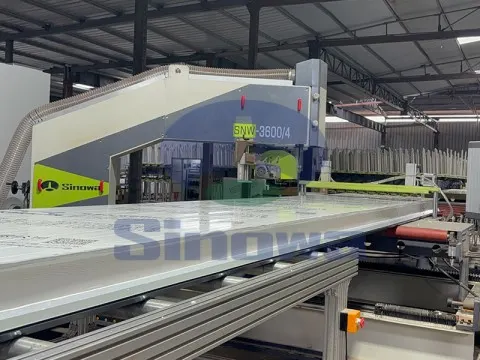
Tags: rock wool insulated panel production line, rock wool insulated panel production line manufacturer, rock wool insulated panel production line supplier, china rock wool insulated panel production line, rock wool insulated panel production line for sale
-
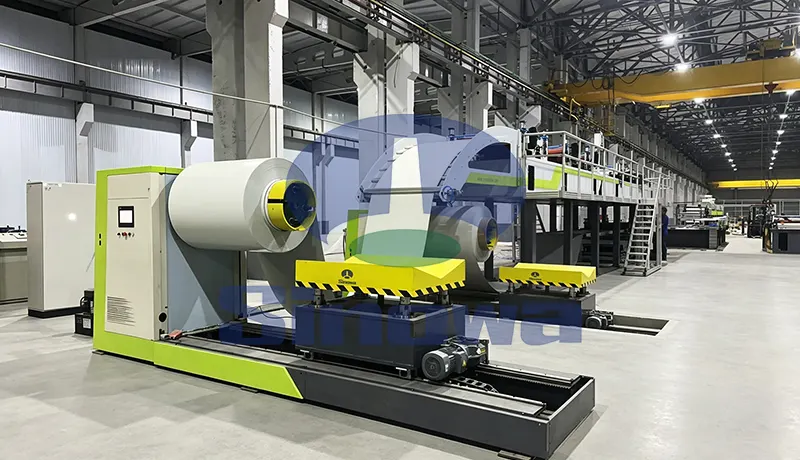
A reliable PU sandwich panel production line serves as the core equipment for manufacturing high-performance building insulation panels. This professional PU sandwich panel line features automated feeding, foaming and molding processes to ensure consistent panel thickness and structural stability. The well-designed polyurethane sandwich panel production line effectively improves production efficiency while reducing material waste in daily operation. Each calibrated polyurethane sandwich panel line can adapt to different panel sizes to meet diverse construction needs. With precise temperature and pressure control, the advanced continuous PU sandwich panel line produces panels with excellent thermal insulation and weather resistance. Meanwhile, the optimized PIR sandwich panel production line upgrades the foaming formula to enhance fire resistance performance. The high-efficiency PIR sandwich panel line maintains stable operation during long-term mass production, delivering durable and high-quality sandwich panels for various architectural and industrial applications.
-
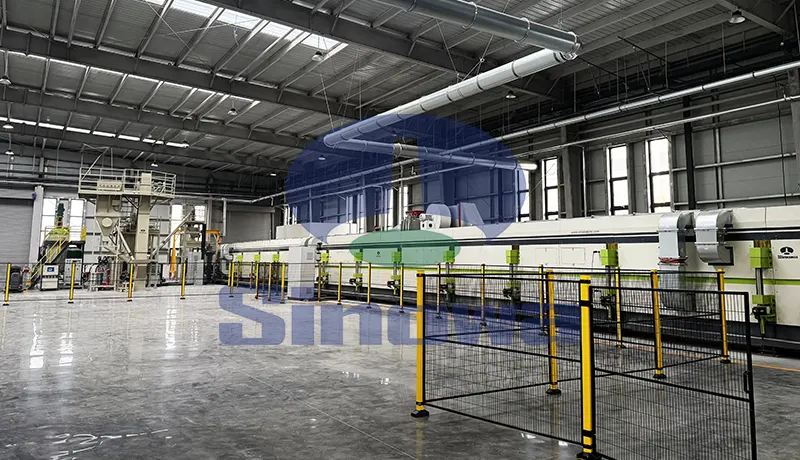
The phenolic panel production line realizes automated and continuous manufacturing of high-performance thermal insulation panels through streamlined and coordinated processing procedures.
-
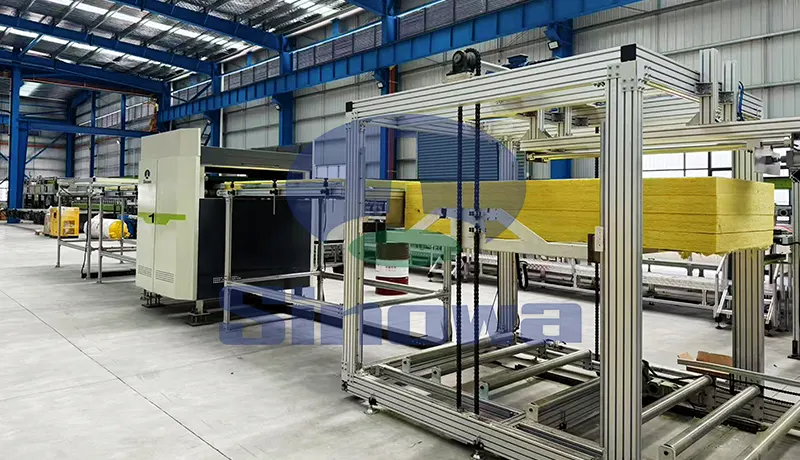
Modern insulation panel manufacturing relies on professional automated equipment to ensure stable product quality and high production efficiency. The rock wool sandwich panel production line features precise material lamination and forming processes to produce rigid, heat-insulating building panels. Meanwhile, the mineral wool sandwich panel production line adopts optimized assembly procedures to fabricate lightweight, soundproof panels widely used in architectural enclosure and thermal preservation projects.