Thermal Insulation Board Machine
Publication Date: Oct 6, 2026
Thermal insulation board machines are specialized industrial equipment designed for streamlined production of heat-insulating building panels. They integrate multiple processing procedures to produce lightweight, high-performance insulation boards widely used in modern construction and thermal preservation projects.
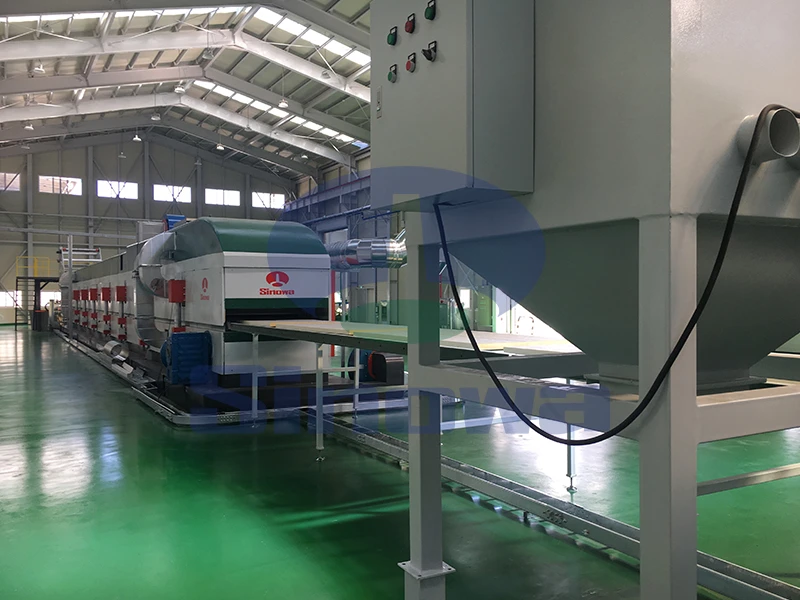
Basic Working Principle of Thermal Insulation Board Machines
Thermal insulation board machines operate based on a combination of physical foaming, uniform material compounding and constant-temperature molding principles, forming a continuous and automated production logic for insulation panel manufacturing. The entire working process starts with precise raw material proportioning, where different base materials and auxiliary additives are quantitatively transported to the mixing system through automated feeding structures. Inside the closed mixing unit, materials undergo full stirring and homogenization to form a stable slurry mixture with consistent density and component distribution, which lays a solid foundation for uniform board performance. After mixing, the homogeneous slurry is delivered to the molding and foaming module, where adjustable internal pressure and temperature environments trigger mild physical expansion of thermal insulation components in the slurry. This controlled expansion forms fine, closed pore structures inside the board materials, which are the core structure that endows finished boards with excellent heat insulation and sound absorption capabilities. Following foaming, the semi-finished products enter the curing stage to complete structural shaping, eliminating internal stress and enhancing overall structural stability. Finally, standardized cutting and shaping processes produce complete thermal insulation boards with uniform specifications. The whole working process relies on synchronous coordination of multiple functional modules, avoiding manual operation errors and ensuring the consistency of each batch of products, while realizing efficient and continuous industrial production.
Core Structural Composition of the Equipment
A complete thermal insulation board machine production line consists of multiple interdependent and collaborative functional modules, each undertaking independent processing tasks to form a systematic and streamlined production system. The front-end raw material pretreatment and batching system serves as the foundation of the entire equipment, including conveying, crushing, grinding and quantitative dosing structures. This module is responsible for processing bulk raw materials into fine, uniform particles and completing accurate proportioning of different materials, effectively avoiding performance differences caused by uneven raw material mixing. The mid-section features a high-precision mixing and foaming system, the core component that determines the internal structure and thermal performance of finished boards. Equipped with sealed mixing chambers and adjustable pressure control structures, this system ensures full fusion of raw materials and stable foaming reactions, preventing pore collapse or uneven pore distribution. The subsequent laminating and pressing module provides stable pressure and flat molding conditions, shaping the preliminary outline of insulation boards and improving the compactness of board structures. Additionally, the equipment is equipped with a constant-temperature curing system, a fixed-size cutting system and an automated conveying and stacking auxiliary system. All modules operate in synchronous linkage, with intelligent sensing components monitoring operating status in real time. This integrated structural design minimizes material waste, reduces manual intervention, and enables the equipment to adapt to continuous and large-scale industrial production scenarios.
Key Functional Advantages of Modern Insulation Board Machinery
Modern thermal insulation board machines stand out in the industrial manufacturing field due to their outstanding functional optimization and technological upgrades, bringing multiple practical advantages to insulation board production. First of all, the equipment features high production automation, realizing full-process automatic control from raw material feeding, mixing, foaming and molding to finished product cutting and output. This highly automated operation mode greatly reduces manual labor investment, lowers the risk of human operation errors, and significantly improves production efficiency and product qualification rate. Secondly, the equipment supports flexible parameter adjustment, allowing operators to modify processing temperature, foaming pressure, material proportioning and cutting specifications according to different production demands. This flexibility enables the machine to produce insulation boards with different thicknesses, densities and structural performances, meeting diverse application needs of different scenarios. In addition, modern models adopt optimized sealing and structural design, which effectively reduces raw material residue and leakage during processing, improving raw material utilization efficiency and reducing production costs. The equipment also features stable operation performance, with anti-vibration and wear-resistant structural designs that reduce equipment failure rates during long-term continuous operation. Moreover, the finished boards produced by advanced machinery have uniform pore structures, stable thermal insulation performance and good structural toughness, with better overall quality consistency than traditional manual and semi-automatic production methods.
Applicable Raw Material Types and Processing Characteristics
Thermal insulation board machines are compatible with a wide range of raw materials, covering mainstream thermal insulation base materials used in the construction industry, with targeted processing characteristics for different material types. Common applicable raw materials include expanded polystyrene materials, polyurethane composite materials, wood fiber thermal insulation materials and other lightweight thermal insulation substrates. Each type of raw material has unique physical and chemical properties, and the equipment can adjust processing parameters adaptively to match different material characteristics. For polystyrene-based raw materials, the equipment adopts mild low-temperature foaming and constant-pressure molding processes to protect the material’s inherent lightweight and heat-insulating advantages, avoiding structural damage caused by excessive temperature or pressure. For polyurethane composite materials, the high-precision metering and mixing system ensures accurate fusion of multi-component materials, realizing uniform foaming and stable composite molding, and enhancing the bonding strength and durability of finished boards. For wood fiber raw materials, the equipment uses symmetric steam heating and rapid curing technology to optimize the internal density distribution of fiber boards, improving the structural stability and thermal insulation effect of fiber insulation products. In the processing process, the equipment’s closed processing environment effectively prevents external impurities from mixing in, ensuring the purity and uniformity of raw material reactions. Meanwhile, the adjustable feeding speed and mixing intensity can adapt to raw materials with different particle sizes and viscosities, realizing efficient and standardized processing of various thermal insulation raw materials and expanding the application scope of the equipment.
Production Process Flow of Thermal Insulation Boards
The production process of thermal insulation boards based on professional machinery follows a standardized, sequential and uninterrupted flow, ensuring orderly progress of each processing link and stable product quality. The whole process is divided into multiple continuous stages, starting with raw material preparation and pretreatment. In this stage, bulk raw materials are screened, crushed and ground to reach uniform particle fineness, and then accurately proportioned through an automatic dosing system according to production formulas. The second stage is material mixing and homogenization, where proportioned raw materials are transported to the sealed mixing chamber for full stirring to form a uniform and stable mixed slurry, eliminating material stratification and component unevenness. The third stage is foaming and preliminary molding, during which the mixed slurry is injected into the molding cavity, and the equipment adjusts internal temperature and pressure to trigger controlled foaming, forming a uniform closed pore thermal insulation structure inside the material. The fourth stage is laminating and curing, where the foamed semi-finished boards are pressed and shaped by the laminating system, and then sent to the constant-temperature curing area for structural stabilization, eliminating internal stress and improving board toughness. The fifth stage is fixed-size cutting and trimming, where cured boards are accurately cut into specified sizes, and edge burrs and irregular parts are trimmed to ensure neat product edges. The final stage is finished product conveying and stacking, where qualified finished boards are automatically transported and stacked, completing the entire production process. Each stage is closely connected with no intermediate stagnation, realizing continuous assembly line production.
Performance Characteristics of Finished Products
Thermal insulation boards produced by professional thermal insulation board machines possess excellent and stable comprehensive performance, with prominent advantages in thermal insulation, structural performance and practical applicability. In terms of thermal insulation performance, the uniform closed pore structure formed by precise mechanical foaming effectively blocks heat conduction and heat convection, endowing the boards with low thermal conductivity and stable heat preservation capacity. This structural feature enables the boards to reduce indoor and outdoor heat exchange, achieving good energy-saving and temperature-regulating effects in building applications. In terms of structural performance, the finished boards have uniform density distribution, moderate hardness and good compressive resistance, avoiding deformation and damage under conventional external pressure. The integrated molding process enhances the overall structural integrity of the boards, with good toughness and crack resistance, adapting to complex construction and usage environments. In addition, mechanically produced insulation boards have stable physical properties, with low water absorption and good moisture resistance, preventing moisture from penetrating into the internal pore structure to affect thermal insulation effects. The boards also feature lightweight characteristics, which can effectively reduce the overall load of buildings while ensuring thermal insulation performance, facilitating transportation and on-site installation. Moreover, standardized mechanical production ensures consistent product specifications and stable performance of each batch of boards, without obvious quality differences, providing reliable material support for long-term use in construction, industrial thermal insulation and other fields.
Automation and Intelligent Operation System
Modern thermal insulation board machines are equipped with mature automation and intelligent operation systems, realizing intelligent monitoring, precise control and efficient operation of the entire production process. The core of the intelligent system is an integrated control terminal that centrally manages all functional modules of the equipment. Operators can set and adjust production parameters such as feeding volume, mixing speed, foaming temperature, molding pressure and cutting size through the terminal interface, with digital parameter display ensuring accurate and intuitive operation. The system is equipped with high-precision sensing components distributed in each processing link, which monitor real-time operating data including equipment operating speed, material flow, internal temperature and pressure of the molding cavity. Once abnormal data such as parameter deviation or equipment jitter is detected, the intelligent system will automatically perform fine adjustment and timely alarm reminders to avoid defective products and equipment failures. In addition, the automatic linkage function realizes synchronous operation of feeding, mixing, foaming, molding and cutting modules. When one link completes processing, the system automatically transmits materials to the next link without manual switching, greatly improving production continuity. The system also supports production data recording and statistical analysis, which helps operators summarize production rules, optimize parameter settings and improve overall production efficiency. The intelligent design reduces the technical threshold of equipment operation, realizes standardized and refined production, and further improves the stability and reliability of the production process.
Daily Maintenance and Operational Debugging Methods
Scientific daily maintenance and standardized operational debugging are crucial to extend the service life of thermal insulation board machines and maintain stable production efficiency. In daily maintenance, regular cleaning of key equipment parts is the primary task. The raw material conveying pipelines, mixing chambers and molding cavities need to be cleaned periodically to remove residual raw materials and cured impurities, preventing pipeline blockage and affecting material conveying and mixing effects. Sealing components such as mixing head seals and molding cavity gaskets are vulnerable to aging and wear during long-term operation, so regular inspection and timely replacement are required to avoid raw material leakage and pressure loss that affect foaming and molding quality. The equipment’s transmission parts, including conveyor belts and transmission gears, need regular lubrication maintenance to reduce operational friction and prevent mechanical wear and abnormal noise. In terms of operational debugging, parameter calibration must be completed before each production. Operators need to debug the metering system to ensure accurate raw material proportioning, and calibrate the temperature and pressure control systems to guarantee stable processing environment parameters. During the production process, real-time observation of equipment operating status and finished product quality is required, and corresponding parameter adjustments should be made according to subtle changes in product molding effects. Regular overall debugging of the intelligent control system is also necessary to ensure sensitive sensor response and accurate parameter execution, eliminating potential operational hazards. Standardized maintenance and debugging can effectively reduce equipment failure rates, reduce maintenance costs, and ensure long-term stable and efficient operation of the equipment.
Application Scenarios of Thermally Insulated Board Products
Thermal insulation boards produced by professional machines have diverse and wide application scenarios, covering construction engineering, industrial manufacturing, municipal facilities and many other fields due to their excellent comprehensive performance. In the construction industry, they are widely used for thermal insulation and energy conservation of building walls, roofs, floors and exterior enclosure structures. The boards can effectively isolate external temperature changes, reduce building heating and cooling energy consumption, and improve indoor living and working comfort. They are also applicable to prefabricated modular buildings, providing lightweight and high-efficiency thermal insulation solutions for temporary and permanent prefabricated structures. In industrial fields, the insulation boards are used for thermal insulation and anti-condensation treatment of industrial workshops, cold storage warehouses, constant-temperature workshops and equipment rooms, stabilizing internal environmental temperature and reducing industrial energy consumption. For municipal facilities, they can be applied to the thermal insulation of public buildings, subway auxiliary facilities and pipeline protection structures, improving the durability and energy-saving performance of municipal infrastructure. In addition, the boards are also suitable for special scenarios such as sound insulation and vibration reduction of building interiors and thermal protection of outdoor facilities. Thanks to adjustable product specifications and stable performance, mechanically produced thermal insulation boards can meet the personalized needs of different application scenarios, with strong market adaptability and practical value.
Development Trends of Thermal Insulation Board Machinery
With the continuous upgrading of industrial manufacturing technology and the growing demand for energy-saving and environmentally friendly building materials, thermal insulation board machines are showing obvious development trends in intelligence, energy conservation, environmental protection and multi-functional integration. In terms of intelligent upgrading, future equipment will realize more refined automatic control, supporting adaptive parameter adjustment according to raw material changes and real-time product quality feedback, further reducing manual intervention and improving production intelligence. Equipment will also be equipped with remote monitoring and fault self-diagnosis functions, enabling operators to remotely grasp operating status and quickly solve equipment problems, improving operation and maintenance efficiency. In terms of energy conservation and environmental protection, new-generation machinery will adopt optimized energy-saving structural design and low-power operating components, reducing energy consumption during production operations. At the same time, the equipment will strengthen the recycling and utilization of residual raw materials, reduce material waste and production pollution emissions, and adapt to the green development trend of the building materials industry. In terms of functional integration, future thermal insulation board machines will break the limitation of single production function, realizing integrated production of multi-type and multi-specification insulation boards through modular structural optimization. The equipment will also combine composite processing technologies to produce high-performance multi-functional insulation boards with heat preservation, sound insulation, fire resistance and weather resistance. In addition, the equipment will develop towards miniaturization and high efficiency, adapting to the production needs of different-scale manufacturers and promoting the standardized and high-quality development of the thermal insulation board industry.
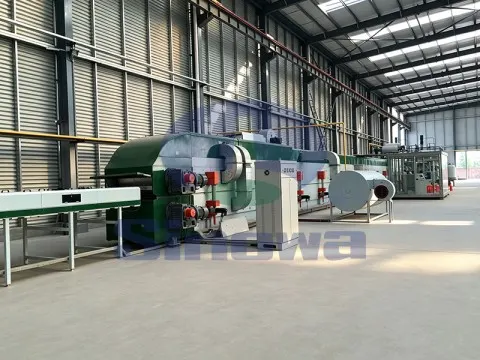
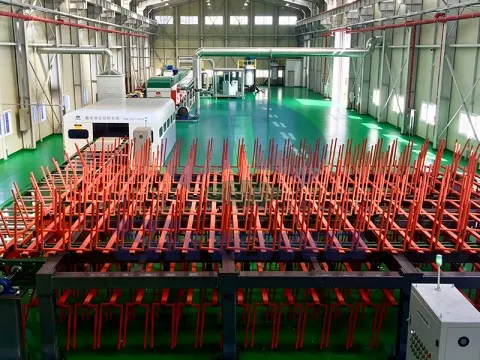
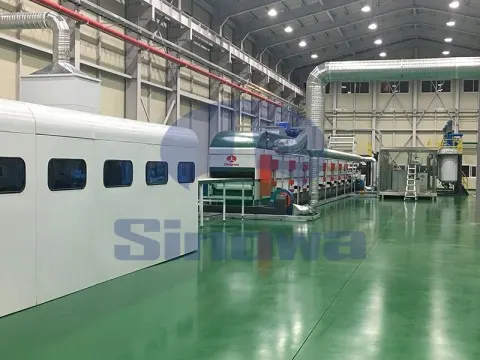
Gallery of Thermal Insulation Board Machine
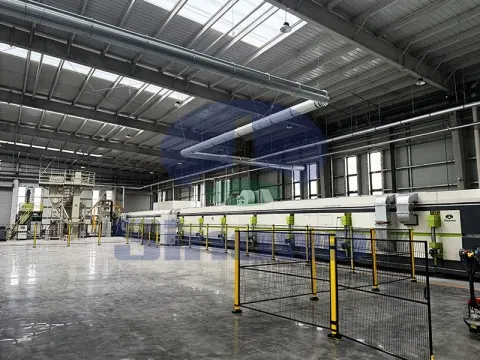
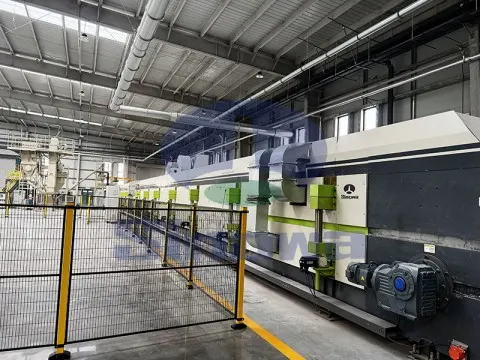
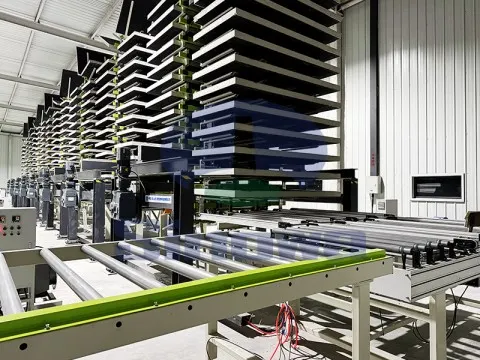
Tags: thermal insulation board machine, thermal insulation board machine manufacturer, thermal insulation board machine supplier, china thermal insulation board machine, thermal insulation board machine for sale
-

A reliable PU sandwich panel production line serves as the core equipment for manufacturing high-performance building insulation panels. This professional PU sandwich panel line features automated feeding, foaming and molding processes to ensure consistent panel thickness and structural stability. The well-designed polyurethane sandwich panel production line effectively improves production efficiency while reducing material waste in daily operation. Each calibrated polyurethane sandwich panel line can adapt to different panel sizes to meet diverse construction needs. With precise temperature and pressure control, the advanced continuous PU sandwich panel line produces panels with excellent thermal insulation and weather resistance. Meanwhile, the optimized PIR sandwich panel production line upgrades the foaming formula to enhance fire resistance performance. The high-efficiency PIR sandwich panel line maintains stable operation during long-term mass production, delivering durable and high-quality sandwich panels for various architectural and industrial applications.
-

The phenolic panel production line realizes automated and continuous manufacturing of high-performance thermal insulation panels through streamlined and coordinated processing procedures.
-

Modern insulation panel manufacturing relies on professional automated equipment to ensure stable product quality and high production efficiency. The rock wool sandwich panel production line features precise material lamination and forming processes to produce rigid, heat-insulating building panels. Meanwhile, the mineral wool sandwich panel production line adopts optimized assembly procedures to fabricate lightweight, soundproof panels widely used in architectural enclosure and thermal preservation projects.