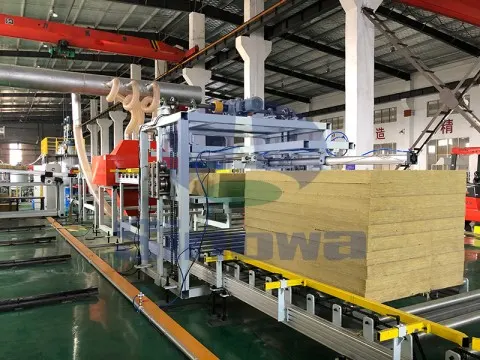
Insulated Panel Production Line
Publication Date: Oct 6, 2026
Fully automatic Insulated Panel Production Line for PU, PIR, rockwool & phenolic sandwich panels. High-speed continuous line for roof, wall, cold room & cleanroom panels. PLC control, customizable, reliable sandwich panel machinery for global builders.
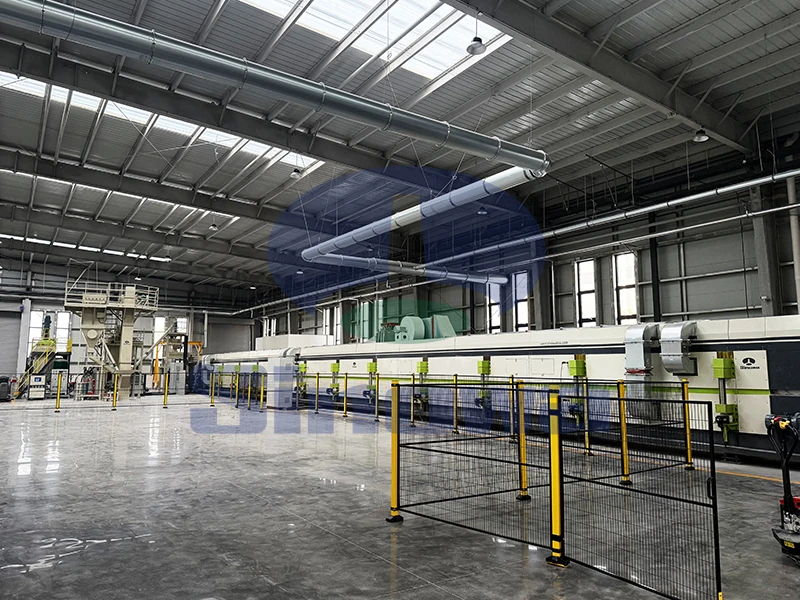
The insulated panel production line is an automated integrated manufacturing system for composite insulation panels. It covers full-process production from raw material processing to finished panel shaping, featuring high automation, stable operation and customizable production to meet diverse building insulation and structural needs.
Basic Composition and Core Functions of the Production Line
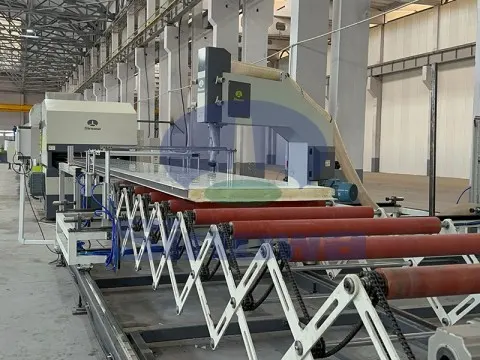
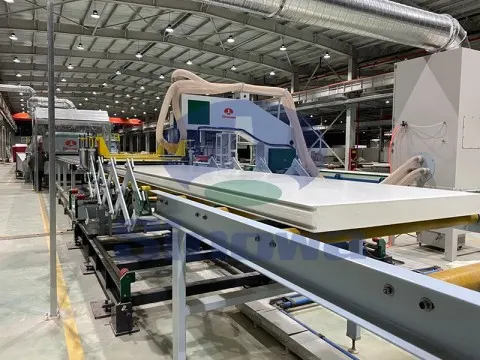
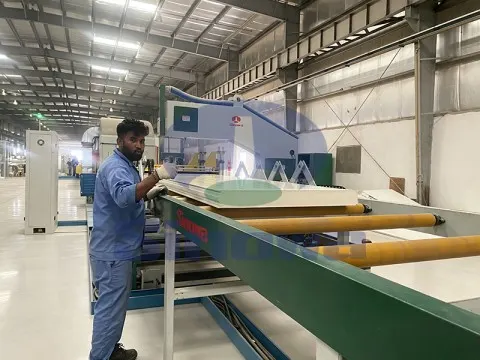
The insulated panel production line is a highly integrated automated manufacturing system composed of multiple functional modules, each undertaking independent and interconnected production tasks to realize continuous and efficient panel manufacturing. The entire line mainly includes raw material unwinding and leveling units, surface forming systems, gluing and composite modules, core material laying and foaming structures, pressing and shaping devices, fixed-length cutting units, and finished product conveying and stacking systems. Each module is precisely matched in operating speed and process parameters to avoid production stagnation or product quality defects caused by mismatched procedures. Different from scattered manual and semi-automatic processing equipment, this integrated line realizes one-stop production of insulated panels, effectively reducing intermediate manual intervention links. Its core functions cover surface plate shaping, insulation core compounding, structural bonding, fixed-size cutting and finished product sorting, which can stably produce composite panels with thermal insulation, sound insulation and structural bearing performance. The modular design also endows the production line with strong flexibility, allowing equipment debugging and process adjustment according to different panel thicknesses, core material types and surface layer specifications, adapting to diversified production demands in the construction and industrial manufacturing fields.
Raw Material Selection and Pre-Processing Technology
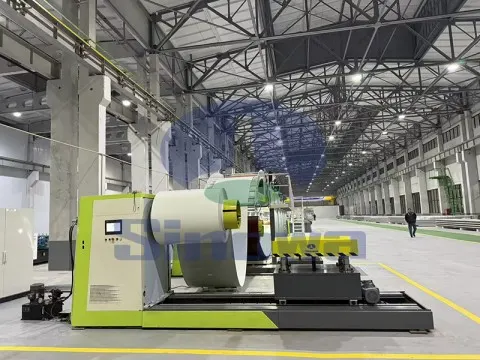
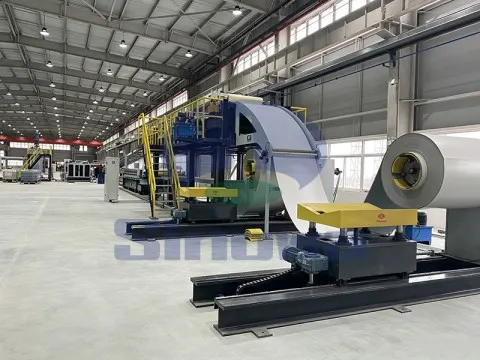
High-quality finished insulated panels are inseparable from scientific raw material selection and standardized pre-processing, which lays a fundamental foundation for product stability and durability. The main raw materials used in production are divided into surface layer materials and internal insulation core materials. Surface layers mostly adopt coated metal sheets with good flatness, toughness and anti-corrosion performance, which can maintain stable structural performance and appearance effect in long-term use environments. Insulation core materials include multiple mainstream types such as polyurethane foaming materials, polystyrene materials and mineral wool materials, each with unique thermal insulation and physical properties to adapt to different usage scenarios. Before formal production, all raw materials need to go through strict pre-processing procedures. Metal coil materials will be unwound and multi-stage leveled to eliminate coil bending, wrinkles and internal stress generated during storage and transportation, ensuring the flatness of subsequent forming and bonding. Insulation core materials will be sorted and pretreated to remove impurities and unqualified raw materials, and adjust material density and uniformity to ensure consistent insulation performance of finished panels. In addition, the surface of metal sheets will be cleaned to remove dust, oil stains and attachments, which effectively improves the bonding tightness between surface layer and core materials and avoids delamination and peeling of panels in later use.
Surface Plate Roll Forming Process
Roll forming is a key process that determines the appearance and structural accuracy of insulated panel surface layers, and it is also an indispensable link in the automated production line. After pre-leveling and cleaning, the metal sheet is continuously sent to the roll forming unit through an automatic conveying system. The unit is equipped with multiple groups of precision forming rollers arranged in an orderly manner, which gradually bend and shape the flat metal sheet through step-by-step pressure adjustment, avoiding one-time strong extrusion that causes material damage or uneven forming. Each group of rollers has precise position and pressure control to ensure consistent geometric dimensions, edge straightness and surface flatness of the formed sheet. The roll forming process supports the processing of various panel profile structures, including flat panels and profiled panels with special grooves and ribs, which enhance the structural rigidity and installation convenience of finished panels. During the forming process, the system is equipped with real-time monitoring components to automatically detect abnormal deformation, dimensional deviation and surface scratches of the sheet. Once unqualified forming conditions are found, the equipment will automatically adjust operating parameters or send out an early warning to stop production, effectively controlling the forming quality of surface plates. The continuous roll forming mode realizes uninterrupted processing, greatly improving production efficiency compared with traditional single-piece stamping forming.
Automatic Gluing and Bonding Technology
Gluing and bonding is the core process that determines the overall structural firmness and service life of insulated panels, and automated gluing systems have completely optimized the defects of traditional manual gluing. The production line adopts intelligent spraying and rolling composite gluing modes, which can evenly coat high-performance adhesive on the inner surface of the formed metal sheet according to set parameters. The gluing system is equipped with precise flow control components, which can dynamically adjust the glue output and coating thickness per unit area according to different surface material textures and core material characteristics, ensuring uniform glue distribution without missing coating, excessive coating or glue accumulation. Uniform adhesive coating can maximize the bonding force between the metal surface layer and the insulation core material, and effectively prevent panel delamination, cracking and water seepage in long-term use. After gluing, the equipment will complete preliminary bonding fitting through auxiliary pressing structures to ensure the initial combination of surface layer and core material. The whole gluing process is fully automated without manual measurement and operation, which not only improves the uniformity and stability of gluing quality, but also saves adhesive consumption and reduces production costs. Meanwhile, the closed gluing operation environment avoids adhesive volatilization pollution and improves the safety of the production workshop.
Core Material Laying and Foaming Process
The laying and foaming of insulation core materials directly determine the thermal insulation, sound insulation and fire resistance performance of finished panels, and different core materials correspond to targeted production processes. For solid core materials such as mineral wool and polystyrene, the production line adopts precise automatic laying equipment to evenly pave the cut core materials between the upper and lower metal surface layers, with automatic correction functions to ensure the flat laying and neat alignment of core materials, avoiding offset, hollowing or uneven thickness. For polyurethane and other foaming core materials, the production line is equipped with a high-precision foaming system, which mixes liquid raw materials in a fixed proportion through pressure and temperature control, and evenly injects the mixed materials into the closed cavity between the upper and lower surface layers. The foaming reaction proceeds stably in a constant-temperature and constant-pressure environment, making the foaming materials expand evenly and fill the entire composite space, forming a dense and uniform insulation core layer without voids or density differences. The system can adjust the foaming density and core layer thickness according to production requirements, realizing flexible production of panels with different insulation grades. The integrated laying and foaming process ensures the overall uniformity of the core material structure, and fundamentally guarantees the stable thermal insulation and mechanical properties of insulated panels.
Composite Pressing and Shaping Processing
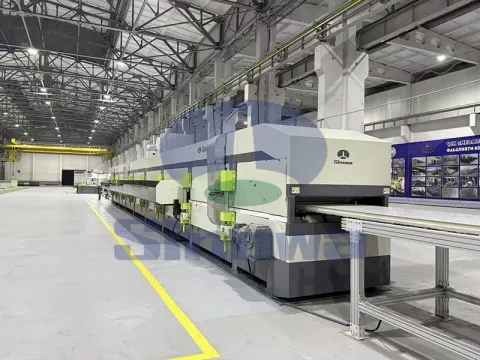
Composite pressing and shaping is a key procedure to integrate surface layers and core materials into a complete insulated panel structure, which directly affects the overall compactness and flatness of finished products. After the completion of gluing, core material laying and foaming preliminary reaction, the semi-finished panel is sent to the constant-pressure pressing unit through a synchronous conveying system. The pressing equipment adopts upper and lower double-belt synchronous pressing structure, which can maintain stable and uniform pressing force and fixed gap spacing during continuous operation. The gap between the pressing belts can be accurately adjusted according to the designed panel thickness, ensuring that the thickness of each batch of panels is consistent. In the pressing process, the equipment matches appropriate pressing time and pressure parameters according to the characteristics of different adhesives and core materials, which can fully promote the curing and bonding of adhesives, and make the surface layer and core material closely integrated into an integral structure. Moderate constant-pressure pressing can eliminate internal gaps and bubbles of the composite panel, improve the overall compactness of the product, and avoid bulging, deformation and uneven surface of finished panels. At the same time, the synchronous conveying and pressing mode ensures the continuity of production, does not interrupt the production rhythm, and effectively balances production efficiency and product shaping quality.
Fixed-Length Cutting and Edge Trimming Technology
Fixed-length cutting and edge trimming are finishing processes to standardize the size and appearance of insulated panels, realizing the transformation from continuous semi-finished products to single finished panels. After pressing and preliminary curing, the continuous integrated panel is transported to the servo flying cutting unit. The high-precision servo positioning system can automatically measure and cut the panel according to the preset length parameters, with fast cutting speed and accurate dimensional positioning. The cutting tool adopts high-hardness stable blade, which can complete smooth cutting without burrs, cracks, delamination and extrusion deformation at the cutting section. After cutting, the independent edge trimming device will automatically polish and trim the four edges of each single panel, remove residual burrs, uneven edges and excess adhesive residues generated in the production process, and make the panel edges neat and smooth. The whole cutting and trimming process is fully automated, without manual measurement and secondary finishing, which ensures the consistent dimensional accuracy and appearance quality of each finished panel. The equipment supports flexible switching of cutting sizes, which can meet the production requirements of panels of different specifications and improve the standardization degree of finished products.
Cooling and Curing Treatment Process
Cooling and curing is an essential post-processing procedure to stabilize the structural performance of insulated panels and eliminate internal stress. The newly pressed and cut panels have not completely completed adhesive curing and internal structural stabilization, and there is residual temperature and internal stress inside the panels. If they are directly stacked and stored, it is easy to cause panel deformation, warping and bonding failure. The production line is equipped with an automatic cooling and conveying system, which transports the cut single panels to the constant-temperature curing channel for gradual cooling and natural curing. The circulating air cooling mode is adopted in the channel to evenly dissipate the residual heat of the panels, avoiding local rapid cooling that causes inconsistent internal and external shrinkage and structural cracks. With the slow cooling process, the adhesive inside the panel is completely cured, the bonding force between layers reaches the optimal state, and the internal stress generated by pressing and forming is gradually released and balanced. The curing time and cooling temperature can be adjusted according to different panel thicknesses and core material types to ensure that each panel achieves stable mechanical properties and structural firmness. Sufficient cooling and curing treatment effectively improves the durability and structural stability of finished panels, reducing the probability of quality problems in later transportation, installation and use.
Automatic Sorting and Stacking System
The automatic sorting and stacking system is the final link of the production line, realizing intelligent finishing and standardized storage of finished panels. After cooling and curing, qualified panels are automatically transported to the stacking station through the conveying line. The system is equipped with intelligent induction and positioning devices, which can identify the specification parameters and production sequence of each panel, and complete automatic sorting according to preset classification standards. Different specifications of panels are divided into different stacking areas to avoid mixed stacking and facilitate subsequent packaging and delivery. The automatic stacking equipment adopts stable mechanical clamping and lifting structures, which can smoothly grab and place panels, avoid surface scratching, edge collision and panel deformation caused by manual handling. The stacking height and arrangement mode can be intelligently adjusted according to panel specifications and storage requirements, ensuring neat and stable stacking of finished products. This automated link completely replaces traditional manual handling and stacking, greatly improves production efficiency, reduces labor costs, and avoids product quality losses caused by manual operation errors. At the same time, standardized stacking is conducive to finished product inventory management and subsequent transportation and installation.
Production Line Operation Advantages and Application Value
The modern insulated panel production line has prominent operational advantages and wide industrial application value, becoming the core equipment for efficient manufacturing of building insulation composite materials. In terms of production performance, the integrated automated production mode realizes continuous and uninterrupted processing from raw material feeding to finished product stacking, with high production efficiency and stable output capacity. The whole process adopts intelligent parameter control and real-time quality monitoring, which effectively reduces the rate of defective products and ensures the consistent quality of batch products. In terms of operation flexibility, the modular production structure supports the switching production of panels with different core materials, thicknesses and profile specifications, meeting the personalized production needs of different industries. In terms of production cost, high automation reduces manual participation links, lowers labor and management costs, and precise parameter control reduces raw material waste and energy consumption. Finished insulated panels produced by the line have excellent thermal insulation, sound insulation, structural stability and convenient installation characteristics, and are widely applicable to building exterior wall insulation, roof enclosure, industrial factory building decoration, cold storage insulation and other fields. With the continuous upgrading of building energy-saving and environmental protection requirements, the efficient and intelligent insulated panel production line will further expand its application scope and play a greater value in the green building industry.
Gallery of Insulated Panel Production Line
Tags: insulated panel production line, insulated panel production line manufacturer, insulated panel production line supplier, china insulated panel production line, insulated panel production line for sale
Related Informations
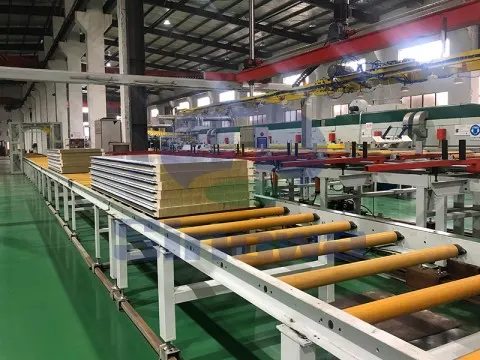
Rock Wool Insulated Panel Production Line
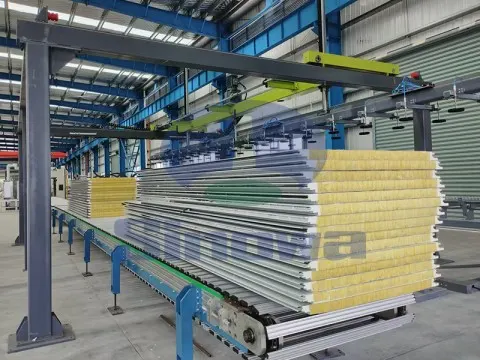
Insulated Sandwich Panel Production Line