Thermal Insulation Sandwich Panel Line
Publication Date: Oct 6, 2026
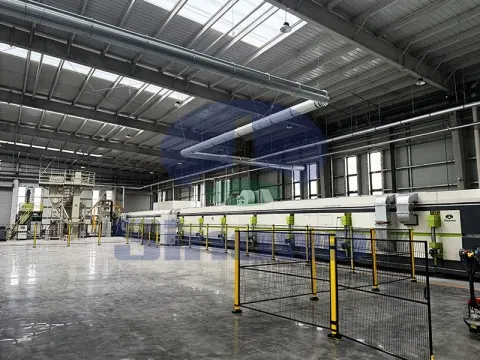
The thermal insulation sandwich panel line is an integrated automated manufacturing system for producing composite insulation panels. It integrates multiple processing procedures to deliver high-performance, structurally stable panels widely used in modern construction and industrial thermal insulation scenarios.
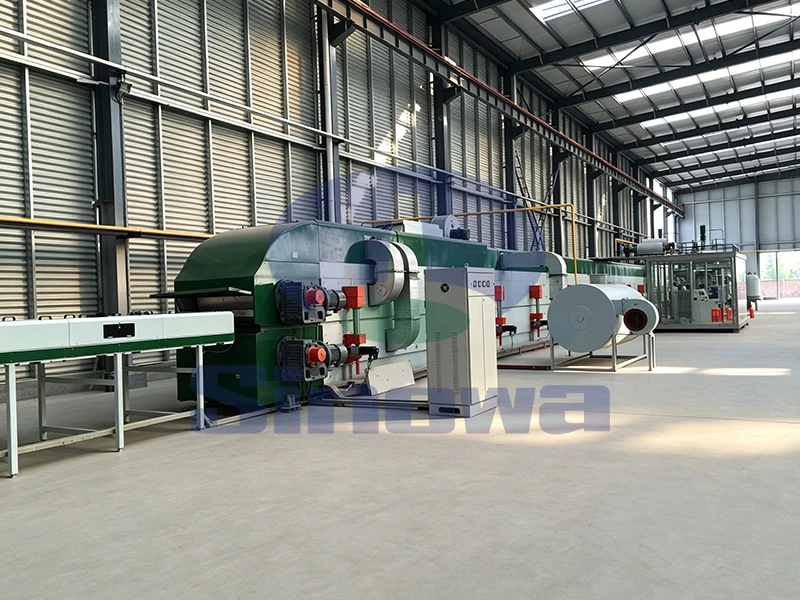
Core Composition of the Production Line
A complete thermal insulation sandwich panel line is a highly integrated mechanical system composed of multiple functional modules, each undertaking independent and collaborative processing tasks to ensure continuous and standardized production. The core modules include surface material preprocessing units, core material feeding and mixing systems, composite laminating devices, constant-temperature curing equipment, precision cutting mechanisms, and automatic stacking units. Every module is precisely matched in operating speed and processing accuracy to form a seamless production workflow. The surface preprocessing unit mainly completes the uncoiling, leveling and surface cleaning of metal or non-metal facing materials, eliminating wrinkles, impurities and surface defects that may affect subsequent bonding effects. The core material processing module adapts to multiple insulation core materials, realizing uniform feeding, high-pressure mixing and even distribution of thermal insulation substrates. Laminating and pressing units ensure tight bonding between surface layers and core layers, while the curing system stabilizes the composite structure. The final cutting and stacking modules achieve standardized sizing and neat collection of finished products, laying a foundation for consistent product quality.
Basic Working Principles of Continuous Production
The entire production process of the thermal insulation sandwich panel line follows a continuous assembly line operation logic, realizing one-step molding from raw material input to finished product output. The production starts with the feeding of surface facing materials, which are transported along the automated conveyor system after precision leveling and tension adjustment to maintain flat and stable feeding status. Meanwhile, the thermal insulation core materials are quantitatively proportioned and evenly conveyed to the middle layer of the upper and lower facings. For foam-based core materials, the system completes high-pressure mixing of raw materials and uniform pouring, enabling the materials to expand naturally in the closed composite space. As the semi-finished panels pass through the constant-speed laminating conveyor, the core materials gradually cure and form a solid integrated structure with the surface layers. The whole process avoids manual intervention in key links, with mechanical transmission and intelligent parameter control ensuring consistent processing rhythm. After curing and shaping, the panels are sent to the precision cutting unit for fixed-length cutting according to production requirements, and finally sorted and stacked automatically. This continuous operation mode greatly improves production efficiency and avoids quality fluctuations caused by intermittent production.
Diversified Adaptability of Core Materials
Modern thermal insulation sandwich panel lines feature strong core material adaptability, supporting the processing of multiple mainstream thermal insulation core materials to meet different usage scenario demands. Common applicable core materials include polyurethane, polyisocyanurate, mineral wool and other mainstream thermal insulation substrates, each with unique performance characteristics and application orientations. The production line can adjust processing parameters such as material mixing ratio, foaming pressure, curing temperature and laminating gap according to the physical properties of different core materials. For lightweight foam core materials, the system adopts precise micro-metering feeding technology to ensure uniform foaming density and closed-cell structure integrity, which is the key to excellent thermal insulation performance. For rigid fiber core materials such as mineral wool, the line uses targeted pressing and bonding processes to avoid fiber displacement and delamination, ensuring the structural uniformity of finished panels. This diversified adaptability enables a single production line to manufacture multiple types of insulation panels, effectively reducing equipment investment costs for manufacturers and improving production flexibility. It also enables products to balance thermal insulation, sound insulation, fire resistance and structural strength, covering multi-scene application needs.
Surface Material Processing Technology Advantages
The surface material processing link is crucial to the appearance quality and service durability of sandwich panels, and the automated production line is equipped with mature and efficient processing technologies for facing materials. The line supports various surface materials including metal sheets and flexible decorative materials, with professional preprocessing procedures for different material characteristics. The uncoiling and leveling system adopts servo speed regulation technology to realize stable and tension-free feeding, effectively avoiding material deformation, scratches and uneven flatness during transmission. Before composite molding, the surface material will go through fine cleaning and anti-oxidation treatment to remove surface dust, oil stains and oxide layers, greatly enhancing the bonding force between the surface layer and the core insulation material. In the rolling and forming stage, precision roller groups carry out fine shaping of the plate edges and surfaces, ensuring the flatness and dimensional regularity of the finished panels. All surface processing links adopt automated integrated operation, with consistent processing standards for each batch of materials. This not only optimizes the visual appearance of the panels but also improves their weather resistance and corrosion resistance, extending the overall service life of the finished products in complex application environments.
Laminating and Curing Molding Technology
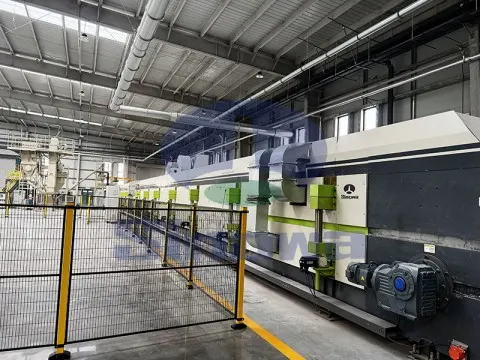
Laminating and curing are the core molding links that determine the overall structural performance of thermal insulation sandwich panels, and the production line adopts integrated constant-pressure laminating and constant-temperature curing technology to ensure product stability. In the laminating stage, the upper and lower pressing structures maintain uniform and stable pressure distribution, enabling the surface materials and core insulation materials to fit closely without gaps or local extrusion deformation. The double-track synchronous conveying system ensures that the plates move forward at a constant speed during pressing, avoiding displacement and layer staggering caused by speed difference. The curing system adopts segmented constant-temperature control, matching the curing cycle characteristics of different core materials to realize gradual and sufficient curing. For foam insulation cores, segmented temperature regulation ensures full expansion and solidification of the foam structure, forming a uniform closed-cell thermal insulation layer. For fiber core materials, constant-temperature bonding curing enhances the adhesion between fibers and surface layers, preventing later delamination and cracking. The whole molding process is free of manual pressure adjustment and temperature intervention, with intelligent parameter locking ensuring that the structural compactness and bonding strength of each panel remain stable, effectively avoiding common quality problems such as hollowing and layering.
Precision Cutting and Finishing Process
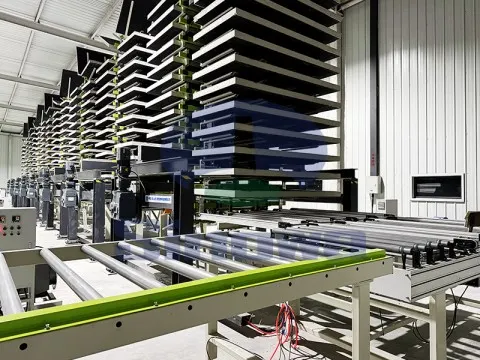
The precision cutting and finishing process is the final key link to realize standardized finished products, and the thermal insulation sandwich panel line is equipped with high-precision servo cutting systems and automatic finishing devices. After the cured composite panels are conveyed to the cutting station, the intelligent sensing system automatically identifies the plate length and transmits data to the servo cutting mechanism, realizing fixed-length accurate cutting. The cutting tool adopts high-hardness wear-resistant materials, which can complete smooth cutting of composite structures with dual-layer surface materials and intermediate insulation cores, avoiding burrs, edge warping and material peeling. The cutting speed can be intelligently adjusted according to plate thickness and material hardness, balancing production efficiency and processing accuracy. After cutting, the automatic finishing unit trims the plate edges and cleans surface residues, ensuring neat and flat plate edges without residual impurities. All cutting parameters are digitally controlled, with high dimensional accuracy of finished products and good consistency of batch products. This precise finishing process enables the panels to achieve seamless docking during on-site installation, improving the construction efficiency and overall installation effect of thermal insulation projects.
Automation and Intelligent Operation System
Modern thermal insulation sandwich panel lines are equipped with highly automated and intelligent operation systems, realizing full-process intelligent control from raw material feeding to finished product output. The core control system integrates data monitoring, parameter adjustment, fault alarm and production statistics functions, enabling operators to complete production setting and equipment monitoring through a simple human-machine interface. All key production parameters including feeding speed, mixing ratio, pressing pressure, curing temperature and cutting size can be digitally preset and automatically locked, avoiding quality errors caused by manual operation differences. The real-time data monitoring module tracks the operating status of each equipment module in real time, automatically identifying abnormal conditions such as material blockage, parameter deviation and equipment overload, and triggering timely alarm and protective shutdown to avoid equipment damage and defective product output. In addition, the system supports batch production data recording, which is convenient for production quality traceability and production schedule optimization. The high degree of automation greatly reduces manual operation intensity, lowers labor dependence, and significantly improves production stability and operational efficiency.
Product Performance Characteristics Brought by the Line
The standardized and refined production mode of the thermal insulation sandwich panel line endows finished panels with excellent and stable comprehensive performance in multiple dimensions. In terms of thermal insulation performance, the precise foaming and uniform core molding technology forms a dense and complete thermal insulation structure, which can effectively block heat transfer and reduce the energy consumption of building temperature regulation. Structurally, the integrated composite molding process enhances the overall rigidity and compression resistance of the panels, enabling them to bear certain external pressure and adapt to complex installation and use environments. The stable bonding process avoids layer separation, ensuring long-term structural stability of the panels. In terms of appearance and practicability, precise processing and finishing technology ensure flat and neat panel surfaces, with good decorative effects while maintaining excellent waterproof and dustproof performance. Meanwhile, the lightweight structural design of the finished panels reduces overall building load. Different from manually produced products with uneven performance, the products manufactured by the automated line have consistent performance indicators in batches, with stable thermal insulation, structural and weather resistance properties, meeting the long-term use requirements of various thermal insulation scenarios.
Wide Application Scenarios of Finished Panels
Thermal insulation sandwich panels produced by the automated production line have extremely wide application coverage, covering multiple fields such as modern construction, industrial facilities and special thermal insulation projects. In the construction field, the panels are widely used in the wall and roof thermal insulation of prefabricated buildings, industrial workshops and commercial buildings, providing efficient thermal insulation solutions for building energy conservation. In cold chain and refrigeration industries, the excellent constant-temperature insulation performance makes them ideal materials for cold storage warehouses, constant-temperature storage rooms and refrigerated transportation equipment, effectively maintaining internal temperature stability and reducing refrigeration energy consumption. In agricultural facilities, the panels are applied to thermal insulation greenhouses and breeding houses, creating a stable internal temperature environment for crop growth and animal breeding. In addition, the panels can also be used for partition decoration and thermal insulation of temporary buildings, municipal facilities and special industrial sites. Relying on their lightweight, easy installation, high thermal efficiency and long service life, the products gradually replace traditional thermal insulation materials and become the mainstream choice in modern thermal insulation engineering.
Production Efficiency and Energy-Saving Advantages
The thermal insulation sandwich panel line has prominent advantages in production efficiency and energy consumption control, conforming to the development trend of green and efficient industrial production. In terms of production efficiency, the continuous assembly line operation mode realizes uninterrupted mass production, with a far higher single-unit output than traditional intermittent production equipment. The highly automated operation reduces intermediate manual links, shortens the production cycle of single panels, and greatly improves overall production capacity. In terms of energy saving, the equipment adopts optimized structural design and intelligent energy-saving control technology. The curing system realizes segmented temperature supply according to production demand, avoiding long-term constant-temperature energy waste. The transmission and processing modules adopt energy-saving drive structures, reducing invalid energy consumption during equipment operation. At the same time, the precise raw material proportioning and feeding technology minimizes raw material waste, improving the utilization rate of production materials. While improving production efficiency, the line effectively reduces comprehensive production energy consumption and material cost, helping manufacturers realize green production and improve market competitiveness.
Future Development Trends of the Production Line
With the continuous upgrading of building energy conservation and industrial manufacturing technology, the thermal insulation sandwich panel line is evolving towards higher intelligence, stronger flexibility and greener production. In terms of intelligent upgrading, future equipment will realize more autonomous production functions, including automatic material identification, adaptive parameter adjustment and intelligent quality inspection, further reducing manual intervention and improving production precision. In terms of production flexibility, the equipment will develop towards multi-functional integration, realizing rapid switching of different core materials, plate thicknesses and surface styles, and meeting the personalized and customized production needs of the market. In terms of green production, the new generation of production lines will optimize the foaming and bonding process, adopt more environmentally friendly raw material matching modes, and reduce the generation of production waste and harmful emissions. In addition, the equipment will be more compatible with intelligent production management systems, realizing integrated management of production, quality and data. These upgrading directions will further expand the application value of thermal insulation sandwich panel production lines and promote the high-quality development of the building thermal insulation material industry.
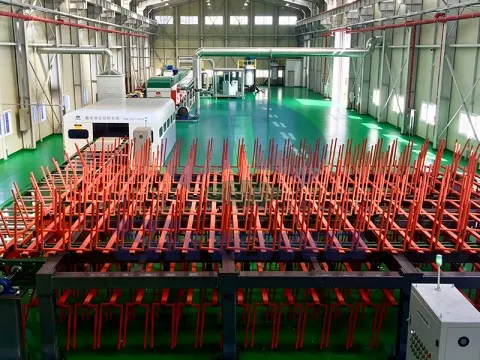
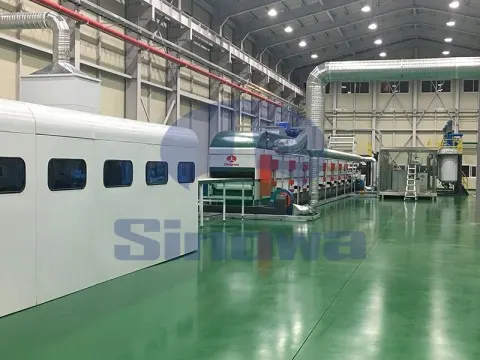
Gallery of Thermal Insulation Sandwich Panel Line
Tags: thermal insulation sandwich panel line, thermal insulation sandwich panel line manufacturer, thermal insulation sandwich panel line supplier, china thermal insulation sandwich panel line, thermal insulation sandwich panel line for sale
-

A reliable PU sandwich panel production line serves as the core equipment for manufacturing high-performance building insulation panels. This professional PU sandwich panel line features automated feeding, foaming and molding processes to ensure consistent panel thickness and structural stability. The well-designed polyurethane sandwich panel production line effectively improves production efficiency while reducing material waste in daily operation. Each calibrated polyurethane sandwich panel line can adapt to different panel sizes to meet diverse construction needs. With precise temperature and pressure control, the advanced continuous PU sandwich panel line produces panels with excellent thermal insulation and weather resistance. Meanwhile, the optimized PIR sandwich panel production line upgrades the foaming formula to enhance fire resistance performance. The high-efficiency PIR sandwich panel line maintains stable operation during long-term mass production, delivering durable and high-quality sandwich panels for various architectural and industrial applications.
-

The phenolic panel production line realizes automated and continuous manufacturing of high-performance thermal insulation panels through streamlined and coordinated processing procedures.
-

Modern insulation panel manufacturing relies on professional automated equipment to ensure stable product quality and high production efficiency. The rock wool sandwich panel production line features precise material lamination and forming processes to produce rigid, heat-insulating building panels. Meanwhile, the mineral wool sandwich panel production line adopts optimized assembly procedures to fabricate lightweight, soundproof panels widely used in architectural enclosure and thermal preservation projects.