Sandwich Panel Manufacturing Machine
Publication Date: Oct 6, 2026
Sandwich panel manufacturing machines are integrated automated production systems designed to produce composite insulated panels. They integrate multiple processing units to complete continuous panel forming, bonding, curing and cutting, delivering high-efficiency, high-uniformity building panels for diverse construction applications.
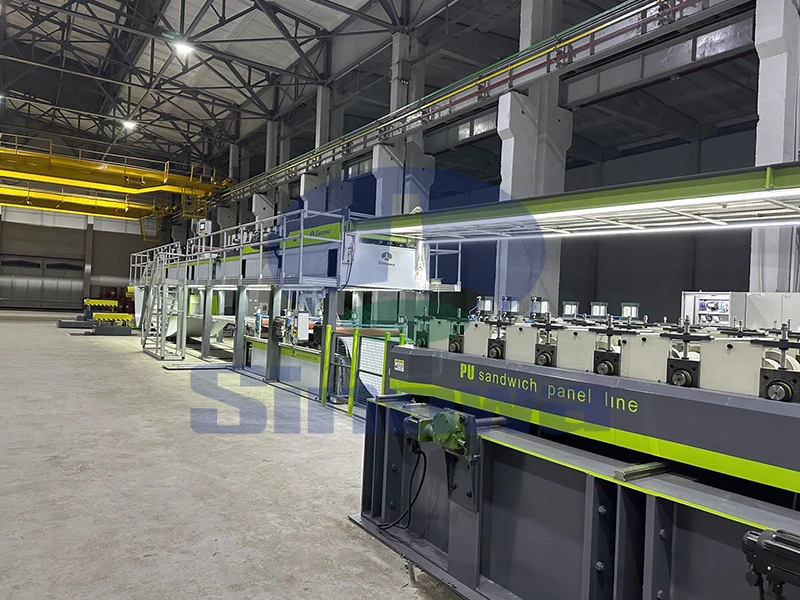
Basic Composition and Core Functional Orientation
A complete sandwich panel manufacturing machine is a modularly assembled automated production line, composed of multiple interconnected functional units that work in synchronous coordination to finish the full panel production process. Each module undertakes an independent professional processing task while cooperating closely with adjacent units to ensure uninterrupted continuous production. The core functional orientation of the equipment is to realize the integral composite molding of metal surface sheets and thermal insulation core materials, achieving tight bonding, stable structural forming and standardized sizing of finished panels. The main components include uncoiling feeding units, roll forming systems, automatic gluing devices, core material laying mechanisms, composite pressing and curing systems, fixed-length cutting units, and finished product stacking devices. Different functional modules can be adjusted and matched according to different core material types and panel usage scenarios, realizing flexible production of diversified panel products. The modular design not only simplifies equipment maintenance and daily debugging but also improves the overall adaptability of the production line, enabling it to meet the production demands of various specifications of wall and roof sandwich panels.
Uncoiling and Feeding System Operation Logic
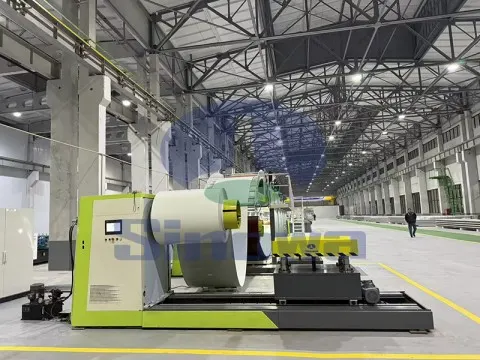
The uncoiling and feeding system is the initial link of the entire production line, responsible for stable supply and tension control of metal coil raw materials. Most advanced production lines adopt a dual-coil alternate feeding structure, which supports automatic coil switching without stopping the machine, effectively avoiding production interruption caused by raw material replacement and greatly improving continuous production efficiency. This system is equipped with a high-precision tension control mechanism and deviation correction device, which can maintain constant feeding tension of metal sheets in the high-speed operation process. Stable tension prevents sheet wrinkling, stretching and uneven feeding, while the real-time deviation correction function ensures that the metal sheets always maintain a straight feeding track, eliminating lateral offset problems in subsequent processing. In addition, the system is matched with a sheet leveling structure, which can flatten the naturally bent metal coils to ensure the flatness of raw materials before entering the forming process. The stable operation of the uncoiling and feeding system lays a solid foundation for the consistent thickness, flatness and dimensional accuracy of finished sandwich panels, and is a key prerequisite for avoiding defective products in the subsequent composite process.
Roll Forming Process and Structural Advantages
The roll forming unit is responsible for shaping flat metal sheets into the special profile structures required for sandwich panels, which determines the appearance dimensional accuracy and structural matching degree of panel surface layers. This unit is composed of multiple groups of precision arranged forming rollers, which adopt graded gradual pressing molding technology to avoid sheet deformation and internal stress damage caused by one-time heavy pressing. Each group of rollers is precisely calibrated in position and gap, which can process metal sheets into various wall panel and roof panel profiles, including conventional flat surfaces, trapezoidal grooves and special-shaped edges. The roller gap can be flexibly adjusted according to different sheet thicknesses and panel design requirements, realizing rapid switching of production specifications. The whole forming process is fully automated with synchronous feeding speed, ensuring that the forming size of each section of the sheet is completely consistent. Compared with traditional stamping forming, continuous roll forming has the advantages of higher production efficiency, better product consistency and lower material loss. Moreover, the surface of the forming roller is treated with high wear resistance and anti-scratch process, which can protect the coating of metal sheets from damage, effectively guaranteeing the surface quality and anti-corrosion performance of finished sandwich panels.
Automatic Gluing and Bonding Technology
Gluing treatment is the core process that determines the bonding strength and service life of sandwich panels, and the automatic gluing system of the manufacturing machine ensures uniform, efficient and stable adhesive coating. The system adopts PLC intelligent precise control, which can accurately adjust the glue output, coating speed and coating range according to different core materials and sheet specifications. It is equipped with two working modes of roller coating and spray coating, which can adapt to the gluing requirements of flat sheets and special-shaped profile sheets respectively. In the working process, the adhesive is evenly covered on the inner surface of the upper and lower metal sheets without missing coating or excessive glue accumulation, which not only ensures the full bonding between the surface layer and the core material but also avoids material waste and glue overflow defects. The automatic gluing system also has a real-time monitoring function for glue temperature and viscosity, which can maintain the best adhesive activity throughout the production process. Stable gluing quality can effectively prevent interlayer degumming, hollowing and peeling of sandwich panels in later use, significantly improving the overall structural stability, weather resistance and durability of panel products.
Core Material Feeding and Laying Mechanism
The core material feeding and laying unit is specially used for the automatic arrangement and positioning of thermal insulation core materials, realizing the precise matching between core materials and metal surface sheets. This equipment can adapt to multiple types of core materials, including mineral wool, rock wool, EPS foam and PIR/PUR foam materials, with strong production compatibility. For rigid core materials such as mineral wool, the unit is equipped with automatic cutting, rotating and conveying devices, which can cut large core plates into standard strips matching the panel width, and automatically lay them neatly between the upper and lower glued metal sheets. For foaming core materials, it adopts precision metering and injection equipment to mix liquid raw materials evenly and inject them into the middle of the sheet gap for in-situ foaming forming. The whole laying process is equipped with a synchronous positioning and deviation correction system, which can effectively avoid core material offset, edge leakage and uneven arrangement. The precise laying technology ensures that the core material distribution of each panel is uniform, making the thermal insulation, fireproof and sound insulation performance of all parts of the panel consistent, and avoiding performance differences caused by uneven core material filling.
Double Belt Pressing and Composite Forming System
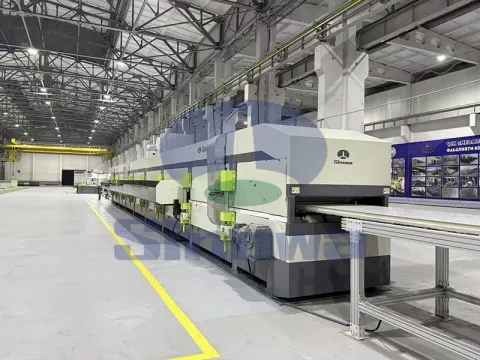
The double belt pressing system is the key functional component for the integral composite molding of sandwich panels, directly determining the compactness and structural firmness of finished products. The system consists of upper and lower circulating high-strength steel belts, which can form a closed and stable pressing cavity. By adjusting the gap between the upper and lower belts, it can adapt to the production of panels with different thickness specifications. During operation, the preliminarily compounded panels are sent into the pressing cavity, and the system provides continuous and uniform static pressure and constant temperature conditions for the panels. The uniform pressure makes the metal surface sheet and the core material closely fit without gaps, and the constant temperature environment promotes the rapid combination of the adhesive and the base materials to complete primary bonding and shaping. Different from intermittent pressing equipment, the double belt press realizes continuous dynamic pressing, which perfectly matches the high-speed continuous production rhythm of the assembly line. The high-strength wear-resistant belt material ensures long-term stable operation without deformation, and the independent temperature and pressure adjustment system can precisely control the composite molding parameters. This processing method effectively improves the overall flatness of panels, eliminates internal gaps, and enhances the overall mechanical strength of composite structures.
Constant Temperature Curing and Shaping Process
After hot pressing composite forming, the semi-finished panels enter the constant temperature curing system for secondary treatment, which is an indispensable link to stabilize panel performance. The curing system is a closed heat preservation bin with a circulating constant temperature control device, which can form a stable and uniform internal temperature field. In the curing stage, the adhesive inside the panel undergoes sufficient chemical cross-linking reaction under constant temperature conditions, further improving the interlayer bonding force and structural stability. Sufficient curing treatment can effectively avoid common quality problems such as later degumming, warping and deformation of panels, and greatly enhance the weather resistance of products. The curing time and temperature can be intelligently adjusted according to different adhesive types, core material characteristics and panel thicknesses to ensure the best curing effect. After curing, the panels will go through a natural cooling and shaping process, which can release the internal stress generated in the hot pressing and curing process, making the panel structure more stable and the size more accurate. The scientific curing and shaping process fundamentally optimizes the comprehensive performance of sandwich panels and improves the qualified rate of finished products.
Fixed-Length Cutting and Edge Trimming Technology
The fixed-length cutting and edge trimming unit is responsible for final sizing and finishing of cured semi-finished panels, ensuring that the finished products meet standardized dimensional specifications. The system adopts high-precision servo positioning and cutting technology, which can set arbitrary cutting lengths according to production requirements, with extremely high sizing accuracy. The flying cutting mode is adopted in the cutting process, which can complete fixed-length cutting synchronously during the continuous operation of the production line without stopping the machine, ensuring the continuity and efficiency of production. After cutting, the edge trimming device automatically polishes and trims the four edges of the panel, removing burrs, residual glue and uneven edges generated in the previous process. The edge trimming treatment makes the panel edges flat and smooth, which not only improves the appearance quality of the product but also facilitates the assembly and docking of panels in construction projects. In addition, this unit is equipped with a dust removal device, which can clean up the debris and dust generated by cutting and trimming in real time, keeping the finished panel surface clean and tidy. The integrated processing of cutting and edge trimming realizes one-time finishing of panel sizing and appearance quality.
Automatic Finishing and Stacking System
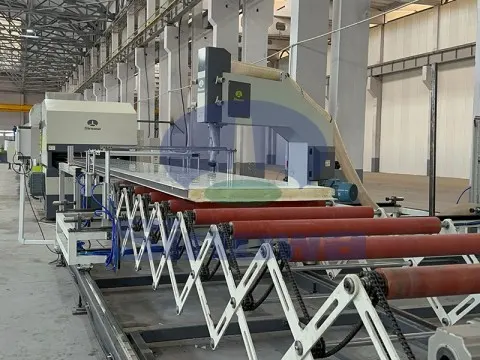
The final stage of the sandwich panel manufacturing machine is automatic finishing and stacking, which realizes automatic collection and preliminary protection of finished products. After cutting and trimming, qualified panels will pass through the surface film laminating device, which automatically attaches protective films on the panel surface to prevent scratches, dust and pollution during transportation and storage. Then the panels are transmitted to the automatic stacking platform through the conveying system. The stacking system adopts intelligent counting and positioning technology, which can neatly stack panels according to the set quantity and height, with regular stacking and stable placement. The whole process realizes full automation without manual intervention, which greatly reduces manual labor intensity and avoids panel damage and pollution caused by manual handling. At the same time, the system has an automatic sorting function, which can screen out unqualified products with dimensional errors or surface defects, ensuring that all stacked finished products are high-quality qualified products. The automatic stacking mode also standardizes the finished product management, facilitating subsequent packaging, transportation and warehouse storage.
Equipment Automation and Intelligent Operation Advantages
Modern sandwich panel manufacturing machines are equipped with complete intelligent control systems, realizing full-process automated production from raw material feeding to finished product stacking. The core of the control system is a PLC intelligent controller, which integrates all functional modules of the production line to realize synchronous linkage operation of each unit. Operators only need to set parameters such as panel thickness, length, core material type and production speed on the human-computer interaction interface, and the equipment can automatically complete the whole production process. The system has real-time monitoring and fault self-diagnosis functions, which can monitor the operating status, production parameters and product quality indicators of each module in real time. Once abnormal parameters or equipment faults are found, it will automatically alarm and display the fault location and processing suggestions, greatly reducing equipment maintenance time and failure rate. In addition, the intelligent system can record production data in real time, facilitating production statistics, process optimization and quality traceability. Compared with traditional semi-automatic equipment, the intelligent production line has higher production efficiency, more stable product quality and lower failure rate, which can effectively reduce production costs and improve enterprise production benefits.
Gallery of Sandwich Panel Manufacturing Machine
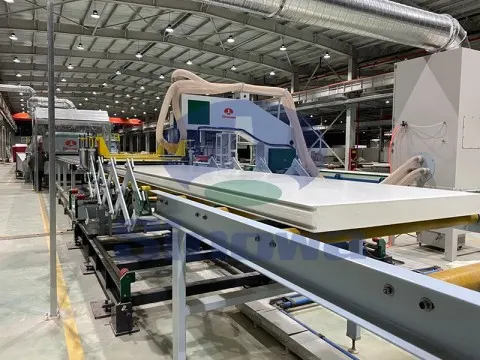
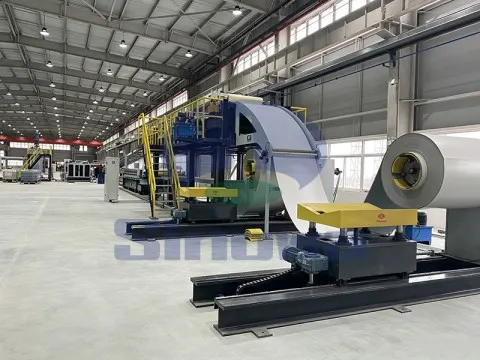
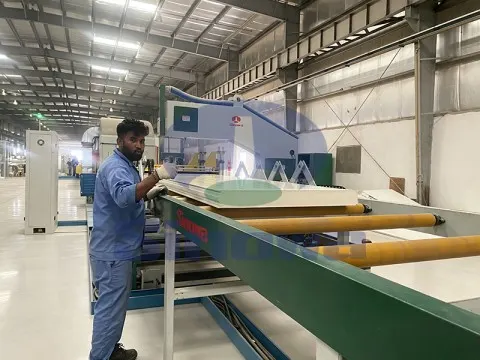
Tags: sandwich panel manufacturing machine, sandwich panel manufacturing machine manufacturer, sandwich panel manufacturing machine supplier, china sandwich panel manufacturing machine, sandwich panel manufacturing machine for sale
-
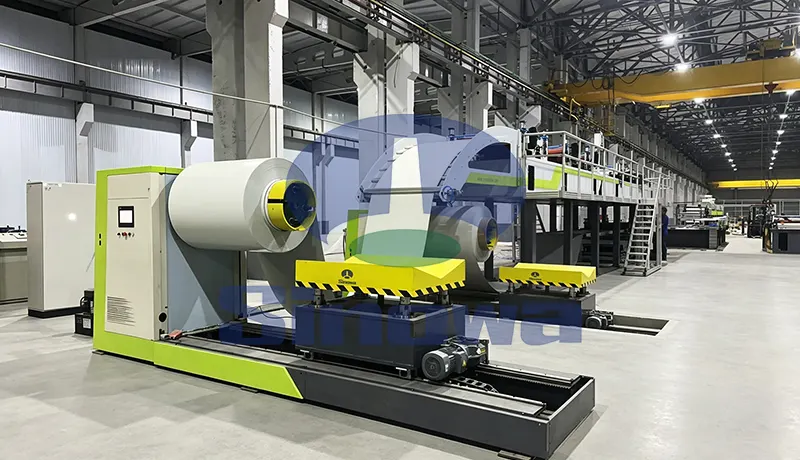
A reliable PU sandwich panel production line serves as the core equipment for manufacturing high-performance building insulation panels. This professional PU sandwich panel line features automated feeding, foaming and molding processes to ensure consistent panel thickness and structural stability. The well-designed polyurethane sandwich panel production line effectively improves production efficiency while reducing material waste in daily operation. Each calibrated polyurethane sandwich panel line can adapt to different panel sizes to meet diverse construction needs. With precise temperature and pressure control, the advanced continuous PU sandwich panel line produces panels with excellent thermal insulation and weather resistance. Meanwhile, the optimized PIR sandwich panel production line upgrades the foaming formula to enhance fire resistance performance. The high-efficiency PIR sandwich panel line maintains stable operation during long-term mass production, delivering durable and high-quality sandwich panels for various architectural and industrial applications.
-
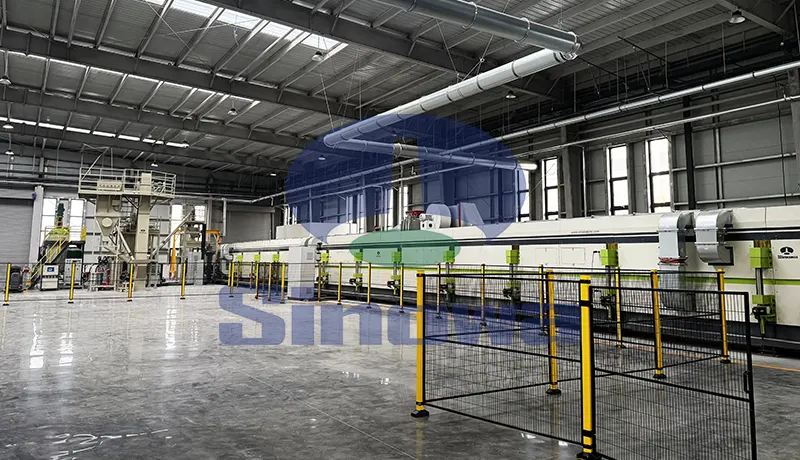
The phenolic panel production line realizes automated and continuous manufacturing of high-performance thermal insulation panels through streamlined and coordinated processing procedures.
-
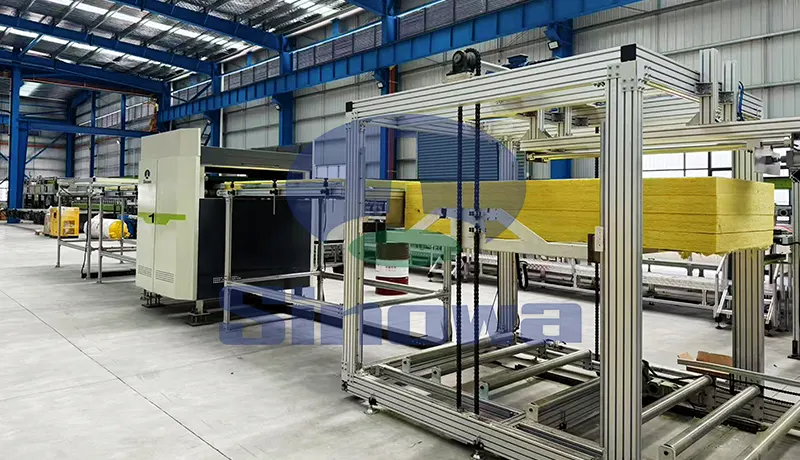
Modern insulation panel manufacturing relies on professional automated equipment to ensure stable product quality and high production efficiency. The rock wool sandwich panel production line features precise material lamination and forming processes to produce rigid, heat-insulating building panels. Meanwhile, the mineral wool sandwich panel production line adopts optimized assembly procedures to fabricate lightweight, soundproof panels widely used in architectural enclosure and thermal preservation projects.