What Thickness Range Can The Continuous PUF Sandwich Panel Production Line Produce?
Publication Date: Oct 14, 2026
Continuous PUF sandwich panel production lines cover a broad thickness window that depends on conveyor height, foam formulation, and line geometry.
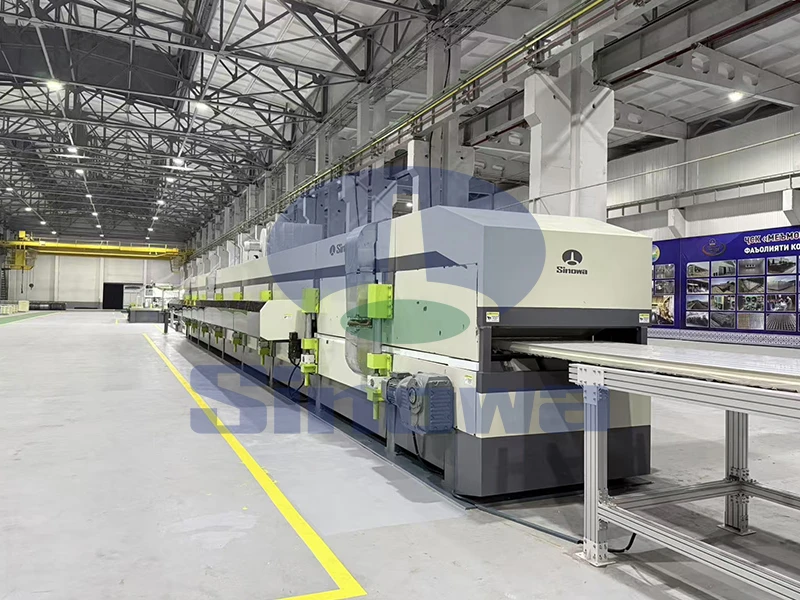
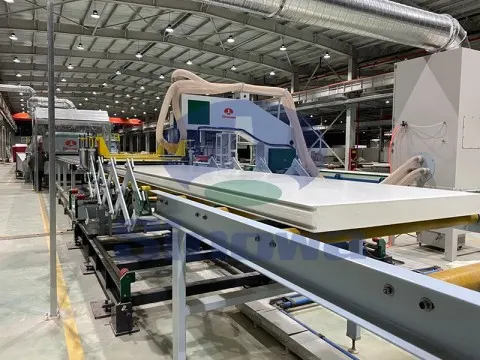
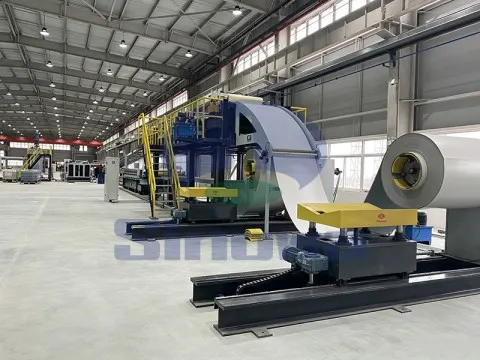
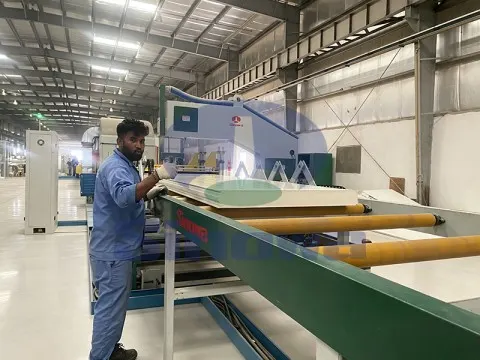
A continuous PUF (polyurethane foam) sandwich panel line is a high-speed assembly system in which two metal facing sheets are unwound, formed, preheated, and passed through a heated conveyor tunnel while reactive foam is injected between them. The foam rises, cures, and bonds to the facings as the whole panel moves forward at a steady speed. Because the process is continuous rather than batch, the thickness of the finished panel is not set by a mold cavity in the traditional sense; instead, it is determined by the gap between the upper and lower conveyor belts, the volume of foam dispensed per meter of panel length, and the pressure that the belt exerts on the expanding core. In practice, a well-engineered line can produce panels across a wide span, and the exact span is chosen when the line is designed. Most commercial lines are built to handle a minimum panel thickness of about 30 millimeters and a maximum of roughly 150 to 200 millimeters, although some configurations go well beyond these numbers. The reason for this range is that the conveyor's vertical opening must be adjustable, the foam head must deliver enough material to fill thicker cavities, and the side confinement (edge ribbons or flexible side walls) must contain the rising core without leaking.
The lower end of the thickness range matters because thin panels are used where weight, clearance, and cost dominate. Thin PUF panels, typically in the 30 to 50 millimeter band, are common in clean rooms, prefabricated cabins, cold storage entry doors, and partition walls where insulation is needed but space is tight. Producing very thin panels on a continuous line introduces its own difficulties. The foam must still flow completely between the facings before it gels, and any void or skin defect becomes highly visible on a thin core. The conveyor gap must be set very precisely, because even a millimeter of variation changes the core density and the flatness of the panel. The dispensing head must also meter a relatively small volume of chemical per running meter, yet the chemical must remain uniform and well mixed. If the line runs too slowly for a thin panel, the foam may cure before it spreads; if it runs too fast, the core may not fill. As a result, thin-panel production is usually the domain of a line with servo-controlled metering, precision belt tracking, and a shortened foam injection section so that fill and cure happen in a controlled sequence. Lines optimized for thin panels can sometimes go down to 20 millimeters, but doing so reliably requires a narrow process window and careful operator attention.
At the upper end, thick panels are required by large cold storage rooms, freezer facilities, industrial insulation envelopes, and fire-rated wall systems where thermal resistance is the primary requirement. A standard continuous line designed for medium thicknesses can usually reach about 100 to 120 millimeters without major modifications. Lines intended for heavy insulation work are specified to reach 150, 180, or even 200 millimeters. Beyond that point, several physical constraints begin to bite. The foam must expand over a much larger vertical distance, which means the chemical system must have a longer cream time, a longer rise time, and adequate flow so that it reaches the top facing before skinning. The conveyor tunnel must be tall enough to open to that height, and the upper belt structure must be strong enough to apply uniform pressure across a deep cavity. Side confinement becomes more demanding, because a thicker panel contains more expanding material and more internal pressure. The heating profile must also be extended; a thick core takes longer to reach full cure, and if the line speed is not reduced accordingly, the panel will exit the tunnel still soft and may deform on the discharge conveyor. Manufacturers who want a line to exceed 200 millimeters often specify a reinforced upper frame, a longer cooling section, and a higher-capacity metering unit so that the chemical throughput can keep up with the larger cavity volume.
The relationship between thickness and core density is one of the most important technical trade-offs on a continuous PUF line. As the panel gets thicker, the foam has more room to expand, and the belt pressure can be lower, which tends to lower the average core density. Conversely, in a thin panel, the foam is squeezed between two facings, and density rises. A well-designed line compensates for this by adjusting the chemical output and belt pressure so that the core remains within the target density band across the entire thickness range. If the dispensing rate is not changed when the operator switches from a 40 millimeter to a 120 millimeter panel, the thick panel will be under-filled and the thin panel will overflow. The metering machine therefore needs a wide output range, typically controlled by variable-rate piston or gear pumps, and the line control system must store recipes that link panel thickness, line speed, chemical output, belt temperature, and conveyor gap. This recipe-driven approach is what allows a single line to jump between thin and thick production without manual recalibration of every component. The density target itself is usually set by the end use; structural panels want a firmer core, while lightweight cladding can tolerate a lower density. The line's mechanical range must be wide enough to support whichever density profile the product family requires.
Belt geometry and conveyor construction define the hard physical limits of any continuous PUF line. The lower conveyor is essentially a long, flat track, while the upper conveyor can be raised or lowered to set the panel thickness. Most lines use a screw or hydraulic adjustment system that moves the upper frame as a whole, and some designs include independent sections so that the gap can vary along the tunnel (a "cook" section that narrows as the foam cures). The maximum opening of this upper frame is the single most direct number that determines the thickest panel the line can ever produce. If the frame can only open to 120 millimeters, no amount of chemical tuning will produce a 150 millimeter panel. The minimum opening is equally important; belts and side guides must still align when the gap is small, and the upper belt must not sag or contact the lower belt under low tension. Belt tension, crown tracking, and the condition of the belt surface all affect how thin a panel can be run without marking or delaminating. As lines age, belt wear and frame deflection can reduce the effective range, which is why periodic calibration of the gap sensors is part of normal maintenance. The side confinement system—usually flexible side ribbons or continuous edge strips—must also adapt to different thicknesses, because a side wall tuned for thin panels will not seal a thick cavity, and a side wall set for thick panels will leak on thin ones.
The chemical system and foam formulation are what make a given thickness range practical in production rather than theoretical. A continuous PUF line uses a high-pressure impingement mixing head that blends polyol blend with isocyanate at the right ratio. The output of this head is measured in grams per second, and the line control translates that into grams per meter based on the chosen line speed. For a thick panel, the head must deliver a large volume of chemical per meter without overheating or losing mix quality. For a thin panel, it must deliver a small volume accurately, which means the metering pumps must remain precise even at low output. The foam's reaction profile—cream time, rise time, gel time—is matched to the panel thickness. A fast-rise foam works well for thin panels at high line speed, but it may skin over before filling a very thick cavity. A slower-rise formulation fills deep cavities but would slump or fail to bond on a thin panel run quickly. Many plants therefore keep a small library of formulations or adjust catalyst levels on the recipe, so that the same line can produce both thin cladding panels and thick freezer panels. The chemical supplier typically provides guidance on which thicknesses a given system can cover, and the line builder specifies the maximum chemical output of the metering unit accordingly.
Temperature and curing conditions also interact with panel thickness in ways that widen or narrow the usable range. The facings are preheated before entering the foam section, and the tunnel walls are heated to drive the polyurethane reaction. A thick panel contains a large mass of reacting chemical, which generates exothermic heat on its own; too much tunnel heat can overcure the core and cause brittle spots or delamination at the facing interface. A thin panel, by contrast, loses heat quickly to the facings and the belts, so it needs more consistent external heat to reach full cure before the line speed carries it out of the tunnel. This means the line's heating zones must be independently adjustable, and the recipe for each thickness must include its own temperature profile. Lines with poorly zoned heating often produce good panels only in the middle of their thickness range and struggle at the extremes. Cooling sections at the discharge end are equally important; thick panels exit the tunnel with a warm core and need time to stabilize before they are cut and stacked. If the line tries to cool thick panels too quickly, internal stresses can cause bowing; if it cools thin panels too slowly, production output drops. As a result, the thickness range that a line can reliably produce in a shift environment is often narrower than the mechanical maximum, because the thermal system must also stay in balance.
Cutting, stacking, and downstream handling set another practical boundary on the usable thickness range. Most continuous lines use a transverse cut-off saw that slices the panel to length as it moves. The saw must have enough blade travel and torque to cut through a thick PUF core with two metal facings, and the cutting speed must be matched to the material. A line rated mechanically for 200 millimeters but fitted with a light-duty saw will struggle or produce ragged edges at the top of the range. Similarly, the discharge conveyor, stacking system, and packaging equipment must accept thick panels without bending them; a thick panel is heavier and stiffer, and a stacking arm tuned for thin panels may drop or jam when it handles one. Thin panels, on the other hand, are lighter and more flexible, and they can warp if they are stacked too soon or with too much weight on top. Operators therefore change stack height, use separators, and adjust downstream handling when they switch thickness. These downstream constraints are not always listed in the headline thickness specification, but they determine which parts of the range are actually comfortable to run in a commercial plant. A line that can mechanically produce 30 to 200 millimeters may in practice be used mainly between 40 and 120 millimeters, with the extremes reserved for occasional jobs.
Switching between thicknesses on a continuous line is a routine setup procedure, but it is not instantaneous. The operator calls up a stored recipe, which sets the conveyor gap, chemical output, line speed, heating profile, side guides, and cutting parameters. The upper frame is raised or lowered by servo motors, usually with feedback from position sensors. The chemical pumps are recalibrated to the new output rate, and the side confinement ribbons are adjusted. A few trial panels are run and measured for thickness, density, edge fill, and bond quality before full production begins. The time for a thickness changeover depends on how different the two products are; moving between 50 and 80 millimeters is quick, while jumping from 40 to 150 millimeters may require more extensive mechanical adjustment and a longer trial run. Modern lines reduce this time with automatic gap adjustment, recipe management software, and quick-change side systems, but a certain amount of verification is unavoidable because any misalignment between belt gap and chemical output immediately shows up as dimensional error or voids. Plants that run a wide thickness range on one line typically schedule products in batches, grouping similar thicknesses together to minimize changeover time. This operational pattern is why buyers often specify a line with a wider range than their current product mix requires: they want headroom for future products without a second major capital investment.
In summary, the thickness range of a continuous PUF sandwich panel production line is the product of several linked choices. The conveyor frame sets the mechanical maximum and minimum, the metering system sets the chemical output range, the foam formulation sets the fill and cure window, the heating zones set the thermal envelope, and the downstream equipment sets the practical handling limit. A typical general-purpose line covers roughly 30 to 150 millimeters, with specialized configurations extending downward toward 20 millimeters for thin cladding or upward toward 200 millimeters and beyond for heavy insulation. Within that window, each thickness has its own recipe, and the line's control system is what makes switching between them repeatable. The exact range a buyer should specify depends on the product mix they intend to run, the speed they want at each thickness, and the density targets they must meet. Over-specifying the range increases cost and complexity; under-specifying it locks the plant out of future products. The most useful way to think about the range is therefore not as a single number on a brochure, but as a balanced envelope in which fill, cure, bond, cut, and handling all stay comfortably inside their working limits.
Tags: continuous puf sandwich panel production line, continuous puf sandwich panel production line manufacturer, continuous puf sandwich panel production line supplier, china continuous puf sandwich panel production line, continuous puf sandwich panel production line for sale
-
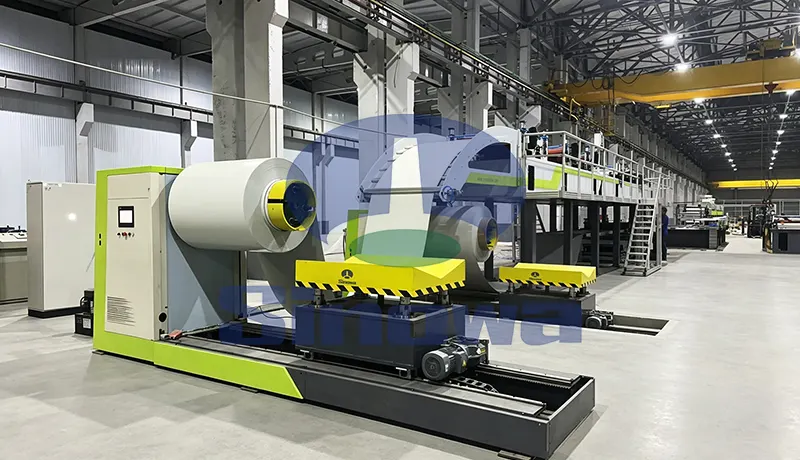
A reliable PU sandwich panel production line serves as the core equipment for manufacturing high-performance building insulation panels. This professional PU sandwich panel line features automated feeding, foaming and molding processes to ensure consistent panel thickness and structural stability. The well-designed polyurethane sandwich panel production line effectively improves production efficiency while reducing material waste in daily operation. Each calibrated polyurethane sandwich panel line can adapt to different panel sizes to meet diverse construction needs. With precise temperature and pressure control, the advanced continuous PU sandwich panel line produces panels with excellent thermal insulation and weather resistance. Meanwhile, the optimized PIR sandwich panel production line upgrades the foaming formula to enhance fire resistance performance. The high-efficiency PIR sandwich panel line maintains stable operation during long-term mass production, delivering durable and high-quality sandwich panels for various architectural and industrial applications.
-
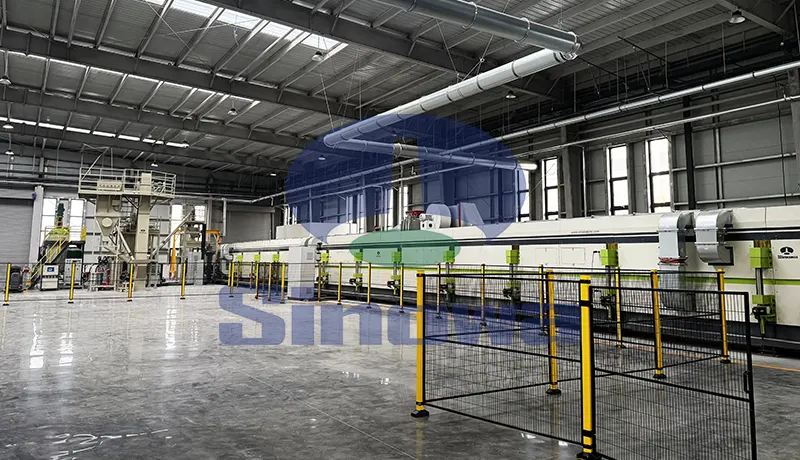
The phenolic panel production line realizes automated and continuous manufacturing of high-performance thermal insulation panels through streamlined and coordinated processing procedures.
-
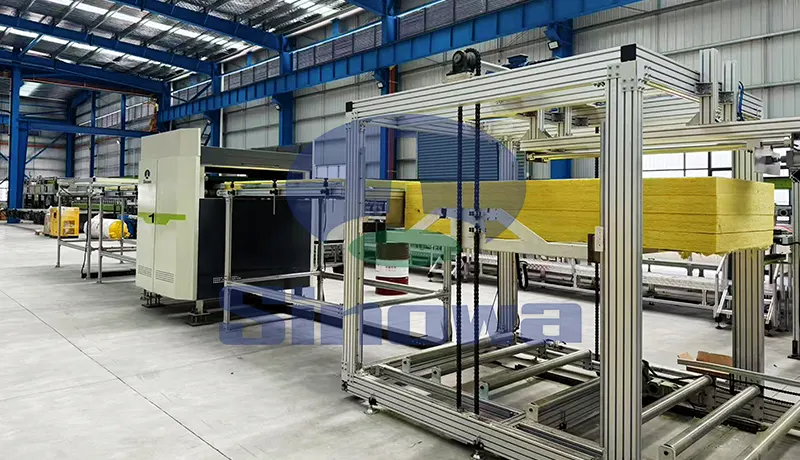
Modern insulation panel manufacturing relies on professional automated equipment to ensure stable product quality and high production efficiency. The rock wool sandwich panel production line features precise material lamination and forming processes to produce rigid, heat-insulating building panels. Meanwhile, the mineral wool sandwich panel production line adopts optimized assembly procedures to fabricate lightweight, soundproof panels widely used in architectural enclosure and thermal preservation projects.