What Are The Common Failure Causes Of Continuous PIR Sandwich Panel Production Line?
Publication Date: Oct 9, 2026
Continuous PIR sandwich panel production lines often face operational and quality failures stemming from process parameter deviations, material abnormalities, mechanical wear, and improper operation.
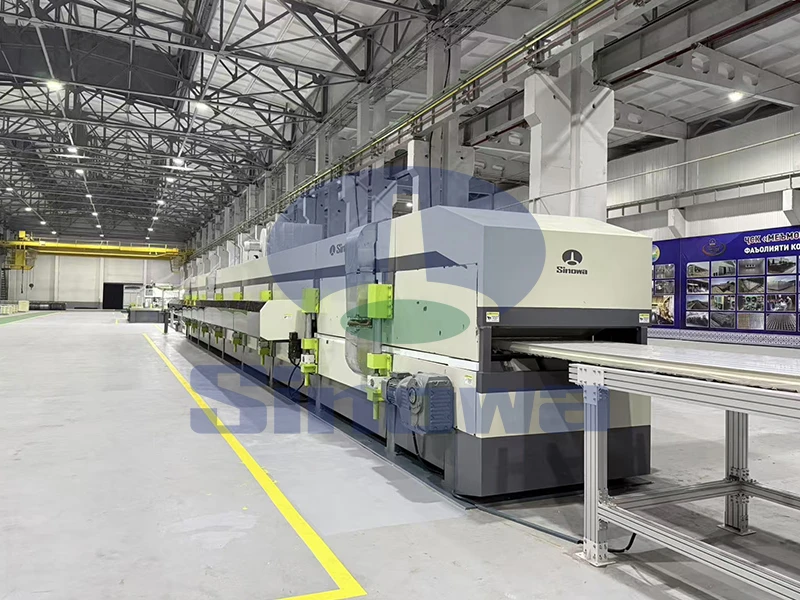
Unstable chemical mixing ratio is one of the most prevalent causes of production failures in continuous PIR sandwich panel lines. PIR foam formation relies on precise proportional reactions between polyol and isocyanate materials, and even minor ratio deviations can trigger irreversible product defects and line operation anomalies. In daily production, inconsistent dosing pump output caused by long-term equipment operation often leads to uneven material supply proportions. Additionally, manual parameter adjustment errors and delayed response to material viscosity changes will disrupt the optimal mixing state. When the polyol proportion is too high, the cured foam core becomes soft with poor structural stability, while excessive isocyanate leads to brittle foam and easy cracking. This imbalance also causes uneven foam density across the panel surface, resulting in local bulges or depressions, and severely reduces the overall bonding performance between the foam core and metal surface layers, laying hidden dangers for subsequent product delamination.
Abnormal production temperature control directly undermines the molding quality of PIR sandwich panels and induces line operation failures. The continuous production process requires stable temperature conditions for material preheating, foam reaction, and curing molding. Excessively high preheating temperatures accelerate the chemical reaction of PIR raw materials in advance, causing premature foaming before materials enter the pressing area, which leads to loose foam structure and irregular panel thickness. Conversely, insufficient temperature slows down the curing reaction, resulting in incomplete foam molding and poor adhesion between layers. Long-term temperature drift of heating and curing equipment, as well as uneven temperature distribution in the oven cavity, often cause inconsistent curing degrees of panels at different production periods. Local overheating will lead to core yellowing and brittleness of thick panels, while low temperature retention causes residual uncured components inside the foam, reducing the weather resistance and structural strength of finished panels.
Asynchronous line speed operation is a key mechanical factor leading to continuous production failures of PIR sandwich panels. A complete production line includes feeding, foaming, pressing, curing, and cutting links, all of which require synchronous speed matching to ensure stable production rhythm. Long-term high-load operation easily causes wear of conveyor belts, drive gears and transmission components, leading to inconsistent operating speeds of different equipment sections. When the front-end feeding speed is faster than the back-end pressing and curing speed, raw materials accumulate locally, resulting in excessive foam accumulation and over-thick panel parts. If the rear speed is too fast, it will pull the uncured foam core, causing core fracture and layer separation. Speed mismatch also leads to unstable press gap pressure, making it impossible to form uniform pressure on the panel surface, further exacerbating thickness deviation and surface flatness defects of finished products.
Laminator pressure instability frequently triggers quality failures and intermittent shutdowns in PIR sandwich panel production. The laminator undertakes the core tasks of panel pressing, shaping and composite bonding, and stable and uniform pressure is the core guarantee for product molding. Long-term operation will cause fatigue deformation of the laminator’s pressure roller and elastic components, leading to uneven pressure distribution on both sides and middle of the panel. Excessive local pressure squeezes out excessive foam materials, forming edge flash and thin local panel thickness, while insufficient pressure results in poor fitting between the surface layer and foam core and incomplete foam filling. In addition, blocked pressure regulating pipelines and failed pressure sensing components will cause real-time pressure data deviation, making the system unable to automatically adjust parameters according to production conditions. Long-term pressure abnormality not only reduces product yield but also accelerates the wear and aging of laminator equipment.
Raw material quality abnormalities are the fundamental inducement of many hidden failures in continuous PIR panel production. The performance stability of PIR raw materials directly determines foam molding effect and panel composite quality. Raw materials with excessive moisture content will destroy the foam reaction balance, generate redundant urea structures during the reaction process, leading to surface powdering and brittleness of finished panels. Batch differences in raw material viscosity and activity will change the foaming speed and curing cycle, making the originally set production parameters unable to adapt to material characteristics. Impurities mixed in raw materials will block feeding pipelines and dosing nozzles, causing intermittent material supply interruption and uneven foaming. Moreover, improper raw material storage and prolonged stacking will lead to material deterioration and activity attenuation, resulting in insufficient foam expansion, low overall density of panels, and greatly reduced mechanical bearing capacity and thermal insulation performance.
Transmission component wear and insufficient lubrication cause frequent mechanical failures of continuous PIR sandwich panel production lines. Universal couplings, drive shafts and conveyor transmission parts are in continuous high-speed operation during production, bearing long-term mechanical friction and shear force. Most production failures in these components stem from inadequate daily lubrication maintenance, including failure to follow regular lubrication cycles and use of non-compliant lubricants. High production temperature will accelerate lubricant degradation and failure, resulting in the loss of lubricating oil film between moving parts and direct metal friction. Long-term wear will cause transmission clearance increase, operation jitter and speed fluctuation, affecting the overall synchronization of the production line. Severe component wear will lead to equipment jamming and sudden shutdown, interrupting continuous production and causing unqualified products due to sudden parameter changes.
Unreasonable press gap adjustment is a common process error leading to PIR panel thickness inconsistency and molding failure. The press gap of the laminator directly determines the thickness specification of finished panels, and fixed and accurate gap parameters are essential for stable production. In actual production, frequent manual adjustment errors and inaccurate calibration of gap detection devices often lead to inconsistent gap sizes. A too-large press gap results in excessive foam expansion, making panels exceed the standard thickness with loose internal structure. A too-small gap causes excessive extrusion, compressing the foam core structure, reducing thermal insulation performance, and even causing foam cracking. In addition, thermal deformation of press equipment after long-term high-temperature operation will cause unilateral gap deviation, leading to inconsistent thickness on both sides of the same panel, forming inclined plate defects that cannot be repaired in the later stage.
Surface layer tension instability induces composite defects and structural failures of PIR sandwich panels during continuous production. Metal surface layers need stable tension control during feeding and composite molding to avoid deviation, wrinkling and layering. Abnormal tension mostly comes from faulty tension control devices, worn tension rollers and uneven feeding resistance. Excessively high tension will stretch the surface layer, causing elastic deformation and surface wrinkling after molding, while insufficient tension leads to surface layer deviation and loose fitting with the foam core. Unstable tension will also cause asynchronous feeding of the upper and lower surface layers, making the foam core bear uneven pulling force during the curing process, resulting in internal core dislocation and local delamination. These defects are not easy to find in the early stage of production and will gradually expand in the later curing and use process, seriously affecting product service life.
Curing time mismatch with production parameters triggers incomplete molding and performance degradation of PIR sandwich panels. The curing process is the key link for foam core solidification and structural stabilization, and the curing time needs to match line speed, temperature and material characteristics. When the production line speed is increased blindly without extending the curing time, the panels will leave the curing channel before complete reaction, resulting in uncured internal foam, soft core body and easy deformation. If the curing time is too long with low line speed, excessive thermal reaction will occur inside the foam, causing core overheating yellowing and brittleness, and reducing the toughness of the panel. In addition, inconsistent curing temperature in different areas of the curing oven leads to uneven curing degree of the same batch of products, with some panels fully molded and others with residual reaction stress, resulting in warping and deformation after leaving the production line.
Poor daily maintenance and irregular operation management aggravate various failure risks of continuous PIR sandwich panel production lines. Many potential equipment and process failures are derived from omitted daily maintenance links, including uncleaned material residues in feeding pipelines, uncalibrated sensing devices, and unchecked wear of transmission parts for a long time. Residual materials in pipelines will harden and block pipelines, affecting stable material supply, while uncalibrated temperature, pressure and speed sensors cause parameter feedback errors and wrong system adjustments. Irregular operator operations, such as random parameter modification, unscheduled equipment inspection and non-standard startup and shutdown procedures, will disrupt the stable production state. Long-term accumulation of minor hidden dangers will evolve into large-scale equipment failures and batch product quality problems, greatly reducing production efficiency and product qualification rate.






Tags: continuous pir sandwich panel production line, continuous pir sandwich panel production line manufacturer, continuous pir sandwich panel production line supplier, china continuous pir sandwich panel production line, continuous pir sandwich panel production line for sale
-

A reliable PU sandwich panel production line serves as the core equipment for manufacturing high-performance building insulation panels. This professional PU sandwich panel line features automated feeding, foaming and molding processes to ensure consistent panel thickness and structural stability. The well-designed polyurethane sandwich panel production line effectively improves production efficiency while reducing material waste in daily operation. Each calibrated polyurethane sandwich panel line can adapt to different panel sizes to meet diverse construction needs. With precise temperature and pressure control, the advanced continuous PU sandwich panel line produces panels with excellent thermal insulation and weather resistance. Meanwhile, the optimized PIR sandwich panel production line upgrades the foaming formula to enhance fire resistance performance. The high-efficiency PIR sandwich panel line maintains stable operation during long-term mass production, delivering durable and high-quality sandwich panels for various architectural and industrial applications.
-

The phenolic panel production line realizes automated and continuous manufacturing of high-performance thermal insulation panels through streamlined and coordinated processing procedures.
-

Modern insulation panel manufacturing relies on professional automated equipment to ensure stable product quality and high production efficiency. The rock wool sandwich panel production line features precise material lamination and forming processes to produce rigid, heat-insulating building panels. Meanwhile, the mineral wool sandwich panel production line adopts optimized assembly procedures to fabricate lightweight, soundproof panels widely used in architectural enclosure and thermal preservation projects.