How To Improve The Production Efficiency Of PIR Sandwich Panel Manufacturing Line?
Publication Date: Oct 9, 2026
Improving PIR sandwich panel production efficiency relies on process optimization, equipment upgrading, precise parameter control and standardized operation.
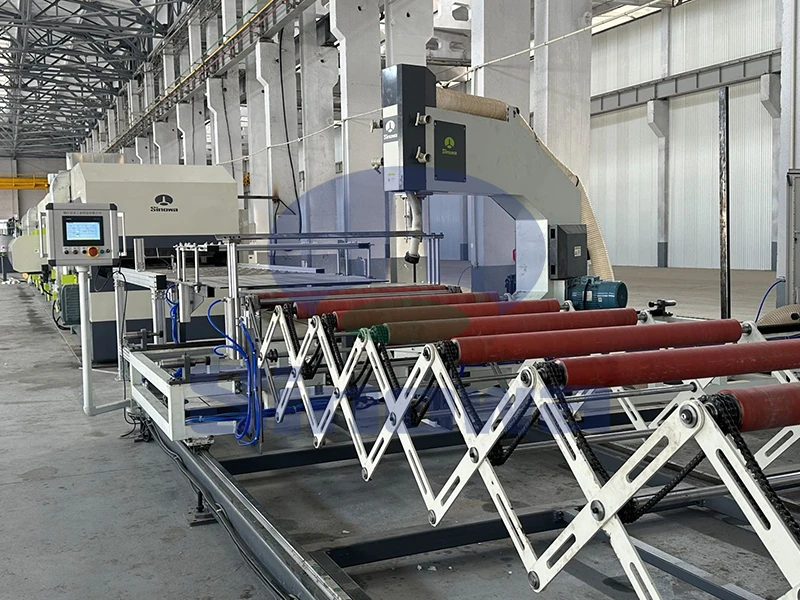
Upgrading automated and synchronized production systems is the foundational step to enhance the overall efficiency of PIR sandwich panel manufacturing lines. Traditional semi-automatic production modes rely heavily on manual intervention in material feeding, panel lamination and cutting processes, which not only slows down production rhythm but also causes frequent operational interruptions. Modern integrated automatic production lines connect all processing units through synchronous conveying and intelligent linkage mechanisms, realizing seamless docking from surface material unwinding, preheating, foaming pouring to final stacking. This synchronous operation eliminates idle time and speed mismatches between different production stages, avoiding frequent start-stop issues that disrupt production continuity. Additionally, automatic measuring and cutting modules replace manual measurement and operation, effectively reducing dimensional errors and secondary processing work. Stable and continuous operational rhythm greatly improves hourly output while lowering unexpected production stagnation caused by human operational errors.
Precise optimization of PIR foaming and mixing parameters plays a decisive role in stabilizing production quality and improving operational efficiency. The core performance and molding effect of PIR sandwich panels depend entirely on the mixing ratio, injection pressure and reaction temperature of raw materials. Unreasonable parameter settings often lead to foaming defects such as uneven core density, insufficient curing and material overflow, which require repeated trimming and rework and seriously drag down production progress. Manufacturers need to calibrate raw material proportioning systems regularly to ensure accurate matching of polyether and isocyanate materials, avoiding material waste and defective products caused by ratio deviation. Meanwhile, adjusting real-time injection pressure and mixing head rotating speed according to production conditions can achieve full and instantaneous raw material mixing. Matching with constant-temperature reaction control ensures stable foaming and curing effects, reduces defective product rates, and saves time consumed by quality correction and reprocessing in mass production.
Optimizing raw material management and preprocessing procedures effectively reduces production delays and material waste in PIR sandwich panel manufacturing. Disordered raw material storage, incomplete preprocessing and irregular material feeding are common hidden bottlenecks that restrict line efficiency. Unprocessed surface materials often have uneven flatness and residual impurities, which cause lamination deviation and bonding failure during formal production, leading to temporary line shutdowns for adjustment. Standardizing raw material preprocessing workflows including surface cleaning, leveling and preheating can greatly improve the compatibility between materials and foaming core layers, ensuring smooth progress of subsequent composite molding. In addition, implementing classified and quantitative raw material management avoids material shortage or overstocking on the production line. Real-time material supply scheduling ensures continuous feeding without interruption, eliminating production stagnation caused by delayed material supply and reducing idle energy consumption of operating equipment.
Introducing intelligent centralized monitoring and data analysis systems realizes refined production management and efficiency improvement. Traditional production management relies on manual patrol and experience judgment, making it difficult to detect subtle parameter changes and abnormal equipment operation in real time, which easily leads to batch quality problems and unplanned downtime. Equipping the production line with an intelligent monitoring system can collect real-time data of equipment operation status, production speed, temperature and pressure parameters throughout the whole process. The system can automatically identify abnormal fluctuations in production indicators and send early warnings, allowing operators to troubleshoot and adjust in a timely manner before faults expand. Meanwhile, accumulated production data can be analyzed to summarize operational rules, identify long-term inefficient links such as slow curing speed and frequent parameter adjustment, and formulate targeted optimization plans to continuously polish production rhythm and improve overall operational stability.
Optimizing the curing and cooling process of PIR sandwich panels is key to balancing production speed and product quality. The curing and shaping stage is the longest time-consuming link in the entire manufacturing process, and unreasonable temperature and speed settings are the main factors limiting production efficiency. Excessively fast production speed will lead to incomplete curing of the PIR core layer, resulting in unstable product performance and increased defective rates, while overly conservative speed settings cause low line output. Adopting graded constant-temperature curing and gradual cooling technology can adapt to the foaming reaction characteristics of PIR materials, ensuring full cross-linking and curing of the core layer while appropriately compressing the shaping cycle. Optimizing the layout of curing and cooling sections to make full use of space and heat circulation can improve temperature field uniformity, avoid local incomplete curing or excessive cooling, ensure consistent product quality, and maximize the continuous operation speed of the production line.
Regular equipment maintenance and modular fault prevention effectively reduce unplanned downtime and improve production continuity. Long-term continuous operation of PIR production lines will inevitably cause wear of conveying parts, blockage of mixing heads and aging of control components, which are important causes of sudden production shutdowns. Many efficiency losses are not caused by low inherent production speed, but by frequent short-term shutdowns for equipment maintenance and fault repair. Establishing a standardized regular maintenance system, including daily cleaning of foaming and lamination equipment, regular lubrication of transmission components and periodic calibration of precision control parts, can eliminate potential equipment faults in advance. Adopting modular equipment design and management also enables quick replacement of faulty parts instead of overall shutdown maintenance, greatly shortening maintenance time, improving equipment operation rate and ensuring long-term stable and efficient operation of the production line.
Standardizing operational workflows and strengthening staff professional training help reduce human errors and improve operational efficiency. Even with advanced automated equipment, non-standard manual operation remains a major factor affecting overall production efficiency. Irregular parameter adjustment, improper equipment operation and unskilled emergency handling will disrupt the standardized production rhythm, cause quality fluctuations and waste production time. Formulating unified and detailed operational guidelines for each production link, from equipment startup and parameter setting to finished product collection and line shutdown, can standardize all operational behaviors and reduce random errors. Organizing regular professional training for frontline operators to help them master equipment performance, parameter adjustment skills and common fault handling methods can improve operational proficiency, shorten parameter debugging time in production, and ensure each production link is completed efficiently and accurately.
Optimizing post-production processes including cutting, stacking and packaging realizes full-link efficiency improvement of the production line. Many manufacturers focus only on the front-end foaming and lamination efficiency while ignoring the low efficiency of post-processing links, resulting in finished product backlog and restricted overall line output. Traditional manual cutting and stacking are slow and prone to cause panel surface damage and dimensional errors, requiring secondary sorting and trimming. Equipping high-precision automatic fixed-length cutting equipment can complete accurate cutting in one step according to production requirements, eliminating secondary processing. Matching with automatic stacking and conveying devices can realize uninterrupted output and orderly arrangement of finished products, improve post-processing speed, avoid finished product accumulation blocking production lines, and form a smooth and efficient closed-loop production workflow from raw material input to finished product output.
Applying closed-loop energy recycling and energy-saving optimization technology indirectly improves comprehensive production efficiency. Unreasonable energy consumption and heat waste in traditional production lines not only increase operational costs but also cause unstable production temperature environments, affecting product molding efficiency and quality. PIR foaming and curing processes require stable thermal environments, and traditional open heating modes lead to massive heat loss and slow temperature response. Adopting closed-loop heat circulation systems can recycle waste heat generated during production, maintain stable operational temperature of key links, reduce repeated heating waiting time, and avoid production speed reduction caused by temperature instability. Energy-saving optimization of equipment operation modes, such as intelligent standby and synchronous start-stop of auxiliary equipment, reduces invalid energy consumption, ensures efficient energy utilization, and creates a stable production environment for continuous high-efficiency operation of the line.
Promoting lean production management and continuous process iteration realizes long-term efficiency improvement of PIR sandwich panel production. Short-term equipment upgrading and process optimization can bring immediate efficiency growth, while lean management is the core of sustained efficiency improvement. Sorting out all production links to eliminate redundant operational steps, waiting time and material waste can continuously compress invalid production cycles. Establishing a production efficiency assessment and optimization mechanism, regularly counting the output, defective rate and downtime of each shift, analyzing inefficient links and summarizing optimization experience, can realize iterative upgrading of production processes. Through refined management, every production link can maintain the best operational state, gradually improve the overall production capacity and operational efficiency of the manufacturing line, and form a sustainable high-efficiency production mode.
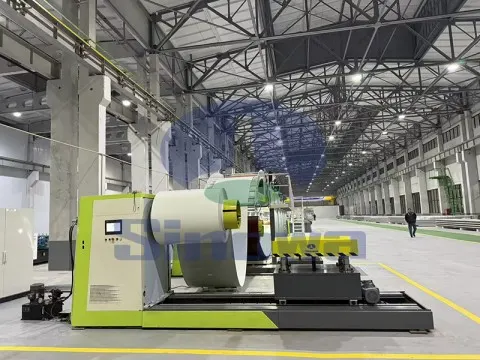
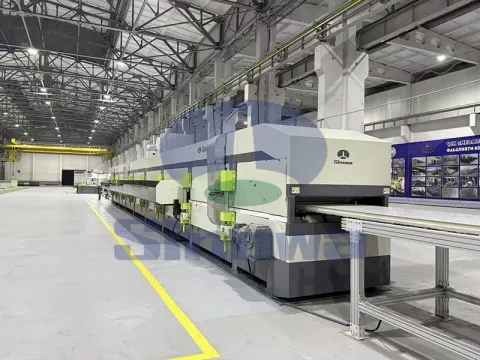
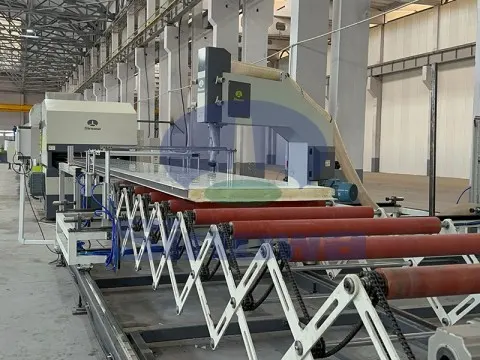
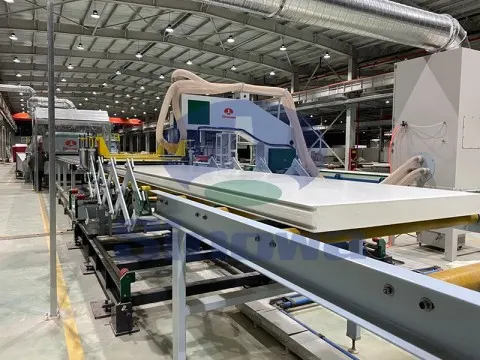
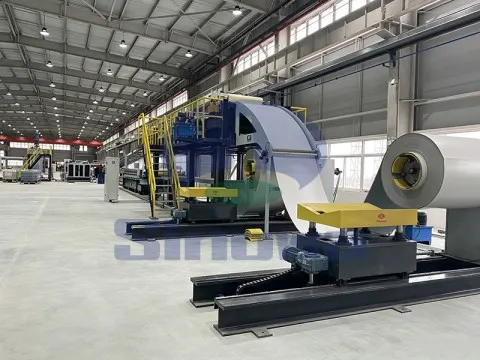
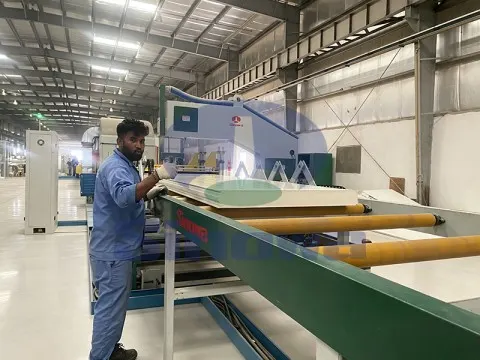
Gallery of PIR Sandwich Panel Manufacturing Line
Tags: pir sandwich panel manufacturing line, pir sandwich panel manufacturing line manufacturer, pir sandwich panel manufacturing line supplier, china pir sandwich panel manufacturing line, pir sandwich panel manufacturing line for sale
-
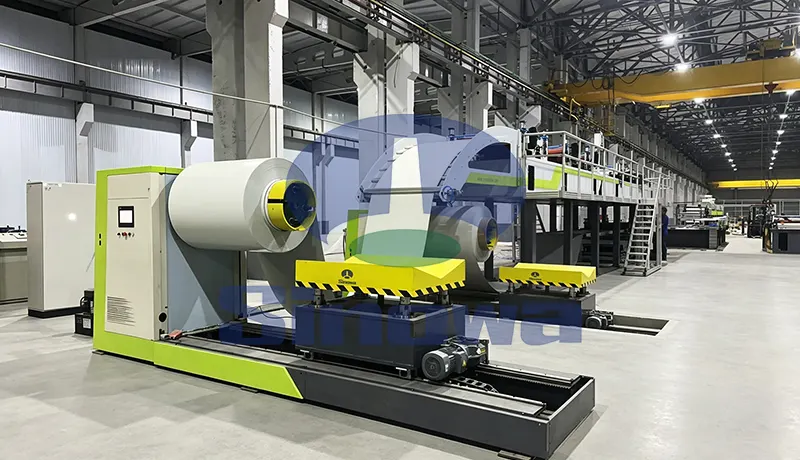
A reliable PU sandwich panel production line serves as the core equipment for manufacturing high-performance building insulation panels. This professional PU sandwich panel line features automated feeding, foaming and molding processes to ensure consistent panel thickness and structural stability. The well-designed polyurethane sandwich panel production line effectively improves production efficiency while reducing material waste in daily operation. Each calibrated polyurethane sandwich panel line can adapt to different panel sizes to meet diverse construction needs. With precise temperature and pressure control, the advanced continuous PU sandwich panel line produces panels with excellent thermal insulation and weather resistance. Meanwhile, the optimized PIR sandwich panel production line upgrades the foaming formula to enhance fire resistance performance. The high-efficiency PIR sandwich panel line maintains stable operation during long-term mass production, delivering durable and high-quality sandwich panels for various architectural and industrial applications.
-
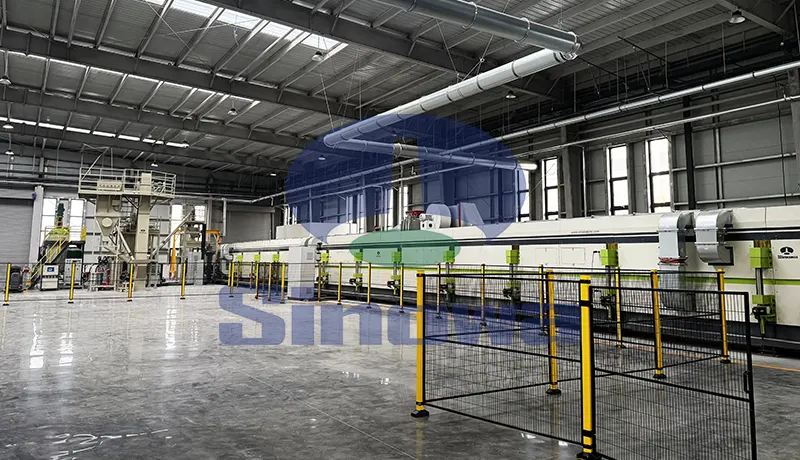
The phenolic panel production line realizes automated and continuous manufacturing of high-performance thermal insulation panels through streamlined and coordinated processing procedures.
-
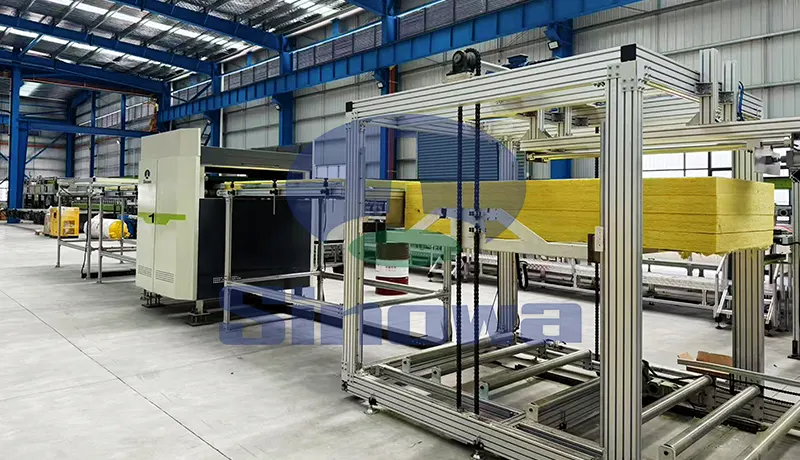
Modern insulation panel manufacturing relies on professional automated equipment to ensure stable product quality and high production efficiency. The rock wool sandwich panel production line features precise material lamination and forming processes to produce rigid, heat-insulating building panels. Meanwhile, the mineral wool sandwich panel production line adopts optimized assembly procedures to fabricate lightweight, soundproof panels widely used in architectural enclosure and thermal preservation projects.