How To Adjust The Temperature Parameter Of The Polyurethane Sandwich Panel Production Line?
Publication Date: Sep 30, 2026
Reasonable temperature parameter adjustment is the core of stable operation for the polyurethane sandwich panel production line. Proper temperature control optimizes PU foaming, bonding and curing effects, eliminates product defects, and ensures consistent quality of finished panels in continuous production processes.
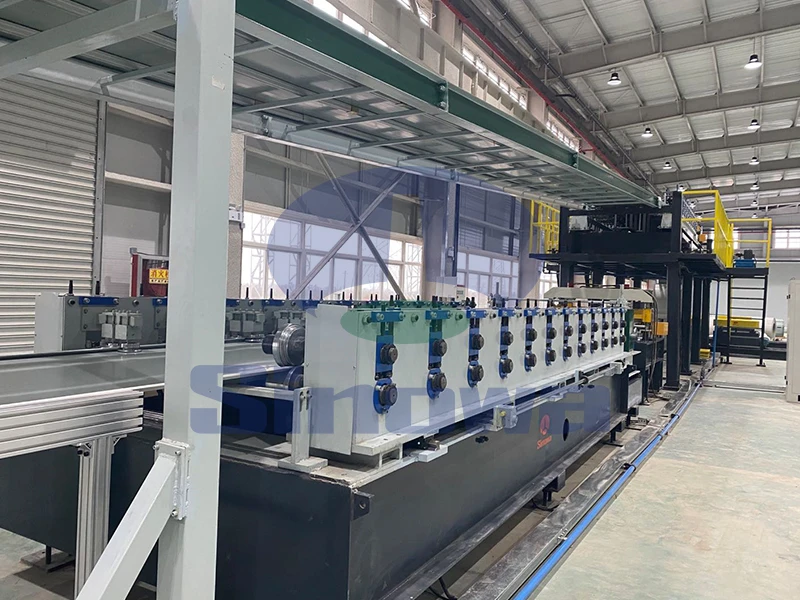
Before starting any temperature adjustment work on the polyurethane sandwich panel production line, operators need to conduct a comprehensive pre-adjustment inspection of the entire thermal control system to lay a solid foundation for accurate parameter calibration. First, it is necessary to check all temperature sensors, heating modules and control terminals of the equipment to confirm that there is no sensor deviation, heating component aging or circuit connection failure. Abnormal sensor data will directly lead to inaccurate temperature regulation, resulting in uneven foaming of polyurethane core materials and weak adhesion between panels and metal surfaces. Meanwhile, operators should observe the real-time operating temperature data of each functional area of the production line, record the temperature difference between the set value and the actual operating value, and sort out abnormal temperature fluctuations in different production stages. In addition, it is essential to confirm the preheating state of the equipment. The polyurethane sandwich panel production line needs a stable preheating environment, and sudden temperature changes in the initial operation stage will affect the subsequent foaming reaction balance. Completing the pre-inspection can avoid blind adjustment and ensure each temperature modification is targeted and effective.
The adjustment of raw material preheating temperature is one of the key links in the parameter optimization of the polyurethane sandwich panel production line, which directly determines the reaction activity of polyurethane materials. Polyurethane production relies on the chemical reaction between polyol and isocyanate, and temperature is the primary factor affecting the reaction speed and uniformity of these two raw materials. If the raw material temperature is too low, the chemical reaction speed will slow down, resulting in insufficient foaming of the core material, low foam density and poor thermal insulation performance of the finished panel. On the contrary, excessively high raw material temperature will cause the reaction to be too intense, leading to rapid foaming, local hollowing and unstable internal structure of the panel. In actual adjustment, operators need to stabilize the temperature of raw material storage tanks and conveying pipelines within a reasonable range, and keep the temperature difference of different raw material components consistent. Fine-tuning the raw material preheating temperature according to the daily production environment can effectively improve the uniformity of polyurethane foaming and lay a good foundation for high-quality panel forming.
Conveyor belt temperature adjustment in the forming zone plays a decisive role in the surface molding and composite bonding quality of polyurethane sandwich panels, and is an indispensable part of the polyurethane sandwich panel production line parameter adjustment work. The upper and lower conveyor belts of the forming zone bear the pressure and temperature conduction task in the panel molding process, and their temperature difference and constant temperature effect directly affect the flatness and bonding firmness of the panel surface. A slightly lower temperature of the upper conveyor belt can prevent the surface coating of the metal panel from being damaged by high temperature, while a moderately higher temperature of the lower conveyor belt helps the polyurethane core material fully bond with the base plate. Operators need to adjust the independent temperature control modules of the upper and lower belts respectively to control the temperature difference within a narrow and stable range, avoiding panel warping and delamination caused by inconsistent heating on both sides. Long-term operation will lead to slight temperature deviation of the conveyor belt, so regular fine adjustment and calibration are required to maintain stable molding temperature conditions.
Foaming zone temperature regulation is the core step to control the internal structure quality of polyurethane sandwich panels, and its parameter accuracy directly determines the mechanical and thermal insulation properties of finished products. The polyurethane foaming reaction is a typical exothermic reaction, and the ambient temperature of the foaming zone will interact with the heat generated by the material reaction to affect the final foaming effect. When the ambient temperature of the foaming zone is too low, the heat released by the material reaction will be lost too fast, resulting in incomplete foaming, insufficient expansion of the core material and compact internal structure, which reduces the thermal insulation effect of the panel. When the ambient temperature is too high, the foaming speed is too fast, the internal bubble structure is prone to rupture and uneven distribution, and the overall structural stability of the panel decreases. In the daily adjustment of the polyurethane sandwich panel production line, operators need to dynamically adjust the foaming zone temperature according to the production speed and panel thickness, ensuring that the polyurethane material completes uniform and stable foaming within the specified process time.
Curing oven temperature adjustment is crucial for the final shaping and performance stabilization of polyurethane sandwich panels, and stable curing temperature is the key to eliminate internal stress of panels. After the composite molding of panels, the internal polyurethane material still has incomplete residual reactions, and a constant temperature curing environment is required to complete the final structural stabilization. If the curing oven temperature is too low, the residual reaction cannot be fully completed, the bonding strength between the core material and the surface layer is insufficient, and the panel is prone to delamination and cracking in subsequent use. If the temperature is too high, excessive aging of the polyurethane material will occur, resulting in reduced toughness and increased brittleness of the panel, affecting its service life. Operators need to adjust the heating power and temperature distribution of the curing oven according to the running speed of the production line, ensuring that each section of the oven maintains a uniform temperature field, so that all panels can obtain consistent curing effects and stable overall performance.
Temperature matching adjustment with production line operating speed is an important skill to optimize the overall process of the polyurethane sandwich panel line, which can effectively avoid quality problems caused by mismatched process parameters. The production speed directly determines the residence time of panels in each temperature control zone, so the temperature parameters must be dynamically linked with the operating speed. When the production line speed increases, the residence time of panels in preheating, foaming and curing zones is shortened, so the temperature of each functional zone needs to be appropriately increased to ensure sufficient reaction and curing time. When the operating speed decreases, excessively high temperature will cause over-reaction and over-curing of polyurethane materials, so the temperature parameters need to be reduced in a timely manner. Operators should establish a matching parameter adjustment logic, flexibly adjust the temperature of each link according to the actual production speed, and maintain the coordination and consistency of the entire production process.
Seasonal ambient temperature compensation adjustment is a necessary maintenance measure to keep the parameter operation of the polyurethane sandwich panel manufacturing line stable throughout the year. The external ambient temperature changes significantly in different seasons, which will interfere with the constant temperature system of the production line and affect the internal process temperature balance. In low-temperature winter environments, the heat loss of equipment and production space increases, the preheating efficiency of raw materials decreases, and the temperature of each functional zone is easy to be lower than the set value. At this time, operators need to appropriately increase the preset temperature of each heating module and extend the equipment preheating time to offset heat loss. In high-temperature summer environments, the ambient heat will superpose with the equipment heating temperature, leading to excessive local temperature and accelerated material reaction. It is necessary to appropriately reduce the heating parameters and strengthen the ventilation and heat dissipation of the production space to avoid abnormal foaming and curing. Seasonal temperature compensation can effectively reduce the quality fluctuation of finished panels caused by environmental changes.
Local temperature deviation correction and regional balanced adjustment are key steps to solve partial quality defects in panel production. In the long-term operation of the polyurethane sandwich panel production line, affected by equipment aging, uneven heating of heating components and inconsistent sensor sensitivity, local temperature differences often appear in the same functional zone. For example, the temperature at both ends of the forming conveyor belt is inconsistent, or the temperature distribution in different areas of the curing oven is uneven, which will lead to inconsistent molding effects of different parts of the same panel and batch quality differences between front and rear panels. Operators need to regularly detect the temperature of each area of the equipment, locate local overheating or underheating points, and independently fine-tune the temperature parameters of abnormal areas. Through regional balanced adjustment, the temperature difference of the same process zone is controlled within a tiny range, ensuring that every panel in continuous production obtains a consistent processing environment and stable quality.
Real-time temperature monitoring and dynamic fine-tuning during formal production are important guarantees for long-term stable operation of the polyurethane sandwich panel production line. Temperature parameters are not fixed values and need to be dynamically adjusted according to real-time production conditions. During continuous production, operators need to observe the equipment temperature data in real time through the control system, track the foaming state, bonding effect and surface flatness of panels at any time. When slight quality abnormalities such as tiny bubbles, uneven surface gloss and weak local bonding are found, it indicates that the current temperature parameters have deviated, and targeted fine-tuning should be carried out immediately. It is necessary to avoid large-scale parameter adjustment in operation, and small-range fine-tuning can ensure the continuity and stability of production while correcting temperature deviations. Long-term adherence to real-time monitoring and dynamic adjustment can effectively reduce the defective rate of products and improve production efficiency.
Regular temperature parameter calibration and equipment maintenance are the fundamental measures to maintain the long-term accuracy of temperature adjustment for the production line. With the increase of equipment running time, temperature sensors will have drift errors, heating components will have aging and power attenuation problems, and the temperature control accuracy of the system will gradually decrease. Operators need to formulate a regular calibration mechanism, regularly detect and calibrate the temperature sensing accuracy of each functional zone, and correct the parameter deviation caused by equipment aging. At the same time, it is necessary to clean the heating components, heat dissipation channels and sensor surfaces regularly to avoid dust accumulation affecting heat conduction and temperature induction. Standardized maintenance and calibration can keep the temperature control system of the polyurethane sandwich panel production line in the best working state, ensure the long-term stability of production process parameters, and provide a reliable guarantee for the continuous output of high-quality polyurethane sandwich panels.
Gallery of Polyurethane Sandwich Panel Production Line






Tags: polyurethane sandwich panel production line, polyurethane sandwich panel production line manufacturer, polyurethane sandwich panel production line supplier, china polyurethane sandwich panel production line, polyurethane sandwich panel production line for sale
-

A reliable PU sandwich panel production line serves as the core equipment for manufacturing high-performance building insulation panels. This professional PU sandwich panel line features automated feeding, foaming and molding processes to ensure consistent panel thickness and structural stability. The well-designed polyurethane sandwich panel production line effectively improves production efficiency while reducing material waste in daily operation. Each calibrated polyurethane sandwich panel line can adapt to different panel sizes to meet diverse construction needs. With precise temperature and pressure control, the advanced continuous PU sandwich panel line produces panels with excellent thermal insulation and weather resistance. Meanwhile, the optimized PIR sandwich panel production line upgrades the foaming formula to enhance fire resistance performance. The high-efficiency PIR sandwich panel line maintains stable operation during long-term mass production, delivering durable and high-quality sandwich panels for various architectural and industrial applications.
-

The phenolic panel production line realizes automated and continuous manufacturing of high-performance thermal insulation panels through streamlined and coordinated processing procedures.
-

Modern insulation panel manufacturing relies on professional automated equipment to ensure stable product quality and high production efficiency. The rock wool sandwich panel production line features precise material lamination and forming processes to produce rigid, heat-insulating building panels. Meanwhile, the mineral wool sandwich panel production line adopts optimized assembly procedures to fabricate lightweight, soundproof panels widely used in architectural enclosure and thermal preservation projects.