How To Adjust The Foaming Ratio Of Continuous PIR Sandwich Panel Production Line?
Publication Date: Oct 13, 2026
Adjusting the foaming ratio on a continuous PIR sandwich panel production line requires precise control over raw material proportions, process temperature, mixing dynamics, and line speed to achieve uniform core density and consistent panel performance.
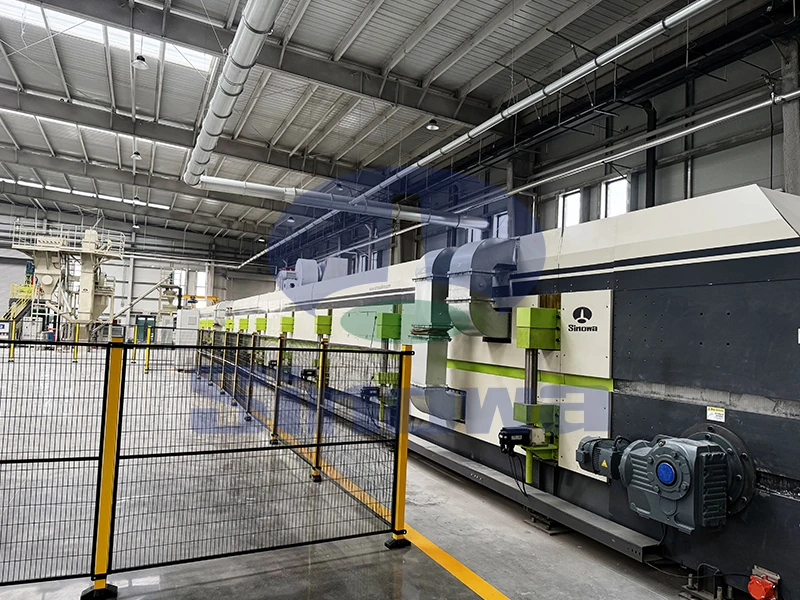
The foaming ratio in a continuous PIR line refers to the expansion multiple between the liquid chemical mixture and the cured rigid foam core. It directly determines the final density, thermal conductivity, mechanical strength, and dimensional stability of the sandwich panel. Operators must first establish the target density range based on the panel application—typically balancing insulation efficiency against structural rigidity. A higher expansion ratio lowers density and improves thermal resistance, but excessive expansion leads to fragile cell structures, surface delamination, and uneven core distribution. Conversely, an overly low ratio produces dense, heavy panels with reduced insulation value and increased material cost.
The primary lever for adjusting foaming ratio lies in the formulation proportion between the polyol side and the isocyanate side, along with the blowing agent dosage. Polyol premix typically contains polyether polyol, blowing agent, catalyst, silicone surfactant, and flame-retardant additives. The isocyanate component reacts stoichiometrically with the polyol to form the PIR polymer network. Increasing the blowing agent percentage while maintaining catalyst balance raises the expansion ratio, but operators must simultaneously adjust the catalyst package—particularly trimerization catalysts—to ensure the polymer matrix cures fast enough to support the expanded cell structure before it collapses. A common mistake is increasing blowing agent without rebalancing the surfactant, which causes cell coalescence and large voids in the core.
On the production floor, the high-pressure mixing head is where ratio adjustments translate into foam quality. The metering pumps for A-side (isocyanate) and B-side (polyol premix) must be calibrated periodically to confirm actual output matches the displayed ratio. Even a two to three percent deviation in pump output can shift the foaming ratio noticeably. When operators increase the blowing agent in the B-side tank, they should verify that the B-side pump output volume has been recalculated so that the combined chemical flow rate into the mixing head remains consistent with the die width and line speed. Otherwise, the pour weight per panel area changes, indirectly altering the apparent expansion ratio.
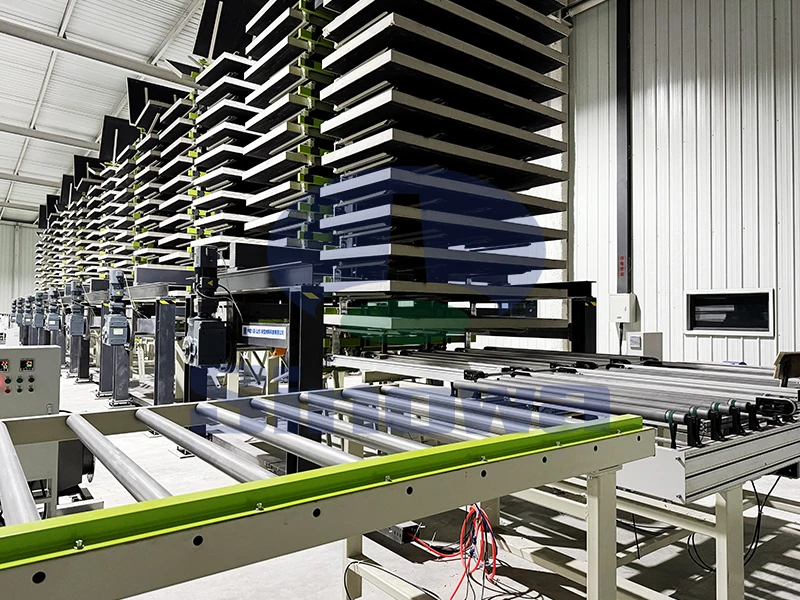
Temperature control is equally critical. Both the A and B chemical tanks, as well as the heat exchangers on the recirculation lines, must hold steady within a narrow band. PIR formulations are highly temperature-sensitive: a five-degree Celsius rise in the polyol tank can accelerate the blowing agent vapor pressure and push the effective foaming ratio upward, even when the nominal chemical ratio stays unchanged. Seasonal changes in workshop temperature often cause operators to chase ratio drift that is actually a temperature effect. Maintaining chemical temperature between 20 and 25 degrees Celsius and die temperatures between 40 and 60 degrees Celsius provides a stable baseline.
The pour zone and conveyor speed interplay with the chemical ratio in determining how much the foam can expand before contacting the top liner. On a continuous double-band press, the foam rises and fills the cavity between the bottom metal liner and the top liner as the panels move through. If the line speed is too fast relative to the chemical output, the foam does not have enough time to reach its designed expansion, resulting in a dense core at the die exit. If the line speed is too slow, the foam over-expands, pushes against the liners unevenly, and can cause edge overflow or wavy surfaces. Adjusting foaming ratio therefore requires rebalancing chemical flow rate with line speed whenever either parameter changes.
Pressure and atmospheric conditions in the pour area also influence the apparent expansion ratio. Some lines operate with a slight negative pressure hood over the pour section to capture fumes, but excessive vacuum can prematurely pull gas out of the rising foam, reducing expansion. Humidity affects surface curing—moisture reacts with isocyanate to produce CO₂, adding unintended blowing that can throw off the ratio. In humid climates, operators may need to slightly reduce the blowing agent or increase isocyanate index to compensate for this side reaction.
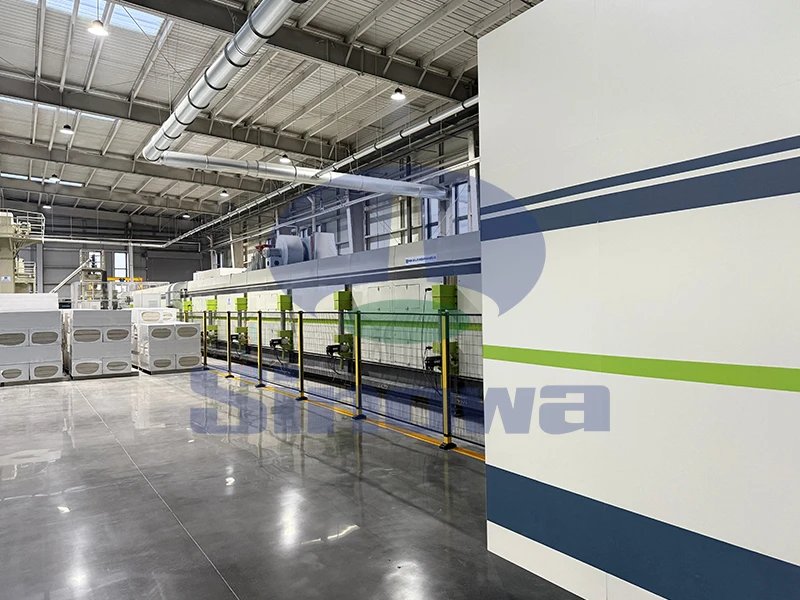
Density profiling across the panel width is a practical diagnostic tool for ratio adjustment. Operators should cut sample panels at regular intervals and measure core density at the center, quarter points, and edges. A center-heavy density profile indicates the foam is not spreading evenly—often caused by incorrect fan spray pattern at the mixing head or improper adjustment of the rolling wave plates. Edge-heavy density suggests the foam is leaking sideways or the side dams are not sealing properly. By correlating these density maps with the current chemical ratio, operators can decide whether the fix belongs in the formulation, the spray pattern, or the mechanical setup.
Troubleshooting common foaming defects follows a logical sequence. If the core shows large cells or visible voids, the likely causes are under-catalysis, insufficient surfactant, or a blocked mixing head chamber. If the surface is sticky or delaminates from the liner, the isocyanate index may have dropped or the die temperature is too low. If the panels bow or warp shortly after exit, the expansion ratio is mismatched with the liner tension, and the core is curing unevenly across thickness. Each symptom points back to one or two specific ratio parameters rather than requiring a full reformulation.
Finally, fine-tuning the foaming ratio is not a one-time setup but an ongoing calibration process. Operators should log chemical batch numbers, tank temperatures, line speed, measured density, and panel dimensions for every shift. Small drift accumulates over weeks as pump seals wear, heat exchanger efficiency drops, and raw material suppliers adjust their formulations. By reviewing the log weekly and making incremental adjustments—often in fractions of a percent—rather than large overnight changes, the line maintains stable foaming ratio output and produces consistent PIR sandwich panels batch after batch.
Tags: continuous pir sandwich panel production line, continuous pir sandwich panel production line manufacturer, continuous pir sandwich panel production line supplier, china continuous pir sandwich panel production line, continuous pir sandwich panel production line for sale
-
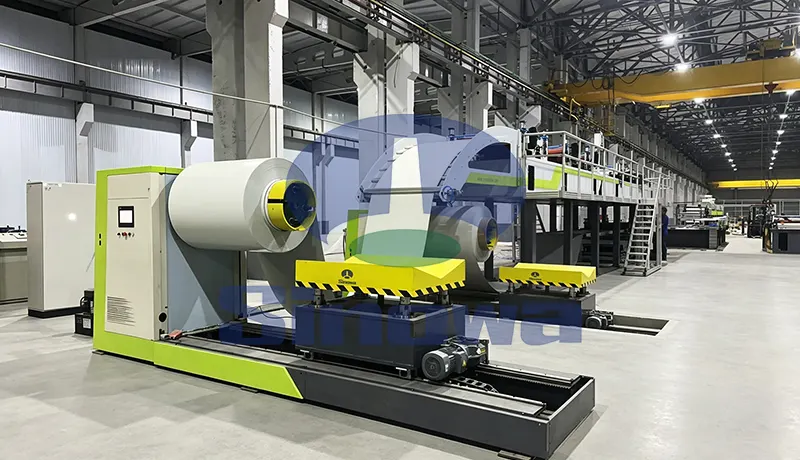
A reliable PU sandwich panel production line serves as the core equipment for manufacturing high-performance building insulation panels. This professional PU sandwich panel line features automated feeding, foaming and molding processes to ensure consistent panel thickness and structural stability. The well-designed polyurethane sandwich panel production line effectively improves production efficiency while reducing material waste in daily operation. Each calibrated polyurethane sandwich panel line can adapt to different panel sizes to meet diverse construction needs. With precise temperature and pressure control, the advanced continuous PU sandwich panel line produces panels with excellent thermal insulation and weather resistance. Meanwhile, the optimized PIR sandwich panel production line upgrades the foaming formula to enhance fire resistance performance. The high-efficiency PIR sandwich panel line maintains stable operation during long-term mass production, delivering durable and high-quality sandwich panels for various architectural and industrial applications.
-
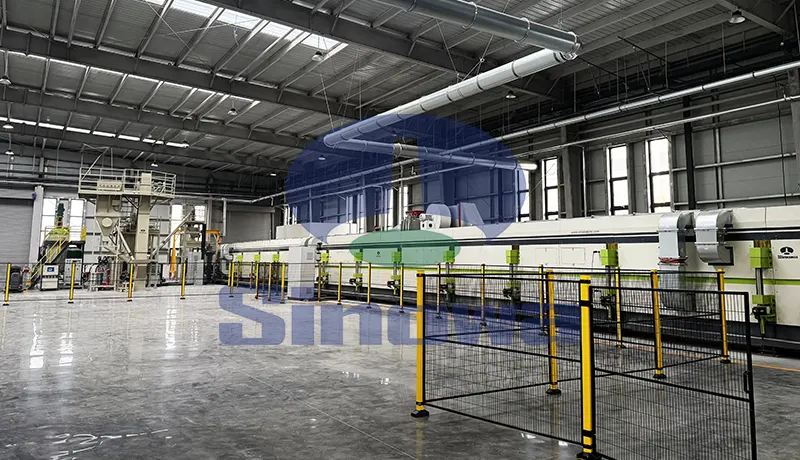
The phenolic panel production line realizes automated and continuous manufacturing of high-performance thermal insulation panels through streamlined and coordinated processing procedures.
-
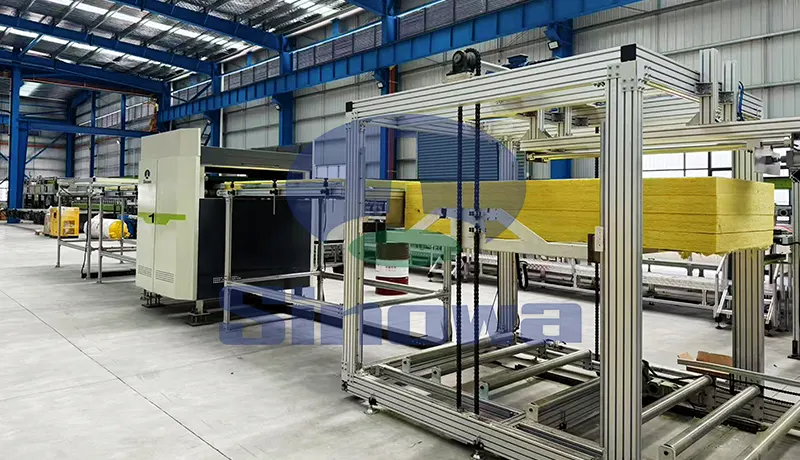
Modern insulation panel manufacturing relies on professional automated equipment to ensure stable product quality and high production efficiency. The rock wool sandwich panel production line features precise material lamination and forming processes to produce rigid, heat-insulating building panels. Meanwhile, the mineral wool sandwich panel production line adopts optimized assembly procedures to fabricate lightweight, soundproof panels widely used in architectural enclosure and thermal preservation projects.