How To Troubleshoot Uneven Panel Density From PIR Sandwich Panel Production Line?
Publication Date: Oct 27, 2026
Learn how to troubleshoot uneven PIR sandwich panel density. Check raw material feeding, mixing head performance, foam distribution, curing temperature, conveyor gap, additive dispersion and facer tension. Fix pump drift, mixing fouling, thermal gradients and web instability for consistent foam core density in continuous panel production.
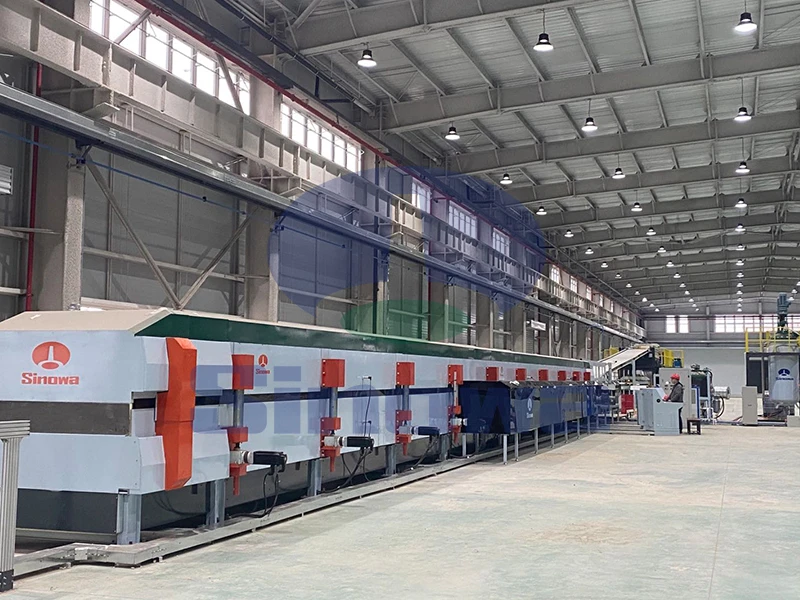
Uneven panel density is one of the most persistent quality defects encountered during the continuous operation of a PIR sandwich panel production line, and it usually manifests as visible differences in weight and hardness across different zones of a finished panel, with some sections feeling soft and porous while others appear overly compact and rigid. Many production operators tend to attribute this issue solely to raw material variations, yet the root causes often lie in the interaction between material feeding, mixing dynamics, and line running parameters that shift subtly over time without immediate detection. When density inconsistency occurs, downstream processing becomes far more difficult, as panels may bend irregularly during cutting, form inconsistent bonding strength with facer sheets, and create reliability concerns once installed. The first stage of troubleshooting begins with consistent observation of defect distribution, to determine whether unevenness follows a fixed lateral pattern across the panel width, appears randomly along the panel length, or only emerges during specific speed adjustments of the line. If the density difference repeats in the same cross-sectional position for successive panels, attention should be directed toward the foaming and distribution system rather than batch fluctuations in polyol or isocyanate components. Random density spots, by contrast, often signal intermittent failures such as momentary blockages, unstable pump output, or trapped air entering the mixing chamber alongside liquid raw materials. Operators should avoid making large, simultaneous adjustments to multiple settings at once, because changing feed ratios, line speed, and mixing pressure together will obscure which adjustment delivers a measurable improvement and may introduce new forms of instability into the foaming reaction. Every minor modification needs to be followed by sampling finished panels and recording density readings from multiple fixed test points, so that data can be compared against baseline values collected when the line was producing stable, uniform product. This patient, data-driven approach prevents rushed corrective actions that mask underlying mechanical or procedural flaws and ensures that troubleshooting builds a clear connection between process conditions and the final physical characteristics of the PIR foam core.
Raw material feeding stability forms the foundational condition for consistent PIR foam density, and even small deviations in the volumetric delivery of polyol blend and isocyanate will create noticeable density gradients within a single sandwich panel. The metering pumps responsible for transferring these two primary reactive liquids rely on precise rotational control to maintain the designed mixing proportion, and gradual wear on internal seals, gear surfaces, or check valves can slowly reduce delivery accuracy without triggering obvious alarm signals on the line control interface. As pump performance drifts, one component may arrive at the mixing head in excess while the other is shorted, altering the completeness of the polymerization reaction and leading to areas with incomplete curing, low density, and open cell structures. Besides pump degradation, feed tank conditions also exert a meaningful influence, especially when liquid temperature inside storage vessels fluctuates widely. Changes in temperature modify fluid viscosity, which directly impacts how easily materials flow through pipelines and how accurately pumps can measure each stream. If one tank is poorly insulated or located near a heat source from other production equipment, its fluid viscosity will shift independently of the other raw material stream, breaking the carefully balanced flow ratio. Filters installed along feed pipelines represent another common source of gradual disruption; as solid residues and undissolved additives accumulate on filter screens, flow resistance rises slowly, restricting delivery volume and creating uneven backpressure that varies across the production run. Regular visual inspection of filter pressure differentials helps identify clogging before density defects become severe, and scheduled filter replacement should follow usage cycles rather than waiting for obvious quality failures to appear. It is also critical to check for air entrainment at pump suction points, since air bubbles drawn into the liquid stream create temporary drops in effective material volume delivered to the mixing head. These air pockets create localized low-density voids that are difficult to distinguish from chemical ratio errors without careful sampling, and correcting suction line leaks or insufficient liquid levels in feed tanks can eliminate this class of inconsistency before it affects large batches of panels.
The mixing head assembly is the critical point where polyol and isocyanate combine and begin the rapid exothermic reaction that forms PIR foam, and poor mixing performance directly translates to uneven core density across sandwich panels. Inside the mixing chamber, high-speed agitation must disperse the two reactive streams into a homogenous blend within a very short window before foaming starts, and any dead zones where liquids move too slowly will leave pockets of unreacted or partially mixed material. Over extended production runs, residual cured foam can build up on mixing chamber walls, agitator blades, or outlet orifices, reducing the effective mixing volume and disrupting flow patterns. This buildup does not always stop flow completely; instead, it redirects the mixed stream unevenly as it exits onto the moving facer sheet, creating bands of higher and lower foam density across the panel width. Operators often overlook slow fouling of the mixing head because small amounts of cured residue accumulate incrementally over hours, and quality drift appears gradual rather than sudden. Mixing speed is another adjustable factor that requires careful calibration. If agitation speed is too low, blending remains incomplete, with streaks of separate raw materials that cure at different rates and form inconsistent cell structures. Excessively high mixing speed, on the other hand, can shear the reactive blend too aggressively, introducing excess air and generating finer, weaker foam cells with reduced density in localized areas. The pressure maintained inside the mixing head also matters, as unstable backpressure causes fluctuating discharge rates onto the continuous facer substrate. Variations in discharge pressure make the foam layer thicker in some regions and thinner in others before the foam rises fully, and this initial thickness difference locks into permanent density variation once the PIR reaction finishes. Routine cleaning protocols for the mixing head must be designed to remove hardened residue without damaging precision surfaces that control flow geometry, and post-cleaning test runs should include multi-point density checks to confirm that mixing uniformity has returned to acceptable levels before full production resumes.
Foam distribution across the width of the moving facer sheet after leaving the mixing head strongly shapes final panel density uniformity, and improper spreading will create consistent lateral density bands that repeat on every finished panel. Many production lines use a distributor or flow guide positioned immediately downstream of the mixing head to spread the reactive liquid blend evenly before foaming expansion begins, and misalignment, worn guide surfaces, or blocked distribution slots will restrict flow to certain width zones. When one section of the distributor delivers less liquid blend, the foam that forms there expands into a thinner core with lower density, while adjacent zones receiving more material develop denser, overfilled foam. The timing of foam rise relative to line travel speed is tightly linked to this distribution step. If the line moves too fast, the reactive blend does not have enough time to spread horizontally before the gel point, trapping uneven liquid placement and locking in density differences. If line speed is reduced too far without matching adjustments to material feed rates, excess liquid accumulates in narrow strips, creating over-dense foam that resists normal expansion. Surface tension of the reactive blend also influences spreading behavior; when additive levels such as surfactants drift outside the optimal range, the liquid cannot flow smoothly across the facer surface and tends to bead or channel instead of forming a continuous thin layer. Even the surface condition of the lower facer sheet can affect distribution. Dust, release agent buildup, or inconsistent surface texture changes how the liquid blend wets the substrate, causing localized pooling or repelled flow. During troubleshooting for lateral banding defects, operators can temporarily pause the line under safe conditions to observe the live flow pattern of the reactive mixture as it exits the distributor, which quickly reveals blocked slots or bent flow guides. Minor realignment of distribution components often resolves repeating cross-width density patterns, though each adjustment must be paired with density sampling to confirm that flow balance is restored across the entire usable width of the sandwich panel.
Curing and temperature control within the double conveyor section, where foam rises and hardens between upper and lower facer sheets, is a frequently underestimated factor behind uneven PIR panel density. The PIR reaction releases substantial heat, and the rate of cure depends heavily on the surrounding thermal environment inside the constrained space between the two moving belts. If temperature across the width or length of the curing zone is inconsistent, the foam reaction proceeds faster in hotter regions and slower in cooler regions, leading to variations in cell formation and final density. Cold spots within the conveyor tunnel slow polymerization, leaving partially cured foam that does not expand fully and results in heavier, denser core material, while excessively hot zones accelerate the reaction so rapidly that gas bubbles escape before cell walls stabilize, creating lighter, weaker foam. Uneven airflow from circulating fans inside the curing tunnel is a common source of these thermal gradients, as blocked air ducts, misdirected fan blades, or worn insulation allow heat to escape unevenly around the panel edges. Conveyor belt tension and parallelism also play an important role. If the upper and lower belts are not perfectly parallel, the gap between them changes slightly across the panel width, compressing foam more tightly in some zones and allowing freer expansion in others. This variable compression directly alters density, because foam trapped in a narrower gap cannot expand to its natural equilibrium volume and becomes denser. Belt slippage can introduce lengthwise inconsistencies, where momentary speed mismatch between the two facer sheets disturbs the rising foam structure before it gels. Regular checks of tunnel temperature readings at multiple width positions help map thermal variation, and cleaning or rebalancing air circulation systems can reduce hot and cold zones. Adjusting conveyor gap settings must be done carefully and incrementally, because changing the target core thickness alters foam compression uniformly, and only small corrections are needed to eliminate uneven gap conditions that create patterned density defects in finished PIR sandwich panels.
Additive composition and dispersion within the polyol blend can create subtle but widespread density irregularities that are difficult to separate from mechanical process faults. Surfactants, blowing agents, catalysts, and flame-retardant components are pre-mixed into the polyol stream, and incomplete homogenization of these additives before metering means that different portions of the feed stream carry slightly different chemical packages. Surfactants control cell nucleation and stabilize foam bubbles during expansion; when surfactant concentration fluctuates locally, some areas develop stable, uniform closed cells while others form irregular, broken cell structures with lower density and higher open-cell content. Catalyst levels govern reaction speed, and uneven catalyst distribution creates pockets where curing occurs out of sync with surrounding foam. Blowing agent performance is also sensitive to consistent mixing, as poor dispersion leads to uneven gas generation during the exothermic reaction. Even if the bulk blend formula is correct on paper, inadequate stirring inside polyol holding tanks allows heavier additives to settle toward the bottom over time, so that the first portion drawn from the tank carries less suspended additive and later portions carry higher concentrations of settled solids. This creates slow density drift over the course of a production run rather than fixed repeating defects. Agitator speed and run time inside blending tanks must be maintained to keep all components suspended uniformly, and tanks should not be allowed to run down to very low liquid levels, because settled sediment can suddenly enter the feed pumps when the tank nears empty. Operators should also track the age of blended polyol batches, since some additives degrade slowly after mixing, altering foam behavior over extended storage periods. When troubleshooting random, drifting density variation that does not follow fixed geometric patterns on panels, reviewing blending procedures, tank agitation schedules, and batch holding times can reveal additive separation issues that mechanical adjustments to pumps or mixing heads cannot resolve.
Facer sheet handling and tension control upstream of foaming can introduce hidden disturbances that translate into uneven PIR core density, even when liquid feed and mixing systems are operating correctly. Both upper and lower facer materials must travel at identical, steady speed and maintain consistent flatness as they enter the foaming zone. If one facer web develops variable tension, it will pull unevenly and shift relative to the other sheet, distorting the space available for foam expansion before gelation. Loose sections of facer allow the foam to expand more freely, producing lower density, while over-tensioned regions restrict expansion and create denser core material. Edge guiding systems for the facer rolls are designed to keep webs centered, and worn guide rollers, misaligned tracking sensors, or sticky roller surfaces can cause the sheet to drift sideways periodically. This lateral drift creates asymmetric foam confinement and uneven compression across the panel width. Surface contamination on guide rollers and idler rollers can also leave intermittent indentations or localized drag on the facer, creating brief disruptions in the smooth entry into the double belt section. Variations in facer flatness, such as inherent waviness from the raw roll, further complicate foam formation, as waves create temporary local changes in the gap between upper and lower sheets. Even minor differences in facer temperature before meeting the reactive foam blend affect the initial reaction rate, because a colder facer absorbs heat from the exothermic foam and slows curing at the contact surface, while a warmer facer supports faster reaction. These surface thermal differences can create a thin boundary layer of foam with density different from the bulk core, and in severe cases, the boundary variation propagates inward to create noticeable through-thickness density inconsistency. Troubleshooting should include running visual checks of facer web movement at all upstream roller stations, verifying that tension readouts remain stable, and replacing worn rollers or recalibrating tracking guides to ensure both facer sheets travel flat, centered, and at matched speed before receiving the PIR foam mixture.
Sampling and measurement methodology directly impact the ability to accurately diagnose uneven panel density, and flawed testing practices can mislead operators into making unnecessary process adjustments. Density testing for PIR foam core requires cutting specimens from defined, repeatable positions on each finished panel, covering left edge, mid-width, right edge, and multiple points along the panel length. If samples are taken only from the panel center, density differences at the edges will go undetected, and the line will continue producing panels with hidden non-uniformity. Sample preparation also matters; cutting must remove any crushed or skin-affected foam near facer bonding lines, because the thin surface layer next to the facer often has a naturally different density from the bulk core and should not be averaged together with interior foam samples. All specimens need proper conditioning before weighing and volume measurement, to allow residual reaction heat and trapped gases to stabilize, as freshly cut foam can show transient weight readings that do not represent final cured density. Recording each sample’s exact position alongside its density value creates a spatial map of defects, which reveals whether unevenness is lateral, longitudinal, random, or concentrated near panel edges. Many production teams fall into the habit of only testing one sample per panel or testing sporadically after quality complaints arise, which leaves no baseline data to compare against during troubleshooting. Without reliable spatial sampling data, operators may incorrectly blame raw material batches when the true issue is a mechanical flow restriction or thermal gradient inside the curing tunnel. Once a consistent sampling grid is established, small process changes can be evaluated quantitatively, and improvements can be confirmed by comparing the new set of density readings against the historical baseline. Standardized sampling also helps distinguish between normal minor density scatter that is inherent to the foaming process and abnormal variation that requires corrective maintenance or parameter tuning on the production line.
Maintenance scheduling and condition monitoring of the entire continuous line prevent gradual degradation that builds into persistent uneven density problems over long production campaigns. Many of the components that affect foam uniformity degrade slowly, and their performance loss is cumulative rather than catastrophic. Metering pump seals wear incrementally, mixing head residue accumulates run after run, conveyor rollers develop bearing play, and tunnel insulation degrades over months of high-temperature operation. Reactive PIR materials are inherently abrasive and chemically aggressive, accelerating wear on wetted parts inside feed lines and mixing equipment. A reactive maintenance approach, where repairs only happen after obvious quality failure, means that density inconsistency becomes entrenched and affects large volumes of product before intervention. Predictable periodic inspections focus on critical wear points, checking pump calibration accuracy, seal integrity, mixing head orifice geometry, conveyor parallelism, fan operation, and filter condition at set intervals independent of quality alarms. Calibration of metering systems should be performed by collecting timed flow samples from each feed stream and verifying that delivered volume matches the setpoint, rather than relying solely on digital readouts from the control panel, because sensor drift can separate displayed values from actual liquid delivery. Lubrication of conveyor bearings, alignment of roller assemblies, and cleaning of air circulation ducts all fall under routine care that preserves stable foam forming conditions. Maintenance logs should record every calibration, cleaning, part replacement, and adjustment, creating a history that links equipment condition to past density issues. When uneven density reappears, reviewing this log can show whether the defect aligns with a known worn component or a skipped cleaning cycle, speeding up diagnosis. Investing in consistent, proactive maintenance reduces the frequency of difficult troubleshooting events and keeps the line operating within the narrow process window required for uniform PIR foam core density in sandwich panels.
After identifying the root source of uneven panel density, structured validation and sustained process control are required to lock in improvements and avoid recurrence of the same defect. It is not sufficient to make a single repair or parameter change and resume normal production without ongoing oversight, because many PIR line systems are interconnected, and fixing one fault can expose secondary instabilities elsewhere in the process. Once corrective action is completed, a dedicated validation run should be carried out at standard production speed, using the established multi-point sampling grid to measure density across multiple successive panels. If density variation narrows to a stable range, operators document the revised parameter set, including feed ratios, mixing speed, tunnel temperature profile, conveyor gap, and additive blending cycle, so these settings serve as the new stable baseline. If unevenness remains, the results from the sampling map guide the next round of inspection, returning focus to the most likely remaining root cause rather than randomly adjusting controls. Long-term stability also depends on limiting unapproved parameter changes by shift operators, because different team members may respond to minor visual variations with incompatible adjustments that push the process outside the optimal window. Regular cross-shift communication ensures that everyone running the line understands which adjustments are permitted and which require review before implementation. Trend tracking of density data over days and weeks helps spot slow drift, such as gradual pump wear or additive settling, before defects become visible again. Minor seasonal shifts in ambient plant temperature and humidity also influence PIR foaming behavior, as cooler ambient air can increase heat loss from the curing tunnel and alter raw material viscosity, requiring small, planned compensations rather than emergency corrections. Ultimately, consistent PIR sandwich panel density emerges from balancing mechanical integrity, stable raw material delivery, controlled mixing, uniform thermal curing, and disciplined measurement practices. Troubleshooting uneven density is not a one-time fix, but an ongoing cycle of observation, targeted correction, data validation, and careful process stewardship that maintains reliable foam quality across continuous production.
Gallery of PIR Sandwich Panel Production Line
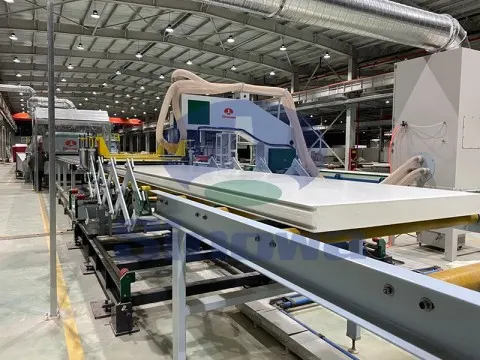
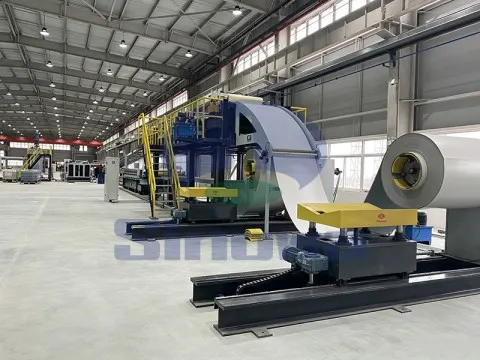
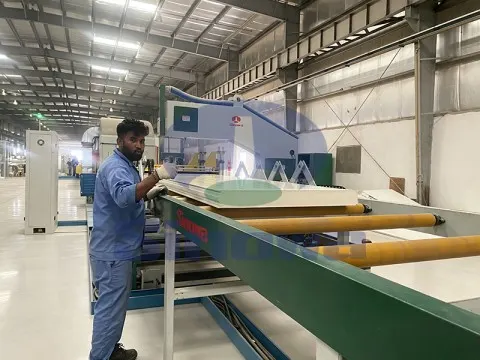
Tags: pir sandwich panel production line, pir sandwich panel production line manufacturer, pir sandwich panel production line supplier, china pir sandwich panel production line, pir sandwich panel production line for sale
-

A reliable PU sandwich panel production line serves as the core equipment for manufacturing high-performance building insulation panels. This professional PU sandwich panel line features automated feeding, foaming and molding processes to ensure consistent panel thickness and structural stability. The well-designed polyurethane sandwich panel production line effectively improves production efficiency while reducing material waste in daily operation. Each calibrated polyurethane sandwich panel line can adapt to different panel sizes to meet diverse construction needs. With precise temperature and pressure control, the advanced continuous PU sandwich panel line produces panels with excellent thermal insulation and weather resistance. Meanwhile, the optimized PIR sandwich panel production line upgrades the foaming formula to enhance fire resistance performance. The high-efficiency PIR sandwich panel line maintains stable operation during long-term mass production, delivering durable and high-quality sandwich panels for various architectural and industrial applications.
-

The phenolic panel production line realizes automated and continuous manufacturing of high-performance thermal insulation panels through streamlined and coordinated processing procedures.
-

Modern insulation panel manufacturing relies on professional automated equipment to ensure stable product quality and high production efficiency. The rock wool sandwich panel production line features precise material lamination and forming processes to produce rigid, heat-insulating building panels. Meanwhile, the mineral wool sandwich panel production line adopts optimized assembly procedures to fabricate lightweight, soundproof panels widely used in architectural enclosure and thermal preservation projects.