Rockwool Sandwich Panel Equipment
Publication Date: Nov 17, 2026
Rockwool Sandwich Panel Equipment Supplier. Fully automatic continuous line for A-class fireproof rock wool sandwich wall & roof panels. Stable, high efficiency, customizable for prefab & steel construction.
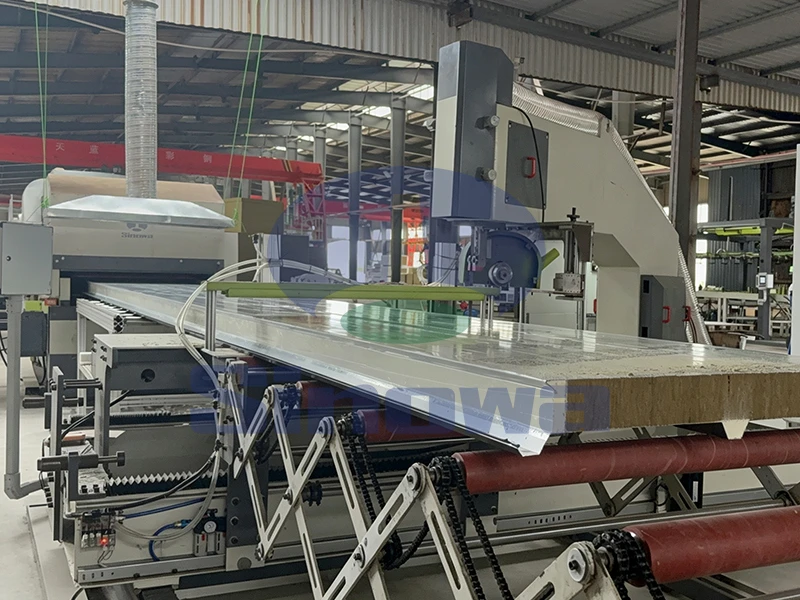
Core Composition and Basic Working Logic of Rockwool Sandwich Panel Equipment
Rockwool sandwich panel equipment represents a complete set of interconnected production machinery designed to assemble rockwool core materials and metal surface sheets into integrated building panels. The whole production line is structured to realize continuous forming instead of intermittent manual processing, which fundamentally changes the low-efficiency mode of separate cutting and bonding of raw materials in traditional workshop operations. At the starting end of the line, metal coil unwinding units steadily release steel or aluminum sheets, and auxiliary roller sets flatten the coiled materials to eliminate bending deformation and surface wrinkles caused by long-term winding. After flattening, the surface sheets enter the profiling section, where customized roller dies press out grooves, ribs and connecting notches according to the structural requirements of finished panels. These shaped textures are not only for assembly convenience but also improve the overall rigidity of the panel after molding. Meanwhile, rockwool raw materials are transported by special conveying equipment to the laying station. Loose rockwool blocks are sorted, evenly distributed and arranged in a fixed thickness layer, avoiding local voids or uneven density inside the core layer. Adhesive spraying devices operate synchronously, applying uniform glue layers on the contact surfaces between rockwool and metal sheets. All moving parts of the equipment are matched through synchronous control systems to ensure the feeding speed of surface plates, core materials and glue application progress remain coordinated. Once the three parts are combined, they move forward together to the pressing and curing area, laying the foundation for stable bonding. The design logic of the whole set of equipment focuses on synchronous coordination of each unit, preventing quality defects such as offset of core materials, insufficient glue coating and uneven panel thickness caused by asynchronous speed. Every functional module is adjusted to adapt to different raw material specifications, so the production line can maintain stable operation under different production configuration requirements.
Raw Material Adaptability and Feeding Control Mechanism
Raw material compatibility is a key performance indicator of rockwool sandwich panel line, and the feeding control system undertakes the task of stabilizing raw material supply for subsequent forming processes. For metal surface materials, the feeding mechanism supports coils of different widths and thicknesses, with tension control components installed on the unwinding rack to maintain constant tension during material release. Excessive tension will stretch thin metal sheets and lead to dimensional deviation, while insufficient tension will cause sheet accumulation and deviation in the conveying track. Sensors arranged along the feeding channel detect the position of metal sheets in real time, and automatic deviation correction structures fine-tune the material running track to keep the sheets centered on the production line. For rockwool core materials, the feeding system handles both block rockwool and semi-continuous rockwool strips. Material breaking and scattering devices break large rockwool blocks into uniform fragments, and the quantitative distribution structure controls the weight of rockwool passing through per unit time, so that the core layer thickness of each finished panel stays consistent. Dust removal attachments work with rockwool feeding to reduce floating fiber dust generated in the material conveying process, improving the working environment and reducing the risk of fiber agglomeration affecting bonding quality. The glue supply subsystem is also an important part of feeding control. It keeps the adhesive in a constant temperature and stirring state to prevent component precipitation and viscosity change. Flow valves adjust the output of glue according to the running speed of the production line. When the line speed increases, the glue supply volume rises proportionally to guarantee complete coverage of the bonding surface. All feeding parameters can be stored and called in the control terminal. When switching to another raw material specification, operators can quickly recall the matched parameter set instead of repeated manual debugging, shortening the preparation time before formal production. The feeding link acts as the first quality control barrier of the whole line, and precise control here effectively reduces most of the panel quality problems that appear in the later stage.
Profiling and Surface Forming Process of Metal Face Sheets
The profiling section is responsible for shaping the flat metal sheet into the required surface structure of rockwool sandwich panels, and this part of the equipment adopts multi-group continuous roller pressing units arranged in sequence. Each group of rollers carries out a small amount of bending and extrusion on the metal sheet step by step, rather than completing all shape changes at one time. Gradual forming can avoid cracking, scratch and internal stress concentration on the metal surface caused by one-time heavy pressing. The surface patterns produced by the rollers include simple flat structures and complex interlocking male and female grooves. The interlocking structure enables adjacent panels to be tightly spliced during on-site installation without additional sealing accessories, improving the sealing performance of the assembled wall or roof system. After roller profiling, trimming devices cut off the irregular edges on both sides of the metal sheet to ensure the width of the surface plate meets the preset size. Surface detection modules equipped in this section check for scratches, indentations and uneven profiling on the metal surface. If abnormal conditions are detected, the system will send prompt signals to operators, and in some operation modes, the line can slow down temporarily for inspection. The roller molds can be disassembled and replaced. When customers need panel products with different surface shapes, the production line only needs to replace the corresponding roller groups instead of transforming the whole equipment. The pressure of each roller group can be adjusted independently. For metal sheets with higher hardness, the pressure value can be appropriately increased to ensure full forming; for softer thin plates, lower pressure settings are used to prevent over-deformation. The speed of the profiling unit is linked with the rockwool feeding unit behind it, so the shaped metal sheets can arrive at the composite station at the same pace as the rockwool core material. Stable profiling quality directly affects the appearance and installation performance of finished sandwich panels, so the structural rigidity and control precision of the roller pressing unit are core points in equipment manufacturing.
Rockwool Core Material Arrangement and Glue Coating Integration System
The integrated system for rockwool arrangement and glue coating determines the bonding reliability between the core layer and metal sheets, and this functional area is the core of the composite process of rockwool sandwich panel equipment. After rockwool raw materials are conveyed to this station, the spreading machine spreads the rockwool fibers into a continuous and uniform felt layer. Internal baffle structures limit the lateral diffusion of rockwool, so the width of the rockwool layer matches the metal face sheets above and below. High-density and low-density rockwool can both be processed through parameter adjustment of the spreading equipment. For rockwool with high fiber brittleness, the conveying speed is reduced to avoid a large amount of fiber breakage during spreading. The glue coating unit is installed above and below the rockwool layer, or on the inner surface of the metal sheets. Spray nozzles distribute adhesive in a fan-shaped mist form, forming a thin and continuous glue film. Compared with brush coating and roller coating, spray coating has better uniformity and can reach tiny gaps between rockwool fibers. The spacing, angle and opening frequency of nozzles can be adjusted according to production requirements. The system will automatically pause glue supply when raw material feeding stops, which saves adhesive and avoids glue accumulation on equipment surfaces. A preheating auxiliary structure can be selected in this section. Mild preheating raises the temperature of rockwool and metal sheets moderately, helping the adhesive infiltrate into the rockwool fiber gaps quickly and enhancing the bonding force after curing. Isolation baffles separate the glue coating area from other stations to prevent adhesive from splashing onto roller sets and conveying chains. Cleaning mechanisms are set around the nozzles. Regular automatic cleaning prevents nozzle blockage caused by adhesive solidification. The whole arrangement and glue coating process runs continuously following the production rhythm. Rockwool and glue are matched in real time, ensuring that every position of the composite interface has sufficient adhesive. Poor operation in this link will lead to hollowing, delamination and separation of panels after long-term use, so manufacturers pay special attention to the stability and maintainability of this subsystem.
Continuous Pressing and Curing Unit Structure and Working Principle
After the rockwool core material and double-sided metal sheets are initially combined, the semi-finished materials enter the continuous pressing and curing unit, which is the key equipment to complete the permanent composite of sandwich panels. The pressing unit consists of upper and lower circulating pressing belts and supporting pressure rollers. The flexible pressing belts make contact with the metal surface evenly, distributing pressure on the whole panel width, avoiding local indentation and thickness deviation that are easy to appear with point-type pressure. The pressure value inside the pressing area can be adjusted. Higher pressure is used when producing panels with thick rockwool cores, and lower pressure is suitable for thin specification products. While maintaining pressure, the curing area provides a stable temperature environment to accelerate the cross-linking reaction of the adhesive. Heat transfer modes include air circulation heating and contact conduction heating. Temperature sensors are distributed at multiple positions inside the curing channel to monitor temperature changes and feed data back to the control system. The system adjusts heating power automatically to keep the temperature within the set range. If the temperature is too low, the adhesive cures slowly and the production efficiency drops; excessive high temperature may damage the adhesive performance and even cause discoloration of the metal coating. The length of the curing channel determines the curing time of the semi-finished product. The production line speed and channel length are matched to guarantee that the adhesive reaches the expected bonding strength before the panel leaves the pressing section. The circulating pressing belts run synchronously with the whole production line, clamping the semi-finished panel to move forward at a constant speed without relative sliding between the belt and the panel surface. Wear-resistant and anti-stick materials are adopted for the surface of the pressing belts, which are not easy to stick to overflowing glue and are convenient for daily cleaning. After coming out of the pressing and curing section, the rockwool, upper and lower metal sheets have been firmly bonded into an integrated plate structure, and the basic forming process of the sandwich panel is completed. The stability of pressure and temperature in this unit directly decides the internal bonding quality and long-term service performance of finished panels.
Fixed-Length Cutting, Trimming and Post-Forming Processing Module
The fixed-length cutting and post-processing module cuts continuous long composite panels into finished products of specified lengths and carries out edge finishing treatment. A tracking cutting structure is widely used in this equipment section. The cutting tool moves synchronously with the running panel during cutting, so the production line does not need to stop for cutting operation, realizing non-stop continuous production. Length measurement sensors record the moving distance of the panel in real time. When the material reaches the preset length, the cutting mechanism receives the signal and starts cutting action. The cutting tool adopts high-speed circular saw blades or special shearing tools. The tool material is selected to reduce burrs, metal edge curling and rockwool fiber flying during cutting. Negative pressure dust collection covers are installed around the cutting position to collect rockwool fiber dust and metal debris generated in the cutting process. After cutting, the panel is sent to the trimming station. Trimming equipment polishes the section of the panel, tidies exposed rockwool fiber ends and removes sharp metal edges. For products requiring edge sealing, optional edge sealing devices can apply sealing materials on the end face of the panel to wrap the exposed rockwool core, reducing the absorption of moisture by fibers in later application. Positioning baffles ensure the cutting size error is controlled within a small range. Multiple sets of length data can be stored in the control system, so the equipment can alternately produce panels of different lengths according to the production schedule. A sorting conveyor is arranged after trimming. Finished panels are transported to the stacking area along the track, and unqualified products marked by the detection system can be diverted to the designated waste area through the sorting structure. The cutting speed, tool lifting time and trimming speed are all linked with the main line speed. If the main line accelerates, the action rhythm of the post-processing module matches automatically. This module realizes the transformation from endless semi-finished materials to single finished panels and is the last shaping link before finished product stacking.
Automatic Stacking, Conveying and Finished Product Handling System
The stacking and conveying system of rockwool sandwich panel production line undertakes the work of orderly collection and transfer of cut finished panels, replacing manual carrying and stacking and lowering the risk of panel surface scratch, deformation and tilting damage. After the finished panel leaves the trimming station, it is transferred to the stacking platform by a low-speed conveyor. The stacking manipulator or pneumatic stacking mechanism grabs or supports the panel from the bottom and side positions. Contact parts of the manipulator are wrapped with soft buffer materials to protect the painted metal surface from abrasion. The stacking action follows the set sequence, placing each panel flat and neatly, and keeping the alignment of four edges. The system can set the stacking quantity for each stack. When the number of accumulated panels reaches the preset value, the stack is conveyed out of the stacking station through an outbound roller conveyor, and an empty pallet is sent in to receive the next batch of panels. Separation spacers can be automatically placed between panels according to configuration options. Spacers prevent direct friction between adjacent panel surfaces and leave gaps for air circulation if temporary storage is needed. Safety grating and contact safety sensors are installed around the stacking area. Once foreign objects or personnel enter the working range of the stacking mechanism, the system triggers a pause signal to stop the stacking action immediately. The conveying track can be connected with packaging equipment. If packaging is required, panels can be sent to the wrapping station along the conveyor. The whole handling system runs in coordination with the cutting module. When the cutting speed rises, the stacking cycle shortens correspondingly to avoid panel accumulation and blockage at the transition position. This set of equipment reduces labor intensity in the finishing area of the production line and improves the consistency of finished panel stacking. Neat stacks are also convenient for subsequent loading and transportation, reducing the loss rate of finished products in the handling link.
Centralized Control System, Parameter Adjustment and Human-Machine Interaction
The centralized control system is the brain of rockwool sandwich panel manufacturing line, connecting all functional units on the production line and realizing unified scheduling, parameter adjustment and state monitoring. The main control terminal adopts a touch human-machine interface, on which operators can view the running speed of the whole line, feeding parameters, glue flow, pressing pressure, curing temperature, cutting length, production count and real-time alarm information. All production parameters can be adjusted directly on the interface. After a parameter group is debugged to match a certain panel specification, it can be saved as a production recipe. When switching orders later, operators only need to call the corresponding recipe, and each unit automatically adjusts its running state without repeated independent debugging. The control system supports local operation and remote viewing. On-site personnel operate through the touch screen, and management personnel can view the real-time production status and historical production records from a remote terminal. The system records running data continuously, including startup duration, alarm records, parameter modification logs and output quantity. These data help equipment maintenance personnel analyze frequent fault points and formulate more reasonable maintenance plans. Multi-level authority management is set in the control system. ordinary operators only have the authority to start, stop and call recipes; technical personnel can modify core parameters; maintenance engineers can enter the debugging interface of single equipment units. Interlock protection logic is embedded in the control program. If one key unit fails or stops abnormally, the front and rear associated units will stop in sequence according to the preset logic to prevent raw material jamming, equipment collision and material waste. Alarm messages are displayed with clear text prompts, indicating the location and possible cause of the abnormality, which shortens the troubleshooting time. The friendly human-machine interface reduces the learning difficulty for new operators and helps the production line maintain stable output under frequent order switching conditions.
Daily Maintenance, Wear Part Replacement and Fault Prevention
Good daily maintenance is essential to extend the service life of rockwool sandwich panel equipment and keep production quality stable. Maintenance work is divided into daily inspection, regular lubrication, periodic cleaning and timing replacement of vulnerable parts. Daily inspection mainly focuses on checking whether the conveying chains, tension rollers, deviation correction sensors and glue supply pipelines work normally before startup. Operators check whether there is residual adhesive, accumulated rockwool dust and metal debris on the surface of rollers, pressing belts and nozzles. Residual glue that solidifies on the equipment surface will harden over time, scratch the panel surface and block the moving gap of mechanical parts. Lubrication points are distributed on rotating bearings, transmission gears and lead screw structures. Lubricating oil or grease should be added on schedule according to the running frequency of the equipment. Insufficient lubrication leads to increased running resistance, abnormal noise and accelerated wear of transmission parts. Vulnerable parts include cutting blades, spray nozzles, pressing belts, sealing rings of glue pumps and conveyor belts. These components bear friction, impact and chemical corrosion during long-term operation, and their performance will gradually decline. Cutting blades become blunt after long-time cutting, which will increase burrs on panel edges; blocked nozzles cause uneven glue spraying. The maintenance plan formulates replacement cycles according to actual production load. Spare vulnerable parts can be prepared in advance, and replacement work can be arranged during planned shutdown to avoid sudden shutdown during peak production. The control system’s historical alarm records can assist maintenance. Recurring minor alarms often imply potential hidden troubles, such as unstable tension and slow response of sensors. In addition to mechanical maintenance, the dust removal and waste collection system also needs regular cleaning. Excessive accumulated dust will reduce the suction capacity and cause fiber dust to diffuse into the production workshop. Standardized maintenance reduces unplanned downtime, lowers the long-term operation cost of the production line and keeps the finished panel quality from fluctuating caused by equipment aging.
Equipment Expansion, Function Upgrade and Future Development Direction
Rockwool sandwich panel equipment has strong expandability, and manufacturers can add functional modules to the basic production line according to changing market demands. Many production lines reserve installation interfaces for additional devices. Common optional expansion modules include automatic film laminating devices, online surface defect visual inspection systems, automatic packaging machines and special forming structures for curved panels. The visual inspection system uses high-speed cameras to scan the surface and section of panels during operation, automatically identifying surface coating damage, core material missing, glue shortage and dimensional defects that are hard to find by human eyes, and marking defective products for sorting. The online film laminating module attaches protective films on the metal surface of finished panels, preventing scratches during transportation and installation. Function upgrade can also be realized through software iteration of the control system. Upgraded control programs can optimize the synchronous response speed of each unit, add statistical analysis functions of production efficiency and energy consumption, and support connection with factory management systems. In the long-term development direction, the design of rockwool sandwich panel equipment pays more attention to optimizing energy consumption performance. New generation structural designs reduce heat loss in the curing section and adopt high-efficiency driving components to cut down power consumption per unit of finished panels. The improvement of dust collection and sealing structures further reduces the emission of rockwool fiber dust, improving the working environment of the production workshop. Equipment structures are developing toward modularization. Modular units are convenient for transportation, on-site assembly and later transformation. When the product range needs to be expanded, users only need to add or replace individual modules instead of rebuilding the whole production line. At the same time, the operation logic of the equipment is moving toward higher automation. The proportion of manual intervention in raw material feeding, parameter adjustment and finished product sorting is gradually reduced. With the continuous change of the application requirements of sandwich panels, the supporting production equipment will keep evolving, balancing production efficiency, product quality, operation cost and environmental performance to adapt to diversified market demands.
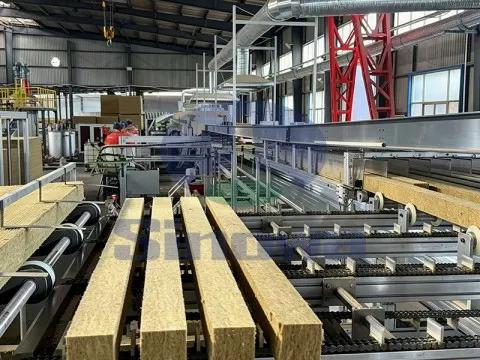
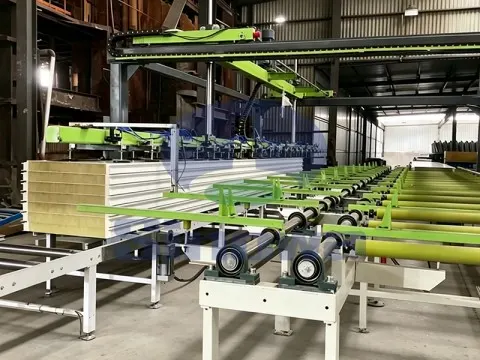
Gallery of Rockwool Sandwich Panel Equipment
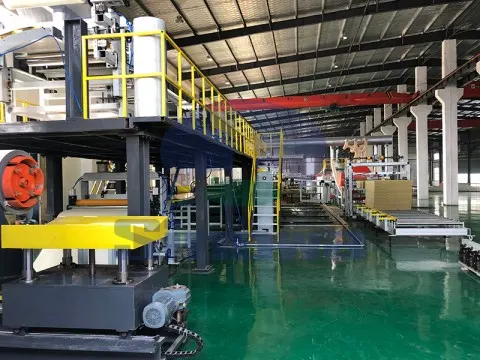
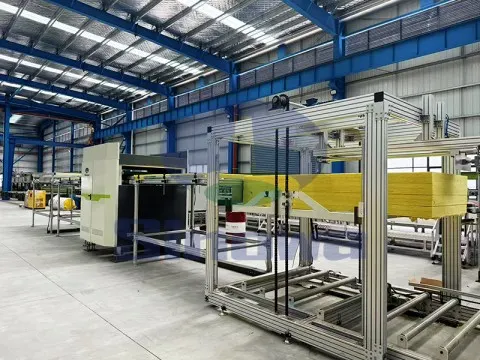
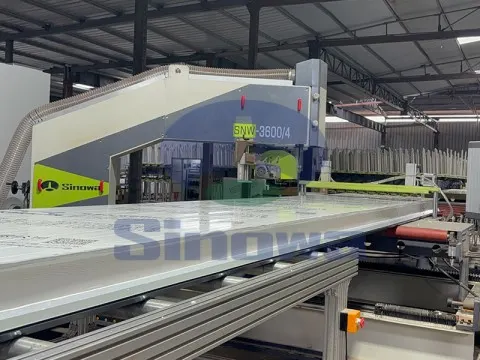
Tags: rockwool sandwich panel equipment, rockwool sandwich panel equipment manufacturer, rockwool sandwich panel equipment supplier, china rockwool sandwich panel equipment, rockwool sandwich panel equipment for sale
https://www.sandwichpanelmanufacturingline.com/blog/rockwool-sandwich-panel-equipment.html
-
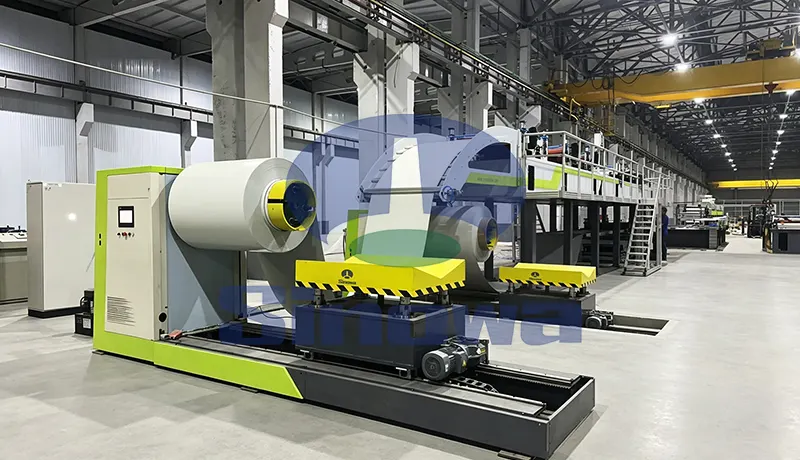
A reliable PU sandwich panel production line serves as the core equipment for manufacturing high-performance building insulation panels. This professional PU sandwich panel line features automated feeding, foaming and molding processes to ensure consistent panel thickness and structural stability. The well-designed polyurethane sandwich panel production line effectively improves production efficiency while reducing material waste in daily operation. Each calibrated polyurethane sandwich panel line can adapt to different panel sizes to meet diverse construction needs. With precise temperature and pressure control, the advanced continuous PU sandwich panel line produces panels with excellent thermal insulation and weather resistance. Meanwhile, the optimized PIR sandwich panel production line upgrades the foaming formula to enhance fire resistance performance. The high-efficiency PIR sandwich panel line maintains stable operation during long-term mass production, delivering durable and high-quality sandwich panels for various architectural and industrial applications.
-
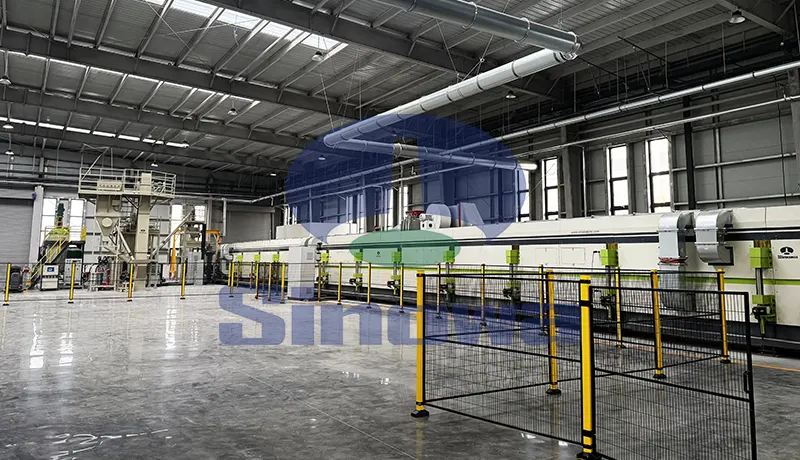
The phenolic panel production line realizes automated and continuous manufacturing of high-performance thermal insulation panels through streamlined and coordinated processing procedures.
-
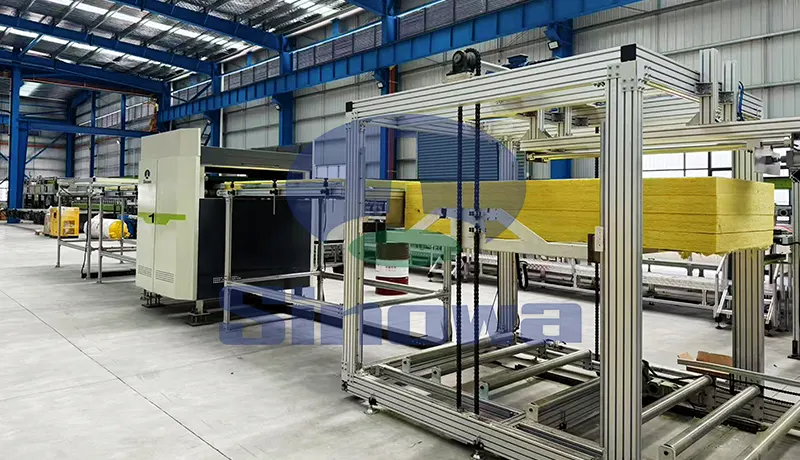
Modern insulation panel manufacturing relies on professional automated equipment to ensure stable product quality and high production efficiency. The rock wool sandwich panel production line features precise material lamination and forming processes to produce rigid, heat-insulating building panels. Meanwhile, the mineral wool sandwich panel production line adopts optimized assembly procedures to fabricate lightweight, soundproof panels widely used in architectural enclosure and thermal preservation projects.