PIR Sandwich Panel Equipment
Publication Date: Nov 17, 2026
PIR Sandwich Panel Equipment manufacturer in China, turnkey continuous production line for PIR insulated wall & roof panels. High fire rating, energy-saving, full after-sales support.
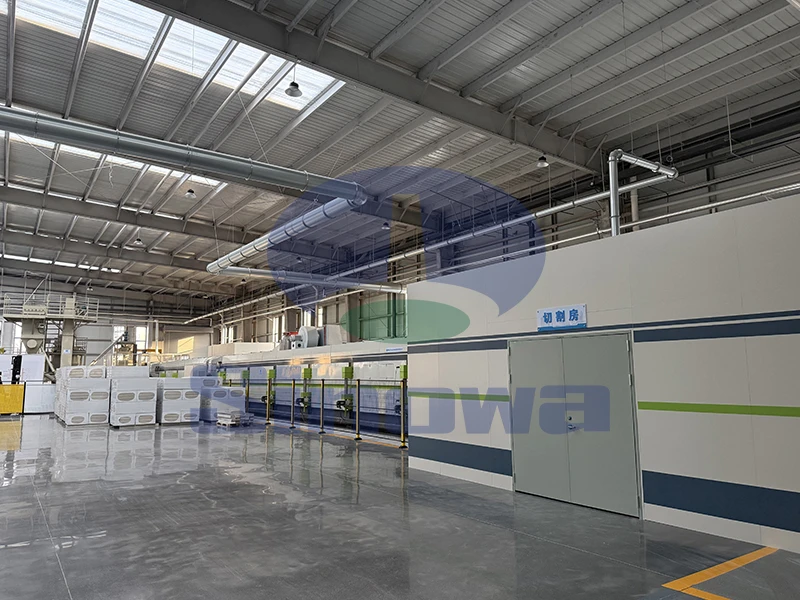
The Basic Composition and Working Logic of PIR Sandwich Panel Equipment
PIR sandwich panel equipment refers to a complete set of continuous production lines designed for manufacturing rigid polyisocyanurate foam composite panels, integrating multiple functional units into one coordinated operating system. Unlike intermittent production devices that process individual panels separately, this type of equipment achieves uninterrupted feeding, foaming, lamination, curing and cutting in a single production flow, which lays the foundation for stable output of finished panels with consistent structural performance. The whole system starts with raw material conveying modules, which separately transport upper and lower surface facings and liquid chemical raw materials for foam reaction. The facings can be flexible or rigid sheet materials with good adhesion and weather resistance, and they are tension-controlled to avoid wrinkling, offset or uneven stretching during high-speed movement. The polyisocyanurate reaction components are stored in sealed tanks with precise temperature control, because small fluctuations in material temperature will directly change the viscosity of the mixed liquid and affect the uniformity of foaming. After accurate metering by independent pumping units, the two main liquid materials are sent to a high-pressure mixing head, where intense turbulent mixing occurs within milliseconds. The mixed foaming liquid is evenly distributed on the moving lower facing through a special distribution device, and then the upper facing is covered synchronously. The composite material enters the double conveyor curing section, where pressure and temperature are maintained to support the full foaming and cross-linking reaction of PIR foam. After the foam completes curing and forms a stable core layer, the continuous plate strip is sent to the cutting unit to be divided into finished panels of specified dimensions. Auxiliary parts include waste collection devices, dust removal assemblies and safety interlock sensors, which reduce production waste and prevent abnormal operation risks. Every functional unit is matched in operating speed, and any mismatch between the speed of facing feeding and foaming output will lead to defects such as foam voids, uneven thickness and delamination between the foam core and surface layers. Operators monitor the running state through a centralized control interface, adjusting parameters such as material ratio, line speed and curing temperature according to real-time feedback. The inherent design logic of this equipment focuses on balancing reaction conditions and forming pressure, so that each finished panel can maintain stable bonding strength between the foam core and facings, and the internal foam cells form a fine and closed structure. The overall structure is built to adapt to long-time continuous operation, reducing frequent shutdowns caused by parameter instability and mechanical failure, and meeting the large-volume supply demand of construction and cold storage industries.
Raw Material Metering and Mixing System, the Heart of PIR Sandwich Panel Equipment
The metering and mixing system is the core functional module that determines the foam quality of PIR sandwich panels, and it puts forward extremely high requirements for flow accuracy, mixing uniformity and sealing stability. PIR foam is formed through the chemical cross-linking reaction between polyisocyanate and polyether composite materials, and the proportion of the two raw materials cannot deviate beyond a narrow range. If the proportion of polyisocyanate is insufficient, the cross-linking reaction will be incomplete, the foam will become soft, prone to shrinkage after curing, and the thermal stability of the finished panel will decline obviously. Excessive polyisocyanate will cause the foam to become brittle, increase internal stress, and easily produce cracks when the finished panel is bent or subjected to temperature changes. The metering part adopts independent frequency conversion metering pumps with closed-loop flow feedback, and the system corrects the pumping flow in real time according to the pressure and viscosity changes of raw materials. Raw material pipelines are equipped with heat preservation and tracing structures to keep the liquid raw materials within the optimal reaction temperature range all the time. Once the temperature drops too low, the fluidity of the material becomes poor, the mixing effect deteriorates, and large bubbles will appear inside the foam core layer. The high-pressure mixing head is the key component for material blending. The internal flow channel of the mixing head is precision machined to form a strong turbulent mixing zone. The two raw materials are injected into the mixing chamber at a set pressure and collide with each other to complete uniform blending in an extremely short time. After mixing, the foaming material flows out from the strip-shaped discharge port and spreads evenly on the moving lower facing. The mixing head is equipped with automatic cleaning mechanisms. When the production line stops for a short time, the internal residual materials can be cleaned rapidly to avoid material solidification and blockage of the flow channel. In addition to the two main reaction materials, auxiliary additives such as foaming agents, catalysts and stabilizers are also delivered through independent small-flow metering branches. Catalysts control the reaction speed of foaming and curing. A too fast reaction will make the foam solidify before it spreads evenly, while a too slow reaction will cause the foaming liquid to flow and accumulate, resulting in inconsistent thickness of the core layer. Stabilizers help to form closed cell structures and improve the dimensional stability of foam under alternating hot and cold conditions. All metering parameters can be stored as preset formulas in the control system. When switching to different panel specifications, operators can call the corresponding formula with simple operations, avoiding repeated manual debugging and reducing the probability of human error. The whole metering and mixing system runs under sealed conditions to prevent raw material volatilization, and supporting gas collection structures collect the trace volatile substances generated during the mixing process, improving the environmental performance of the production process.
Continuous Lamination and Double-Belt Curing Section for Panel Forming
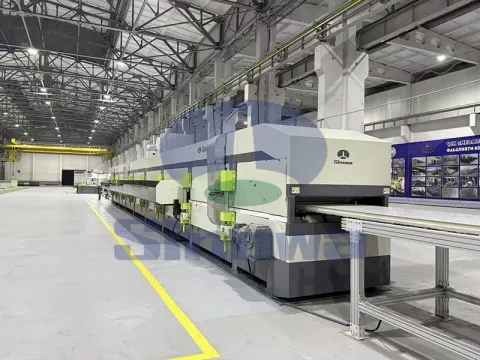
After the foaming liquid is laid on the lower facing and covered with the upper facing, the composite enters the continuous lamination and double-belt curing section, which is the key area for the PIR foam to complete foaming, rise, form cells and bond firmly with the two surface facings. This section uses two circulating steel belts arranged up and down to clamp the composite plate strip, and the clamping gap between the upper and lower belts directly determines the finished thickness of the sandwich panel. The gap can be adjusted through mechanical lifting structures according to the production requirements of different panel thicknesses, and the adjustment accuracy is strictly controlled to prevent thickness deviation of finished products. The steel belts have high flatness and wear resistance, and they run synchronously at the same speed as the front feeding and foaming units, maintaining stable traction on the composite plate strip. The pressure generated by the upper and lower belts restricts the free expansion of the foaming material, forcing the foam to expand uniformly along the horizontal direction and form a flat core layer without local bulging or depression. Inside the closed curing chamber, a constant temperature environment is maintained by circulating heating assemblies. Temperature distribution needs to be uniform along the whole length of the curing channel. The front section of the curing area is suitable for the initial foaming and reaction stage, and the temperature is set to promote the rapid initiation of cross-linking. The middle section maintains the temperature required for cell growth and shaping, and the rear section stabilizes the internal structure of the foam to complete the post-curing reaction. If the local temperature in the curing chamber is too high, the foam reaction speed surges, internal stress accumulates, and the finished panel is prone to warping after leaving the curing section. Low local temperature will lead to incomplete reaction, the foam core will be sticky, and the bonding force between the foam and facings will be insufficient, which is easy to peel off in later use. The side baffles on both sides of the double-belt limit the lateral overflow of foaming materials and shape the straight side edges of the continuous plate strip. The running speed of the steel belt matches the reaction cycle of PIR foam. If the line speed is too fast, the material cannot finish curing within the residence time in the curing section; if the speed is too slow, excessive cross-linking will make the foam excessively hard and brittle. The surface of the steel belt is treated with anti-sticking coating, which prevents the foaming material from adhering to the belt surface and reduces the cleaning workload during equipment maintenance. The circulating steel belt is supported by a large number of roller groups, which evenly disperse the pressure and avoid indentation on the surface of the facing. The whole curing section is equipped with heat preservation outer shell to reduce heat loss and stabilize the internal thermal environment, which also helps to control the energy consumption of long-term continuous production. After exiting the double-belt curing section, the continuous plate strip has formed a stable three-layer composite structure, and the bonding interface between foam core and facings has basically reached the designed bonding strength.
Traction, Cutting and Post-Processing Modules of the Production Line
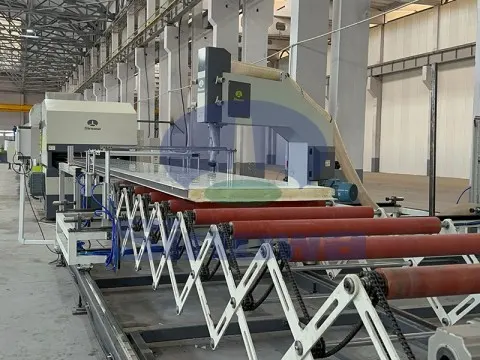
After the continuous PIR sandwich plate strip comes out of the curing section, it enters the traction, cutting and post-processing module, which converts the endless plate strip into independent finished panels of the required length and completes surface finishing and edge treatment. The traction unit uses paired traction rollers to clamp the plate strip and provide stable forward power. The running speed of the traction rollers is synchronized with the speed of the front double-belt conveyor. The tension is controlled moderately. Excessive traction tension will stretch the surface facings and cause deformation of the finished panel; insufficient traction will lead to slipping, resulting in inaccurate cutting length. An encoder is installed on the traction mechanism to record the conveying length of the plate strip in real time. When the accumulated length reaches the preset finished panel size, the cutting system is triggered to start cutting action. There are two common cutting forms applied in this equipment: flying saw cutting and hydraulic shearing cutting. Flying saw cutting moves synchronously with the moving plate strip during cutting, so it can complete the cutting action without stopping the production line, which is suitable for high-speed continuous production scenarios and effectively improves the overall production efficiency. Hydraulic shearing has the advantages of stable cutting force and neat section, and it is often used for panels with thicker core layers and harder facings. The cutting tool is equipped with cooling and chip removal structures to reduce the heat generated by friction during cutting, prevent the local PIR foam at the cutting section from being scorched and deformed, and collect the fine foam debris produced. After cutting, the finished panels are conveyed to the post-processing station by the output roller table. The post-processing link includes edge trimming, surface inspection and stacking arrangement. Edge trimming devices trim the residual foam burrs and uneven parts on both sides of the panel to ensure the straightness of the panel edges, which is convenient for tight splicing during on-site installation. The surface inspection station is equipped with visual detection components and manual inspection positions, which can screen out panels with surface scratches, delamination, pits and other appearance defects. Qualified panels are transported to the stacking area, and the stacking mechanism automatically arranges the panels neatly according to the set stacking height. Soft buffer pads are set on the stacking platform to avoid surface abrasion caused by direct collision between panels. The stacking speed is matched with the cutting rhythm to prevent panel accumulation and blockage on the roller table. Waste materials generated by cutting and trimming are collected through a centralized conveying pipeline and sent to the waste storage area for unified processing. The parameters of cutting length, cutting frequency and stacking quantity can be adjusted on the central control terminal according to customer order requirements. The whole post-processing module is designed to reduce manual intervention, avoid damage to finished panels caused by frequent manual handling, and ensure the consistency of the appearance and dimensional accuracy of the products leaving the production line.
Automatic Control System and Human-Machine Interaction of PIR Sandwich Panel Equipment
The automatic control system is the command center of the whole PIR sandwich panel production line, which connects all mechanical, hydraulic, pneumatic and detection units together to realize coordinated and interlocked operation of each station. The core of the control system adopts a programmable controller, which collects real-time signals from flow sensors, temperature sensors, pressure sensors, speed encoders and position switches distributed on each equipment section. These data are transmitted to the human-machine touch screen, presenting the operating parameters of the whole production line in the form of charts and digital values. Operators can view the raw material flow, mixing pressure, curing temperature, line speed, cutting length and equipment alarm information on the interface. All adjustable parameters can be set and modified on the touch screen, and the system supports saving multiple groups of production formulas corresponding to different panel thicknesses, facing types and foam density requirements. When switching product specifications, calling the stored formula can quickly complete parameter setting, which greatly shortens the debugging time between different orders. The system is equipped with multiple safety interlock logic. If the raw material tank level is too low, the metering pump will be automatically limited to prevent empty pumping and air from entering the mixing pipeline. When the temperature of the curing chamber exceeds the safe range, the system sends out an audible and visual alarm, and can slow down or stop the feeding process according to the preset strategy. If the steel belt deviates from the normal running track, the deviation correction sensor will trigger the automatic deviation correction mechanism to adjust the roller angle and reset the steel belt position. The control system also records production data automatically, including cumulative output, running time, parameter change records and alarm logs. These historical records can be exported for production analysis, helping managers to count output efficiency, analyze frequent failure points and optimize production parameters. The operation authority is divided into different levels. Ordinary production operators only have the authority to view parameters and call formulas, while maintenance personnel and technical engineers can modify deep parameter settings and calibration data, which avoids misoperation by untrained personnel. The human-machine interface adopts a concise layout, and the alarm information is marked with obvious color distinction. Fault prompts include corresponding troubleshooting suggestions, reducing the difficulty for on-site staff to judge the cause of abnormalities. The control cabinet is designed with dustproof and heat dissipation structure, adapting to the harsh environment of the production workshop with dust and temperature changes. Communication cables between the control cabinet and on-site sensors adopt anti-interference shielding measures to avoid signal distortion caused by the operation of high-power motors. The control system can also reserve extended communication interfaces. When users need to connect the production line with upper factory management systems later, data docking can be realized to further realize digital workshop management.
Mechanical Structure Design and Wear Resistance of Key Components
The long-term continuous operation of PIR sandwich panel line puts forward high requirements on the mechanical strength, structural stability and wear resistance of key components. The main frame of the whole production line is welded and assembled with thick section steel, and stress relief treatment is carried out after welding to reduce internal welding stress. This prevents the frame from gradual deformation after long-term load bearing, which would cause the parallelism deviation of the upper and lower steel belts and affect the thickness uniformity of panels. All transmission shafts, supporting rollers and driving rollers are processed with high-precision turning and grinding, and the surface is treated with wear-resistant coating or quenching hardening. The supporting rollers under the circulating steel belt bear the pressure of the foaming expansion process. If the roller surface wears unevenly, indentations will appear on the surface of finished panels. Bearings used for roller rotation adopt sealed heavy-duty bearings, which can resist the invasion of foam dust and debris generated in the production environment, and extend the service cycle of rotating parts. The high-pressure mixing head, as a component directly in contact with reactive chemical raw materials, is made of corrosion-resistant alloy materials. The internal flow channel needs to maintain high surface finish to avoid raw material residue and local material accumulation that will solidify into blocks. The discharge lip of the mixing head requires extremely high flatness. Slight deformation or abrasion of the lip edge will lead to uneven distribution of foaming liquid along the width direction, resulting in inconsistent foam thickness on the left and right sides of the panel. The steel belt of the double-belt curing section is made of special alloy steel with good toughness and heat resistance. It needs to withstand continuous cyclic tension and the temperature change in the curing chamber, and maintain flatness after repeated bending around the roller groups. The traction roller surface is covered with high friction and anti-aging rubber layer. It provides stable friction force to pull the plate strip, and will not scratch the surface facings of the panel. The cutting saw blade and shearing blade are made of hard alloy tool materials. In the process of cutting composite materials containing metal or organic facings and hard PIR foam, the blade keeps sharp for a long time and reduces the frequency of disassembly and grinding. The pneumatic and hydraulic actuators used for deviation correction, pressing and cutting are equipped with oil and water separation and filtering devices. Impurities in compressed air and hydraulic oil are filtered to prevent the jamming of valve cores and cylinder piston rods. Each key moving part is equipped with an automatic lubrication system. The lubrication pump regularly quantitatively injects lubricating oil into bearing pairs and gear transmission structures, reducing dry friction and wear. The lubrication system can feed back the lubrication state. When the lubricant level is insufficient or the oil pipeline is blocked, an alarm will be issued to remind maintenance. The whole equipment reserves maintenance operation space at the positions of the mixing head, steel belt, cutting mechanism and transmission box. The connecting structure adopts quick disassembly design, which facilitates the replacement of wearing parts and reduces the downtime required for routine maintenance.
Adaptability of Equipment to Different Surface Facing Materials
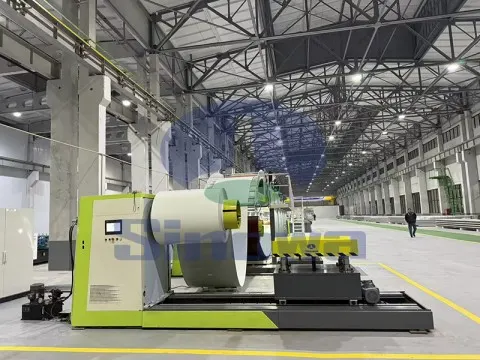
A prominent advantage of mature PIR sandwich panel manufacturing line lies in its strong adaptability to different types of surface facings, and it can match multiple facing materials by adjusting feeding, tension control and pre-treatment units. Metal sheet facings are widely used. They have high surface rigidity, good impact resistance and decorative performance. When metal facings are used, the feeding section is equipped with an uncoiler and leveling machine. The coiled metal sheet is leveled first to eliminate the inherent bending radian of the coil, and then sent to the production line after tension adjustment. The tension control parameter of metal facings needs to be set at a moderate level. Too large tension will cause elastic deformation of the metal sheet, and the panel will rebound and warp after leaving the curing section. Besides metal facings, various organic composite sheets, fiber reinforced sheets and flexible membrane materials can also be used as the surface layer of PIR sandwich panels. For relatively brittle rigid facings, the feeding speed and traction force need to be reduced appropriately, and soft pressing rollers are used to avoid cracking or chipping of the facing edges. For flexible facings with thin thickness, the tension control accuracy needs to be further improved, and anti-wrinkle auxiliary rollers are added to prevent the material from folding and drifting sideways during operation. Some facings require surface pre-treatment before compounding with PIR foam. The pre-treatment unit installed on the feeding line can carry out surface cleaning, corona activation or primer coating. The activation treatment improves the surface energy of the facing material, strengthens the bonding effect between the facing and PIR foam, and reduces the risk of interface delamination in the long-term use of finished panels. When switching between different facings, the equipment can adjust the pressing force of the upper and lower belts, the temperature curve of the curing section and the formula of foaming raw materials correspondingly. Different facings have different thermal conductivity and heat resistance. A facing with poor heat resistance cannot bear too high temperature in the curing section, otherwise surface discoloration, deformation and performance decline will occur. The equipment also supports the production of single-sided special panels. Under this working mode, one side uses conventional facings and the other side directly forms a self-skin foam surface through the control of foaming parameters and belt surface conditions. The width range of the production line can be adjusted within the design scope, adapting to facings of different widths. The side baffle position of the double-belt curing section moves synchronously with the width adjustment, ensuring that the edge shaping of the foam core matches the width of the facings. The inspection module after cutting can also switch the inspection standards according to different facing characteristics. For metal facings, the focus is to detect scratches and indentations; for fiber composite facings, attention is paid to check surface fiber exposure and local penetration defects. This multi-material adaptability enables one set of equipment to produce sandwich panels oriented to multiple application scenarios, improving the utilization rate of production equipment and expanding the product portfolio of manufacturers.
Energy Consumption Control and Thermal Management of PIR Sandwich Panel Equipment
Energy consumption control is an important part of the design of PIR sandwich panel production line, and thermal management runs through the raw material storage, mixing, curing and finished product cooling stages of the whole production process. The curing section is the main energy consumption source of the production line, because it needs to maintain a stable high-temperature environment for a long time to support the cross-linking reaction of PIR foam. The outer shell of the curing chamber adopts high-performance thermal insulation materials with low thermal conductivity, which reduces the heat transferred from the inside of the chamber to the external workshop environment. The internal heating components adopt zoned independent temperature control. Each temperature zone can independently adjust the heating power according to the real-time temperature feedback, instead of full-power continuous heating. When the production line runs at a low speed, the required heat input decreases, and the system automatically reduces the output power of the heating assembly to avoid unnecessary energy waste. The hot air circulating fan inside the curing chamber promotes the flow of hot air, making the temperature distribution more uniform, and avoiding the local overheating caused by concentrated heat source. The raw material storage and conveying pipeline also have thermal tracing systems. Compared with directly heating the curing chamber to compensate for the low temperature of raw materials, preheating raw materials to the optimal reaction temperature with low-power tracing has higher energy utilization efficiency. The circulating steel belt carries a large amount of heat when it leaves the high-temperature curing chamber. Some equipment designs add heat recovery structures near the outlet of the curing section. The residual heat taken away by the steel belt is recovered and used for preheating the fresh air entering the curing chamber or preheating raw material pipelines, realizing the recycling of waste heat. After the finished panel is cut, it has a relatively high temperature. A slow cooling channel is arranged after the cutting station. The panel naturally dissipates heat in the channel before stacking, which avoids heat accumulation inside the stacked panels and prevents secondary thermal deformation. The driving motors of each transmission unit adopt energy-saving variable frequency motors. The output power of the motor changes with the actual load. When the production line runs without materials or at low speed, the motor automatically reduces power operation, which is obviously different from the constant-speed fixed power drive mode. The control system counts the energy consumption data corresponding to different production speeds and different panel specifications. Production technicians can find the production speed interval with the best energy efficiency through data comparison, and arrange production plans reasonably. While controlling energy consumption, thermal management also needs to avoid excessive pursuit of energy saving that damages product quality. Insufficient heat supply will lead to incomplete foam reaction and unstable product performance. Therefore, the thermal control strategy always takes the stability of foaming reaction as the premise, and optimizes energy use on this basis. The sealing performance of the curing chamber door and the gap between the inlet and outlet of the plate strip are also optimized. Flexible sealing strips are used to reduce hot air leakage from the gap, which is a simple but effective measure to reduce energy loss. Good thermal management design can reduce the long-term operating cost of the production line and reduce the thermal impact of the equipment on the surrounding workshop environment.
Daily Maintenance, Fault Diagnosis and Service Life Management of Equipment
Scientific daily maintenance and standardized fault diagnosis mechanisms are essential to keep PIR sandwich panel equipment running stably for a long time and extend its service life. Maintenance work is divided into daily inspection, regular minor maintenance and periodic overhaul. Daily inspection is carried out by on-site operators before starting up and after shutting down every day. The inspection content includes checking whether the raw material pipeline has leakage, whether the pressure and temperature of the mixing head are normal, whether the steel belt has scratches, cracks and deviation signs, and whether the cutting blade is sharp. Operators also need to clean the foam dust and debris accumulated on the roller group, sensor probe and guide rail in time. If foam debris accumulates on the deviation correction sensor, it will shield the detection signal and cause steel belt deviation failure. The lubrication system oil level, hydraulic station oil level and compressed air pressure are also checked daily to ensure that the power and auxiliary systems are in normal standby state. Regular minor maintenance is arranged according to the cumulative running time of the equipment. During minor maintenance, the filter elements of raw material pipelines, hydraulic oil filters and air filters are replaced. The mixing head is disassembled and thoroughly cleaned to remove the tiny solidified material residues accumulated in the flow channel. The tension of transmission chains and belts is adjusted, and the fastening bolts of the frame and roller support are re-tightened to prevent loosening caused by long-term vibration. Periodic overhaul is a deeper maintenance work. The overhaul cycle is longer. During overhaul, the wear of rollers, bearings, steel belts and cutting blades is measured. Components whose wear exceeds the allowable range are replaced in advance to prevent sudden failure during production. The control system is calibrated synchronously during maintenance, including the calibration of flow sensors, temperature sensors and length encoders, to ensure that the collected data and control output are accurate. The equipment control system records fault codes and alarm information, which provides a basis for fault diagnosis. Common faults such as unstable material flow, steel belt deviation, poor foaming effect and inaccurate cutting length correspond to specific alarm codes. Maintenance personnel can quickly locate the fault link according to the code, check the corresponding sensor, actuator or mechanical structure. For hidden faults without obvious alarm, they can be judged by comparing the current production parameters with the normal historical data, such as the gradual increase of mixing pressure indicating that the flow channel is slowly blocked. It is recommended to establish a complete equipment maintenance file, recording the time and content of each maintenance, the replaced parts and the fault handling process. The maintenance file can help summarize the failure law of components, formulate a more targeted parts reserve plan, and reduce the waiting time for spare parts when breakdown occurs. Operators and maintenance personnel need to receive special training, master the correct startup and shutdown sequence, and be familiar with the forbidden operation items. Improper operation such as feeding raw materials when the mixing head is blocked, or adjusting the steel belt gap under load, will cause irreversible damage to the mechanical structure. Good maintenance habits can avoid most sudden shutdown failures, improve the equipment operation rate, and make the equipment maintain stable production performance in the whole service cycle.
Development Trend of PIR Sandwich Panel Equipment and Technical Evolution Direction
With the continuous expansion of the application scenarios of PIR sandwich panels, the related production equipment is also evolving toward higher production speed, stronger intelligent level, higher raw material utilization rate and more flexible production capacity. The first evolution direction is the improvement of continuous production speed, while maintaining stable product quality. Early equipment is limited by the reaction speed matching of the foaming system and the curing capacity, and the line speed cannot be increased too much. New generation equipment optimizes the mixing structure, the length layout of the curing section and the temperature zoning logic, so that the PIR foam can complete the reaction and forming within a shorter residence time, supporting higher linear speed production and improving the single-line output capacity. The second trend is the deepening of intelligent perception and autonomous adjustment. Traditional equipment relies on technicians to judge the quality of panels by experience and manually adjust parameters. Newer equipment introduces online detection technology. Imaging sensors and thickness detection sensors are installed in the production line to detect the foam core density distribution, panel thickness uniformity and bonding state in real time. The control system can automatically fine-tune the raw material ratio, mixing pressure and curing temperature according to the online detection results, forming a closed-loop quality control without human intervention. The third development direction is the improvement of raw material utilization and the reduction of production waste. Optimized foaming distribution structure makes the foaming liquid spread more evenly along the width direction, reducing the trimming waste on both sides of the panel. The waste generated by cutting and trimming can be matched with auxiliary crushing and recycling devices to realize resource treatment of foam waste. At the same time, the equipment structure is optimized to reduce the residual amount of raw materials in the pipeline and mixing head during material change and shutdown, cutting down the waste of expensive chemical raw materials. Flexible production is also an important development direction. Modern market orders show the characteristics of small batch and multiple specifications. The new equipment shortens the specification switching time, and the adjustment of panel width, thickness and facing type can be completed rapidly through electric and automatic execution mechanisms, without a large number of manual disassembly and adjustment work. In terms of human protection and workshop environment optimization, the new equipment optimizes the sealing and collection structure of volatile substances generated in the foaming reaction process, further reducing the escape of trace volatiles to the workshop space and improving the working environment of operators. The modular design idea is gradually widely adopted. The whole production line is divided into independent functional modules such as feeding module, foaming module, curing module and cutting module. Users can select and combine modules according to their own output scale and product positioning, instead of purchasing a fixed full set of large production line at one time. When production capacity needs to be expanded in the later stage, functional modules can be added on the basis of the original equipment frame, which reduces the initial investment threshold and improves the scalability of the equipment. In the long run, the technical iteration of PIR sandwich panel equipment will always revolve around the core goal of stably manufacturing high-performance composite panels, continuously balancing production efficiency, product quality, operating cost and environmental performance, and adapting to the ever-changing market demand for thermal insulation composite panels.
Gallery of PIR Sandwich Panel Equipment
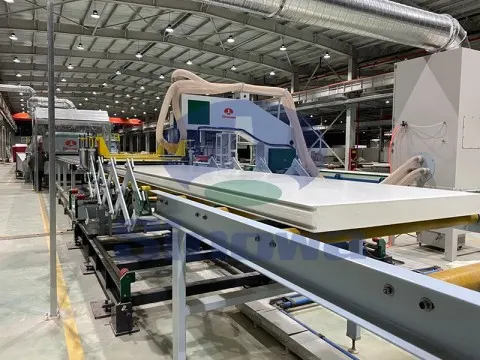
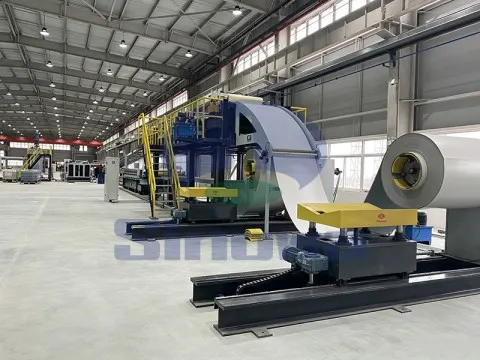
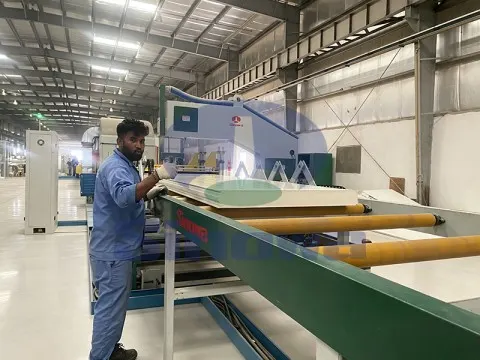
Tags: pir sandwich panel equipment, pir sandwich panel equipment manufacturer, pir sandwich panel equipment supplier, china pir sandwich panel equipment, pir sandwich panel equipment for sale
https://www.sandwichpanelmanufacturingline.com/blog/pir-sandwich-panel-equipment.html
-
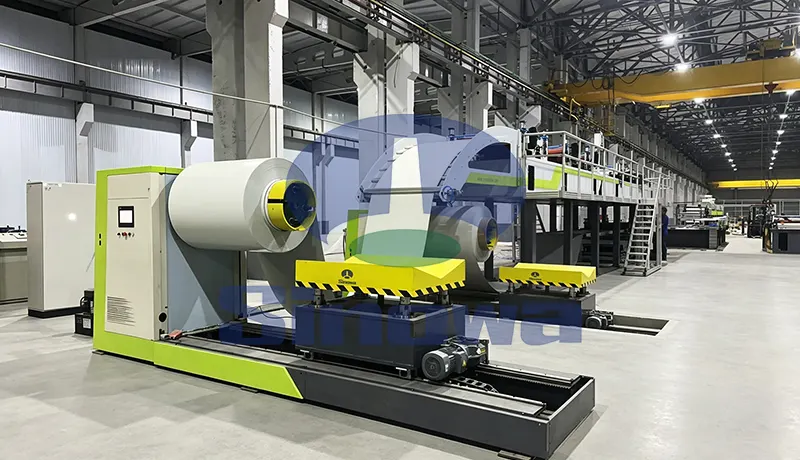
A reliable PU sandwich panel production line serves as the core equipment for manufacturing high-performance building insulation panels. This professional PU sandwich panel line features automated feeding, foaming and molding processes to ensure consistent panel thickness and structural stability. The well-designed polyurethane sandwich panel production line effectively improves production efficiency while reducing material waste in daily operation. Each calibrated polyurethane sandwich panel line can adapt to different panel sizes to meet diverse construction needs. With precise temperature and pressure control, the advanced continuous PU sandwich panel line produces panels with excellent thermal insulation and weather resistance. Meanwhile, the optimized PIR sandwich panel production line upgrades the foaming formula to enhance fire resistance performance. The high-efficiency PIR sandwich panel line maintains stable operation during long-term mass production, delivering durable and high-quality sandwich panels for various architectural and industrial applications.
-
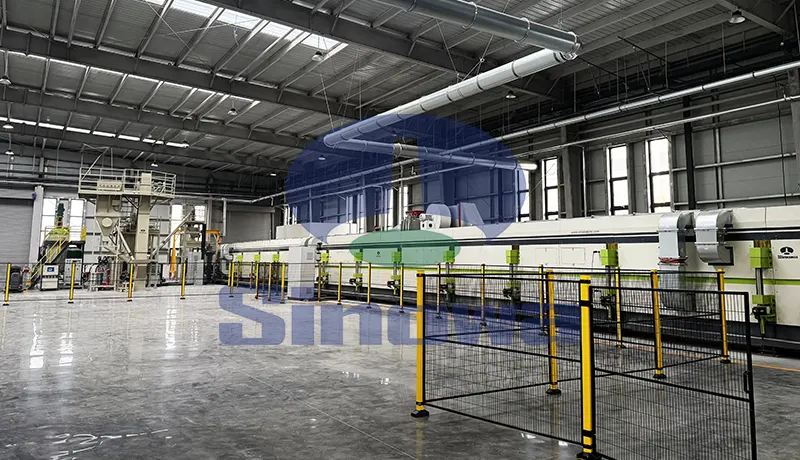
The phenolic panel production line realizes automated and continuous manufacturing of high-performance thermal insulation panels through streamlined and coordinated processing procedures.
-
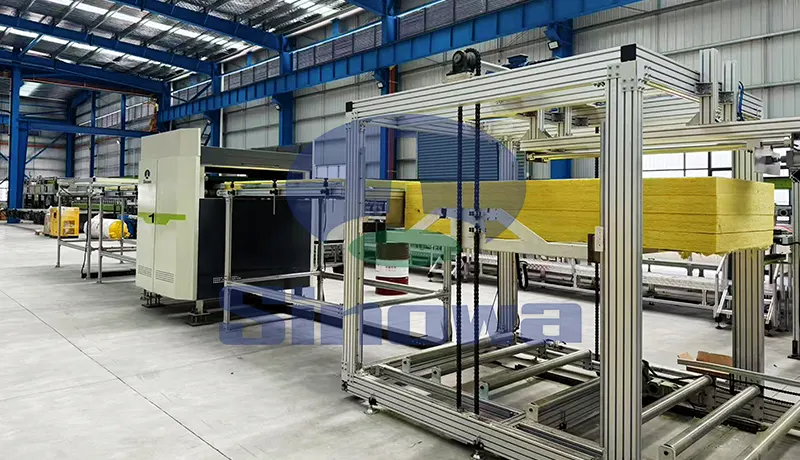
Modern insulation panel manufacturing relies on professional automated equipment to ensure stable product quality and high production efficiency. The rock wool sandwich panel production line features precise material lamination and forming processes to produce rigid, heat-insulating building panels. Meanwhile, the mineral wool sandwich panel production line adopts optimized assembly procedures to fabricate lightweight, soundproof panels widely used in architectural enclosure and thermal preservation projects.