Heat Insulation Rock Wool Sandwich Panel Line
Publication Date: Oct 12, 2026
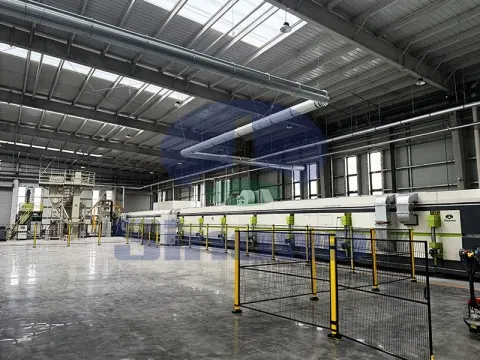
The heat insulation rock wool sandwich panel line is an integrated automated production system for manufacturing high-performance building insulation panels. It unifies raw material processing, composite lamination, curing and shaping to produce durable, thermally efficient panels for modern construction projects.
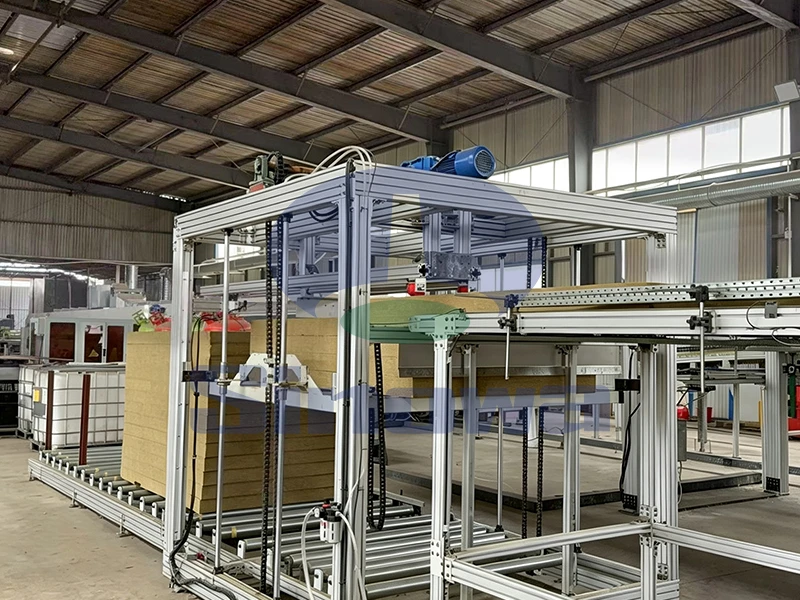
The heat insulation rock wool sandwich panel production system serves as a comprehensive automated manufacturing solution dedicated to producing composite building panels with superior thermal insulation and structural stability. Unlike traditional segmented production equipment that relies on frequent manual intervention, this integrated line combines multiple independent processing procedures into a continuous streamlined workflow, covering all core manufacturing stages from raw material pretreatment to finished product output. The system adopts integrated mechanical transmission and intelligent parameter control technologies, which effectively avoids the quality fluctuations and low efficiency caused by discontinuous processing. It is specially designed to adapt to the large-scale production needs of insulation building materials, and can stably manufacture composite panels with rock wool as the core insulation medium and metal sheets as outer protective layers, laying a solid foundation for the standardized production of high-quality building thermal insulation components.
Raw material pretreatment and feeding constitute the initial core stage of the entire production process, which directly determines the basic quality of finished rock wool sandwich panels. The system supports the automatic feeding and sorting of two key raw materials: rock wool core materials and metal surface materials. For rock wool raw materials, the equipment completes uniform loosening, impurity removal and thickness calibration, ensuring the internal fiber structure of the rock wool is loose and uniform without agglomeration or missing areas. For metal sheet materials, the pretreatment process includes surface cleaning, flattening and fine profiling, eliminating surface wrinkles, scratches and uneven radian problems. The automated feeding mechanism realizes synchronous and quantitative conveying of internal and external materials, maintaining stable material supply speed and dosage, which avoids material waste and production interruption caused by manual feeding errors, and creates consistent preconditions for subsequent composite processing.
Rock wool fiber arrangement and core layer molding are key processes that determine the thermal insulation and mechanical properties of sandwich panels. The production line is equipped with a professional vertical fiber orientation mechanism, which can adjust the arrangement direction of rock wool fibers to make them vertically distributed relative to the outer metal plates. This unique fiber arrangement mode is different from the random horizontal distribution of traditional rock wool materials, which greatly improves the compressive resistance, structural firmness and overall stability of the rock wool core layer. During the molding process, the system precisely controls the density and thickness of the rock wool layer through constant-pressure molding technology, ensuring uniform density distribution of the core layer of each panel. Reasonable fiber arrangement and stable core molding not only enhance the thermal insulation effect of the panel, but also optimize its sound absorption and fire resistance performance, realizing the multi-functional improvement of the core material.
Glue coating and composite bonding processes ensure the tight combination of rock wool core layer and metal surface layers, which is the key to avoiding panel delamination and falling off in later use. The production line adopts automatic uniform glue coating equipment, which can carry out quantitative and even glue spraying on the bonding surfaces of metal plates and rock wool layers. The intelligent glue coating system adjusts the glue amount and coating range according to the panel specification, effectively avoiding excessive glue overflow or local glue shortage. After glue coating, the equipment completes the precise alignment and fitting of the surface layer and core layer through mechanical positioning and pressing technology. The composite fitting process maintains stable pressure and fitting speed, ensuring that the bonding interface is completely closely attached without gaps. This precise bonding process greatly improves the overall structural integrity of the sandwich panel, enhancing its durability and weather resistance in long-term use.
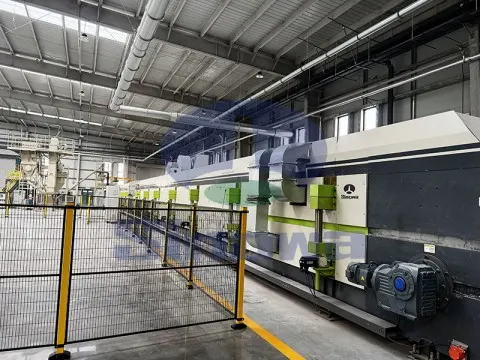
Constant temperature curing and integral shaping are essential links to solidify the bonding structure and finalize the panel shape. After composite fitting, the semi-finished panels enter the constant temperature curing area of the production line for continuous thermal curing treatment. The closed curing system maintains a stable internal temperature environment, which can fully activate the adhesive components, promote the complete curing of the bonding layer, and form a firm and durable bonding structure between layers. During the curing process, the equipment is equipped with a synchronous shaping mechanism, which fine-tunes the flatness and overall dimension of the panel to eliminate minor deformation generated in the composite process. Scientific curing time and stable temperature control ensure that the bonding strength of the panel reaches the optimal state, effectively preventing layer separation, bulging and other quality problems in subsequent use, and greatly improving the structural stability of finished products.
Precision cutting and edge finishing processes realize the standardized sizing and neat appearance of finished panels. After curing and shaping, the continuous integrated panel is transported to the cutting unit through the automated conveying system. The high-precision cutting device adopts intelligent numerical control positioning technology, which can flexibly adjust the cutting length and width according to different production requirements, realizing accurate sizing of panels of various specifications. The cutting process is stable and efficient, with smooth and flat cutting sections without burrs, cracks or fiber scattering. Subsequently, the edge finishing mechanism polishes and trims the panel edges, optimizing the edge flatness and sealing performance. Perfect cutting and finishing treatment not only improves the appearance quality of the product, but also facilitates the seamless assembly and installation of panels in actual construction scenarios.
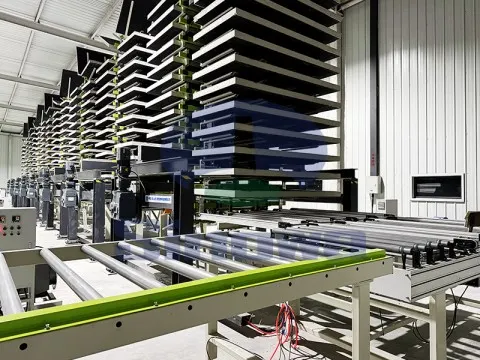
Automatic stacking and finished product output form the final link of the entire production cycle, realizing unmanned and efficient finished product sorting and storage. After cutting and finishing, the qualified panels are automatically conveyed to the stacking area, and the intelligent stacking equipment completes orderly stacking and arrangement according to fixed specifications. The system can adjust the stacking quantity and arrangement mode according to product types, effectively avoiding panel collision, extrusion and surface damage during stacking. The automated output and stacking mode replaces traditional manual handling and sorting, greatly reducing labor investment while improving production efficiency and finished product cleanliness. The neatly stacked finished panels are convenient for subsequent packaging, transportation and storage, realizing the seamless connection of the entire production process from raw material input to finished product output.
The automated control system of the production line guarantees the overall stability and intelligent operation of the manufacturing process. The entire production process is centrally controlled by an intelligent operating system, which can monitor and adjust key production parameters in real time, including feeding speed, molding pressure, curing temperature, cutting size and other core indicators. The system has automatic error correction and parameter memory functions, which can quickly adjust deviations when subtle changes occur in the production process, ensuring consistent product quality in batch production. In addition, the intelligent control platform simplifies the operation process, reduces the dependence on professional operating skills, and effectively reduces the error rate caused by manual operation. The integrated control mode realizes the coordinated operation of all functional units of the production line, maximizing the overall production efficiency.
The production line has prominent comprehensive performance advantages in production efficiency and product quality stability. Compared with semi-automatic and manual production modes, the fully continuous streamlined operation eliminates intermediate waiting, transfer and repeated debugging links, realizing uninterrupted batch production and significantly improving unit output. In terms of quality control, the whole process of mechanical precision processing and intelligent parameter monitoring avoids the instability of manual operation, making the density, bonding strength, dimensional accuracy and surface flatness of finished panels highly unified. Meanwhile, the optimized production process reduces raw material waste and energy consumption in the processing process, achieving efficient and energy-saving production, and adapting to the growing market demand for high-performance insulation building materials.
Rock wool sandwich panels produced by this professional production line have excellent comprehensive application performance and wide industry adaptability. Benefiting from the high-quality rock wool core material and precise composite process, the panels have outstanding thermal insulation performance, which can effectively block heat transfer and reduce building energy consumption. At the same time, the panels retain the inherent fire resistance and sound absorption characteristics of rock wool materials, with good safety and comfort optimization effects for building spaces. The integrated structure formed by precise composite bonding gives the panels good compressive resistance, wind resistance and weather resistance, enabling them to adapt to various complex construction environments. These excellent performances make the panels widely applicable to industrial factory buildings, public buildings, cold storage insulation and other scenarios, providing reliable lightweight and energy-saving insulation solutions for modern architectural engineering.
Tags: heat insulation rock wool sandwich panel line, heat insulation rock wool sandwich panel line manufacturer, heat insulation rock wool sandwich panel line supplier, china heat insulation rock wool sandwich panel line, heat insulation rock wool sandwich panel line for sale
-

A reliable PU sandwich panel production line serves as the core equipment for manufacturing high-performance building insulation panels. This professional PU sandwich panel line features automated feeding, foaming and molding processes to ensure consistent panel thickness and structural stability. The well-designed polyurethane sandwich panel production line effectively improves production efficiency while reducing material waste in daily operation. Each calibrated polyurethane sandwich panel line can adapt to different panel sizes to meet diverse construction needs. With precise temperature and pressure control, the advanced continuous PU sandwich panel line produces panels with excellent thermal insulation and weather resistance. Meanwhile, the optimized PIR sandwich panel production line upgrades the foaming formula to enhance fire resistance performance. The high-efficiency PIR sandwich panel line maintains stable operation during long-term mass production, delivering durable and high-quality sandwich panels for various architectural and industrial applications.
-

The phenolic panel production line realizes automated and continuous manufacturing of high-performance thermal insulation panels through streamlined and coordinated processing procedures.
-

Modern insulation panel manufacturing relies on professional automated equipment to ensure stable product quality and high production efficiency. The rock wool sandwich panel production line features precise material lamination and forming processes to produce rigid, heat-insulating building panels. Meanwhile, the mineral wool sandwich panel production line adopts optimized assembly procedures to fabricate lightweight, soundproof panels widely used in architectural enclosure and thermal preservation projects.