Acoustic Sandwich Panel Production Line
Publication Date: Oct 9, 2026
The acoustic sandwich panel production line is an automated integrated system for manufacturing sound-insulating composite panels. It completes full-process production from raw material processing to finished panel shaping, focusing on optimizing acoustic performance and structural stability for diverse building and industrial applications.
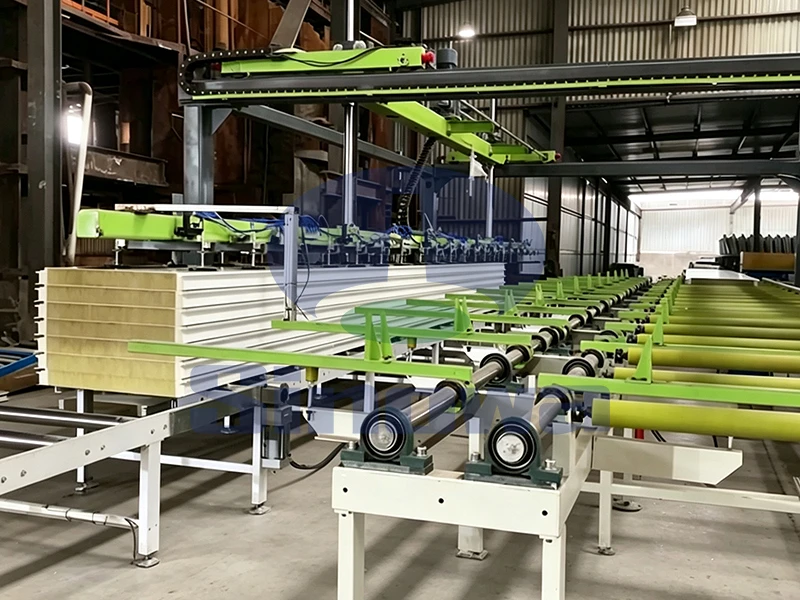
The core design concept of the acoustic sandwich panel production line centers on balancing acoustic insulation efficiency, structural durability, and continuous production capacity. Unlike ordinary sandwich panel manufacturing equipment, this production line is specially optimized to enhance the sound absorption and noise reduction functions of finished products through targeted process adjustments. It adapts to multiple composite structures composed of metal outer facings and porous sound-absorbing core materials, realizing the integrated molding of sound insulation and structural bearing functions. The entire production workflow is highly automated, minimizing manual intervention to ensure consistent product performance across batches. Each production link is precisely matched to eliminate structural gaps that may weaken acoustic effects, laying a solid foundation for the stable sound insulation performance of finished panels in complex application environments.
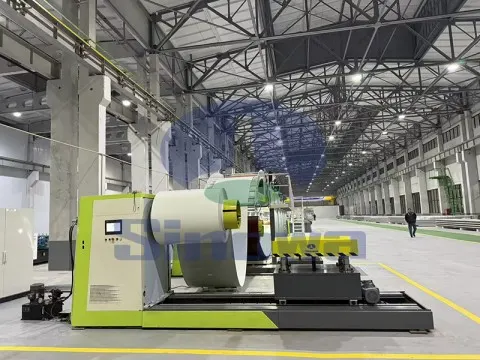
Raw material pretreatment serves as the foundational stage of the entire production process, directly determining the basic quality and acoustic performance of acoustic sandwich panels. The production line is equipped with an automatic decoiling and leveling system, which smoothly unfolds continuous metal coil materials and eliminates surface wrinkles and deformations through precise roller pressing. This process ensures the flatness of outer panel materials, avoiding uneven bonding caused by irregular surfaces that could damage the panel’s sound insulation structure. Meanwhile, core sound-absorbing materials such as porous fiber cotton and foam substrates undergo automatic cutting and sorting, with raw materials trimmed to uniform specifications to fit subsequent composite molding. The pretreatment link also includes surface cleaning treatment to remove dust and impurities, ensuring tight adhesion between materials and preventing internal voids that affect noise reduction effects.
Precision roll forming is a key process to shape the outer protective layer of acoustic sandwich panels. After pretreatment, flat metal sheets are sent to the roll forming unit, where multiple groups of precision profiling rollers gradually press the sheets into required three-dimensional profiles. The production line adopts adjustable roller spacing and pressure parameters, enabling flexible molding of different panel shapes to meet diverse installation and usage needs. The gradual forming mode avoids excessive stress concentration on metal surfaces, maintaining the structural integrity of outer panels and ensuring effective protection of internal sound-absorbing cores. Moreover, the forming process retains the surface structural uniformity required for acoustic panels, ensuring that external sound waves can uniformly penetrate the panel surface and fully interact with the internal sound-absorbing structure.
Adhesive coating and distribution is a critical link to ensure composite firmness and acoustic stability of sandwich panels. The production line is fitted with a high-precision automatic gluing system that evenly sprays high-strength environmental adhesive on the inner surface of formed metal panels. The system precisely controls glue application thickness and coverage, realizing full and uniform gluing without overflow or missing coating. A uniform adhesive layer not only enhances the bonding strength between the outer metal layer and the inner sound-absorbing core but also seals tiny gaps between materials. This sealing effect prevents sound wave leakage through structural crevices, effectively improving the overall sound insulation performance of the panel. The gluing process adapts to different core materials, with adjustable gluing formulas to match various composite structures.
Core material laying and positioning directly affects the sound absorption efficiency of finished acoustic sandwich panels. After the adhesive coating process, the production line automatically transports and lays processed sound-absorbing core materials between upper and lower metal panels. The intelligent positioning system accurately fixes the core material position to avoid offset and dislocation during composite molding, ensuring the overall structural consistency of the panel. For fiber and porous core materials, the laying process adopts a gentle conveying method to prevent fiber compression and structural damage, maintaining the original porous sound-absorbing structure of the core material. Complete and uniform core material distribution ensures that each part of the panel has stable sound wave absorption and attenuation capabilities, avoiding local noise reduction performance differences.
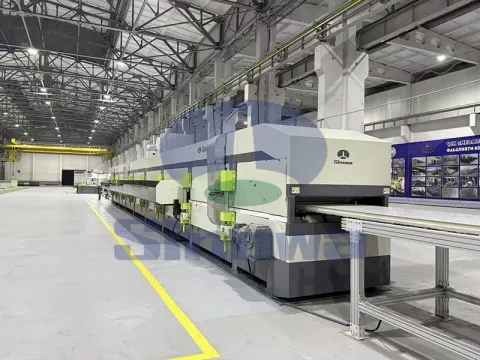
High-pressure composite lamination is the core molding process of acoustic sandwich panels, determining the overall structural compactness and performance stability of products. The production line uses a constant-temperature and constant-pressure composite system to apply uniform and stable pressure to the initially assembled composite panels. Under appropriate temperature and pressure conditions, the adhesive fully cures and bonds the outer metal layer and inner sound-absorbing core into an integrated structure. The constant-pressure design eliminates internal gaps and loose bonding problems, making the overall panel structure more compact. A compact composite structure can effectively convert sound wave vibration into internal friction energy consumption, significantly improving the panel’s medium and low-frequency noise reduction effect while enhancing structural compression and impact resistance.
Surface micro-perforation treatment is a unique customized process of the acoustic sandwich panel production line, specially designed to upgrade sound absorption performance. The automated punching unit arranges dense and regular tiny through-holes on the surface of molded composite panels. These uniform micro-pores form a professional sound attenuation structure on the panel surface, which can effectively capture incident sound waves and guide sound energy into the internal porous core layer. When sound waves pass through the micro-pores, air molecule friction and collision consume most sound energy, realizing efficient noise reduction. The production line can adjust pore diameter, pore spacing and distribution density according to usage scenarios, realizing targeted optimization of acoustic performance for different noise frequency bands.
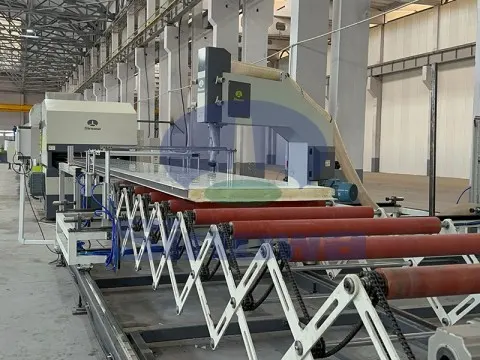
Precision cutting and edge trimming processes standardize the final size and appearance quality of acoustic sandwich panels. After composite molding and perforation treatment, continuous long panels are transported to the automatic cutting unit, which cuts panels into standard fixed sizes according to preset parameters. The high-precision cutting device ensures smooth and flat cutting sections without burrs or irregular notches. Subsequent edge trimming procedures polish and seal panel edges to prevent core material exposure and edge deformation. Standardized size processing ensures high matching degree in on-site assembly, while neat edge sealing maintains the overall structural tightness of assembled panels, avoiding sound leakage from splicing gaps and ensuring the overall acoustic effect of the assembled wall or ceiling system.
Cooling and shaping is an essential post-processing step to stabilize the comprehensive performance of acoustic sandwich panels. Panels after high-pressure lamination and cutting retain certain molding temperature and internal stress, so the production line is equipped with a circulating cooling system for gradual and uniform cooling treatment. The slow cooling mode effectively releases internal structural stress, preventing panel warping, deformation and adhesive cracking caused by rapid temperature change. After cooling and shaping, the bonding performance, flatness and structural stability of the panels reach the optimal state, and the acoustic structure is fully fixed to ensure long-term stable noise reduction effect in subsequent use.
Automatic stacking and finished product output realize efficient and standardized finished product management of the production line. The sorted and qualified acoustic sandwich panels are automatically transported to the stacking platform by the conveying system, and the intelligent stacking device neatly stacks panels in fixed specifications. This automated process replaces manual stacking, greatly improving production efficiency while avoiding surface scratches, panel tilting and damage caused by manual operation. The orderly stacked finished products are convenient for subsequent packaging, transportation and storage, maintaining the complete appearance and structural performance of the panels. The entire output and stacking process is seamlessly connected with the front-end production process, forming a fully closed and efficient continuous production loop.
Gallery of Acoustic Sandwich Panel Production Line
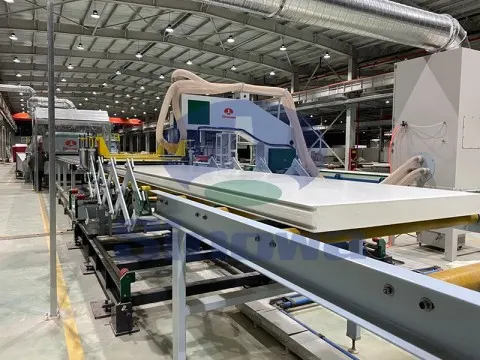
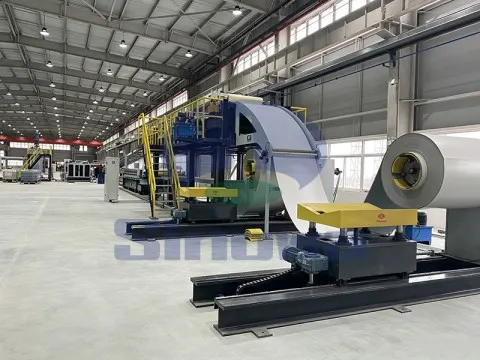
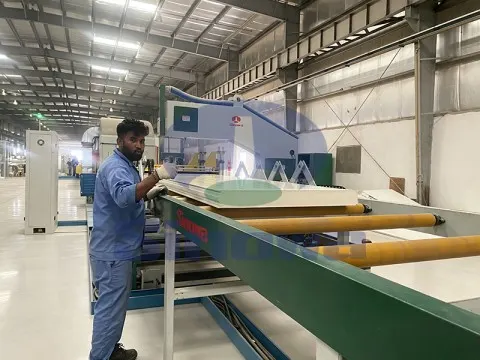
Tags: acoustic sandwich panel production line, acoustic sandwich panel production line manufacturer, acoustic sandwich panel production line supplier, china acoustic sandwich panel production line, acoustic sandwich panel production line for sale
https://www.sandwichpanelmanufacturingline.com/blog/acoustic-sandwich-panel-production-line.html
-
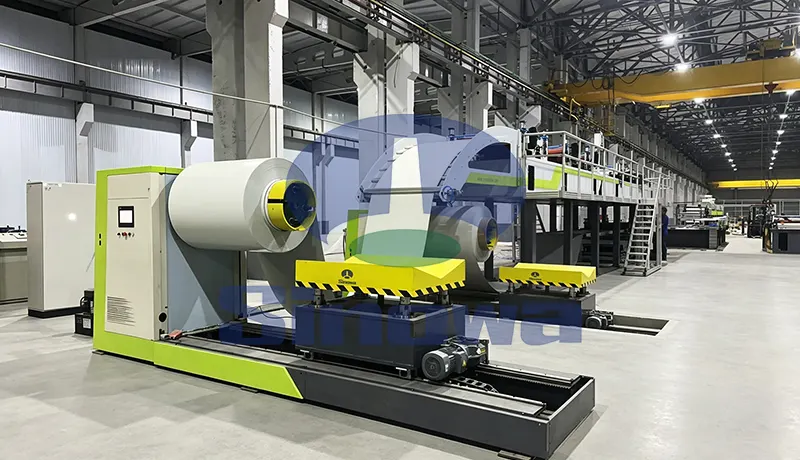
A reliable PU sandwich panel production line serves as the core equipment for manufacturing high-performance building insulation panels. This professional PU sandwich panel line features automated feeding, foaming and molding processes to ensure consistent panel thickness and structural stability. The well-designed polyurethane sandwich panel production line effectively improves production efficiency while reducing material waste in daily operation. Each calibrated polyurethane sandwich panel line can adapt to different panel sizes to meet diverse construction needs. With precise temperature and pressure control, the advanced continuous PU sandwich panel line produces panels with excellent thermal insulation and weather resistance. Meanwhile, the optimized PIR sandwich panel production line upgrades the foaming formula to enhance fire resistance performance. The high-efficiency PIR sandwich panel line maintains stable operation during long-term mass production, delivering durable and high-quality sandwich panels for various architectural and industrial applications.
-
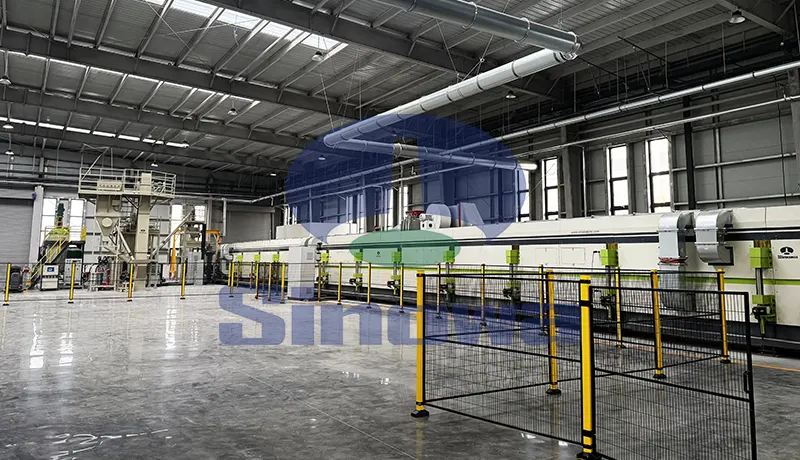
The phenolic panel production line realizes automated and continuous manufacturing of high-performance thermal insulation panels through streamlined and coordinated processing procedures.
-
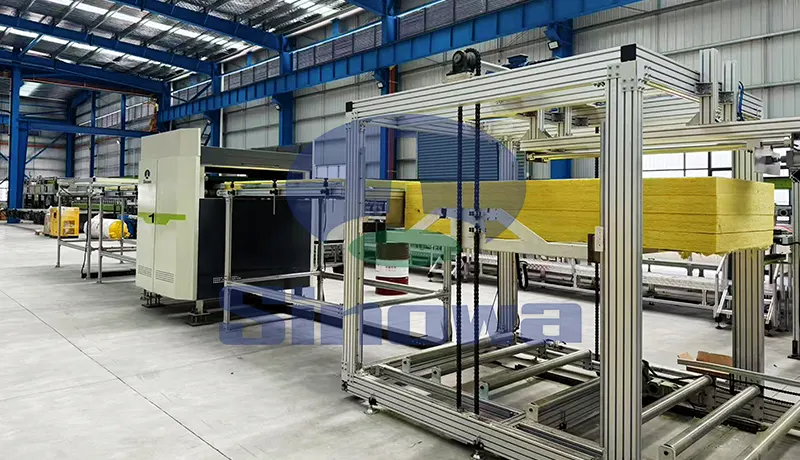
Modern insulation panel manufacturing relies on professional automated equipment to ensure stable product quality and high production efficiency. The rock wool sandwich panel production line features precise material lamination and forming processes to produce rigid, heat-insulating building panels. Meanwhile, the mineral wool sandwich panel production line adopts optimized assembly procedures to fabricate lightweight, soundproof panels widely used in architectural enclosure and thermal preservation projects.