Energy Saving Phenolic Panel Production Machine
Publication Date: Oct 9, 2026
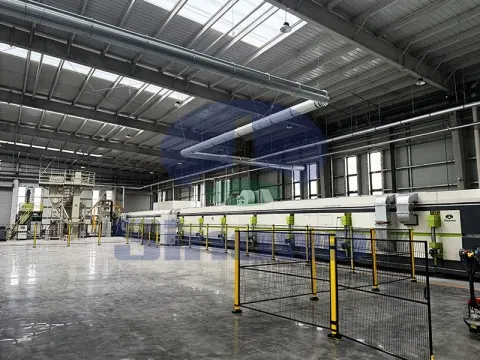
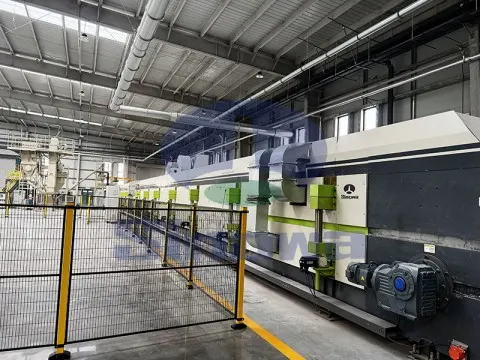
Energy saving phenolic panel production machine is an advanced automated industrial device tailored for phenolic insulation panel manufacturing. It optimizes traditional production processes with low energy consumption design, stable operation and intelligent control, delivering high-performance, energy-efficient finished panels for construction and insulation industries.
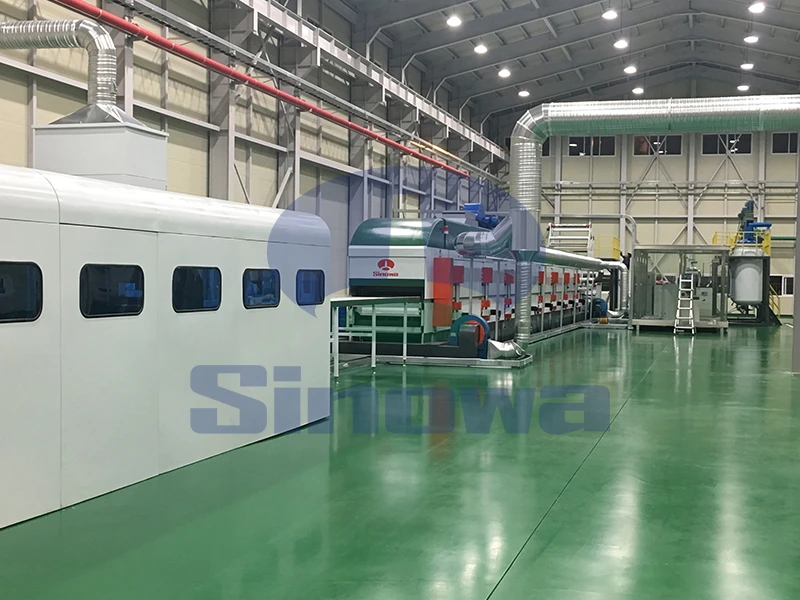
The energy saving phenolic panel production machine is engineered to redefine the efficiency and sustainability of phenolic foam panel manufacturing by addressing the high energy consumption pain points of conventional production equipment. Different from traditional manufacturing devices that feature inefficient energy conversion and excessive heat loss, this specialized machine integrates optimized thermodynamic structural design and precise power regulation systems throughout its operational modules. It focuses on minimizing invalid energy consumption during material processing, heating, foaming and curing stages while maintaining consistent production quality. The core design concept centers on matching energy output with actual production demand, eliminating long-term idle power consumption and excessive thermal radiation waste. By refining internal heat circulation structures, the machine traps and recycles residual heat generated during continuous operation, converting waste heat into reusable energy for preheating raw materials and maintaining operational temperature. This systematic energy optimization effectively cuts down overall power consumption in the full production cycle, laying a solid foundation for low-cost, eco-friendly large-scale panel production.
Raw material pretreatment is the initial key stage where the machine’s energy-saving advantages are fully demonstrated, supporting stable and high-quality panel forming. The equipment is equipped with a precision automatic batching and stirring system that achieves accurate proportional mixing of phenolic resin, foaming agents, curing agents and various functional additives. Traditional manual or semi-automatic batching often leads to uneven material mixing and repeated processing, which causes extra energy waste and unstable panel performance. In contrast, this machine’s high-speed homogeneous stirring module operates with adjustable frequency power output, automatically matching stirring intensity and duration according to raw material characteristics. It ensures uniform molecular fusion of all components in one-time processing, avoiding repeated stirring and secondary material treatment. Meanwhile, the sealed stirring structure prevents material volatilization and heat loss in the mixing process, maximizing the retention of material reaction activity. This not only improves the utilization rate of raw materials but also reduces energy consumption caused by defective product rework, realizing dual energy and material savings in the early production stage.
The core foaming and forming system of the machine adopts a low-energy-consumption constant-temperature control technology, which is crucial for producing high-quality phenolic panels while reducing energy loss. Phenolic panel performance largely depends on the uniformity and compactness of the closed-cell foam structure formed during the foaming process, which requires stable and precise temperature and pressure control. Conventional equipment usually adopts constant high-power heating, resulting in continuous heat dissipation and huge energy waste. This energy-saving machine uses an intelligent variable-temperature heating mode, which dynamically adjusts heating power based on real-time foaming progress and environmental temperature. The fully sealed foaming cavity structure effectively isolates internal and external temperature exchange, greatly reducing thermal radiation and convection heat loss. The slow and uniform foaming process regulated by the system enables the phenolic material to complete cross-linking and foaming reactions stably, forming a dense and consistent closed-cell structure. The optimized foaming process not only enhances the thermal insulation and structural stability of finished panels but also avoids energy waste from temperature fluctuation and repeated heating.
Intelligent automatic control is a core functional module that endows the machine with excellent energy-saving performance and operational stability. The whole production line is equipped with a mature programmable control system and human-machine interactive touch screen, realizing full-process automatic operation from raw material feeding, batching, stirring, foaming, curing to finished product output. The system can monitor and adjust key operational parameters such as operating speed, heating temperature, material feeding volume and working pressure in real time. It automatically enters low-energy standby mode during temporary production gaps, completely solving the problem of long-term no-load power consumption of traditional equipment. In addition, the built-in fault self-diagnosis function can timely identify abnormal operating states, avoid energy waste and material loss caused by equipment failure and unqualified products. The highly automated operation mode reduces manual intervention, unifies production parameters for each batch of products, and effectively improves production consistency while optimizing overall energy utilization efficiency.
The heating and curing system of the machine has undergone targeted energy-saving optimization, breaking through the energy consumption bottleneck of traditional phenolic panel curing processes. Curing is a key step that determines the molding strength and dimensional stability of phenolic panels, and it requires continuous and stable temperature maintenance. Traditional curing equipment has scattered heating points and low heat utilization rate, with most heat dissipated in the external environment. This upgraded machine adopts an integrated circulating heating design, with heat conduction and heat preservation structures arranged in a targeted manner inside the curing chamber. The circulating hot air system makes heat evenly distributed in the curing space, ensuring that each panel receives consistent curing treatment. Moreover, the waste heat recovery device collects residual heat after curing and feeds it back to the raw material preheating area, realizing cyclic reuse of heat energy. This closed-loop heat utilization mode greatly improves heat utilization rate, significantly reduces the energy required for repeated heating, and shortens the overall curing cycle to further boost production efficiency.
Mechanical structural optimization further enhances the machine’s energy-saving effect and long-term operational reliability. The main load-bearing and operating components of the equipment are made of high-rigidity, high-strength structural materials, which can maintain stable operating conditions under long-term high-load continuous production. The optimized transmission structure reduces mechanical friction resistance during operation, lowering the power loss caused by mechanical wear and operation resistance. Compared with traditional equipment with complex transmission structures and high failure rates, this machine simplifies unnecessary mechanical links, reduces operating load and mechanical energy consumption. Meanwhile, the integrated sealed body structure reduces dust accumulation and external interference, ensuring stable operation of each functional module. The durable and stable mechanical structure minimizes equipment failure rate and maintenance frequency, avoiding energy and resource waste caused by production shutdown and equipment maintenance, and extends the stable service life of the whole production line.
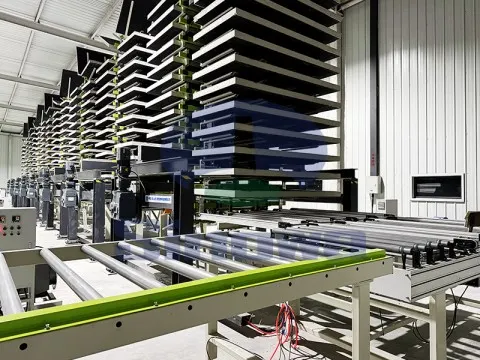
The cooling and cutting module of the machine also incorporates refined energy-saving designs to coordinate with the overall low-consumption production system. After high-temperature curing, phenolic panels need scientific cooling treatment to fix their structural shape and facilitate subsequent cutting and forming. Traditional rapid cooling modes often consume large amounts of power and cause panel structural stress deformation. This machine adopts a gradual circulating cooling mode, which uses low-power circulating air cooling instead of high-energy-consumption forced cooling. It slowly reduces the panel temperature evenly, ensuring the internal structure of the panel is fully stabilized while avoiding excessive power consumption. The automatic cutting system matches the production speed intelligently, completing precise fixed-length cutting according to set parameters without idle running. The high-precision cutting technology reduces edge material waste and defective products, improving finished product yield. The coordinated operation of cooling and cutting modules realizes low-energy and high-precision post-processing, perfecting the full-link energy-saving production system.
The energy-saving advantages of the machine bring remarkable economic and production benefits for panel manufacturing enterprises in long-term operation. In actual production and operation, the optimized full-process energy control system can effectively reduce the comprehensive energy consumption per unit of product compared with ordinary production equipment. The efficient raw material utilization and low defective product rate reduce raw material procurement costs and waste loss for enterprises. The intelligent unattended operation mode cuts down labor input while ensuring stable and continuous production. In addition, the equipment’s low failure rate and simple daily maintenance reduce later operation and maintenance costs and production downtime losses. The stable and high-quality finished panels produced by the machine also have better market adaptability, helping manufacturers gain competitive advantages in the insulation material market while realizing green and low-carbon production.
In terms of product quality improvement, the precise and low-energy production mode of the machine endows phenolic panels with more superior and stable performance. The uniform batching, constant-temperature foaming and balanced curing processes ensure that each batch of finished panels has consistent cell structure, density and thermal insulation performance. The closed-cell foam structure formed by precise process control gives the panels excellent heat insulation, sound insulation and fire resistance. Meanwhile, the low-distortion cooling and precise cutting technology ensures accurate panel size and flat appearance, meeting the diverse processing and application needs of different scenarios. Compared with panels produced by traditional high-energy-consumption equipment, the products have more stable physical properties, longer service life and lower comprehensive application costs, which can well meet the large-scale application demands of modern building energy-saving and thermal insulation projects.
With the continuous upgrading of green manufacturing concepts and the growing demand for energy-saving insulation materials in the industry, the energy saving phenolic panel production machine has broad application and development prospects. Its core advantages of low energy consumption, stable operation, high production efficiency and excellent product quality make it a preferred device for modern phenolic panel production. The equipment not only solves the problems of high energy consumption, low efficiency and unstable product quality of traditional production lines but also conforms to the general trend of green industrial manufacturing. Continuous technological iteration and structural optimization will further improve its energy-saving level and production adaptability, enabling it to adapt to more diversified panel production specifications and market demands, and provide strong technical and equipment support for the high-quality development of the insulation material manufacturing industry.
Tags: energy saving phenolic panel production machine, energy saving phenolic panel production machine manufacturer, energy saving phenolic panel production machine supplier, china energy saving phenolic panel production machine, energy saving phenolic panel production machine for sale
-
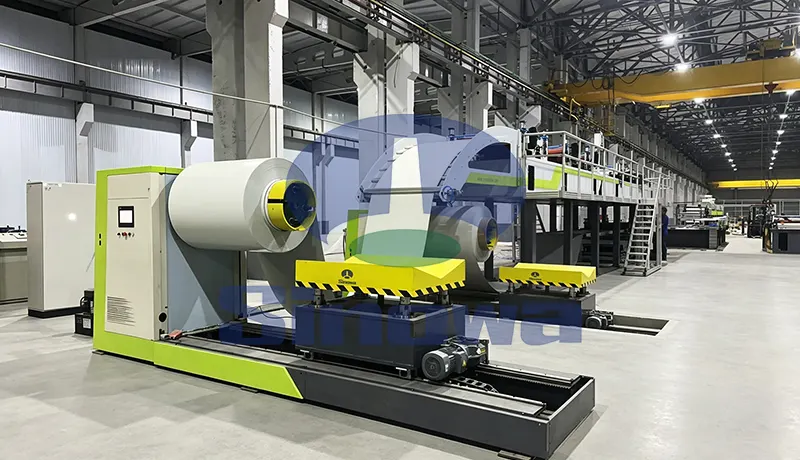
A reliable PU sandwich panel production line serves as the core equipment for manufacturing high-performance building insulation panels. This professional PU sandwich panel line features automated feeding, foaming and molding processes to ensure consistent panel thickness and structural stability. The well-designed polyurethane sandwich panel production line effectively improves production efficiency while reducing material waste in daily operation. Each calibrated polyurethane sandwich panel line can adapt to different panel sizes to meet diverse construction needs. With precise temperature and pressure control, the advanced continuous PU sandwich panel line produces panels with excellent thermal insulation and weather resistance. Meanwhile, the optimized PIR sandwich panel production line upgrades the foaming formula to enhance fire resistance performance. The high-efficiency PIR sandwich panel line maintains stable operation during long-term mass production, delivering durable and high-quality sandwich panels for various architectural and industrial applications.
-
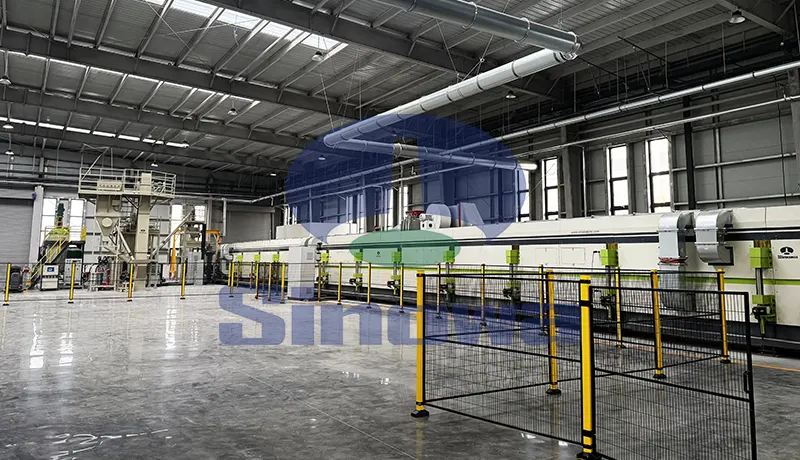
The phenolic panel production line realizes automated and continuous manufacturing of high-performance thermal insulation panels through streamlined and coordinated processing procedures.
-
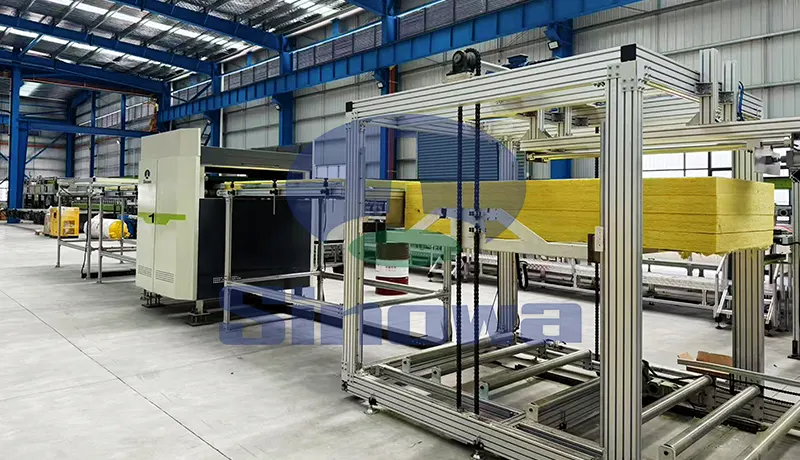
Modern insulation panel manufacturing relies on professional automated equipment to ensure stable product quality and high production efficiency. The rock wool sandwich panel production line features precise material lamination and forming processes to produce rigid, heat-insulating building panels. Meanwhile, the mineral wool sandwich panel production line adopts optimized assembly procedures to fabricate lightweight, soundproof panels widely used in architectural enclosure and thermal preservation projects.