Continuous Sandwich Panel Production Line
Publication Date: Oct 5, 2026
Continuous Sandwich Panel Production Line: fully automatic integrated line for PU, PIR, rock wool insulated panels. Stable high-speed output, precise lamination & cutting. Ideal for roof, wall, cold room & cleanroom panels. Custom configurations available.
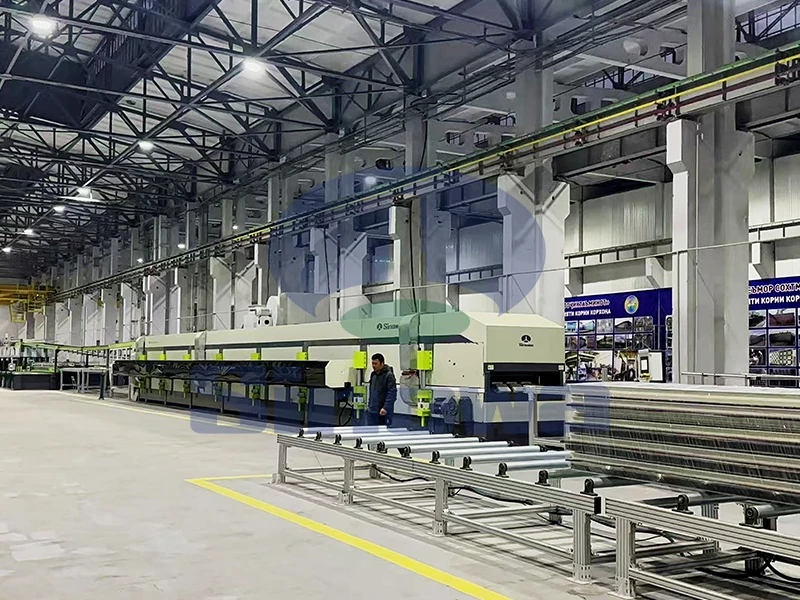
The continuous sandwich panel production line is an automated integrated manufacturing system for uninterrupted composite panel production. It unifies feeding, forming, bonding, curing and cutting processes, delivering high-efficiency, uniform-quality insulated panels for diverse construction and industrial applications.
Core Definition and Industrial Value
The continuous sandwich panel production line stands as a core automated manufacturing system tailored for large-batch and streamlined production of composite sandwich panels. Different from traditional intermittent production equipment that relies on segmented operation and manual intervention, this integrated line realizes fully continuous and synchronous operation of all production links from raw material input to finished product output. Its core industrial value lies in breaking the bottlenecks of low efficiency, inconsistent product quality and high labor cost in traditional panel manufacturing. In modern industrial and construction fields, sandwich panels serve as key lightweight thermal insulation and structural materials, and the continuous production mode perfectly matches the market demand for large-volume, standardized and high-stability panel supplies. The entire production process is highly centralized and intelligent, with mechanical and electrical systems operating in precise coordination to eliminate production gaps and material waste caused by frequent equipment start and stop. This production mode not only greatly improves production continuity and output capacity but also stabilizes the structural compactness, surface flatness and overall performance consistency of finished panels, laying a solid foundation for the large-scale popularization and application of sandwich panels in various engineering scenarios.
Overall Structural Composition of the Production Line
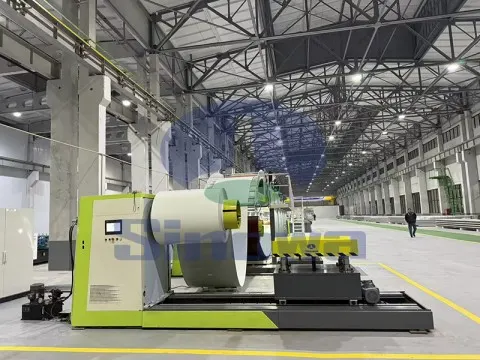
A complete continuous sandwich panel line consists of multiple interconnected and synergistic functional modules, each undertaking independent and indispensable production tasks. The whole line can be divided into raw material unwinding and pretreatment module, roll forming module, core material processing and laying module, gluing and composite pressing module, constant temperature curing module, fixed-length cutting module and automatic finishing and stacking module. All modules are connected by intelligent conveying systems and controlled by a centralized intelligent control terminal, realizing one-stop automatic production without manual transfer of semi-finished products. The unwinding module is equipped with stable coil supporting and automatic switching structures, which can realize non-stop coil replacement to avoid production interruption. The roll forming module adopts multi-group precise rolling units to shape metal surface materials into standard profiles. The core material processing module supports adaptive treatment of different insulation core materials, while the composite and curing modules undertake the key bonding and shaping work of panels. The modular structural design not only simplifies daily equipment maintenance and fault troubleshooting but also supports flexible production adjustment according to different panel specifications, greatly improving the line’s production adaptability.
Raw Material Preparation and Unwinding Process
Raw material preparation and unwinding are the initial and foundational links of continuous sandwich panel production, directly affecting the stability of subsequent processes and the surface quality of finished panels. The main raw materials involved include metal coil surface materials and various insulating core materials, as well as special adhesive materials for composite bonding. Before formal production, raw materials need to undergo preliminary inspection and sorting to ensure uniform material texture and complete performance. The unwinding system adopts a dual-station unwinding structure, which can store two groups of metal coils at the same time. When one coil is about to be consumed, the system can automatically switch to the other coil for feeding, realizing seamless connection of raw material supply and ensuring long-term continuous operation of the production line. During the unwinding process, the system is equipped with automatic deviation correction and leveling devices, which can accurately adjust the feeding position and flatness of metal sheets to avoid sheet deviation, wrinkling and uneven tension. For bulk core materials such as mineral wool and foam materials, special automatic feeding and sorting equipment is configured to arrange core materials in uniform specifications, remove defective materials, and lay a uniform and stable material foundation for subsequent composite processing, effectively avoiding product quality problems caused by uneven raw material feeding.
Precision Roll Forming Technology
Roll forming is a key process that shapes the outer surface of sandwich panels, determining the dimensional accuracy, surface flatness and structural profile of finished panels. The roll forming module of the continuous production line adopts multi-pass precision rolling process, with multiple groups of high-precision rolling rollers arranged in an orderly sequence. Each group of rollers undertakes independent deformation tasks, gradually bending and shaping the flat metal sheet into the required wall or roof panel profile through gradual and uniform force application. This gradual forming mode avoids the structural damage and surface scratch problems caused by one-time forced deformation of metal sheets. The rolling system supports flexible parameter adjustment, which can quickly switch rolling profiles and adjust forming dimensions according to different panel design requirements, realizing the production of diversified panel specifications on one single production line. In addition, the module is equipped with real-time dimensional detection devices, which can automatically monitor the forming size and flatness of sheets during operation. Once dimensional deviation is found, the system will feed back data to the control terminal in real time and complete automatic parameter calibration, ensuring that each batch of formed sheets maintains high dimensional consistency and meeting the standardized production requirements of engineering panels.
Core Material Processing and Laying System
The core material determines the thermal insulation, fire resistance and buffering performance of sandwich panels, and its processing and laying quality directly affect the overall performance of finished products. The continuous production line is compatible with multiple mainstream core materials, including foam materials and mineral wool materials, and is equipped with targeted processing systems for different core material characteristics. For block-shaped mineral wool core materials, the system realizes automatic cutting, rotating and arranging functions, cutting bulk raw materials into uniform strip structures matching panel specifications, and adjusting the laying direction to ensure compact and neat arrangement between upper and lower metal sheets. For foam core materials, the system adopts precise quantitative filling and foaming technology to control the foaming density and filling uniformity, avoiding hollow gaps and uneven thickness inside the panel core. The automatic laying equipment maintains a constant laying speed and spacing, cooperating with the continuous conveying speed of surface metal sheets to realize synchronous feeding of core and surface materials. The whole process avoids manual laying errors, ensures that the core material is fully and evenly filled in the middle of the composite panel, effectively guarantees the structural integrity and performance stability of the panel, and improves the overall thermal insulation and structural bearing capacity of the finished product.
Automatic Gluing and Composite Pressing Process
Gluing and composite pressing are the core links of panel compound molding, which determine the bonding firmness and overall structural tightness of sandwich panels. The continuous sandwich panel manufacturing line adopts full-automatic precise gluing technology, with intelligent gluing devices arranged at fixed positions in the production line. The system can automatically adjust the gluing amount, gluing range and gluing uniformity according to different panel thicknesses and material types, realizing uniform and seamless gluing on the inner surface of upper and lower metal sheets. The precise gluing control mode avoids excessive glue overflow or local glue shortage, which not only ensures the bonding effect but also saves adhesive materials and reduces production costs. After gluing, the surface sheets and core materials are synchronously sent to the composite pressing unit, which adopts double-belt constant-pressure pressing structure. The unit provides stable and uniform pressing force in the whole pressing area, making the upper and lower surface materials closely bonded with the core material without relative displacement. The continuous pressing mode realizes synchronous compound molding of uninterrupted panel strips, ensuring that the bonding strength of each position of the panel is consistent, effectively solving the problems of local degumming and uneven stress existing in traditional batch composite production, and greatly improving the structural stability and service life of finished panels.
Constant Temperature Curing and Shaping Mechanism
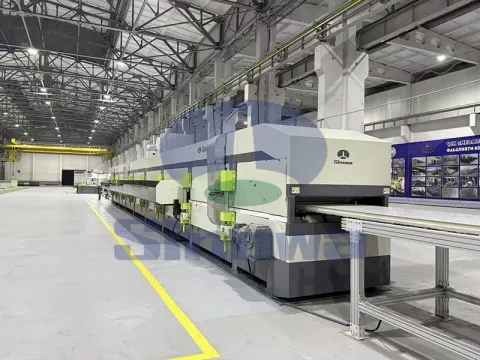
Constant temperature curing is a key process to accelerate adhesive solidification and finalize the panel structure, which plays a decisive role in stabilizing the bonding performance and overall shape of sandwich panels. After composite pressing, the initially molded panel strip is continuously sent to the constant temperature curing channel, which adopts a closed thermal insulation structure and multi-temperature zone precise temperature control technology. The system sets graded temperature parameters according to the characteristics of different adhesives and core materials, realizing gradual heating and constant temperature curing, which can effectively promote the full solidification of adhesives and enhance the bonding tightness between layers. The internal circulating hot air structure of the curing channel ensures uniform temperature distribution in the whole curing area, avoiding local overheating or insufficient curing. The continuous conveying mode enables the panel strip to pass through the curing channel at a constant speed, ensuring consistent curing time and effect of each part of the panel. After high-temperature curing, the panel enters the natural cooling and shaping section, which slowly releases internal stress generated in the pressing and curing process through gradual cooling. This process effectively prevents panel deformation, warping and cracking after molding, ensures the flat and neat appearance of finished panels, and further stabilizes the internal structural performance of products.
Fixed-Length Cutting and Edge Trimming Processing
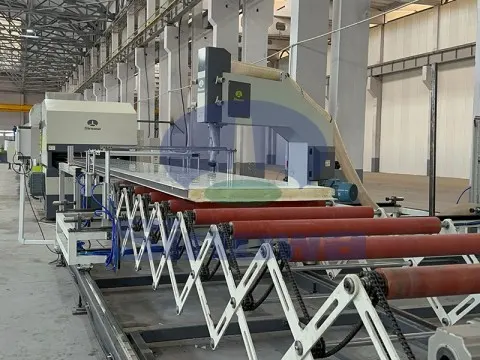
Fixed-length cutting and edge trimming are the finishing processing links of panel molding, which standardize the size and appearance of finished products. After curing and shaping, the continuous long-strip panel is transmitted to the cutting unit, which adopts high-precision automatic fixed-length cutting technology. The intelligent control system can preset various required panel lengths and automatically track the conveying speed of the panel to realize synchronous cutting without stopping the production line. The high-speed cutting tool ensures smooth and flat cutting sections without burrs, cracks or material delamination, maintaining the structural integrity of the panel section. After cutting, the single panel is sent to the edge trimming and finishing unit, which automatically trims the redundant edge materials on both sides of the panel to ensure consistent overall width of the product. At the same time, the unit is equipped with dust removal devices to clean up debris and dust generated by cutting and trimming, keeping the panel surface clean and tidy. The whole cutting and trimming process is fully automated with high positioning accuracy and stable operation, which not only ensures the unified dimensional standard of finished panels but also improves the appearance quality of products, meeting the fine processing requirements of high-end engineering applications.
Automatic Finishing and Stacking System
The automatic finishing and stacking system is the final link of the entire production line, undertaking the tasks of finished panel inspection, surface protection and orderly stacking. After cutting and trimming, qualified panels will pass through the surface detection device, which automatically identifies surface scratches, indentations and dimensional abnormalities, and screens out unqualified products to ensure the quality of outgoing products. For qualified panels, the system can selectively complete surface protective film pasting according to production requirements, preventing surface abrasion and pollution during transportation and storage. Subsequently, the automatic stacking device transports single panels to the stacking area in an orderly manner, and realizes layered and neat stacking through intelligent positioning and lifting adjustment. The stacking system can set different stacking heights and arrangement modes according to panel specifications and storage requirements, avoiding panel extrusion and deformation caused by messy stacking. The whole finishing and stacking process requires almost no manual operation, which greatly reduces manual labor intensity, improves production efficiency, and standardizes the finished product storage process, providing convenient conditions for subsequent packaging, transportation and warehouse management.
Intelligent Control and Operation Advantages
The core competitiveness of modern continuous sandwich panel lines lies in intelligent centralized control and efficient collaborative operation. The entire production process is uniformly controlled by an intelligent human-computer interaction terminal, which integrates parameter setting, real-time monitoring, fault alarm and data statistics functions. Operators can complete the adjustment of production parameters such as raw material feeding speed, pressing pressure, curing temperature and cutting length through a simple operation interface, realizing one-click switching of different product specifications. The system supports real-time monitoring of the operating status of each functional module, and can automatically identify abnormal conditions such as equipment jamming, material shortage and parameter deviation, and send out timely alarm prompts and automatic protection to avoid equipment failure and product batch quality problems. Compared with traditional production equipment, the intelligent production line has significant advantages in production efficiency, product stability and labor saving. It realizes unmanned continuous operation for a long time, greatly reduces manual operation errors and labor costs, and maintains stable and high output while ensuring consistent product quality, bringing higher production benefits and market competitiveness to panel manufacturing enterprises.
Application Prospects and Development Trends
With the continuous development of modern construction, industrial manufacturing and cold chain logistics industries, the market demand for high-performance sandwich panels is constantly expanding, which also promotes the continuous upgrading and optimization of continuous sandwich panel production lines. At present, this type of production line has become the mainstream equipment for sandwich panel manufacturing, covering the production needs of thermal insulation panels, fireproof panels, cold storage panels and other multi-type products. In terms of future development, the production line will develop towards higher intelligence, higher energy efficiency and stronger versatility. The intelligent degree of equipment will be further improved, realizing automatic identification of raw materials, intelligent optimization of production parameters and remote operation and maintenance. In terms of energy conservation and environmental protection, the equipment will optimize the heating and curing system to reduce energy consumption and material waste in the production process, meeting the green production development requirements. In addition, the production line will strengthen multi-specification adaptive production capacity, realize the integrated production of more types of sandwich panels, and better adapt to the diversified and personalized market demand, providing more efficient and reliable production support for the development of downstream related industries.
Gallery of Continuous Sandwich Panel Production Line
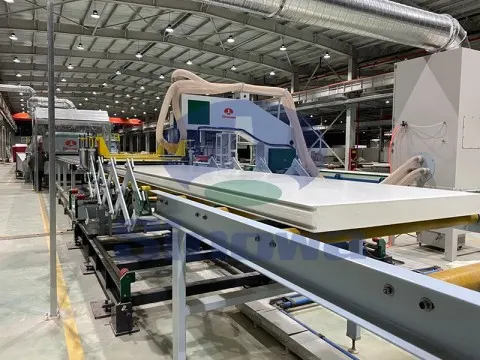
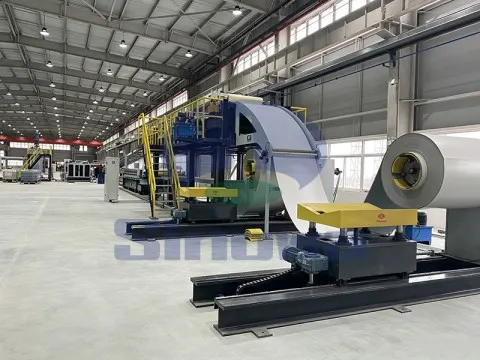
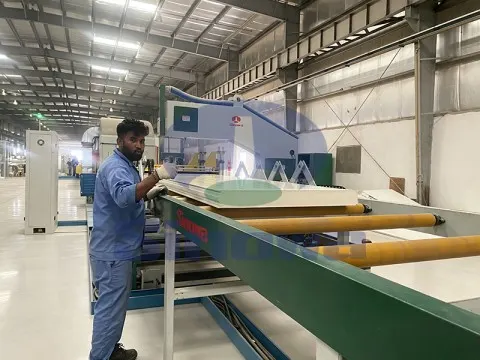
Tags: continuous sandwich panel production line, continuous sandwich panel production line manufacturer, continuous sandwich panel production line supplier, china continuous sandwich panel production line, continuous sandwich panel production line for sale
-
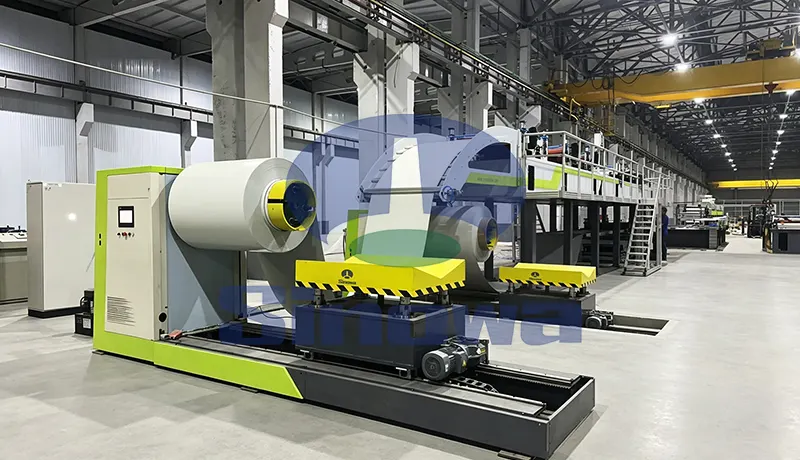
A reliable PU sandwich panel production line serves as the core equipment for manufacturing high-performance building insulation panels. This professional PU sandwich panel line features automated feeding, foaming and molding processes to ensure consistent panel thickness and structural stability. The well-designed polyurethane sandwich panel production line effectively improves production efficiency while reducing material waste in daily operation. Each calibrated polyurethane sandwich panel line can adapt to different panel sizes to meet diverse construction needs. With precise temperature and pressure control, the advanced continuous PU sandwich panel line produces panels with excellent thermal insulation and weather resistance. Meanwhile, the optimized PIR sandwich panel production line upgrades the foaming formula to enhance fire resistance performance. The high-efficiency PIR sandwich panel line maintains stable operation during long-term mass production, delivering durable and high-quality sandwich panels for various architectural and industrial applications.
-
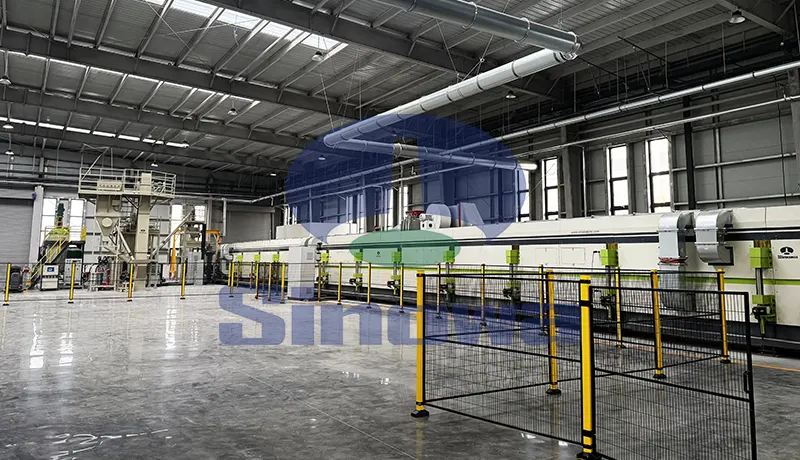
The phenolic panel production line realizes automated and continuous manufacturing of high-performance thermal insulation panels through streamlined and coordinated processing procedures.
-
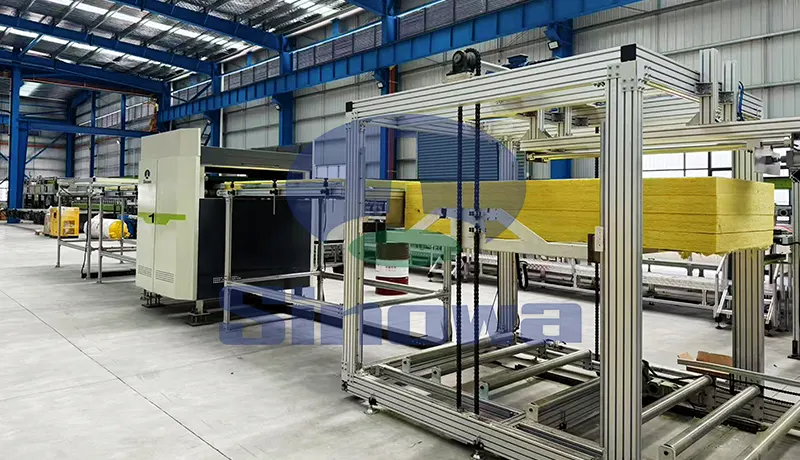
Modern insulation panel manufacturing relies on professional automated equipment to ensure stable product quality and high production efficiency. The rock wool sandwich panel production line features precise material lamination and forming processes to produce rigid, heat-insulating building panels. Meanwhile, the mineral wool sandwich panel production line adopts optimized assembly procedures to fabricate lightweight, soundproof panels widely used in architectural enclosure and thermal preservation projects.