PU Insulation Panel Production Line
Publication Date: Oct 9, 2026
PU insulation panel production line is an automated integrated system for manufacturing high-performance polyurethane insulation panels. It covers raw material processing, foaming, lamination, curing and cutting, delivering consistent, durable insulation panels for diverse construction and industrial thermal insulation scenarios.
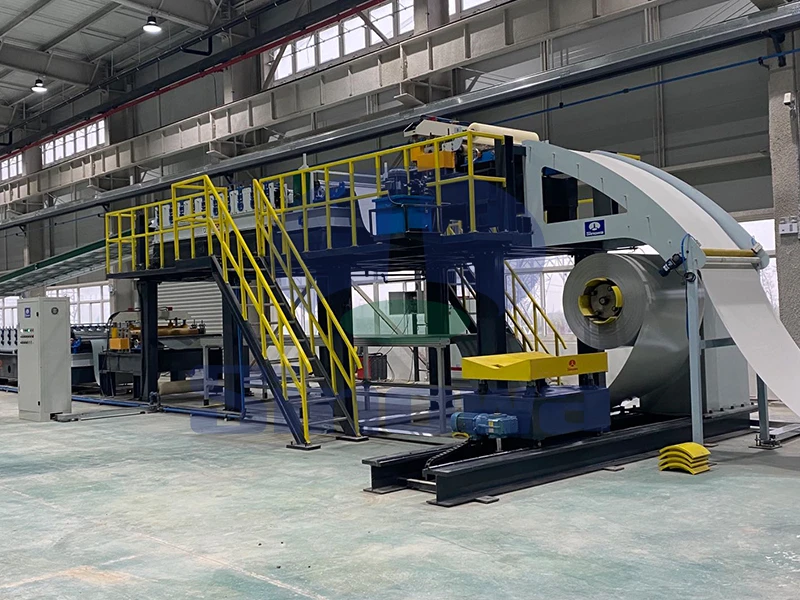
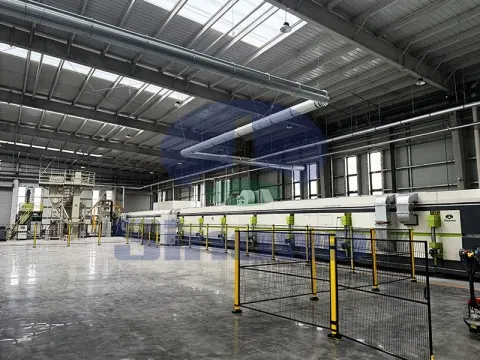
The PU insulation panel production line serves as a comprehensive automated manufacturing system tailored for producing rigid polyurethane insulation sandwich panels, which are widely favored for their excellent thermal insulation, soundproofing and structural stability. The entire production workflow operates in a continuous and synchronous manner, minimizing manual intervention and improving overall production efficiency. Unlike traditional intermittent manufacturing equipment, this integrated line unifies multiple independent processing procedures into a cohesive production chain, realizing streamlined output from raw material input to finished product collection. Each functional module of the line is precisely matched in operating speed and working rhythm, effectively avoiding production stagnation and product quality inconsistencies caused by mismatched process links. This systematic production mode not only stabilizes the basic performance of finished panels but also greatly enhances the batch production capacity of insulation panels, meeting the large-scale application demands of modern construction, cold chain and industrial enclosure projects.
Raw material pretreatment is the primary foundational process of the PU insulation panel production line, which directly determines the foaming quality and structural performance of finished panels. The core raw materials for PU foam formation include polyol and isocyanate, which are stored in independent sealed storage tanks to prevent chemical deterioration and impurity contamination. The production line is equipped with precision metering units that accurately control the proportion of the two core raw materials, while cooperating with auxiliary ingredient delivery structures to add blowing agents and stabilizers in a fixed ratio. Before formal mixing and foaming, all liquid raw materials undergo constant-temperature preheating treatment to ensure consistent fluidity and chemical activity. This standardized pretreatment process eliminates raw material proportion deviations and temperature differences, laying a solid foundation for uniform foam reaction, stable cell structure and reliable adhesion performance of subsequent panels.
Surface material unwinding and profiling is an indispensable pre-process for panel composite molding in the production line. The line is fitted with dual-station unwinding devices for upper and lower surface materials, which can stably release metal or composite sheet materials without wrinkles and tension deformation. After unwinding, the flat surface materials pass through multi-group roller profiling units, which carry out precise bending and shaping according to the preset panel specification requirements. The profiling rollers are finely calibrated to ensure consistent surface flatness and edge regularity of each sheet. Meanwhile, the system is equipped with surface cleaning and micro-heating structures to remove dust and moisture on the material surface, improving the bonding tightness between surface materials and PU foam core. This process standardizes the appearance and structural foundation of panels, avoiding defects such as uneven thickness and loose bonding in subsequent composite molding.
High-precision raw material mixing and foaming injection is the core technological link of the entire production line. After pretreatment, the measured PU raw materials are transported to the high-speed mixing head, where intense instantaneous mixing is completed to form a homogeneous liquid mixture. The mixing speed and material flow rate are intelligently adjusted in real time according to production parameters to ensure full fusion of all components. The mixed liquid is evenly injected between the upper and lower profiled surface materials through a translational injection structure, which can uniformly cover the entire width of the sheet materials. Once injected, the liquid mixture triggers a rapid chemical reaction, generating fine and closed foam cells through the action of blowing agents. The whole foaming injection process is completed in a closed environment, which effectively controls the foaming uniformity and avoids local hollowing or uneven density of the panel core layer.
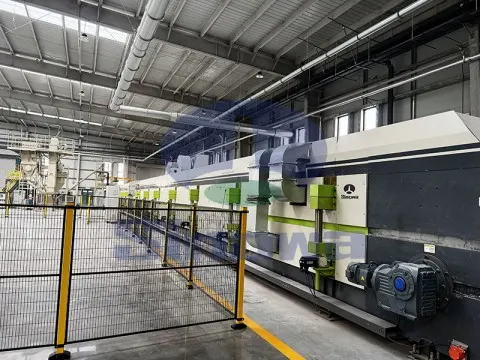
Double-belt lamination molding is a key process to shape the overall structure of PU insulation panels. After foam injection, the semi-finished panel enters the closed double-belt conveyor system, where adjustable upper and lower conveyor belts form a fixed gap to control the final thickness of the panel accurately. The high-strength wear-resistant belts provide stable and uniform pressing force for the panel, ensuring that the expanding foam core fits closely with the upper and lower surface materials without dislocation or deformation. The belt system is equipped with a constant-temperature heating module to maintain a stable thermal environment required for foam curing. Under the dual action of constant pressure and constant temperature, the PU foam fully expands, fills the entire molding space, and completes preliminary solidification and composite bonding with surface materials, forming an integrated sandwich panel structure with stable overall performance.
Constant-temperature curing treatment is crucial for stabilizing the physical and chemical properties of PU insulation panels. After lamination molding, the panels are continuously transported to the intelligent curing area with graded temperature control. The curing area adopts segmented temperature adjustment design, which adapts to the different curing reaction stages of PU foam, realizing gradual and complete solidification of the core layer. Slow and uniform curing can effectively eliminate internal stress generated during foam expansion and molding, preventing panel warping, cracking and performance attenuation in later use. The closed curing environment also avoids the influence of external temperature and humidity on panel molding quality. Through sufficient constant-temperature curing, the PU core forms a dense closed-cell structure, which significantly improves the thermal insulation, compression resistance and dimensional stability of finished panels.
Precision fixed-length cutting and edge trimming processes realize standardized sizing of finished panels. After curing, the continuous long strip panel is conveyed to the cutting unit, which adopts automatic numerical control positioning to complete fixed-length cutting according to customized production parameters. The cutting tool features high hardness and high-speed cutting performance, ensuring smooth and burr-free panel sections without damaging the surface layer and internal foam structure. Meanwhile, the edge trimming device accurately trims the irregular edges on both sides of the panel to ensure consistent overall dimensions of each finished product. The entire cutting and trimming process is linked with the front-end production speed, realizing non-stop continuous processing, which not only guarantees the dimensional accuracy of panels but also effectively improves production continuity and finished product qualification rate.
Surface protection and quality inspection form the final quality control barrier for PU insulation panel production. After cutting and trimming, qualified panels pass through the surface protection unit, which automatically attaches protective films on the panel surface to prevent scratches, abrasion and pollution during transportation and stacking. Subsequently, the panels enter the automatic inspection station, which detects key indicators including surface flatness, overall thickness uniformity, bonding firmness and core layer compactness through non-contact detection technology. The system automatically screens out unqualified products and marks defective parts for subsequent reprocessing. This all-round inspection mechanism effectively eliminates defective products from entering the finished product link, ensuring that all delivered panels have stable and reliable comprehensive performance.
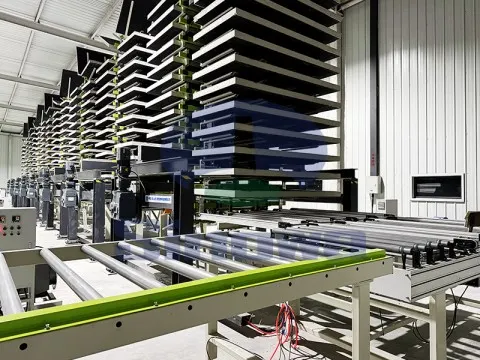
Automatic conveying and intelligent stacking realize efficient finishing and storage of finished products. The inspected qualified panels are stably transported to the stacking area through the flexible conveying system, which can automatically adjust the conveying speed according to the production rhythm to match the front-end processing efficiency. The intelligent stacking device adopts precise positioning and layered stacking technology, neatly stacking panels in standard specifications without extrusion damage. The whole finishing process is fully automated without manual operation, which greatly reduces labor costs and avoids product damage caused by manual handling. At the same time, the orderly stacked finished products are convenient for subsequent packaging, transportation and storage, realizing the closed-loop automation of the entire production process.
The intelligent control and synchronous linkage system supports the stable and efficient operation of the entire production line. The core control system integrates all functional modules including raw material feeding, foaming, lamination, curing, cutting and stacking, realizing unified scheduling and synchronous operation of each link. The system can monitor real-time production parameters such as temperature, pressure, speed and material ratio, and automatically adjust abnormal parameters to maintain stable production status. It also supports parameter presetting for different panel specifications, enabling rapid switching of production modes and meeting diversified production demands. The intelligent linkage design avoids single-module operation delay affecting overall production, greatly improving production stability, flexibility and intelligent level of the entire line.
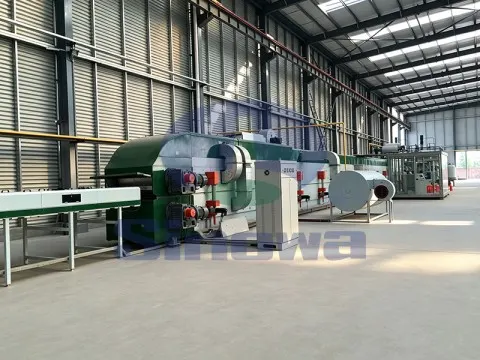
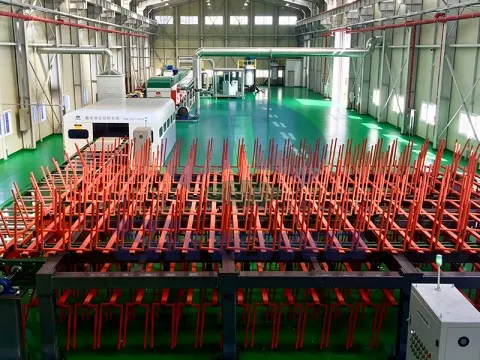
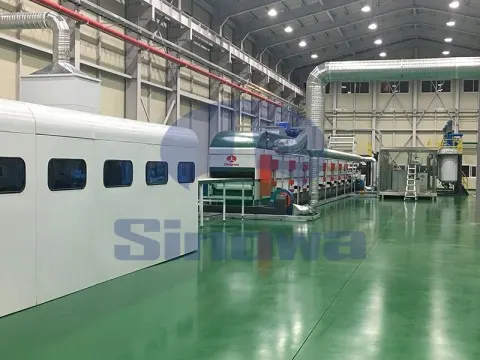
Gallery of PU Insulation Panel Production Line
Tags: pu insulation panel production line, pu insulation panel production line manufacturer, pu insulation panel production line supplier, china pu insulation panel production line, pu insulation panel production line for sale
-

A reliable PU sandwich panel production line serves as the core equipment for manufacturing high-performance building insulation panels. This professional PU sandwich panel line features automated feeding, foaming and molding processes to ensure consistent panel thickness and structural stability. The well-designed polyurethane sandwich panel production line effectively improves production efficiency while reducing material waste in daily operation. Each calibrated polyurethane sandwich panel line can adapt to different panel sizes to meet diverse construction needs. With precise temperature and pressure control, the advanced continuous PU sandwich panel line produces panels with excellent thermal insulation and weather resistance. Meanwhile, the optimized PIR sandwich panel production line upgrades the foaming formula to enhance fire resistance performance. The high-efficiency PIR sandwich panel line maintains stable operation during long-term mass production, delivering durable and high-quality sandwich panels for various architectural and industrial applications.
-

The phenolic panel production line realizes automated and continuous manufacturing of high-performance thermal insulation panels through streamlined and coordinated processing procedures.
-

Modern insulation panel manufacturing relies on professional automated equipment to ensure stable product quality and high production efficiency. The rock wool sandwich panel production line features precise material lamination and forming processes to produce rigid, heat-insulating building panels. Meanwhile, the mineral wool sandwich panel production line adopts optimized assembly procedures to fabricate lightweight, soundproof panels widely used in architectural enclosure and thermal preservation projects.