PU Foam Sandwich Panel Production Line
Publication Date: Sep 28, 2026
The PU foam sandwich panel production line is an integrated automated manufacturing system for continuous production of high-performance composite panels. It integrates material processing, chemical foaming, lamination and shaping processes, delivering uniform, durable, and energy-efficient panels for diverse industrial and construction applications.
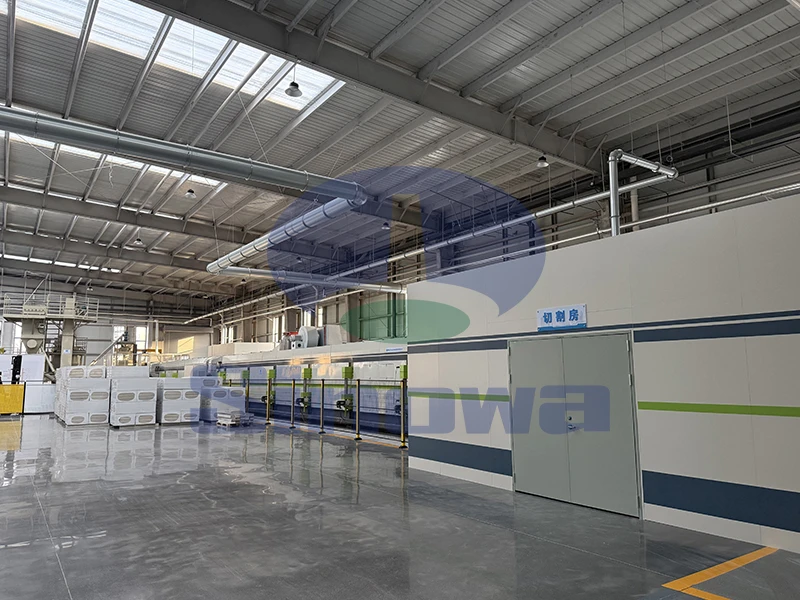
Core Working Principle of the PU Foam Production Line
The entire operation of the PU foam sandwich panel production line relies on the precise synchronization of mechanical transmission, chemical reaction control, and thermal forming technology. At its core, the manufacturing process leverages the instantaneous foaming and curing properties of polyurethane raw materials to achieve one-piece composite molding between foam core materials and double-sided surface materials. The system operates on a continuous cyclic workflow, eliminating intermittent operation and manual material transfer links in traditional batch production. Surface materials are steadily conveyed at a constant speed through the front-end feeding system, while liquid polyurethane raw materials are accurately proportioned, fully mixed, and evenly sprayed between the upper and lower facers. With the coordination of constant temperature and pressure environments, the PU liquid undergoes rapid chemical foaming, expands uniformly, and forms a dense and integrated foam core layer. This core layer bonds tightly with surface materials without gaps or delamination, realizing synchronous molding of structure and performance. All functional units maintain linkage operation, ensuring each production link is coordinated and consistent, which lays a fundamental guarantee for the stable quality and structural uniformity of finished panels.
Overall Structural Composition of the PU Foam Line
A complete PU foam sandwich panel line consists of multiple interconnected and coordinated functional units, each undertaking independent and complementary production tasks. The front-end module includes surface material unwinding and pretreatment equipment, which is responsible for releasing coil materials stably and completing surface cleaning, flattening and edge trimming to remove impurities and deformations that may affect bonding effect. The midstream core part is the PU raw material metering and mixing system, the foaming pouring unit, and the composite lamination unit, which dominate the foaming quality and interlayer bonding strength of panels. The downstream modules cover constant-temperature curing tunnels, fixed-length cutting devices, edge finishing mechanisms, and automatic stacking equipment. All units are connected by intelligent transmission systems to form a seamless production chain. Unlike discrete production equipment, this integrated structure avoids repeated positioning errors and performance inconsistencies caused by segmented processing. Each functional module can be independently adjusted according to production demands, realizing flexible switching of panel specifications while maintaining the overall continuity of production, which greatly improves the comprehensiveness and practicability of the production line.
Surface Material Pretreatment and Feeding System
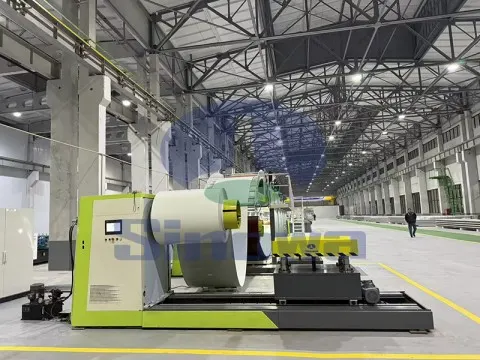
The surface material pretreatment and feeding system is the initial key link that determines the appearance quality and bonding performance of PU sandwich panels. This system is designed for continuous and stable supply of various flexible and rigid surface materials, including metal coils, color steel plates and other decorative protective materials. The unwinding device adopts a tension automatic adjustment structure, which can dynamically balance the material conveying tension during high-speed operation to prevent material deviation, wrinkling or stretching deformation. After unwinding, materials enter the pretreatment process, where professional leveling rollers correct material flatness, and surface cleaning components remove dust, oil stains and residual impurities. These treatments effectively eliminate barrier factors between surface materials and PU foam, enhancing the adhesion stability of the composite interface. In addition, the system is equipped with precise guiding and deviation correction mechanisms to ensure the consistent conveying track of upper and lower surface materials. The synchronous speed control technology enables the feeding speed to match the foaming and lamination rhythm of subsequent processes, avoiding material accumulation or tension fracture. Stable feeding and standardized pretreatment lay a solid foundation for the flat appearance, uniform thickness and durable structural performance of finished sandwich panels.
PU Raw Material Metering and High-Pressure Mixing Technology
The PU raw material metering and high-pressure mixing system is the core functional component that directly determines the foam quality and thermal insulation performance of sandwich panels. Polyurethane foam is formed by the chemical reaction between two liquid raw materials, combined polyether and isocyanate, and the proportion accuracy and mixing uniformity of raw materials are the key to stable foaming effect. The production line adopts high-precision intelligent metering pumps to independently transport different raw materials, realizing real-time accurate control of material flow and proportion. The system supports dynamic parameter adjustment according to different panel thickness and performance requirements, ensuring the raw material ratio always matches the optimal foaming state. After precise metering, raw materials are delivered to the high-pressure sealed mixing chamber, where high-speed stirring and impact mixing are completed instantly. This high-pressure mixing mode can fully fuse different liquid raw materials, avoid local uneven reaction or insufficient foaming, and eliminate bubble defects and density differences in the foam core. The closed mixing environment prevents external air and impurities from entering, ensuring the purity and reaction activity of raw materials. Stable mixing quality enables the PU foam core to form a fine and uniform cellular structure, improving the overall compressive resistance, thermal insulation and dimensional stability of the panel.
Continuous Foaming and Composite Lamination Process
Continuous foaming and composite lamination is the central molding process of PU foam sandwich panel production, which integrates chemical foaming and physical composite molding into one step. After fully mixed PU liquid is evenly poured on the lower surface material, the upper and lower facers are closed and conveyed into the lamination molding area synchronously. In the closed lamination space, the PU liquid undergoes rapid chemical cross-linking reaction, accompanied by uniform expansion and foaming. The adjustable pressure and temperature environment in the lamination area precisely controls the foaming speed and expansion multiple, ensuring the foam core fills the entire gap between the upper and lower materials without hollowing or over-expansion. During the foaming process, the active groups on the surface of PU materials undergo in-situ bonding reaction with the surface materials, forming an integrated composite structure with high bonding strength. Different from traditional secondary bonding processes, this synchronous foaming and lamination technology realizes one-time molding, effectively avoids interlayer delamination and degumming problems caused by secondary processing. The continuous operation mode ensures that each section of the panel maintains consistent foaming density and bonding effect, greatly improving the overall structural uniformity and production efficiency of the product, and reducing the defective rate caused by intermittent production.
Constant Temperature Curing and Structural Stabilization
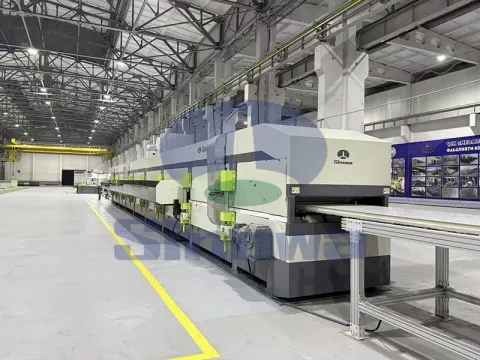
The constant temperature curing process is an indispensable post-molding link to stabilize the internal structure and comprehensive performance of PU sandwich panels. After preliminary lamination and molding, the panels enter the sealed constant temperature curing tunnel for continuous thermal insulation curing treatment. The internal temperature of the tunnel is kept within a stable and reasonable range through intelligent temperature control components, which promotes the complete reaction of residual raw materials in the foam core and further optimizes the cellular structure of polyurethane foam. Sufficient curing treatment can eliminate internal stress generated during foaming and lamination, prevent panel deformation, warping and size shrinkage in subsequent use. In addition, the constant temperature environment helps further strengthen the bonding force between the foam core and surface materials, making the composite interface more compact and durable. The curing tunnel is designed with segmented temperature adjustment functions, which can adapt to different production speeds and panel specifications, ensuring that panels of different thicknesses can achieve the best curing effect. Reasonable curing time and temperature matching can significantly improve the dimensional stability, structural rigidity and weather resistance of finished panels, laying a foundation for long-term stable application of products in complex environments.
Precision Cutting and Edge Finishing Processing
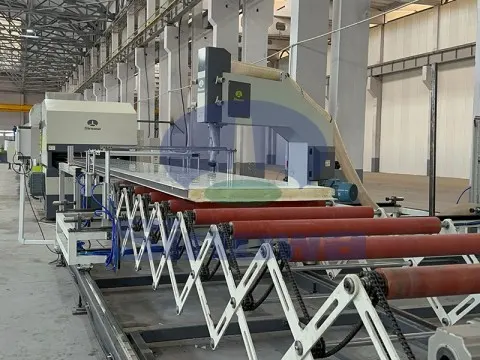
Precision cutting and edge finishing are key processes to ensure the dimensional accuracy and appearance quality of finished PU sandwich panels. After full curing and structural stabilization, the continuous long strip panels are conveyed to the fixed-length cutting area. The production line adopts intelligent numerical control cutting systems, which can set arbitrary cutting lengths according to user application requirements, realizing high-precision fixed-length cutting. The cutting equipment is equipped with high-speed sharp cutting tools, which can complete smooth cutting without generating burrs, cracks or edge collapses on the panel section. After cutting, the edge finishing mechanism automatically trims and polishes the four sides of the panel to eliminate tiny burrs and uneven edges generated during cutting. This processing not only optimizes the appearance flatness of the panel, but also ensures the assembly accuracy of subsequent engineering installation. Meanwhile, the system supports automatic error detection of cutting size, and can timely correct offset parameters to avoid dimensional deviation of finished products. The integrated cutting and finishing process realizes automated operation without manual intervention, which not only improves production efficiency, but also ensures the consistency of panel size and appearance quality in batches, meeting the standardized manufacturing requirements of high-quality composite panels.
Automatic Stacking and Finished Product Output
The automatic stacking and finished product output system is the final link of the entire production line, realizing efficient collection and standardized arrangement of finished panels. After cutting and finishing, qualified panels are automatically conveyed to the stacking station through the transmission track. The intelligent stacking manipulator adopts flexible grabbing and placing technology, which can stably pick up panels without causing surface scratches, indentations or structural damage. The system supports automatic counting, layered stacking and neat arrangement of panels, and can adjust the stacking height and spacing according to panel specifications and storage requirements. Compared with manual stacking, the automatic system effectively avoids panel tilting, collision and messy stacking problems, ensures the neatness and uniformity of finished product stacks, and facilitates subsequent transportation, storage and loading operations. In addition, the output system is equipped with a qualified product screening function, which can automatically identify and eliminate unqualified products with dimensional errors or appearance defects, ensuring that all delivered finished products meet quality requirements. The automated output mode greatly reduces labor investment, improves the overall automation level of the production line, and realizes efficient and orderly batch production.
Core Performance Advantages of Line-Manufactured Panels
PU foam sandwich panels produced by continuous automated production lines have outstanding comprehensive performance advantages compared with traditionally processed panels. First of all, the precise raw material proportioning and uniform foaming technology make the foam core form a dense and fine closed-cell structure, endowing the panels with excellent thermal insulation and heat preservation performance, which can effectively reduce energy consumption in building and industrial facilities. Secondly, the integrated composite molding process ensures ultra-high interlayer bonding strength, avoiding common problems such as delamination and degumming in long-term use, and greatly improving the structural durability of the panels. In terms of physical performance, the panels feature light weight and high strength, which can reduce the overall load of buildings and equipment while maintaining good compression and impact resistance. In addition, the standardized continuous production makes the panel size, thickness and structural performance highly consistent in batches, with low product difference and stable quality. The closed-cell foam structure also gives the panels good moisture-proof, waterproof and sound insulation effects, enabling them to adapt to various complex application environments. These superior performance characteristics make line-produced PU sandwich panels widely recognized in modern energy-saving building and industrial manufacturing fields.
Application Scenarios and Industry Value of PU Foam Production Lines
The advanced PU foam sandwich panel production line has broad application prospects and important industry value, supporting the manufacturing of composite panels for multiple fields. The produced panels are widely used in energy-saving building envelopes, including wall and roof panels of prefabricated buildings, cold storage insulation structures, and temporary engineering buildings, relying on their excellent thermal insulation and lightweight structural advantages. In industrial fields, the panels can be used for equipment insulation shells, dust-free workshop partition panels, and industrial facility heat preservation structures, meeting the high requirements of industrial production for environmental stability. In addition, the production line can adapt to customized production of different panel specifications, meeting the differentiated demands of various application scenarios. From the perspective of industry development, the automated and integrated production mode of the line optimizes the traditional panel manufacturing process, improves production efficiency and product quality, and promotes the standardized and large-scale development of the composite panel industry. While reducing production costs and resource waste, it provides high-quality energy-saving composite materials for green building and low-carbon industrial development, bringing significant economic and environmental benefits to the industry.
Gallery of PU Foam Sandwich Panel Production Line
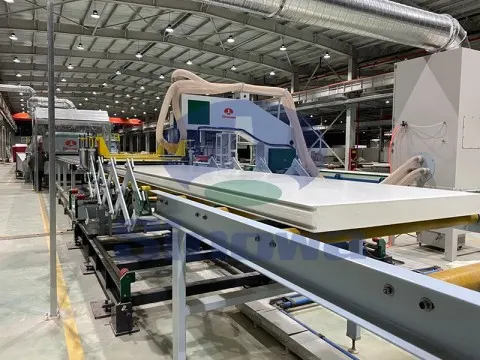
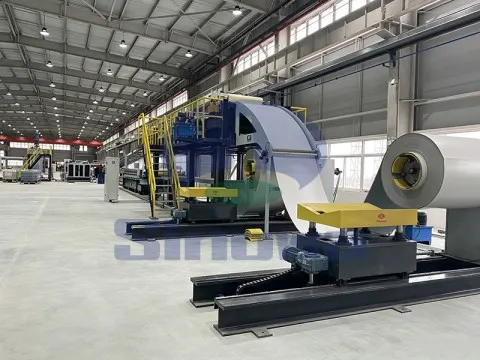
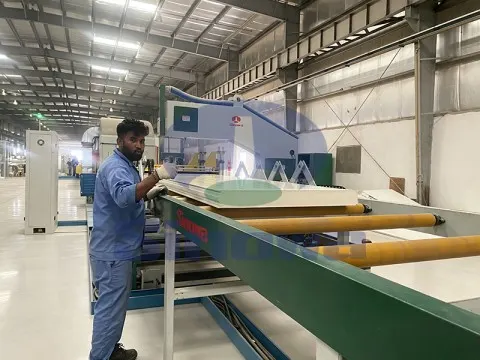
Tags: pu foam sandwich panel production line, pu foam sandwich panel production line manufacturer, pu foam sandwich panel production line supplier, china pu foam sandwich panel production line, pu foam sandwich panel production line for sale
-
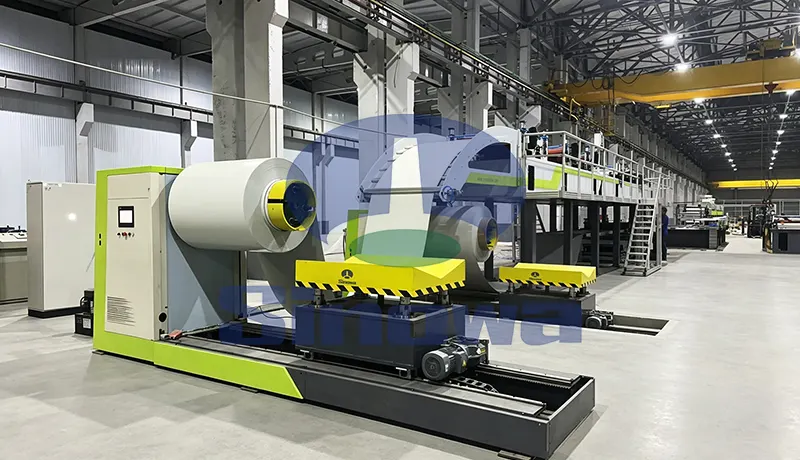
A reliable PU sandwich panel production line serves as the core equipment for manufacturing high-performance building insulation panels. This professional PU sandwich panel line features automated feeding, foaming and molding processes to ensure consistent panel thickness and structural stability. The well-designed polyurethane sandwich panel production line effectively improves production efficiency while reducing material waste in daily operation. Each calibrated polyurethane sandwich panel line can adapt to different panel sizes to meet diverse construction needs. With precise temperature and pressure control, the advanced continuous PU sandwich panel line produces panels with excellent thermal insulation and weather resistance. Meanwhile, the optimized PIR sandwich panel production line upgrades the foaming formula to enhance fire resistance performance. The high-efficiency PIR sandwich panel line maintains stable operation during long-term mass production, delivering durable and high-quality sandwich panels for various architectural and industrial applications.
-
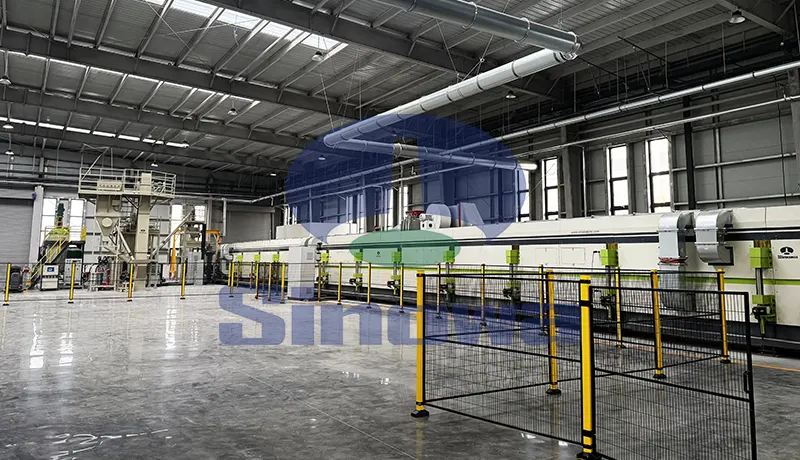
The phenolic panel production line realizes automated and continuous manufacturing of high-performance thermal insulation panels through streamlined and coordinated processing procedures.
-
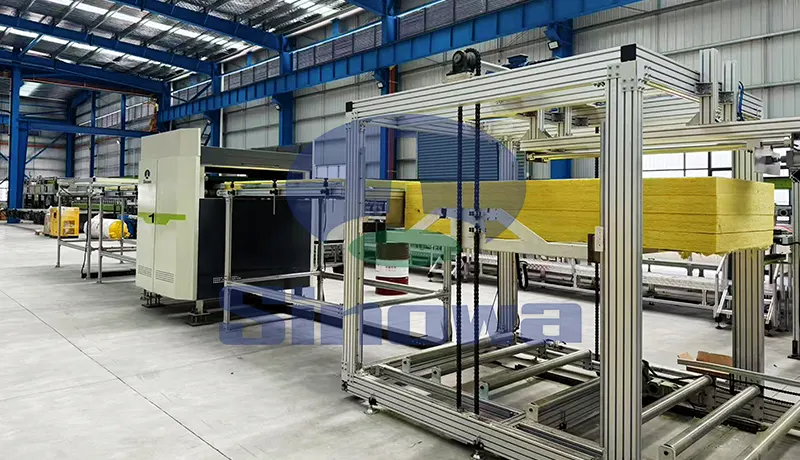
Modern insulation panel manufacturing relies on professional automated equipment to ensure stable product quality and high production efficiency. The rock wool sandwich panel production line features precise material lamination and forming processes to produce rigid, heat-insulating building panels. Meanwhile, the mineral wool sandwich panel production line adopts optimized assembly procedures to fabricate lightweight, soundproof panels widely used in architectural enclosure and thermal preservation projects.