Continuous Sandwich Panel Line
Publication Date: Oct 9, 2026
Continuous sandwich panel lines fabricate durable insulated panels with PU, PIR, phenolic, rock wool, mineral wool and glass wool cores for roofing, wall and cold storage building applications.
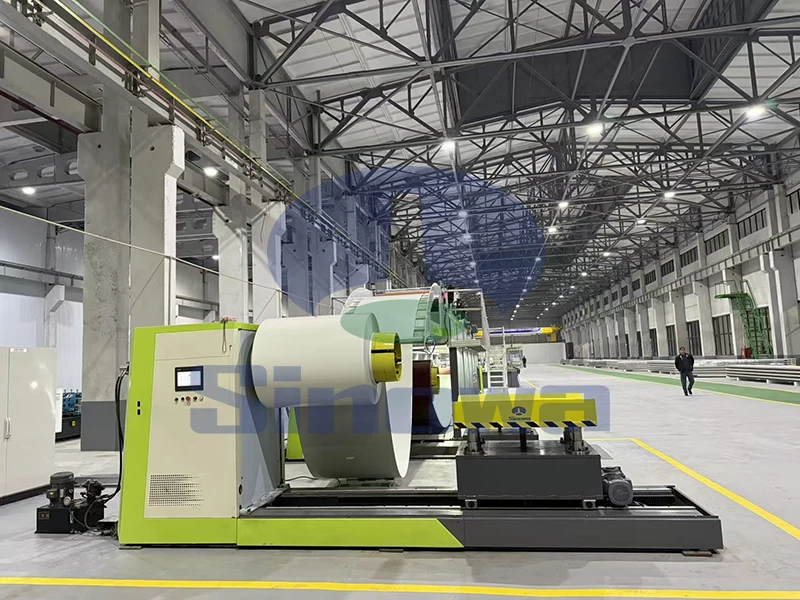
Continuous sandwich panel production lines represent advanced automated manufacturing systems designed to produce composite insulation panels with diverse core materials, catering to versatile modern construction needs. These integrated production lines streamline the full manufacturing process from material feeding, core laying, surface bonding, high-pressure curing to fixed-length cutting, ensuring consistent panel thickness, uniform structural density and stable overall performance in every finished product. By supporting six mainstream core materials including polyurethane, PIR, phenolic, rock wool, mineral wool and glass wool, the production lines can customize panel functionality to match different usage scenarios, covering core application fields such as building roof panels, exterior and interior wall panels, professional cold storage panels and industrial partition panels. The continuous production mode eliminates the efficiency bottlenecks of intermittent batch production, realizing uninterrupted mass output while maintaining precise product uniformity. Each type of core material endows the finished sandwich panels with unique physical properties, including thermal insulation, fire resistance, sound absorption and lightweight structural advantages, making these panels indispensable core materials for prefabricated buildings, industrial plants, cold chain facilities and public architectural spaces.
Polyurethane core continuous sandwich panel lines are specialized production systems focused on manufacturing high-efficiency thermal insulation composite panels, renowned for excellent low-temperature resistance and ultra-low thermal conductivity. The production process adopts automatic high-pressure foaming and constant-temperature curing technology, which enables the polyurethane foam core to form a fine and closed-cell structure, effectively locking in air and blocking heat transfer. Panels produced by this line feature lightweight texture, high bonding strength and intact overall integrity, with flexible adjustability in thickness and specification to adapt to diverse construction requirements. These polyurethane sandwich panels are widely applied in cold storage panels that require strict temperature control, effectively stabilizing internal low-temperature environments and reducing energy consumption for refrigeration equipment operation. Meanwhile, they serve as ideal wall panels and roof panels for temporary prefabricated buildings, industrial workshops and purification workshops, providing reliable basic thermal insulation protection for building envelopes. The integrated continuous production process ensures no gap or defect in the core material, greatly improving the durability and weather resistance of the panels, allowing long-term stable use in different climatic environments without obvious aging or heat insulation attenuation.
PIR core continuous sandwich panel lines are upgraded and optimized based on polyurethane production technology, specially designed for manufacturing composite panels with enhanced fire resistance and thermal stability. Different from ordinary polyurethane materials, PIR foam undergoes special chemical modification, with more stable molecular structure and better high-temperature resistance, and the production line is equipped with targeted improved systems in foam batching, mixing and curing links to adapt to the unique molding characteristics of PIR materials. The finished PIR sandwich panels retain the excellent thermal insulation performance of polyurethane products while achieving significantly improved flame retardant and anti-combustion capabilities, effectively preventing flame spread and reducing fire hazards. Such panels are highly suitable for high-standard cold storage panels and low-temperature logistics warehouse enclosure structures, meeting the dual requirements of long-term low-temperature insulation and building fire safety. In addition, they are widely used as exterior wall panels and roof panels for commercial buildings, industrial parks and clean rooms, balancing energy-saving insulation and building fire protection needs perfectly. The continuous automated production ensures consistent core density and structural stability of each panel, making the product performance more reliable than traditional manually produced panels.
Phenolic core continuous sandwich panel lines are professional production equipment for high-fire-safety insulation panels, featuring unique advantages in high-temperature resistance and flame retardancy. The phenolic foam core formed by continuous molding has uniform and compact cell structure, with outstanding heat insulation, smoke suppression and heat resistance properties, and will not melt or drip when exposed to high temperature and open fire. The production line adopts precise constant-temperature foaming and composite bonding technology, which tightly combines the phenolic core with metal or decorative surface layers to form integrated composite panels with strong structural stability. Phenolic sandwich panels are mostly used as fire-proof wall panels and partition panels for high-rise buildings, industrial plants and public facilities, effectively isolating fire areas and improving building safety redundancy. They also perform excellently in special cold storage and constant-temperature workshop scenarios that require both thermal insulation and high fire resistance, avoiding potential safety risks caused by flammable insulation materials. The continuous production mode realizes standardized batch manufacturing, ensuring stable fire resistance and thermal insulation of each panel, and the panels also have good corrosion resistance and aging resistance, adapting to long-term outdoor and indoor harsh use environments.
Rock wool core continuous sandwich panel lines are dedicated to producing heavy-duty fire-proof and sound-insulation composite panels, taking high-quality rock wool fiber as the core raw material. The production line adopts modular assembly and automatic laying technology, which arranges rock wool fibers evenly and fixes them through high-pressure composite molding, ensuring the overall compactness and structural strength of the core layer. Rock wool itself is an inorganic non-combustible material, endowing the finished panels with excellent non-combustible performance, strong sound absorption and noise reduction capabilities, and good thermal insulation effects. These rock wool sandwich panels are the mainstream choice for building exterior wall insulation panels and roof fire-proof panels, widely used in industrial workshops, steel structure buildings and commercial building exterior enclosure systems. In addition, they are commonly used as fire isolation belt panels and indoor fire-proof partition panels in buildings, effectively blocking the spread of fire and sound transmission. The continuous production process optimizes the bonding tightness between rock wool core and surface materials, avoiding core layer shedding and hollowing problems, greatly improving the service life and structural stability of the panels, and meeting the long-term use needs of high-fire-risk and high-noise industrial scenarios.
Mineral wool core continuous sandwich panel lines manufacture multi-functional insulation panels with mineral wool as the core medium, featuring balanced performance in fire resistance, thermal insulation and cost-effectiveness. Mineral wool is made from natural mineral raw materials through high-temperature melting and fiber forming, with light weight, good thermal insulation and certain sound absorption properties, and the continuous production line realizes automatic cutting, laying and composite molding of mineral wool substrates. The produced mineral wool sandwich panels have moderate structural density, flexible specification adjustment and strong environmental adaptability, without harmful substances released during use. These panels are widely used in ordinary industrial building wall panels and roof panels, providing basic thermal insulation and sound insulation protection for factory buildings and warehouse spaces. They also serve as auxiliary insulation panels for civil buildings and temporary construction facilities, as well as non-high-standard cold storage insulation structures. The continuous automated production improves the flatness and consistency of panel surfaces, ensuring uniform thickness and stable performance of each finished product, and the panels have good compression resistance and weather resistance, adapting to conventional indoor and outdoor construction environments.
Glass wool core continuous sandwich panel lines are specialized production systems for lightweight high-efficiency sound-insulation and thermal-insulation panels, using fine glass fiber wool as the core insulation material. The production line adopts soft fiber automatic laying and low-pressure composite molding technology, which fully protects the fiber structure of glass wool, avoiding fiber breakage and performance attenuation caused by excessive pressure. Glass wool core materials have ultra-light weight, excellent air permeability, outstanding sound absorption and low-temperature thermal insulation performance, and can effectively weaken sound wave transmission and block ambient heat exchange. The finished glass wool sandwich panels are extremely lightweight, reducing the overall load of building structures significantly, and are mainly used for indoor partition panels, ceiling insulation panels and building interior wall insulation layers. They are also applicable to light-duty roof panels of temporary buildings and low-demand cold storage auxiliary insulation structures, creating quiet and constant-temperature indoor environments. The continuous production process ensures uniform fiber distribution of the core layer, making the sound insulation and thermal insulation performance of the panels stable and consistent, and the products have good flexibility and impact resistance, not easy to crack or deform during installation and use.
The diversified material compatibility of continuous sandwich panel lines lays a solid foundation for the multi-scenario application of finished panels in modern construction. Different core materials correspond to differentiated product performance orientations, enabling the production lines to cover all mainstream building insulation panel types. Polyurethane and PIR core panels focus on high-efficiency thermal insulation and low-temperature resistance, dominating high-standard cold storage and constant-temperature building scenarios; phenolic core panels take advantage of high fire safety, adapting to high-fire-risk public and industrial buildings; rock wool and mineral wool panels balance fire resistance and structural practicability, suitable for outdoor building enclosure and fire isolation facilities; glass wool panels excel in lightweight sound insulation, meeting indoor decoration and light-load insulation needs. Whether it is large-area building roof and wall enclosure engineering or professional cold storage thermal insulation construction, the continuous production lines can produce matched panels. The unified continuous manufacturing standard ensures the interchangeability and compatibility of different types of panels on the construction site, greatly improving the efficiency of building assembly and construction progress.
The technological advantages of continuous sandwich panel lines are fully reflected in product consistency and production efficiency compared with traditional intermittent production equipment. The fully automated integrated production process from raw material input to finished product output reduces manual intervention errors, realizing precise control of panel thickness, core density and bonding strength. For different core materials, the production line can complete rapid parameter switching and process adjustment, realizing flexible production of six types of panels on the same equipment, greatly improving equipment utilization rate. The finished panels produced by continuous molding have integral composite structures, with tighter bonding between core layer and surface layer, no hollowing, delamination or deformation problems, and better overall durability and pressure resistance. This efficient and flexible production mode not only meets the large-scale procurement demand of engineering projects, but also supports customized production of small-batch and multi-specification panels, adapting to the diverse and personalized development trend of modern prefabricated construction industry.
With the continuous upgrading of modern building energy-saving and safety standards, continuous sandwich panel lines with multi-core material production capacity have become core equipment in the insulation building material industry. The six types of core material panels produced by the lines cover the full range of needs from building energy-saving insulation, fire safety protection to indoor sound absorption and noise reduction, penetrating various fields such as industrial construction, commercial architecture, cold chain logistics and temporary prefabricated buildings. The continuous production technology continuously optimizes product performance stability and production cost control, making composite sandwich panels more popular in engineering applications. In the future, with the development of intelligent manufacturing and green building concepts, continuous sandwich panel lines will further realize intelligent process adjustment and green production, providing more high-quality, efficient and environmentally friendly insulation panel products for the global construction industry, and promoting the iterative upgrading of prefabricated building enclosure systems.
Gallery of Continuous Sandwich Panel Line






Tags: continuous sandwich panel line, continuous sandwich panel line manufacturer, continuous sandwich panel line supplier, china continuous sandwich panel line, continuous sandwich panel line for sale
-

A reliable PU sandwich panel production line serves as the core equipment for manufacturing high-performance building insulation panels. This professional PU sandwich panel line features automated feeding, foaming and molding processes to ensure consistent panel thickness and structural stability. The well-designed polyurethane sandwich panel production line effectively improves production efficiency while reducing material waste in daily operation. Each calibrated polyurethane sandwich panel line can adapt to different panel sizes to meet diverse construction needs. With precise temperature and pressure control, the advanced continuous PU sandwich panel line produces panels with excellent thermal insulation and weather resistance. Meanwhile, the optimized PIR sandwich panel production line upgrades the foaming formula to enhance fire resistance performance. The high-efficiency PIR sandwich panel line maintains stable operation during long-term mass production, delivering durable and high-quality sandwich panels for various architectural and industrial applications.
-

The phenolic panel production line realizes automated and continuous manufacturing of high-performance thermal insulation panels through streamlined and coordinated processing procedures.
-

Modern insulation panel manufacturing relies on professional automated equipment to ensure stable product quality and high production efficiency. The rock wool sandwich panel production line features precise material lamination and forming processes to produce rigid, heat-insulating building panels. Meanwhile, the mineral wool sandwich panel production line adopts optimized assembly procedures to fabricate lightweight, soundproof panels widely used in architectural enclosure and thermal preservation projects.