What Factors Affect The Thermal Insulation Performance Of PU Panels From The Continuous Sandwich Panel Line?
Publication Date: Oct 12, 2026
The thermal insulation performance of continuously produced PU sandwich panels relies on multiple production and material factors. Core foam structure, raw material quality, and continuous line operational parameters collectively determine heat resistance, defining the panels’ long-term thermal stability in practical use.
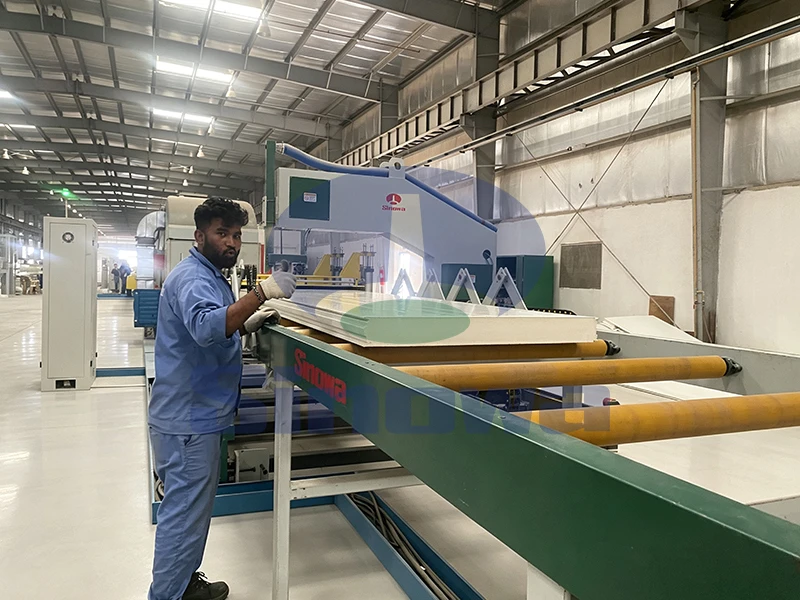
The cellular structure of polyurethane foam formed during continuous production serves as the foundational determinant of thermal insulation performance. High-performance PU panels feature uniform, dense closed-cell structures with tiny, independent air cavities that effectively block heat conduction and convection. In continuous sandwich panel lines, unstable foaming reactions often lead to irregular cell sizes, open-cell gaps, or internal voids. Open cells allow air and moisture to circulate inside the foam core, creating unobstructed heat transfer channels and drastically lowering thermal resistance. Excessively large cell diameters reduce the number of insulating air pockets per unit volume, while uneven cell distribution causes inconsistent heat insulation across the panel surface. Continuous production requires steady foaming conditions to maintain optimal cell morphology, as minor fluctuations in the line can disrupt cell uniformity and permanently weaken the panel’s insulation capacity throughout its service life.
Raw material formulation and purity directly influence the thermal conductivity of PU foam cores produced on continuous lines. Polyurethane insulation depends on the precise chemical reaction between polyol and isocyanate, and the purity, ratio stability, and auxiliary ingredient quality of these raw materials shape final foam properties. Impurities in raw materials can hinder full chemical cross-linking, resulting in incomplete foam curing and defective internal structures. Improper proportioning of core materials disrupts foaming density balance, leading to either overly dense foam with increased solid heat conduction or overly sparse foam with fragile cellular structures. Additionally, low-quality auxiliary additives fail to stabilize foaming reactions, causing inconsistent expansion and residual internal stress. Continuous production amplifies these raw material flaws, as batch inconsistencies are replicated across mass-produced panels, leading to widespread degradation of overall thermal insulation performance.
Precise raw material metering accuracy on continuous production lines is critical to maintaining stable thermal insulation performance. Unlike batch production, continuous sandwich panel manufacturing requires real-time, consistent dosing of all PU raw materials to ensure uniform foaming across every panel section. Minor metering deviations during continuous operation cause uneven material mixing, resulting in localized under-foaming or over-foaming. Under-foamed areas form compact, high-density foam with higher thermal conductivity, while over-foamed sections develop loose, porous structures with abundant open cells. These heterogeneous structural defects create thermal bridges within the panel core, enabling rapid heat penetration through weak insulation zones. Long-term metering inaccuracies also lead to cumulative production errors, reducing the overall thermal resistance consistency of finished PU panels and undermining their reliable insulation performance.
Production temperature control throughout the continuous line profoundly impacts PU foam curing and thermal insulation properties. The foaming and curing process of PU materials is highly temperature-sensitive, with each production stage requiring a stable temperature range to complete ideal chemical reactions. Insufficient preheating temperature leads to slow and incomplete foaming, leaving uncured material residues and irregular cell structures inside the foam core. Excessively high production temperatures trigger over-violent chemical reactions, causing rapid foam expansion, cell rupture, and the formation of large open voids. In continuous production, temperature fluctuations in heating, foaming, and curing sections create uneven curing degrees along the panel length. Panels with inconsistent curing exhibit unstable thermal conductivity, failing to deliver consistent heat insulation and gradually losing thermal performance under long-term temperature cycling in application environments.
Line running speed matching is a key operational factor affecting the thermal insulation quality of continuous-produced PU panels. The operating speed of the continuous sandwich panel line must precisely match the foaming and curing cycle of PU materials to ensure complete structural formation. Excessively fast line speed shortens the foaming and curing time, leaving the PU foam insufficient time to expand fully and stabilize. This results in underdeveloped cellular structures, incomplete cross-linking reactions, and residual flexible foam areas with poor heat resistance. Conversely, overly slow line speed causes excessive foam expansion and prolonged curing, breaking delicate closed-cell structures and increasing solid heat conduction paths. Speed mismatches also lead to inconsistent foam thickness and density across panel batches, creating uniform thermal defects that weaken the overall insulation performance of mass-produced panels.
Foam density uniformity achieved in continuous production directly dictates the thermal insulation efficiency of PU panels. Thermal resistance of PU foam is closely tied to its density, with a stable medium density range delivering the lowest thermal conductivity and optimal insulation effects. In continuous line operation, unstable foaming pressure and material feeding speed cause density fluctuations in the panel core. Local low-density foam contains oversized cells and more open structures, failing to block heat transfer effectively. Local high-density foam increases solid material proportion, raising heat conduction efficiency and reducing insulation capacity. Even minor density variations across the panel surface create scattered weak insulation points. Sustained density inconsistency in mass production results in overall lower average thermal performance and poor long-term insulation stability of finished PU panels.
Surface panel bonding quality in continuous sandwich production affects overall thermal insulation integrity. The tight bonding between the PU foam core and metal or composite surface layers eliminates gaps that would otherwise form thermal leakage channels. In continuous line processing, insufficient bonding pressure or uneven pressure distribution creates tiny delamination gaps between the core and surface materials. These gaps trap air and moisture, forming continuous heat transfer pathways that bypass the insulating foam core. Poor edge bonding during continuous cutting and molding also leads to edge gaps and micro cracks, which are major thermal leakage points of PU panels. Over time, these bonding defects expand under environmental changes, gradually worsening heat loss and significantly reducing the panel’s overall thermal insulation performance in practical applications.
Foam aging resistance formed during continuous production determines the long-term stability of PU panel thermal insulation. High-quality continuously produced PU foam features stable cross-linked molecular structures that resist aging, moisture penetration, and structural deformation. Unstable production parameters such as incomplete curing, improper material ratios, or inadequate temperature control leave residual active substances and defective molecular structures in the foam core. These defects accelerate aging under natural conditions, causing gradual cell structure collapse, increased open-cell rates, and enhanced water absorption. Moisture accumulation inside the foam drastically raises thermal conductivity, as water conducts heat far more efficiently than air. Panels with poor aging resistance experience continuous thermal performance attenuation after installation, failing to maintain original insulation effects for long-term use.
Post-production forming and trimming precision of continuous lines influences the final thermal insulation performance of PU panels. Continuous sandwich panel production involves fixed-length cutting, edge trimming, and surface finishing processes that shape the panel’s complete insulating structure. Rough trimming, irregular edge cutting, or surface scratches caused by unstable line operation destroy the integrity of the panel’s closed insulation structure. Irregular panel edges create assembly gaps during installation, leading to overall thermal leakage of the building envelope. Inaccurate forming also causes inconsistent panel thickness, resulting in uneven thermal resistance across different panel areas. These post-production defects, though subtle in initial production, become prominent thermal weak points in practical applications, reducing the overall insulation efficiency and service performance of PU sandwich panels.
Environmental adaptation performance of continuously produced PU panels affects their practical thermal insulation effects in service. PU foam structures are sensitive to ambient humidity and temperature changes, and production process defects amplify environmental sensitivity. Panels produced with unstable continuous line parameters have poor structural compactness, making them prone to moisture absorption and dimensional deformation in humid or extreme temperature environments. Moisture invasion destroys closed-cell insulation structures and increases internal heat conduction, while structural deformation causes panel warping and assembly gaps. Even panels with qualified initial thermal performance will experience obvious insulation attenuation if their production process fails to endow them with sufficient environmental adaptability, limiting their thermal insulation efficacy in complex and variable application scenarios.
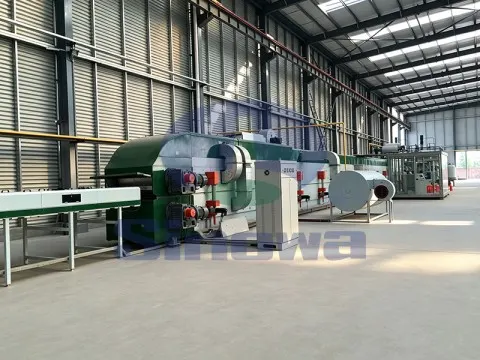
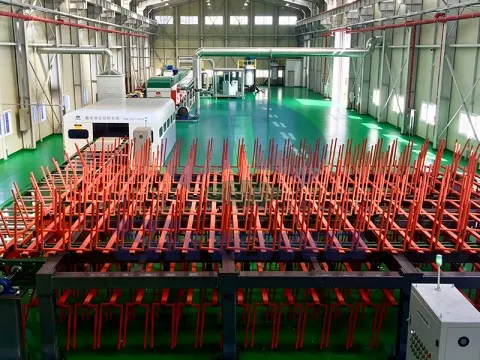
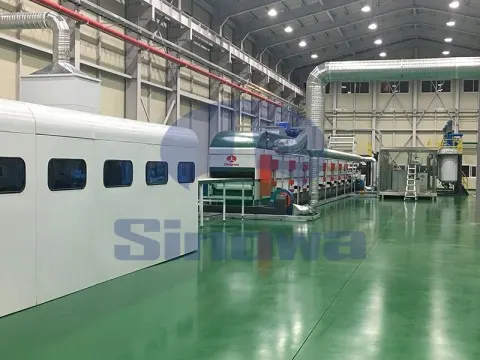
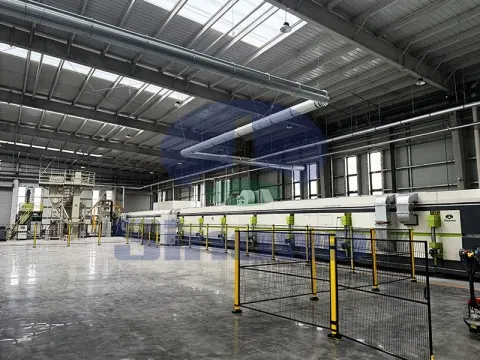
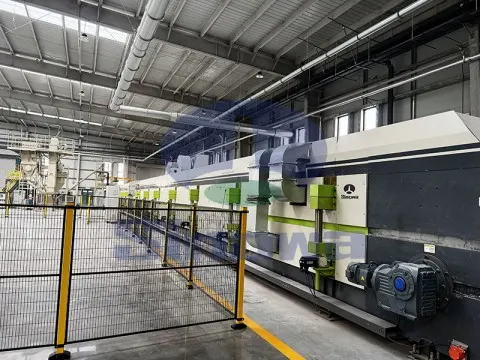
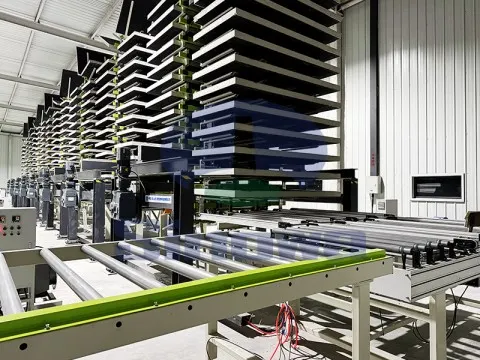
Gallery of Continuous Sandwich Panel Line
Tags: continuous sandwich panel line, continuous sandwich panel line manufacturer, continuous sandwich panel line supplier, china continuous sandwich panel line, continuous sandwich panel line for sale
-

A reliable PU sandwich panel production line serves as the core equipment for manufacturing high-performance building insulation panels. This professional PU sandwich panel line features automated feeding, foaming and molding processes to ensure consistent panel thickness and structural stability. The well-designed polyurethane sandwich panel production line effectively improves production efficiency while reducing material waste in daily operation. Each calibrated polyurethane sandwich panel line can adapt to different panel sizes to meet diverse construction needs. With precise temperature and pressure control, the advanced continuous PU sandwich panel line produces panels with excellent thermal insulation and weather resistance. Meanwhile, the optimized PIR sandwich panel production line upgrades the foaming formula to enhance fire resistance performance. The high-efficiency PIR sandwich panel line maintains stable operation during long-term mass production, delivering durable and high-quality sandwich panels for various architectural and industrial applications.
-

The phenolic panel production line realizes automated and continuous manufacturing of high-performance thermal insulation panels through streamlined and coordinated processing procedures.
-

Modern insulation panel manufacturing relies on professional automated equipment to ensure stable product quality and high production efficiency. The rock wool sandwich panel production line features precise material lamination and forming processes to produce rigid, heat-insulating building panels. Meanwhile, the mineral wool sandwich panel production line adopts optimized assembly procedures to fabricate lightweight, soundproof panels widely used in architectural enclosure and thermal preservation projects.