PIR Insulation Board Production Line
Publication Date: Oct 6, 2026
PIR insulation board production line is a continuous integrated manufacturing system that converts chemical raw materials into high-performance rigid foam insulation boards. It features precise process control, stable foaming reaction and automated molding, delivering durable insulation panels for diverse construction and industrial thermal preservation scenarios.
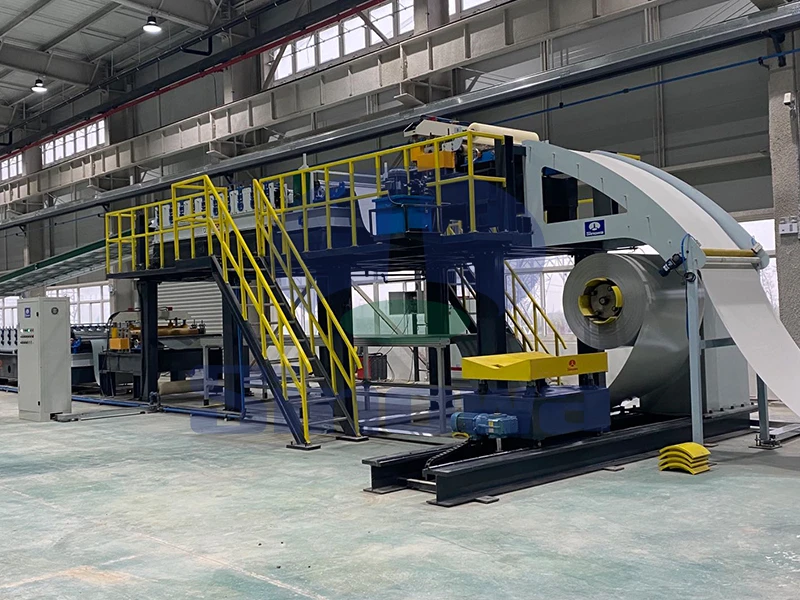
Core Working Principle of PIR Production Lines
The operation of a PIR insulation board production line relies on specialized chemical reaction mechanisms and automated process coordination, distinguishing it from ordinary polyurethane foam production equipment. The core manufacturing principle centers on the trimerization reaction of isocyanate components under the catalysis of professional additives, which forms stable isocyanurate ring structures inside the foam core layer. This unique chemical reaction endows PIR boards with superior thermal stability and structural rigidity compared with conventional insulation materials. The entire production process is a continuous cyclic operation, where liquid raw materials undergo accurate proportioning, high-speed mixing, foaming expansion, curing molding and final shaping in sequence. Each reaction stage requires strict temperature and pressure regulation to avoid uneven foam density or structural defects. Unlike intermittent production modes, the continuous line maintains consistent reaction conditions throughout operation, ensuring the internal cellular structure of each board is uniform and compact. This standardized reaction mechanism lays a solid foundation for the finished products’ excellent thermal insulation and anti-aging performance, making PIR boards reliable for long-term industrial and building insulation applications.
Raw Material Proportioning and Feeding System
The raw material proportioning and feeding system serves as the primary functional module of the PIR insulation board production line, directly determining the basic performance of finished products. This system is designed for precise metering and stable delivery of multiple liquid raw materials, including main reaction components, catalysts, blowing agents and flame retardant additives. All raw materials are stored in sealed insulated tanks to maintain stable liquid viscosity and prevent component deterioration caused by temperature fluctuations. The automated metering device adopts high-precision flow control technology to adjust the proportion of each raw material in real time according to production process requirements, eliminating manual proportioning errors. During the feeding process, raw materials are transported through dedicated pipelines with filtering devices to remove tiny impurities that may affect foaming quality. The system also supports synchronous material supply according to the production line operating speed, ensuring uninterrupted feeding and matching the continuous foaming and molding process. Reasonable proportioning and stable feeding not only optimize the foaming reaction efficiency but also stabilize the physical and chemical properties of PIR boards, avoiding quality fluctuations such as poor foam uniformity and inconsistent hardness in finished products.
High-Pressure Mixing and Foaming Process
High-pressure mixing and foaming is the most critical link in the entire PIR insulation board production process, which shapes the core foam structure of the insulation board. After precise proportioning, all raw materials are transported to the high-pressure mixing head, where they undergo instantaneous high-speed stirring and collision mixing to achieve full fusion of different components. The mixing head is professionally optimized for PIR material characteristics, with a unique internal flow channel structure that ensures no dead corners during mixing and completely avoids local uneven component distribution. Fully mixed liquid materials are evenly sprayed between upper and lower surface materials through multi-nozzle outlets. Under set temperature conditions, the liquid mixture triggers a rapid foaming reaction, with blowing agents promoting continuous volume expansion of the material. During foaming, the material gradually fills the gap between the two surface layers, forming a dense and uniform closed-cell structure. The whole foaming process is dynamically monitored in real time, with the system automatically adjusting mixing pressure and foaming temperature according to production status. This precise control effectively prevents common defects such as bubble rupture, hollow layers and uneven thickness, ensuring the foam core maintains stable density and excellent thermal insulation performance.
Surface Material Pretreatment Technology
Surface material pretreatment is an essential pre-process to ensure the bonding quality and surface finish of PIR insulation boards. Common surface materials for PIR insulation boards include various flexible and rigid decorative and protective materials, all of which require standardized pretreatment before compounding with the foam core. The pretreatment module of the production line integrates multiple functions including unwinding, flattening, dust removal and preheating. The automatic unwinding device releases surface materials at a constant speed synchronized with the production line operation, avoiding material deviation and tension unevenness. The flattening mechanism eliminates wrinkles and folds on the material surface to ensure flat compounding. High-efficiency dust removal equipment removes surface dust, particles and impurities, preventing foreign matter from affecting the bonding tightness between surface material and foam core. The constant-temperature preheating device properly raises the surface material temperature, which enhances the activity of the bonding interface and promotes tighter integration with the foaming material. Standardized pretreatment not only improves the overall flatness and appearance quality of finished boards but also significantly enhances the peel resistance and structural stability of the composite layer, extending the service life of PIR insulation boards in complex application environments.
Continuous Lamination and Curing System
The continuous lamination and curing system undertakes the core molding task of PIR insulation boards, realizing integral compounding and solidification of surface materials and foam cores. After the foaming material is injected between the upper and lower surface materials, the semi-finished product enters the lamination equipment operating at a constant speed. The double-belt lamination structure applies uniform and stable pressure on the board surface, which controls the foaming expansion range accurately and standardizes the thickness of the insulation board. The pressure balance design of the lamination equipment ensures consistent thickness and flatness across the entire board width, avoiding thickness deviation at edges and middle parts. Meanwhile, the constant-temperature curing channel provides a stable thermal environment for the continuous polymerization and solidification of PIR foam. The staged temperature setting in the curing channel adapts to the different reaction stages of PIR materials, promoting complete trimerization reaction and forming a stable three-dimensional network structure. Synchronous operation of lamination pressure and curing temperature ensures firm bonding between the foam core and surface materials without gaps or delamination. After continuous lamination and curing, the semi-finished product forms a complete rigid board structure with stable physical properties and preliminary molding effect.
Constant Temperature Cooling and Shaping Process
Constant temperature cooling and shaping is a key process to stabilize the structural performance and dimensional accuracy of PIR insulation boards. After completing high-temperature lamination and curing, the board still retains residual temperature, and the internal foam structure is not completely stabilized, which may cause deformation, warping or size deviation if cooled rapidly or unevenly. The production line is equipped with an independent segmented cooling system, which adopts gradual constant-temperature cooling mode to reduce the board temperature uniformly. The cooling channel is equipped with circulating air cooling devices on upper and lower sides, realizing three-dimensional uniform heat dissipation for the board surface and interior. The staged cooling temperature is scientifically set according to the thickness and formula characteristics of PIR boards, ensuring the internal stress of the foam structure is released slowly and completely. This process effectively eliminates residual stress generated during high-temperature molding and prevents subsequent deformation and cracking of finished boards. After full cooling and shaping, the dimensional stability and flatness of the insulation board reach the optimal state, laying a foundation for subsequent fixed-length cutting and finishing processing, and ensuring the product can adapt to various precise installation scenarios.
Fixed-Length Cutting and Edge Trimming Processing
Fixed-length cutting and edge trimming are finishing processes that standardize the size and appearance of PIR insulation boards. The fully cooled and shaped continuous board strip is transported to the cutting unit through a synchronous conveyor device. The intelligent positioning system accurately identifies the preset board length and sends cutting instructions in real time. The high-speed cutting equipment adopts precision cutting tools to complete vertical and flat cutting, ensuring neat and burr-free cutting sections without material collapse or foam shedding. After fixed-length cutting, independent edge trimming devices process the four edges of each insulation board to trim irregular edges and tiny burrs generated during production. The edge trimming process ensures consistent edge straightness and flatness of all finished boards, realizing unified product size specifications. In addition, the cutting and trimming system operates synchronously with the front-end production process, achieving non-stop continuous processing and effectively improving production efficiency. All cutting parameters can be flexibly adjusted according to different product specifications, enabling the production line to meet diversified size production requirements while maintaining high processing accuracy and product consistency.
Automatic Stacking and Finished Product Output
The automatic stacking and finished product output module is the final link of the PIR insulation board production line, realizing automated collection and standardized output of finished products. After cutting and edge trimming, qualified insulation boards are transported to the stacking station through an intelligent conveying system. The automatic stacking manipulator precisely grabs and arranges the boards according to set rules, realizing orderly stacking with consistent spacing and flat placement. The system is equipped with a position correction function to avoid skewed stacking and uneven board placement, ensuring the overall stability of finished product stacks. Compared with manual stacking, automated operation effectively reduces surface scratches, pollution and damage caused by human contact, improving the appearance quality of finished products. After stacking reaches the preset quantity, the finished product stack is automatically output from the production line and transferred to the subsequent packaging and storage link. The whole process realizes unmanned continuous operation, greatly improving production efficiency and reducing labor costs. Meanwhile, the standardized stacking mode facilitates subsequent transportation, storage and on-site construction and installation of products.
Intelligent Control and Operation Management
The intelligent control system is the core command center of the entire PIR insulation board production line, realizing integrated regulation of all production links. The system adopts centralized intelligent control mode, which uniformly manages raw material feeding, mixing foaming, lamination curing, cooling shaping and finished product processing modules. Operators can view real-time operating parameters including production speed, material proportioning, temperature and pressure through the intuitive human-machine interface, and adjust process parameters according to production demands. The built-in data monitoring function automatically records production data in real time, realizes abnormal fault early warning and automatic shutdown protection, and effectively avoids mass quality problems and equipment failures caused by parameter deviation. The system also supports linkage operation of all equipment modules, ensuring synchronous coordination of each process link and avoiding production defects caused by asynchronous equipment operation. In addition, the intelligent control system has a self-detection function, which can automatically identify equipment operating anomalies and provide troubleshooting prompts. This intelligent operation mode simplifies production management, improves production stability and consistency, and reduces the technical threshold of equipment operation and maintenance.
Equipment Maintenance and Production Stability Optimization
Scientific equipment maintenance and targeted stability optimization are crucial to ensuring the long-term efficient operation of PIR insulation board production lines. The production line is designed with convenient maintenance structures for key components such as mixing heads, conveying rollers and heating and cooling systems, which facilitates daily cleaning, component inspection and replacement of vulnerable parts. Regular cleaning of the mixing head can prevent residual raw material condensation from affecting mixing accuracy and foaming effect, while regular calibration of metering and positioning equipment ensures long-term production precision. The transmission system is equipped with wear-resistant and noise-reducing structures, which reduce equipment loss during high-frequency continuous operation and extend the service life of mechanical components. In terms of production stability optimization, the equipment adopts anti-deviation and anti-vibration designs to avoid product quality fluctuations caused by mechanical vibration and material deviation during operation. The thermal insulation and energy-saving structure of the heating and curing system reduces temperature fluctuation amplitude and maintains stable reaction conditions. Daily standardized maintenance and continuous stability optimization can effectively reduce equipment failure rates, improve production continuity and qualification rate, and help enterprises maintain stable and high-quality long-term production operation.
Application Advantages and Market Value of Production Lines
The advanced PIR insulation board production line has prominent application advantages and broad market value in the field of thermal insulation material manufacturing. Relying on continuous automated production technology, the production line achieves high-efficiency and large-scale production of PIR insulation boards, with stable product performance and high finished product qualification rate. The produced PIR boards have excellent thermal insulation, structural stability and aging resistance, and can adapt to various harsh use environments such as high temperature, low temperature and humid conditions. Compared with traditional insulation board production equipment, this production line has stronger process flexibility, can adjust product specifications and formula schemes according to different application scenarios, and meet the personalized needs of building exterior wall insulation, roof waterproof insulation, cold storage thermal preservation and industrial equipment insulation. In addition, the automated and intelligent production mode reduces resource waste and labor input, realizing energy-saving and efficient production. The high-quality PIR insulation boards produced by the line can effectively reduce building and industrial energy consumption, providing reliable material support for energy-saving and environmental protection projects. With the continuous improvement of market demand for high-performance insulation materials, the PIR insulation board production line has become core equipment for upgrading the thermal insulation material manufacturing industry, with outstanding economic and social application value.
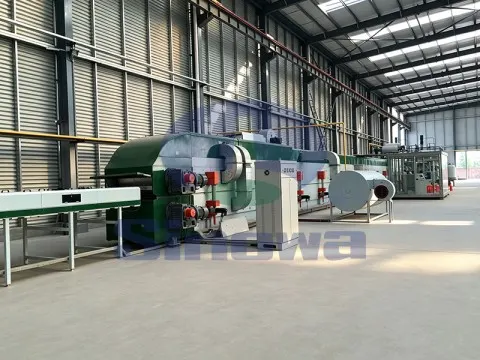
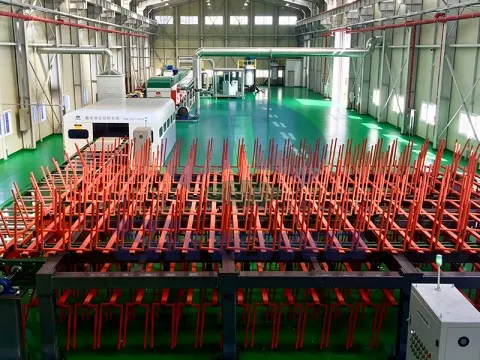
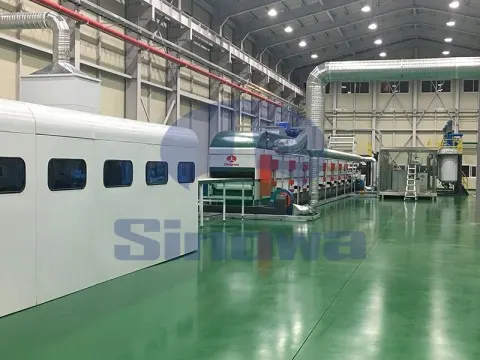
Gallery of PIR Insulation Board Production Line
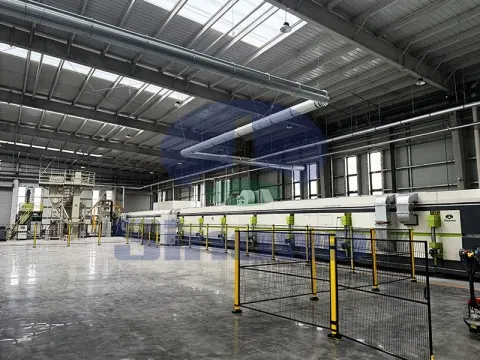
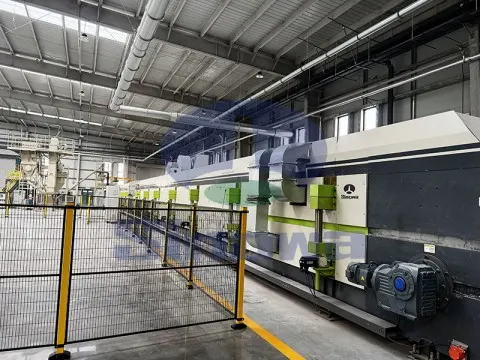
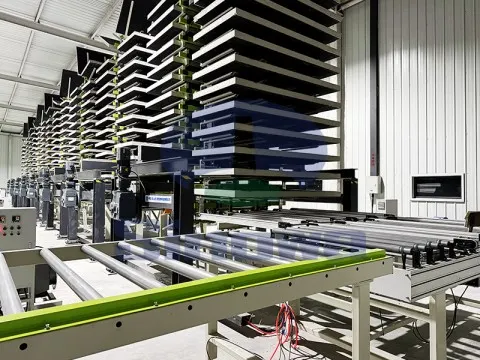
Tags: pir insulation board production line, pir insulation board production line manufacturer, pir insulation board production line supplier, china pir insulation board production line, pir insulation board production line for sale
-

A reliable PU sandwich panel production line serves as the core equipment for manufacturing high-performance building insulation panels. This professional PU sandwich panel line features automated feeding, foaming and molding processes to ensure consistent panel thickness and structural stability. The well-designed polyurethane sandwich panel production line effectively improves production efficiency while reducing material waste in daily operation. Each calibrated polyurethane sandwich panel line can adapt to different panel sizes to meet diverse construction needs. With precise temperature and pressure control, the advanced continuous PU sandwich panel line produces panels with excellent thermal insulation and weather resistance. Meanwhile, the optimized PIR sandwich panel production line upgrades the foaming formula to enhance fire resistance performance. The high-efficiency PIR sandwich panel line maintains stable operation during long-term mass production, delivering durable and high-quality sandwich panels for various architectural and industrial applications.
-

The phenolic panel production line realizes automated and continuous manufacturing of high-performance thermal insulation panels through streamlined and coordinated processing procedures.
-

Modern insulation panel manufacturing relies on professional automated equipment to ensure stable product quality and high production efficiency. The rock wool sandwich panel production line features precise material lamination and forming processes to produce rigid, heat-insulating building panels. Meanwhile, the mineral wool sandwich panel production line adopts optimized assembly procedures to fabricate lightweight, soundproof panels widely used in architectural enclosure and thermal preservation projects.