What Are The Common Faults Of The Double Belt Press In The Polyurethane Sandwich Panel Production Line?
Publication Date: Oct 12, 2026
The double belt press is the core molding equipment for polyurethane sandwich panel production, prone to various operational faults. This article elaborates on its frequent failures, root causes, performance impacts and targeted improvement solutions in actual production processes.
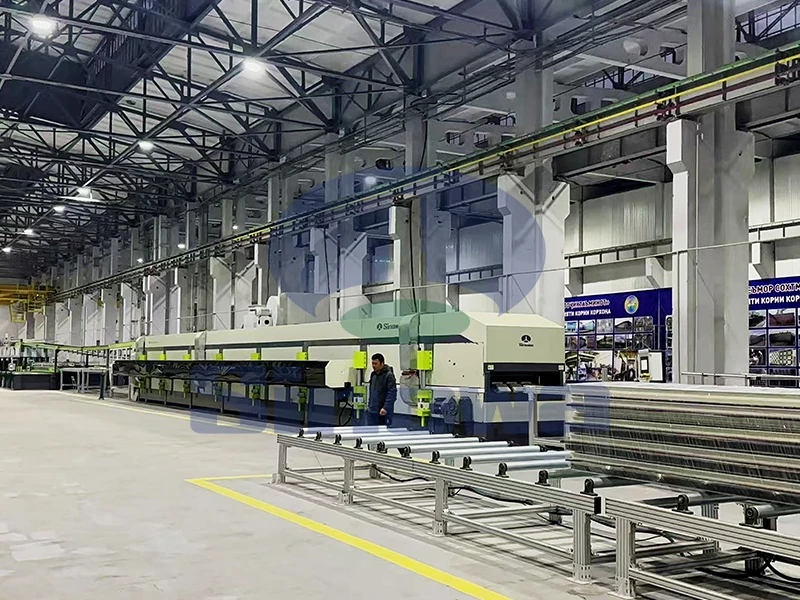
Uneven belt pressure distribution is one of the most prevalent faults of double belt presses in polyurethane sandwich panel production. In normal operation, the upper and lower circulating belts should deliver consistent and balanced pressure across the entire panel surface to ensure uniform foam expansion and stable composite molding. However, long-term continuous operation often leads to inconsistent pressure output, with partial areas bearing excessive or insufficient pressure. This fault mainly stems from worn belt tensioning components, loose hydraulic adjustment structures, and accumulated residual foam impurities on the belt surface that cause uneven contact gaps. When pressure distribution is disordered, the polyurethane foam cannot expand evenly in the confined space, resulting in inconsistent core density across the panel, local bulges or depressions, and unqualified overall flatness. Long-term pressure imbalance will also accelerate local belt wear, increase equipment operating load, and further expand the range of product defects, seriously reducing the yield of finished sandwich panels.
Belt speed desynchronization is a common operational fault that severely disrupts continuous production stability. The upper and lower belts of the press need to maintain strictly synchronized operating speeds to clamp and convey semi-finished panels stably. In actual production, deviation in belt speed often occurs due to aging drive motors, worn transmission gears, and inaccurate parameter calibration of the control system. Minor speed deviations will cause relative friction and displacement between the belt and the panel surface, scratching the panel’s outer facing and damaging the surface integrity. Severe desynchronization will lead to panel offset and torsion during pressing, causing irregular edge deformation and internal foam layer dislocation. Moreover, unsynchronized belt speed interferes with the stable foaming reaction of polyurethane materials, resulting in inconsistent curing degrees of the core layer, which greatly reduces the structural stability and service performance of the finished panels.
Abnormal temperature control failure frequently troubles double belt presses and directly affects polyurethane foam curing quality. The press relies on an internal constant-temperature heating system to provide a stable thermal environment for polyurethane cross-linking and curing reactions. Common temperature faults include local overheating, overall insufficient heating, and frequent temperature fluctuation. These problems are mainly caused by aging heating components, blocked heat conduction channels, failed temperature sensors, and delayed system signal feedback. Insufficient overall temperature leads to incomplete foam curing, making the panel core soft, prone to deformation, and poor in bonding fastness between the core layer and outer facings. Local overheating causes partial foam aging and embrittlement, forming brittle areas inside the panel that reduce impact resistance. Frequent temperature fluctuations make the foaming reaction unstable, easily producing tiny voids and gaps in the core layer, which undermine the thermal insulation and structural performance of the sandwich panels.
Belt surface deviation and jamming faults often occur during long-term high-load operation of double belt presses. Affected by uneven material stress, long-term unilateral force, and worn guiding rollers, the circulating belts are prone to lateral deviation during operation. Slight deviation leads to uneven stress on the belt edges and inconsistent pressing gaps on both sides of the panel. Severe deviation will cause the belt to rub against the equipment frame, resulting in belt edge wear, damage and even fracture. In addition, residual polyurethane foam, dust and debris accumulated in the equipment gap may block the belt operating track, triggering jamming failure. Belt deviation and jamming will force the press to run intermittently, interrupting continuous production rhythm. Meanwhile, jitter and stagnation during operation will cause uneven pressing of semi-finished panels, forming irregular thickness differences and edge defects, and may even cause material accumulation and equipment overload operation in severe cases.
Side seal failure is a key fault that causes edge defects of polyurethane sandwich panels in double belt pressing. The side sealing structure of the press is designed to limit the lateral overflow of foaming materials and ensure complete filling of the panel edge foam. After long-term operation, the sealing strips are prone to aging, deformation, wear and elastic fatigue, while loose fixed structures and accumulated material residues will also lead to incomplete side sealing. When the side seal fails, the expanded polyurethane foam overflows from the edge gap of the press, resulting in insufficient filling of the panel edge core layer and forming edge flash and missing corners. Excessive foam overflow also changes the internal foaming pressure environment, causing inconsistent expansion degree between the edge and the center of the panel. This not only affects the dimensional accuracy and appearance flatness of the finished panel edge, but also leads to poor edge structural strength and reduced overall sealing performance of the sandwich panel.
Hydraulic system pressure instability is a hidden recurring fault of double belt presses. The hydraulic system undertakes the core function of adjusting the pressing height and maintaining constant pressing pressure. Common faults include slow pressure rise, pressure drop during operation, and unbalanced pressure output of multiple hydraulic groups. These problems are mainly caused by hydraulic oil deterioration, pipeline blockage, seal ring leakage, and insufficient system pressure calibration. Unstable hydraulic pressure makes the pressing gap of the upper and lower belts unable to remain fixed, resulting in inconsistent thickness of the produced sandwich panels. Real-time pressure drop during pressing will lead to insufficient foam compression density, making the panel core loose and porous. Frequent pressure changes will also cause alternating stress on the equipment structure, accelerating the fatigue damage of hydraulic components and mechanical parts, increasing equipment failure rate and maintenance frequency, and reducing production efficiency.
Foam residue adhesion and belt fouling failure affect the long-term stable operation of double belt presses. In the continuous foaming and pressing process, a small amount of unformed polyurethane foam overflows and adheres to the belt surface and equipment gaps. If not cleaned regularly, these residues will solidify and accumulate into hard attachments. The hardened residues on the belt surface will form raised points, leading to local indentation and unevenness on the panel surface after pressing, destroying the flatness of the finished product. Residues accumulated in the belt gaps and roller parts will increase belt operating friction, cause jitter and deviation, and even affect the normal heat conduction of the heating system. In addition, aged and deteriorated residues will produce tiny particles that adhere to the panel surface, causing surface contamination defects and reducing the appearance quality and qualification rate of polyurethane sandwich panels.
Transmission component wear failure is a chronic fault that gradually deteriorates with equipment operation. The double belt press relies on chains, bearings, gears and other transmission components to realize circulating belt operation. Long-term high-speed and high-load operation will cause gradual wear, gap increase and lubrication failure of these components. Mild wear leads to unstable belt operation, jitter and slight speed fluctuation. Severe wear causes transmission gap dislocation, resulting in belt slipping, stalling and even operational stagnation. Abnormal operation of transmission components will directly disrupt the pressing stability of semi-finished panels, leading to inconsistent pressing time and pressure. Meanwhile, worn components will produce abnormal vibration and noise, making the equipment operate in an unstable state for a long time. This not only reduces production precision and product quality stability, but also accelerates the overall aging of equipment and shortens the service life of key components.
Control system signal delay and misjudgment faults affect the intelligent operation accuracy of double belt presses. Modern double belt presses adopt automatic control systems to regulate speed, temperature, pressure and pressing gap in real time. After long-term operation, sensor aging, circuit aging, dust interference and program cache accumulation will cause signal transmission delay and data misjudgment. The system cannot accurately capture the real-time operating state of the equipment, resulting in untimely parameter adjustment. For example, the system fails to adjust pressure in time when the material foaming state changes, or cannot correct speed deviation and temperature fluctuation in real time. This leads to frequent quality fluctuations of sandwich panels, with alternating defects of insufficient pressing, excessive pressing and incomplete curing. In severe cases, the system will trigger false alarms or fail to alarm for real faults, leading to unplanned shutdowns and even accidental equipment damage.
Insufficient curing and uneven core forming induced by press operational faults are comprehensive quality problems derived from multiple equipment failures. Superimposed effects of unstable pressing pressure, fluctuating temperature and unsynchronized belt speed will disrupt the optimal foaming and curing environment of polyurethane materials. The polyurethane reaction cannot proceed stably and fully in the pressing section, resulting in inconsistent curing degrees inside the panel core. Some areas have insufficient cross-linking reaction with loose foam structures, while local areas have excessive curing and embrittlement. This comprehensive fault makes the mechanical properties of the sandwich panel uneven, with poor overall compression resistance, bending resistance and bonding strength. It also leads to easy deformation, delamination and cracking of the finished panel during later use and stacking, greatly reducing product durability and usability, and bringing greater economic losses to continuous production.
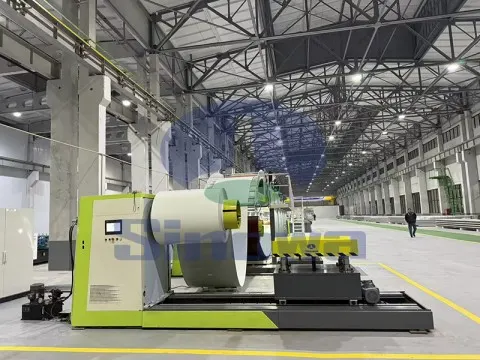
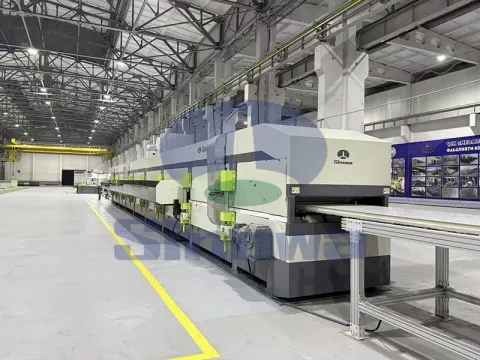
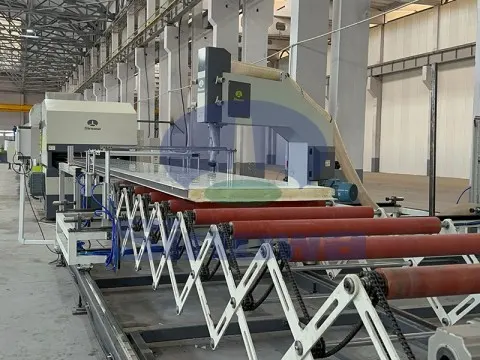
Gallery of Polyurethane Sandwich Panel Production Line
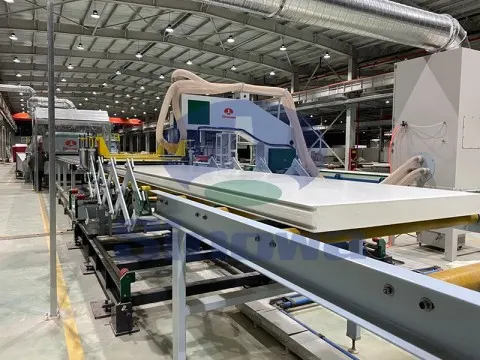
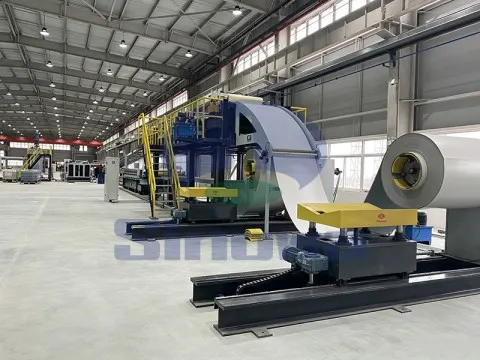
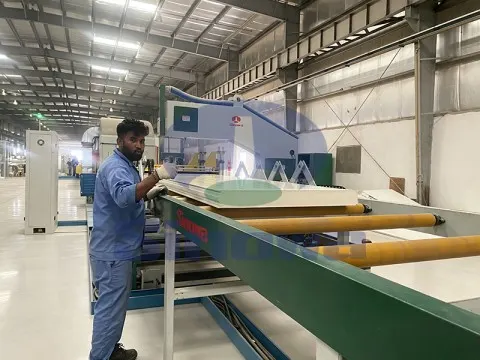
Tags: polyurethane sandwich panel production line, polyurethane sandwich panel production line manufacturer, polyurethane sandwich panel production line supplier, china polyurethane sandwich panel production line, polyurethane sandwich panel production line for sale
-
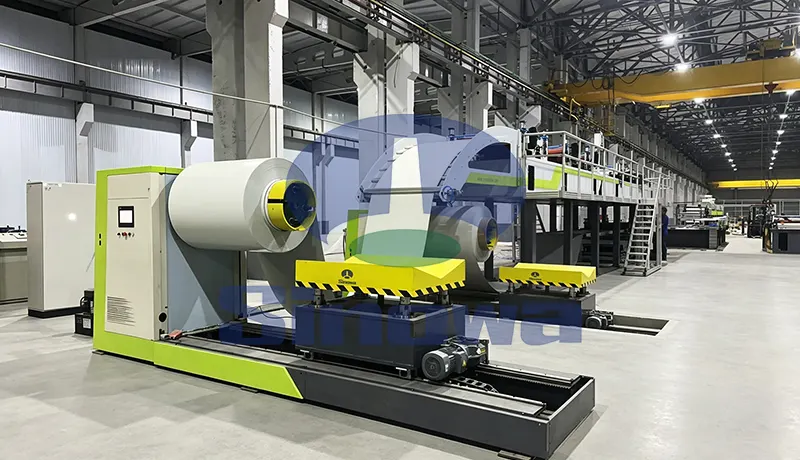
A reliable PU sandwich panel production line serves as the core equipment for manufacturing high-performance building insulation panels. This professional PU sandwich panel line features automated feeding, foaming and molding processes to ensure consistent panel thickness and structural stability. The well-designed polyurethane sandwich panel production line effectively improves production efficiency while reducing material waste in daily operation. Each calibrated polyurethane sandwich panel line can adapt to different panel sizes to meet diverse construction needs. With precise temperature and pressure control, the advanced continuous PU sandwich panel line produces panels with excellent thermal insulation and weather resistance. Meanwhile, the optimized PIR sandwich panel production line upgrades the foaming formula to enhance fire resistance performance. The high-efficiency PIR sandwich panel line maintains stable operation during long-term mass production, delivering durable and high-quality sandwich panels for various architectural and industrial applications.
-
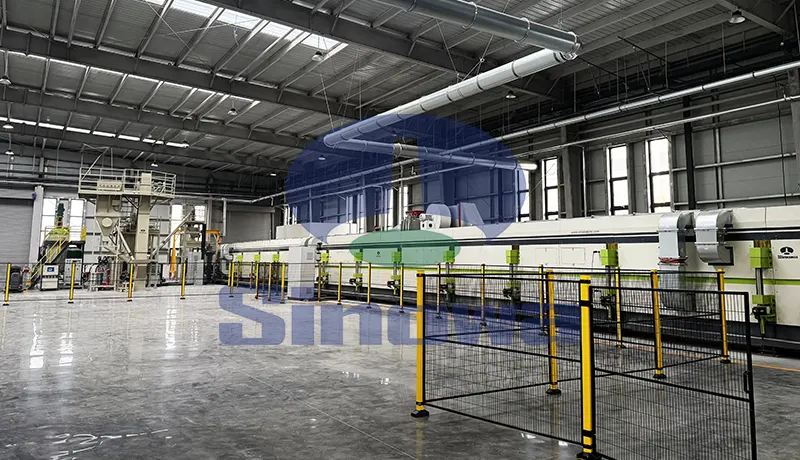
The phenolic panel production line realizes automated and continuous manufacturing of high-performance thermal insulation panels through streamlined and coordinated processing procedures.
-
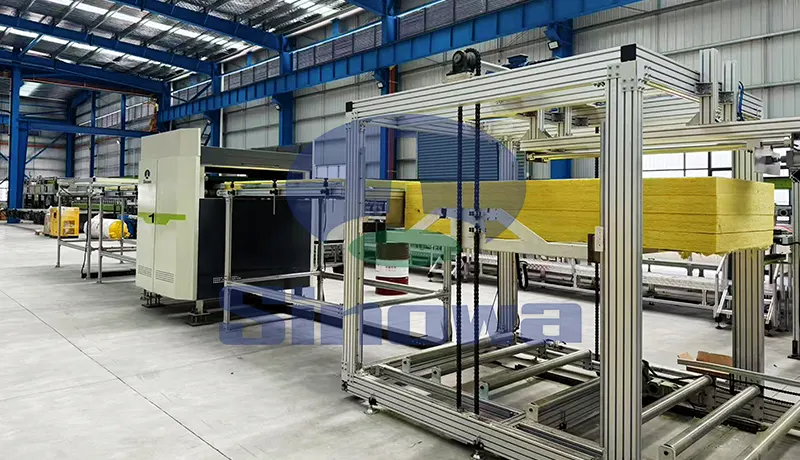
Modern insulation panel manufacturing relies on professional automated equipment to ensure stable product quality and high production efficiency. The rock wool sandwich panel production line features precise material lamination and forming processes to produce rigid, heat-insulating building panels. Meanwhile, the mineral wool sandwich panel production line adopts optimized assembly procedures to fabricate lightweight, soundproof panels widely used in architectural enclosure and thermal preservation projects.