Why Is The Production Efficiency Of The Continuous PUR Sandwich Panel Line Reduced?
Publication Date: Oct 12, 2026
Continuous PUR sandwich panel lines often face gradual production efficiency drops during long-term operation. This issue stems from mechanical aging, process parameter deviations, raw material inconsistencies, and improper operation and maintenance, which disrupt continuous production and lower overall output stability.
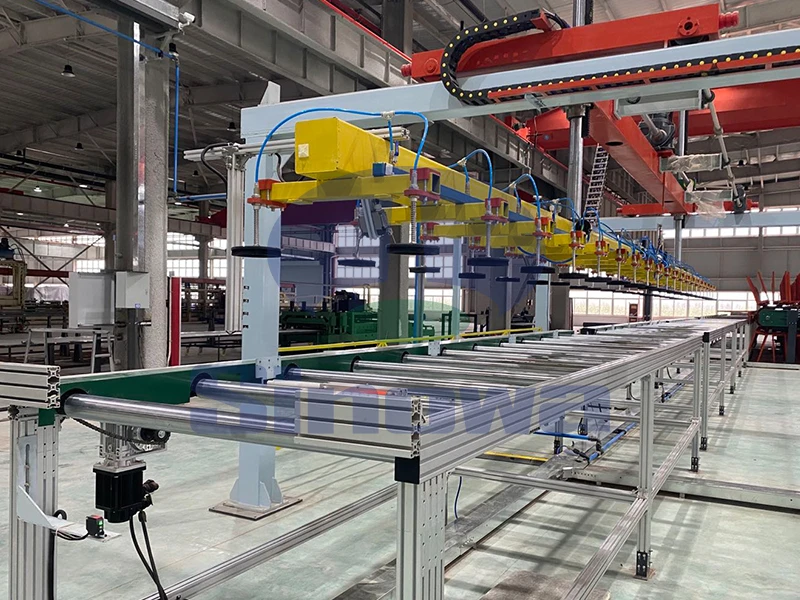
Mechanical transmission system aging is one of the primary causes of reduced efficiency in continuous PUR sandwich panel production lines. After long-term uninterrupted operation, core transmission components such as drive shafts, couplings and bearings experience gradual wear and thermal deformation. Friction generated by high-load operation accumulates heat continuously, causing shaft expansion and tiny displacement deviations between connected mechanical parts. Traditional transmission structures lack flexible adaptability to such dynamic changes, leading to inconsistent torque transmission and unsynchronized rotating speeds between different processing units. These subtle mechanical errors are amplified in continuous cyclic production, resulting in unstable conveying speed of panel substrates. Frequent speed fluctuations force the line to slow down temporarily to avoid product defects, directly cutting down effective production time and reducing overall operational efficiency.
Unreasonable PUR raw material proportioning and mixing status greatly hinder the stable operation of sandwich panel production lines. The foaming and bonding performance of PUR materials rely on precise matching of various chemical components. Minor deviations in dosing ratios during continuous production will lead to uneven foaming density and insufficient bonding force of the core material. When the mixing speed of the pouring unit does not match the line running speed, raw materials cannot be fully blended, resulting in local material agglomeration or incomplete foaming. Substandard raw material mixing effects produce a large number of defective panels, requiring repeated inspection, rework and waste disposal in the production process. This not only increases invalid labor consumption but also interrupts continuous production rhythm, forcing frequent temporary line adjustments and greatly reducing effective production efficiency.
Abnormal temperature control in the production environment and equipment system is a key factor triggering efficiency decline. PUR foaming and curing processes have strict temperature requirements, and temperature fluctuations will directly affect molding quality and production progress. Long-term operation of heating and constant-temperature equipment leads to reduced heating accuracy and slow temperature response. Low equipment surface temperature will prolong the curing time of PUR core materials, making it impossible to follow the original production rhythm. In addition, unstable ambient temperature in the workshop interferes with the foaming reaction rate of raw materials. Excessively high or low ambient temperature will cause foaming failure or incomplete curing, resulting in unqualified panel products. To ensure product qualification rate, workers have to reduce line speed and extend process cycle, which significantly lowers daily production output.
Laminating and pressing system failures and parameter drift severely affect continuous production efficiency. The laminating unit undertakes the core work of bonding metal surface plates and PUR core materials, and stable pressure output is the premise of consistent product quality. After long-term operation, the pressure calibration of the pressing system drifts, leading to uneven pressure distribution in different areas of the panel. Partial overpressure causes core material extrusion deformation, while insufficient pressure leads to delamination between layers. Once such quality problems occur, the production line needs to be shut down for pressure debugging and equipment calibration. Moreover, worn pressing rollers will cause surface scratches and thickness deviation on panels, increasing defective rate. Frequent shutdown maintenance and quality troubleshooting break the continuous production cycle and greatly reduce operational efficiency.
Frequent pipeline and equipment blockages caused by intermittent production disrupt production continuity. The continuous PUR production line relies on unobstructed material conveying and pouring pipelines for stable operation. Unplanned temporary shutdowns caused by mechanical faults or manual operation errors lead to residual PUR raw materials in the mixing and pouring area solidifying rapidly. Solidified materials block pipelines and pouring ports, resulting in subsequent material feeding interruption. Clearing blocked pipelines and solidified materials requires long manual shutdown maintenance. Even after cleaning, the production line needs repeated debugging to restore stable operation. Frequent blockage faults and cleaning work consume a large amount of production time, eliminate continuous production advantages, and lead to obvious efficiency reduction.
Unsynchronized coordination of multi-process units restricts the overall production capacity of the line. A complete continuous PUR sandwich panel production process includes feeding, pouring, foaming, pressing, curing, cutting and finishing links, all of which require precise speed and rhythm matching. In actual long-term operation, the running speed of individual units may drift due to component wear and parameter aging. For example, the feeding speed of the substrate unwinding unit does not match the operating speed of the laminating unit, or the cutting unit cannot keep up with the molding speed of the front-end process. Process mismatch causes semi-finished product accumulation, material jamming and panel position deviation. Workers need to manually adjust unit speed and sort out stacked materials, which slows down the overall production pace and reduces the line’s comprehensive operational efficiency.
Inadequate daily maintenance and irregular equipment inspection accelerate efficiency attenuation. Many production lines adopt high-intensity continuous operation modes and lack standardized regular maintenance plans. Long-term accumulation of dust, residual materials and oil stains on equipment surfaces and internal components affects equipment operation accuracy and heat dissipation performance. Wear of small parts is not detected and replaced in a timely manner, evolving into large mechanical faults that require long-term shutdown repairs. Irregular calibration of detection and control devices leads to inaccurate real-time data feedback of production parameters, making process adjustment lag behind actual production changes. Gradual accumulation of minor equipment problems leads to increasing production failures, more downtime and lower effective operation efficiency.
Unstandardized manual operation and insufficient operator experience cause production efficiency loss. The continuous PUR sandwich panel line has complex process logic and high requirements for operation proficiency. New or inexperienced operators often make improper adjustments to production parameters such as line speed, material dosage and temperature according to subjective judgment. Blind parameter adjustment easily triggers product quality defects and equipment operation abnormalities. In addition, non-standard startup and shutdown operations, as well as irregular material feeding modes, increase the probability of material waste and equipment failure. Operators’ inability to quickly judge and handle minor on-site faults leads to prolonged problem-solving time, expanded production interruption range, and continuous reduction of overall production efficiency.
Aging automation control systems and delayed signal transmission affect production stability. Modern continuous sandwich panel lines rely on automatic control systems to realize coordinated operation of all units. Long-term use leads to aging of control system hardware and reduced sensitivity of signal sensors, resulting in delayed or inaccurate data transmission between equipment units. The control system cannot timely feed back and adjust parameter changes such as speed, pressure and temperature, causing inconsistent operating status of each process link. System response lag will trigger frequent minor equipment abnormalities, and the line will automatically enter low-speed protection operation to avoid mass defective products. Long-term low-speed operation and occasional system fault shutdowns greatly reduce the average production efficiency of the entire line.
Raw material quality instability and inconsistent pre-treatment effects induce efficiency reduction. The performance stability of PUR raw materials and surface substrates directly determines production smoothness. Batch differences in raw material activity, viscosity and fluidity will change the foaming and bonding reaction state during production, making the original set process parameters no longer applicable. In addition, incomplete pre-treatment of metal substrates such as uncleaned surface dust and oil stains will reduce bonding performance, causing panel delamination and defective products. Unstable raw material quality forces frequent manual adjustment of process parameters during continuous production, and repeated parameter debugging and defective product processing occupy a lot of production time, ultimately leading to a significant drop in continuous production efficiency.
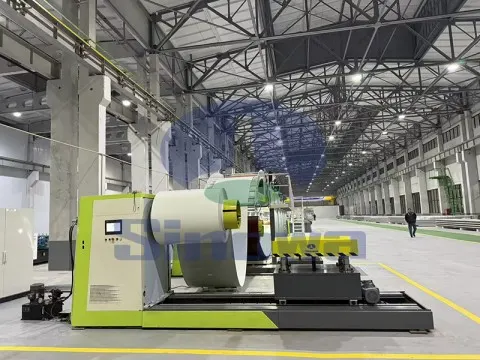
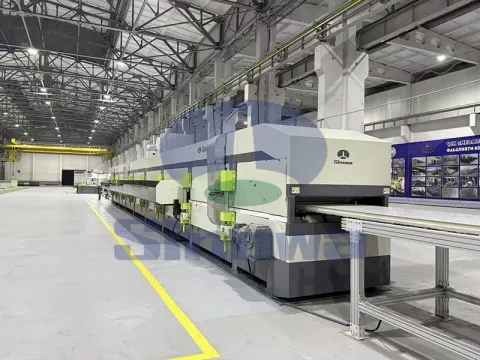
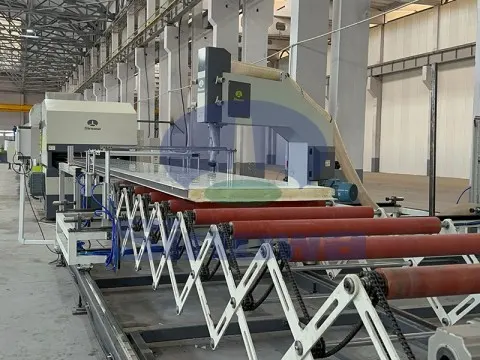
Gallery of Continuous PUR Sandwich Panel Line
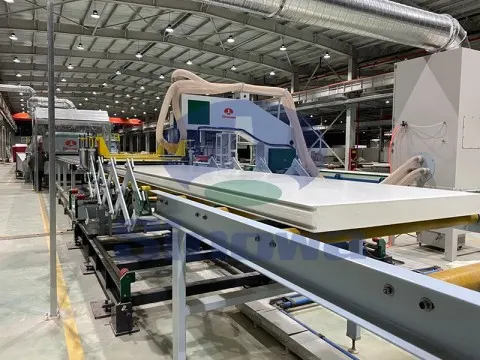
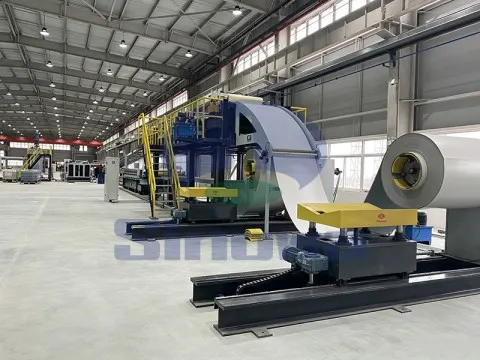
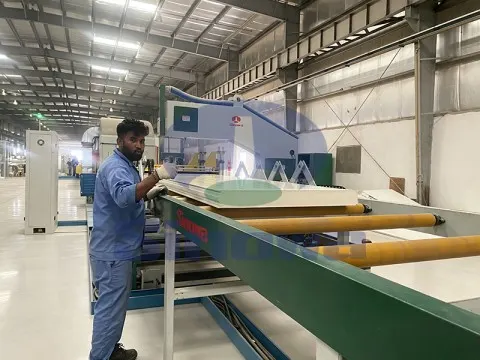
Tags: continuous pur sandwich panel line, continuous pur sandwich panel line manufacturer, continuous pur sandwich panel line supplier, china continuous pur sandwich panel line, continuous pur sandwich panel line for sale
-

A reliable PU sandwich panel production line serves as the core equipment for manufacturing high-performance building insulation panels. This professional PU sandwich panel line features automated feeding, foaming and molding processes to ensure consistent panel thickness and structural stability. The well-designed polyurethane sandwich panel production line effectively improves production efficiency while reducing material waste in daily operation. Each calibrated polyurethane sandwich panel line can adapt to different panel sizes to meet diverse construction needs. With precise temperature and pressure control, the advanced continuous PU sandwich panel line produces panels with excellent thermal insulation and weather resistance. Meanwhile, the optimized PIR sandwich panel production line upgrades the foaming formula to enhance fire resistance performance. The high-efficiency PIR sandwich panel line maintains stable operation during long-term mass production, delivering durable and high-quality sandwich panels for various architectural and industrial applications.
-

The phenolic panel production line realizes automated and continuous manufacturing of high-performance thermal insulation panels through streamlined and coordinated processing procedures.
-

Modern insulation panel manufacturing relies on professional automated equipment to ensure stable product quality and high production efficiency. The rock wool sandwich panel production line features precise material lamination and forming processes to produce rigid, heat-insulating building panels. Meanwhile, the mineral wool sandwich panel production line adopts optimized assembly procedures to fabricate lightweight, soundproof panels widely used in architectural enclosure and thermal preservation projects.